
Listen to this Post
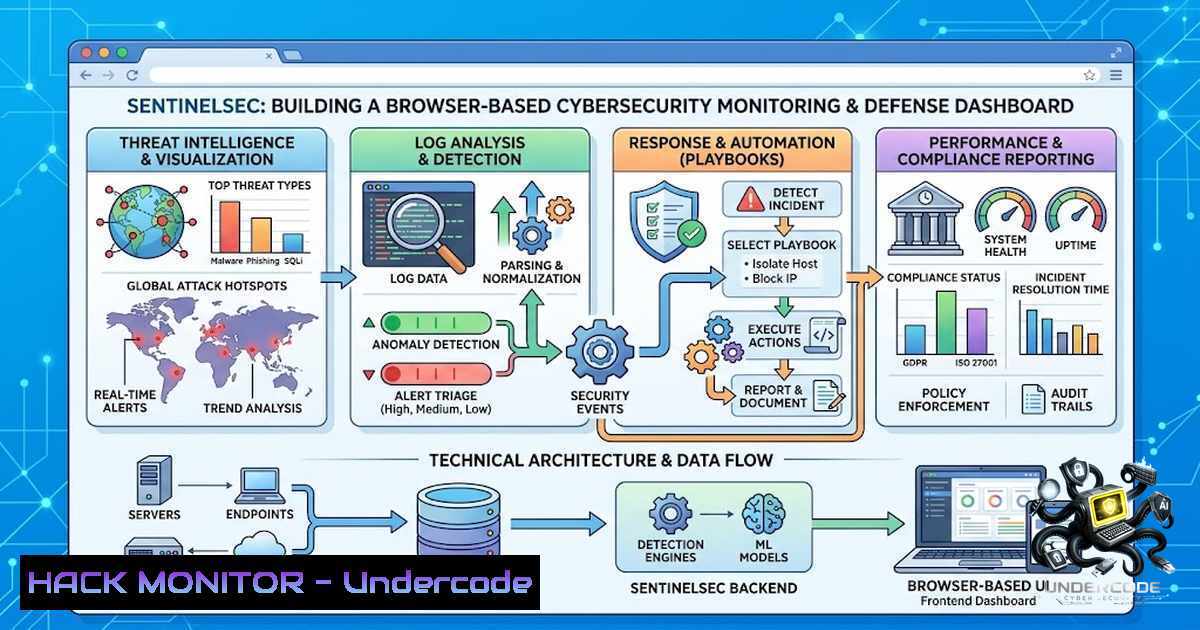
Introduction:
The democratization of cybersecurity tools has reached a pivotal moment with the emergence of browser-based security frameworks that bring enterprise-grade defensive capabilities directly to developers and security analysts. SentinelSec, a comprehensive security dashboard built with React.js and the Web Crypto API, exemplifies this trend by integrating file encryption, firewall rule management, intrusion detection, and audit logging into a single cohesive interface. This project demonstrates how modern web technologies can be leveraged to create accessible security tools that bridge the gap between theoretical security concepts and practical implementation, while raising important considerations about the limitations and appropriate use cases of client-side security controls.
Learning Objectives & Secrets:
- Objective 1: Master Browser-Based Cryptography with Web Crypto API – Understand how to implement AES-256-GCM encryption and decryption entirely within the browser using the native `crypto.subtle` interface. The Web Crypto API provides a secure, standardized way to perform cryptographic operations without third-party libraries, ensuring that plaintext and encryption keys never leave the client environment.
-
Objective 2 Secret Tip: Implement Proper IV Handling for GCM – The most common failure point in AES-GCM implementations is improper initialization vector (IV) management. Always generate a fresh 12-byte IV using `crypto.getRandomValues()` for each encryption operation, and store it alongside the ciphertext (prepended) so decryption can retrieve it. Never reuse an IV with the same key, as this compromises the security of GCM mode entirely.
-
Objective 3 Secret Tip: Combine Encryption with Integrity Verification – AES-GCM is an authenticated encryption mode that produces both ciphertext and an authentication tag. The Web Crypto API automatically verifies this tag during decryption—if the data has been tampered with, the promise rejects with an `OperationError` rather than returning corrupted plaintext. Wrap your decryption calls in try/catch blocks and treat any rejection as untrustworthy data.
You Should Know:
1. Implementing AES-256-GCM Encryption with Web Crypto API
The Web Crypto API enables secure client-side encryption without external dependencies. Below is a complete implementation pattern for encrypting and decrypting data using AES-256-GCM:
// Generate a 256-bit AES key
const key = await crypto.subtle.generateKey(
{ name: "AES-GCM", length: 256 },
true,
["encrypt", "decrypt"]
);

// Encrypt function with automatic IV generation
async function encryptData(plaintext, key) {
const iv = crypto.getRandomValues(new Uint8Array(12)); // 96-bit IV
const encoded = new TextEncoder().encode(plaintext);
const ciphertext = await crypto.subtle.encrypt(
{ name: "AES-GCM", iv, tagLength: 128 },
key,
encoded
);
// Prepend IV to ciphertext for storage
const output = new Uint8Array(iv.length + ciphertext.byteLength);
output.set(iv, 0);
output.set(new Uint8Array(ciphertext), iv.length);
return btoa(String.fromCharCode(...output));
}

// Decrypt function extracting IV from stored data
async function decryptData(encodedData, key) {
const data = Uint8Array.from(atob(encodedData), c => c.charCodeAt(0));
const iv = data.slice(0, 12);
const ciphertext = data.slice(12);
try {
const plainBuffer = await crypto.subtle.decrypt(
{ name: "AES-GCM", iv, tagLength: 128 },
key,
ciphertext
);
return new TextDecoder().decode(plainBuffer);
} catch (error) {
throw new Error("Data integrity check failed - possible tampering");
}
}
For SHA-256 integrity hashing, use `crypto.subtle.digest()`:
async function generateHash(message) {
const encoder = new TextEncoder();
const data = encoder.encode(message);
const hashBuffer = await crypto.subtle.digest("SHA-256", data);
const hashArray = Array.from(new Uint8Array(hashBuffer));
return hashArray.map(b => b.toString(16).padStart(2, '0')).join('');
}
This approach is ideal for verifying file integrity or generating checksums for audit logs.
2. Building a Client-Side Firewall Rule Engine
SentinelSec implements a rule-based firewall system that allows users to create ALLOW/BLOCK rules based on protocol (TCP, UDP, ICMP, ANY), IP/CIDR ranges, and port numbers. While client-side rule evaluation cannot replace network-layer firewalls, it serves as an excellent educational tool and can be integrated into browser extensions or local development environments.
Step-by-Step Implementation:
1. Define the Rule Schema:
const ruleSchema = {
id: string,
action: 'ALLOW' | 'BLOCK',
protocol: 'TCP' | 'UDP' | 'ICMP' | 'ANY',
sourceIP: string, // Supports CIDR notation (e.g., '192.168.1.0/24')
destinationPort: number | null,
enabled: boolean,
priority: number
};
2. Implement IP/CIDR Matching:
function ipInCIDR(ip, cidr) {
const [range, bits] = cidr.split('/');
const ipParts = ip.split('.').map(Number);
const rangeParts = range.split('.').map(Number);
const mask = ~0 << (32 - parseInt(bits));
const ipInt = ipParts.reduce((acc, part, i) => acc | (part << (24 - 8i)), 0);
const rangeInt = rangeParts.reduce((acc, part, i) => acc | (part << (24 - 8i)), 0);
return (ipInt & mask) === (rangeInt & mask);
}
3. Rule Evaluation Engine:
function evaluateRules(packet, rules) {
const sortedRules = rules.filter(r => r.enabled).sort((a, b) => a.priority - b.priority);
for (const rule of sortedRules) {
if (rule.protocol !== 'ANY' && rule.protocol !== packet.protocol) continue;
if (rule.sourceIP && !ipInCIDR(packet.sourceIP, rule.sourceIP)) continue;
if (rule.destinationPort && rule.destinationPort !== packet.destinationPort) continue;
return rule.action; // First matching rule determines action
}
return 'ALLOW'; // Default fallback
}
4. Store Rules in LocalStorage for Persistence:
const saveRules = (rules) => localStorage.setItem('firewallRules', JSON.stringify(rules));
const loadRules = () => JSON.parse(localStorage.getItem('firewallRules')) || [];
This pattern is similar to how cloud security groups and network ACLs function, making it a valuable learning exercise for understanding network security concepts.
3. Simulating Intrusion Detection System (IDS) Alerts
SentinelSec includes a simulated IDS module that generates security alerts based on predefined attack patterns. The detection examples include port scans, brute force attempts, SQL injection, XSS, ARP spoofing, and DNS tunneling, each assigned a severity level (Critical, High, Medium, Low).
Step-by-Step Alert Generation:
1. Define Attack Signatures:
const attackSignatures = {
'PORT_SCAN': {
pattern: /(?:SYN|ACK|RST|FIN)\s+scan/i,
severity: 'HIGH',
description: 'Potential port scanning activity detected'
},
'BRUTE_FORCE': {
pattern: /(?:failed|invalid)\s+(?:login|password|auth)/i,
severity: 'HIGH',
description: 'Multiple failed authentication attempts'
},
'SQL_INJECTION': {
pattern: /(?:SELECT|INSERT|UPDATE|DELETE|DROP|UNION).?(?:'|--|;)/i,
severity: 'CRITICAL',
description: 'Possible SQL injection attempt'
},
'XSS': {
pattern: /<script|javascript:|onerror=|onload=/i,
severity: 'CRITICAL',
description: 'Cross-site scripting payload detected'
},
'ARP_SPOOFING': {
pattern: /arp.?(?:spoof|poison|reply)/i,
severity: 'HIGH',
description: 'ARP spoofing activity detected'
},
'DNS_TUNNELING': {
pattern: /dns.?(?:tunnel|exfil|query)/i,
severity: 'MEDIUM',
description: 'Potential DNS tunneling for data exfiltration'
}
};
2. Implement Alert Generation Logic:
function analyzeTraffic(logEntry) {
const alerts = [];
for (const [type, signature] of Object.entries(attackSignatures)) {
if (signature.pattern.test(logEntry)) {
alerts.push({
id: crypto.randomUUID(),
type,
severity: signature.severity,
description: signature.description,
timestamp: new Date().toISOString(),
sourceIP: logEntry.sourceIP || 'unknown',
raw: logEntry
});
}
}
return alerts;
}
3. Severity-Based Alert Prioritization:
const severityOrder = { 'CRITICAL': 0, 'HIGH': 1, 'MEDIUM': 2, 'LOW': 3 };
function prioritizeAlerts(alerts) {
return alerts.sort((a, b) => severityOrder[a.severity] - severityOrder[b.severity]);
}
This approach mirrors how real SIEM (Security Information and Event Management) systems correlate and prioritize security events.
4. Audit Logging and Attack Vector Summarization
Comprehensive audit logging is essential for security monitoring and incident response. SentinelSec maintains an event history that includes attack-vector summaries, source IP information, and severity details.
Implementation Pattern:
class AuditLogger {
constructor() {
this.logs = JSON.parse(localStorage.getItem('auditLogs')) || [];
}

logEvent({ eventType, sourceIP, severity, description, details = {} }) {
const entry = {
id: crypto.randomUUID(),
timestamp: new Date().toISOString(),
eventType,
sourceIP,
severity,
description,
details,
hash: null // Will be populated after creation
};
// Generate integrity hash for the log entry
this.generateEntryHash(entry).then(hash => {
entry.hash = hash;
this.logs.push(entry);
this.persist();
});
return entry;
}

async generateEntryHash(entry) {
const data = JSON.stringify({ ...entry, hash: null });
const encoder = new TextEncoder();
const hashBuffer = await crypto.subtle.digest('SHA-256', encoder.encode(data));
return Array.from(new Uint8Array(hashBuffer)).map(b => b.toString(16).padStart(2, '0')).join('');
}

getAttackVectorSummary() {
const summary = {};
this.logs.forEach(log => {
if (!summary[log.eventType]) summary[log.eventType] = 0;
summary[log.eventType]++;
});
return summary;
}

getLogsBySeverity(severity) {
return this.logs.filter(log => log.severity === severity);
}

persist() {
localStorage.setItem('auditLogs', JSON.stringify(this.logs));
}
}
Log integrity hashing ensures that audit records cannot be tampered with undetected—a critical feature for forensic readiness.
- React + Vite Project Setup for Security Dashboards
SentinelSec uses React.js with Vite for fast development and Hot Module Replacement (HMR). The project structure follows modern React best practices.
Setup Commands:
 Create a new Vite React project
npm create vite@latest sentinel-sec -- --template react

Navigate to project directory
cd sentinel-sec

Install dependencies
npm install

Start development server
npm run dev

Build for production
npm run build

Preview production build
npm preview
Recommended Project Structure:
src/
├── components/
│ ├── Encryption/
│ │ ├── EncryptionPanel.jsx
│ │ └── KeyManagement.jsx
│ ├── Firewall/
│ │ ├── RuleEditor.jsx
│ │ └── RuleTable.jsx
│ ├── IDS/
│ │ ├── AlertFeed.jsx
│ │ └── AlertDetails.jsx
│ └── Audit/
│ ├── LogViewer.jsx
│ └── SummaryDashboard.jsx
├── hooks/
│ ├── useEncryption.js
│ ├── useFirewall.js
│ └── useAuditLog.js
├── utils/
│ ├── crypto.js
│ ├── firewall.js
│ └── alerts.js
└── App.jsx
For production-grade security dashboards, consider integrating TypeScript for type safety and implementing comprehensive error boundaries.
6. Security Considerations and Limitations
While browser-based security tools like SentinelSec are valuable for education and prototyping, several critical limitations must be understood:
Client-Side Security Cannot Replace Server-Side Controls:
- All cryptographic operations occur in the browser, meaning keys are potentially exposed to the user (who can inspect them via DevTools)
- Firewall rules are evaluated client-side and cannot protect against network-level attacks
- IDS alerts are simulated and do not reflect actual network traffic
When Client-Side Cryptography Is Appropriate:
- End-to-end encryption where the server should never see plaintext
- Local file encryption for personal data
- Password managers and secure note applications
- Educational demonstrations of cryptographic concepts
Best Practices for Production Security:
- Never store sensitive keys in localStorage or sessionStorage
- Use HTTPS exclusively to prevent man-in-the-middle attacks
- Implement proper key derivation using PBKDF2 with high iteration counts
- Consider WebAuthn for strong authentication
What Undercode Say:
- Key Takeaway 1: Browser-based cybersecurity tools represent a paradigm shift in security education, making complex concepts like AES-256-GCM encryption, firewall rule engines, and intrusion detection accessible to developers without requiring specialized hardware or expensive software licenses. The Web Crypto API’s native browser support eliminates dependency risks while maintaining strong security guarantees—provided developers understand the cryptographic primitives they’re working with.
-
Key Takeaway 2: The separation between client-side security demonstrations and production-ready security controls must be clearly understood. While SentinelSec excels as a learning platform and prototyping environment, production deployments require server-side enforcement, proper key management infrastructure, and defense-in-depth strategies. The project’s greatest value lies in its ability to demystify security concepts and provide hands-on experience with real cryptographic operations.
The convergence of frontend development and cybersecurity is creating new opportunities for security professionals to build intuitive, accessible tools. Projects like SentinelSec demonstrate that with modern web technologies, developers can implement sophisticated security features including authenticated encryption, rule-based access control, and security event monitoring—all within the browser. However, the educational nature of such projects should never be confused with production-ready security solutions. The real-world application of these concepts requires additional layers of protection including server-side validation, secure key storage, network-level controls, and continuous monitoring. For security practitioners, building projects like SentinelSec provides invaluable hands-on experience that translates directly to understanding enterprise security architectures, SIEM platforms, and cloud security configurations. The future of security tooling will likely see increased adoption of web-based interfaces for security operations, making proficiency in both cybersecurity and modern web development an increasingly valuable skill set.
Prediction:
- +1 The continued maturation of the Web Crypto API and browser security features will enable increasingly sophisticated client-side security tools, potentially reducing reliance on third-party libraries and improving supply chain security for web applications.
- +1 The integration of AI-powered threat detection within browser-based security dashboards (using TensorFlow.js or similar) will become more prevalent, enabling real-time anomaly detection without backend dependencies.
- -1 The ease of building browser-based security tools may lead to a false sense of security among developers who deploy client-side controls without understanding their limitations, potentially creating vulnerabilities in production applications.
- +1 Open-source security dashboard projects like SentinelSec will continue to serve as valuable educational resources, accelerating the learning curve for aspiring security professionals and SOC analysts.
- -1 Without proper server-side validation and key management, client-side encryption and firewall rule evaluation remain vulnerable to client-side manipulation, emphasizing the critical importance of defense-in-depth architectures.
- +1 The growing ecosystem of React-based security components and libraries will streamline the development of security operations center (SOC) dashboards, making professional-grade monitoring more accessible to organizations of all sizes.
▶️ Related Video (90% Match):
🎯Let’s Practice For Free:
🎓 Live Courses & Certifications:
Join Undercode Academy for Verified Certifications
🚀 Request a Custom Project:
Secure, high-velocity infrastructure and disruptive technological engineering. Contact our engineering team for high-tier development and proprietary systems:
[email protected]
💎 Smart Architecture | 🛡️ Secure by Design | ⭐ Trusted by Thousands
IT/Security Reporter URL:
Reported By: https://lnkd.in/p/ecNd84EF – Hackers Feeds
Extra Hub: Undercode MoN
Basic Verification: Pass ✅


