Listen to this Post
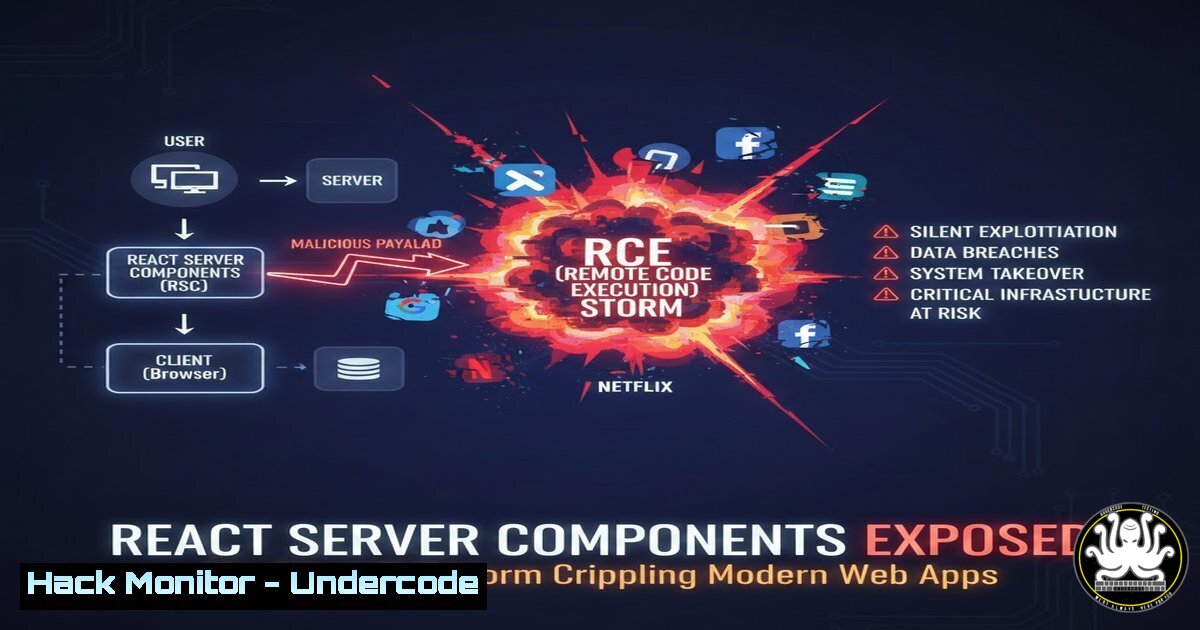
Introduction:
A critical vulnerability, CVE-2025-55182, has shattered the security perimeter of React Server Components (RSC), a foundational architecture for modern React frameworks like Next.js. This flaw enables unauthenticated Remote Code Execution (RCE) through a simple malicious HTTP request, bypassing all authentication and explicitly defined server functions. With nearly 40% of cloud environments potentially harboring vulnerable instances, this is a full-scale incident requiring immediate remediation.
Learning Objectives:
- Understand the mechanism of the RSC vulnerability (CVE-2025-55182) and its ecosystem impact.
- Learn to identify, scan for, and patch vulnerable React and Next.js deployments.
- Implement hardening measures and monitoring to defend against exploitation attempts.
You Should Know:
- The Anatomy of the Exploit: How RSC Becomes a Shell
The core vulnerability lies in the deserialization mechanism of React Server Components. Attackers can craft a specific HTTP POST request to an RSC endpoint (commonly `/_next/` or/RSC/) containing a malicious payload. This payload tricks the server into deserializing and executing arbitrary JavaScript code on the Node.js server, leading to full system compromise.
Step-by-step guide explaining what this does and how to use it.
Conceptual Proof-of-Concept: While public exploits are unverified, the theoretical attack vector is clear.
1. Target Identification: An attacker scans for exposed Next.js applications (common on ports 3000, 3001) using tools like Shodan (http.html:"_next/static") or Nuclei.
2. Crafting the Payload: The exploit involves sending a serialized RSC response that, when processed, escapes the React component context and executes Node.js code (e.g., global.process.mainModule.require('child_process').exec('cat /etc/passwd')).
3. Delivery: The payload is sent via a `POST` request to the RSC endpoint. No authentication or prior session is required.
Linux/Monitoring Command: To detect exploitation attempts, monitor your Node.js application logs for unusual POST requests to RSC endpoints:
`sudo tail -f /var/log/next-app.log | grep -E “POST /(_next|RSC). 500″`
2. Immediate Detection: Are You Running a Vulnerable Version?
Your first action is inventory. The vulnerability affects React versions 19.0.0 through 19.2.0 and specific Next.js versions (App Router). Parallel vulnerability CVE-2025-66478 affects Next.js.
Step-by-step guide explaining what this does and how to use it.
1. Check Local Dependencies: Navigate to your project root and examine your `package.json` file.
`cat package.json | grep -A2 -B2 ‘”react”‘`
`cat package.json | grep -A2 -B2 ‘”next”‘`
- Use NPM Audit (Post-Patch): After patching is available, run:
`npm audit –production`
- Container & Cloud Inventory: Use SBOM tools or directly query package versions in running containers.
`docker exec npm list react next`
- Network Scanning (Defensive): Use the official VULN check script from the React team (when released) or craft a safe detection request using `curl` to check server headers.
`curl -I https://your-app.com | grep -i “nextjs\|x-powered-by”`
3. The Critical Patch: Updating React and Next.js
Patching is non-negotiable. The fixes in React 19.2.1 and the listed Next.js versions properly sanitize the RSC deserialization process.
Step-by-step guide explaining what this does and how to use it.
1. Update React: In your project directory, run the appropriate command.
Using NPM: `npm update [email protected] [email protected]`
Using Yarn: `yarn upgrade [email protected] [email protected]`
- Update Next.js: Update to the patched minor version corresponding to your major release.
`npm update next@^15.0.5` Example for v15.0.x line
- Verify Installation: Force a clean install and rebuild to ensure no cached dependencies.
`rm -rf node_modules package-lock.json`
`npm install`
`npm run build` For Next.js
- Redeploy: Rebuild and redeploy all containers and serverless functions. Clear any global or server-side caches.
-
Cloud & WAF Hardening: Building a Defensive Perimeter
Patching alone is insufficient. Implement layers of defense to block attack patterns and limit blast radius.
Step-by-step guide explaining what this does and how to use it.
1. Web Application Firewall (WAF) Rules: Configure rules to block malicious patterns targeting RSC endpoints.
Example AWS WAF String Match Rule: Block request body patterns containing `”rootModule”` or `”mainModule.require”` for URIs matching `/_next/` or /RSC.
2. Network Segmentation: Ensure your Next.js server is not directly internet-facing. Place it behind a reverse proxy (Nginx, Apache).
Sample Nginx Location Block to Rate-Limit RSC Endpoints:
location ~ ^/(_next|RSC) {
limit_req zone=api burst=10 nodelay;
proxy_pass http://localhost:3000;
proxy_set_header Host $host;
}
3. Principle of Least Privilege: Run your Node.js process with a non-root user.
`sudo setcap cap_net_bind_service=+ep /path/to/node && useradd -r nextuser && sudo -u nextuser npm start`
5. Incident Response & Forensic Logging
Assume compromise. Check logs for IOCs and prepare your response playbook.
Step-by-step guide explaining what this does and how to use it.
1. Enable Verbose Logging: Ensure your Node.js/Next.js app logs all HTTP request details and uncaught exceptions.
`NODE_OPTIONS=’–unhandled-rejections=strict’ npm start 2>&1 | tee -a app.log`
- Search for Indicators: Grep logs for known exploit patterns or unusual child process spawns.
`grep -r “mainModule.require\|child_process\|spawn\|exec” /var/log/next-app/`
`journalctl -u nextjs-service –since “2025-11-29” | grep -i “error\|exception”`
3. File Integrity Monitoring: Use tools like AIDE or Tripwire to monitor critical directories (/pages, /app, node_modules) for unauthorized changes post-exploit.
`aide –check`
6. The Ecosystem Threat: Beyond Next.js
The vulnerability stems from `react-server` packages, affecting the entire ecosystem: RedwoodJS, Waku, Expo Router, and custom RSC implementations with Vite or Parcel.
Step-by-step guide explaining what this does and how to use it.
1. Framework-Specific Patches: Identify your meta-framework and apply its specific update.
RedwoodJS: Update to version containing React 19.2.1+.
Expo Router: Update all `expo` and `react-native` packages.
2. Custom RSC Implementations: If you use `react-server` Webpack/Vite plugins, update them and audit your custom deserialization logic.
3. SBOM Generation: Create a Software Bill of Materials for all applications to track transitive dependencies.
`npm list –all –json > sbom.json`
What Undercode Say:
- Patch Immediately, Validate Continuously. This is not a vulnerability you can risk “patching next sprint.” The unauthenticated nature makes every vulnerable instance a prime target for automated botnets. Patching must be followed by aggressive validation that the fix is live and effective.
- The Shared Responsibility Model is Cracked. Cloud providers won’t save you here. The vulnerability resides in the application layer. The staggering statistic that 44% of Next.js instances are publicly exposed—regardless of version—highlights a critical failure in baseline security posture: unnecessary exposure of development frameworks to the public internet.
Prediction:
CVE-2025-55182 represents a paradigm shift for the security of meta-frameworks. We will see a rapid weaponization of this flaw, leading to widespread cryptojacking and data breach campaigns targeting poorly maintained development and staging environments first. This event will accelerate the adoption of stricter default security postures in frameworks, likely moving towards isolated “RSC runtimes” with no Node.js access, and will force DevOps teams to implement stricter egress filtering and runtime protection for Node.js applications as a standard. The industry’s reliance on client-side secrets and API keys within Server Components will be scrutinized, leading to a push for more robust secrets management solutions integrated at the framework level.
🎯Let’s Practice For Free:
IT/Security Reporter URL:
Reported By: Kondah Cve – Hackers Feeds
Extra Hub: Undercode MoN
Basic Verification: Pass ✅


