Listen to this Post
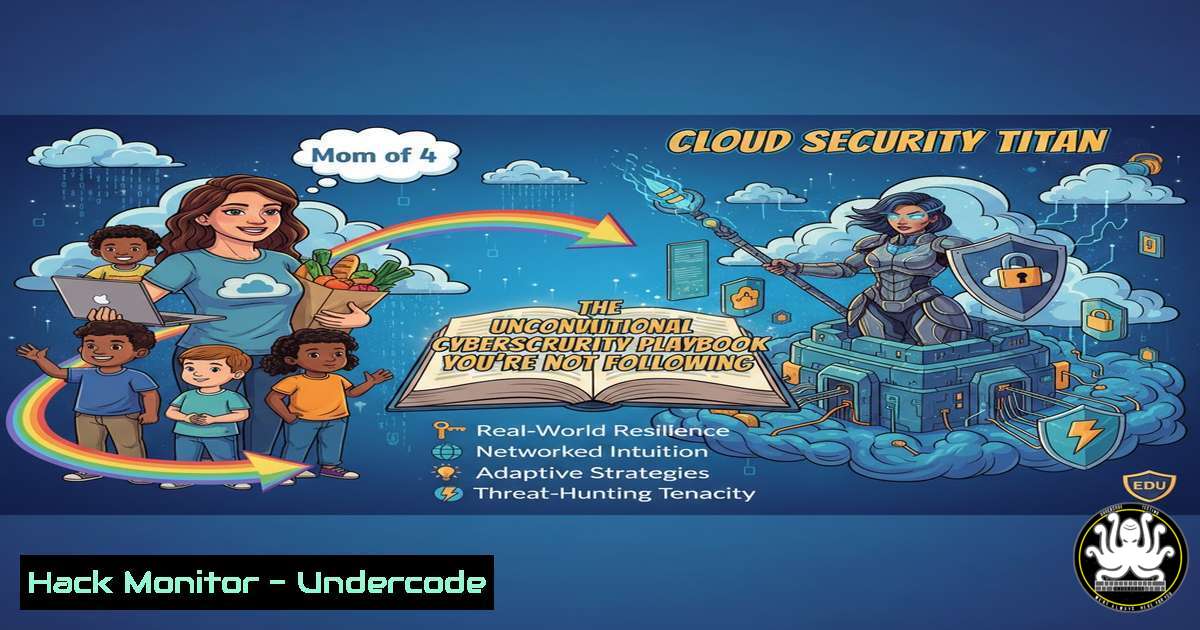
Introduction:
The cybersecurity industry often portrays a narrow path to success, but the real-world journey is forged by diverse experiences and relentless resilience. By examining the trajectory of professionals like Zinet Kemal, a senior cloud security engineer and author, we uncover a potent blend of technical mastery, community building, and strategic personal branding that defines modern career advancement in infosec. This article deconstructs the actionable technical and strategic steps behind such success, moving beyond inspiration to provide a concrete blueprint.
Learning Objectives:
- Understand the core cloud security certifications and tools essential for a senior engineering role.
- Learn how to build a public-facing technical brand that accelerates career opportunities.
- Develop a strategy for contributing to cybersecurity community education and awareness.
You Should Know:
- Building the Technical Foundation: Cloud Security Certifications & Commands
The extended version of Zinet’s credentials (CISA, CCSK, AIGP, GCLD, 4x AWS) points to a structured learning path spanning audit, cloud security controls, governance, and specific platform expertise. This isn’t just collecting badges; it’s building a layered understanding of security from policy to platform.
Step‑by‑step guide explaining what this does and how to use it:
1. Start with Governance (CISA): Focuses on auditing, assurance, and control. While not command-heavy, it’s about understanding frameworks. Use tools like `linpeas` or `winpeas` on a test system to audit for misconfigurations, thinking like an auditor.
 Example: Download and run a common Linux privilege escalation audit script
wget https://github.com/carlospolop/PEASS-ng/releases/latest/download/linpeas.sh
chmod +x linpeas.sh
./linpeas.sh
This teaches you what an attacker or auditor looks for—missing patches, weak file permissions, exposed credentials.
- Master Cloud Conceptual Security (CCSK): This certificate covers the Cloud Security Alliance matrix. Practice applying it by reviewing AWS IAM policies. Use the AWS CLI to analyze policies:
Use AWS CLI to get a user's effective permissions (requires proper IAM permissions)
aws iam simulate-principal-policy --policy-source-arn arn:aws:iam::123456789012:user/TestUser --action-names "s3:GetObject" "ec2:RunInstances"
-
Specialize in a Cloud Platform (AWS): For AWS Security Specialty, hands-on practice is key. Harden an S3 bucket:
Force encryption on an S3 bucket and block public access
aws s3api put-bucket-encryption --bucket my-bucket --server-side-encryption-configuration '{"Rules": [{"ApplyServerSideEncryptionByDefault": {"SSEAlgorithm": "AES256"}}]}'
aws s3api put-public-access-block --bucket my-bucket --public-access-block-configuration "BlockPublicAcls=true,IgnorePublicAcls=true,BlockPublicPolicy=true,RestrictPublicBuckets=true"
2. Establishing Authority: Creating Technical Content & Courses
Zinet’s books and courses translate complex knowledge into accessible formats. This establishes authority and fulfills a critical industry need: effective communication of security concepts.
Step‑by‑step guide explaining what this does and how to use it:
1. Identify a Gap: She wrote “Oh, No …Hacked Again!”—likely addressing cyber hygiene. Create a tutorial on a specific vulnerability. For example, demonstrate a simple cross-site scripting (XSS) flaw and mitigation.
2. Build a Lab: Set up a vulnerable VM (like OWASP WebGoat or a Dockerized flawed app).
3. Document the Exploit & Fix:
Vulnerable Code (Node.js/Express Example):
// UNSAFE: Rendering user input directly
app.get('/unsafe', (req, res) => {
res.send('Hello, ' + req.query.name + '</p>');
});
Exploit: The URL `https://vulnerable.site/unsafe?name=` would trigger an alert.
Mitigation (Using Output Encoding):
// SAFE: Using a template engine that auto-escapes (like EJS)

Hello, <%= userName %>
// Or, using a dedicated library like `helmet` for security headers
const helmet = require('helmet');
app.use(helmet());
3. Community Defense: Extending Awareness to Vulnerable Groups
The comment from Maryam Shuaibu Aliyu about teaching cybersecurity in schools highlights a critical mission: expanding security literacy beyond professionals to protect the most vulnerable.
Step‑by‑step guide explaining what this does and how to use it:
1. Curriculum Design for Non-Technical Audiences: Focus on practical, scenario-based learning.
2. Demo: Phishing Awareness. Use a safe, controlled environment to show how easy it is to clone a login page.
Tool: Simple PHP script or Python’s `http.server` to host a fake login page.
Lesson: Show how to inspect the browser’s address bar and SSL certificate (the padlock icon).
Command to check website SSL from terminal (for older students):
openssl s_client -connect www.realbank.com:443 | openssl x509 -noout -subject -issuer -dates
3. Implement Technical Protections: Teach the use of password managers and Multi-Factor Authentication (MFA). For seniors, guide them through enabling MFA on their email accounts step-by-step with screenshots.
- Securing the Development Pipeline: A Core Cloud Security Skill
As a Cloud Security Engineer, integrating security into CI/CD pipelines is a key responsibility. This is where code meets cloud configuration.
Step‑by‑step guide explaining what this does and how to use it:
1. Infrastructure as Code (IaC) Security: Use a tool like `checkov` or `tfsec` to scan Terraform files for misconfigurations before deployment.
 Install and run checkov on a Terraform directory
pip install checkov
checkov -d /path/to/terraform/code
 Sample output highlights a security finding, like an open security group.
2. Integrate Scanning into Git: Use pre-commit hooks to run security scans automatically.
 Example .pre-commit-config.yaml hook for Terraform scanning
repos:
- repo: https://github.com/antonbabenko/pre-commit-terraform
rev: v1.77.1
hooks:
- id: terraform_fmt
- id: terraform_tflint
- From Engineer to Advocate: The Public Speaking & “Bigger Stages” Strategy
Technical expertise alone has a ceiling. Public speaking (TEDx) and advocacy, as Zinet highlights, amplify impact and open doors to “bigger projects.”
Step‑by‑step guide explaining what this does and how to use it:
1. Find Your Narrative: Connect a technical topic to a broader human story (e.g., “How a Simple S3 Misconfiguration Could Leak Your Medical Records”).
2. Build a Technical Demo for the Stage: Use visually compelling tools.
Tool: `Wireshark` to show unencrypted traffic vs. encrypted (HTTPS) traffic in real-time.
Command-line alternative for a demo: Use `tcpdump` to capture packets and highlight sensitive data.
sudo tcpdump -i eth0 -A 'port 80' | grep -i "password|cookie"
3. Practice and Record: Use tools like OBS Studio to record your technical talks and share them online, building your portfolio.
What Undercode Say:
- Key Takeaway 1: The modern security leader is a hybrid: deep technical proficiency must be coupled with the ability to educate, advocate, and build community. Certifications are the foundation, but impact is built through content, courses, and public engagement.
- Key Takeaway 2: True security extends beyond corporate networks. The most meaningful work often involves “planting seeds” by educating children and seniors, thereby strengthening the ecosystem’s human layer. This systems-level thinking is what creates lasting legacy and industry change.
The analysis here reveals a strategic model: technical depth (cloud/audit skills) creates credibility, which is then leveraged through communication (books/speaking) to influence a wider audience. This creates a positive feedback loop—community recognition leads to bigger opportunities (bigger stages, projects), which in turn demands deeper technical learning. It challenges the stereotypical “hidden expert” archetype in cybersecurity, proving that public, educational engagement is not a distraction but a powerful career accelerator and risk mitigator for society.
Prediction:
The future of cybersecurity expertise will increasingly favor and reward the “translator” professional—those who can bridge the gap between hyper-complex technical landscapes and the boardroom, the classroom, and the living room. As AI accelerates the pace of both attacks and defense tooling, the human elements of ethics, communication, and accessible education will become the highest-value differentiators. Professionals who follow this hybrid model will not only secure faster career growth but will also dictate the public and policy narratives around technology safety for the next generation. The “seeds” of community-focused education planted now will bloom into a more resilient digital culture, fundamentally altering the attack surface by empowering end-users.
🎯Let’s Practice For Free:
IT/Security Reporter URL:
Reported By: Zinetkemal December – Hackers Feeds
Extra Hub: Undercode MoN
Basic Verification: Pass ✅


