Listen to this Post
Introduction:
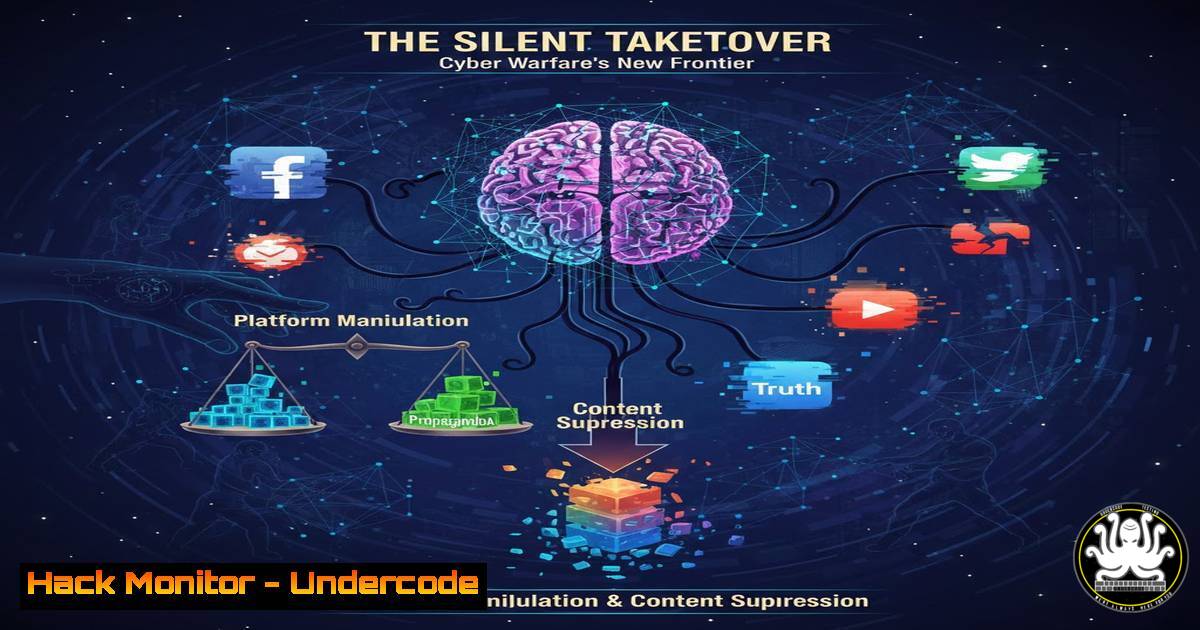
The digital landscape is no longer just a battleground for malware and data breaches; it’s an arena for algorithmic manipulation and narrative control. Recent observations from industry experts hint at a more insidious threat: the deliberate suppression of content and views on major professional platforms like LinkedIn. This isn’t merely an annoyance—it’s a cybersecurity issue masquerading as a platform policy, potentially enabling threat actors to control discourse, manipulate markets, and silence whistleblowers under the guise of algorithmic curation.
Learning Objectives:
- Understand the technical mechanisms behind content suppression and algorithmic bias on social platforms.
- Learn to identify digital fingerprints of automated botnets used for mass reporting and engagement manipulation.
- Acquire defensive skills to audit your own digital presence and mitigate risks of shadow-banning or targeted suppression.
You Should Know:
- The Anatomy of a Suppression Botnet: It’s Not Just Bots, It’s an Army
Platform suppression often leverages coordinated networks of fake or compromised accounts. These botnets can artificially flag content as “spam” or “inappropriate,” triggering automated platform filters that limit reach without human review.
Step‑by‑step guide explaining what this does and how to use it.
Step 1: Reconnaissance with OSINT Tools. Use a tool like `Sherlock` (Linux/macOS) to find target usernames across platforms and assess their footprint.
 Install and use Sherlock to map associated accounts
git clone https://github.com/sherlock-project/sherlock.git
cd sherlock
python3 -m pip install -r requirements.txt
python3 sherlock.py "username_of_interest"
Step 2: Analyze Network Traffic for Coordination. Suspicious clusters of accounts often exhibit similar behavior patterns. Using Wireshark or tcpdump, filter for API calls to the platform’s reporting or reaction endpoints, looking for synchronized timing from diverse IPs that resolve to the same hosting provider (e.g., AWS, DigitalOcean).
 Basic tcpdump filter for HTTP POST requests (common for report actions)
sudo tcpdump -i eth0 -A 'tcp port 443 and (((ip[2:2] - ((ip[bash]&0xf)<<2)) - ((tcp[bash]&0xf0)>>2)) != 0)' | grep -E "(POST|/report|/violation)"
Step 3: Counter-Monitoring with Custom Scripts. Create a Python script using the `requests` and `BeautifulSoup` libraries to monitor the visibility of your own posts. Track metrics like view count delta over time, comparing logged-in vs. logged-out (incognito) access to detect shadow-banning.
- API Exploitation: How Bad Actors Programmatically Silence You
Platform APIs, intended for legitimate integration, can be reverse-engineered and abused to automate suppression actions. Attackers script these actions to mimic human behavior at scale.
Step‑by‑step guide explaining what this does and how to use it.
Step 1: Intercepting API Calls. Use Burp Suite or browser Developer Tools (F12 > Network tab) while performing a manual “report” or “hide” action on a post. Identify the exact endpoint, headers (especially authorization tokens like `JSESSIONID` or li_at), and JSON payload.
Step 2: Crafting the Malicious Payload. The payload will often contain the post URN and a reason code.
 EXAMPLE FOR EDUCATIONAL PURPOSES ONLY - ILLUSTRATES API STRUCTURE
import requests

report_api_url = "https://www.linkedin.com/voyager/api/graphql"  Example endpoint
headers = {
"User-Agent": "Mozilla/5.0",
"Csrf-Token": "extracted_token",
"Cookie": "JSESSIONID=ajax:123456789",
"Content-Type": "application/json"
}
payload = {
"operationName": "FlagContent",
"variables": {
"urn": "urn:li:activity:123456789",
"flagType": "SPAM"
},
"query": "mutation FlagContent($urn: String!, $flagType: String!) { flagContent(urn: $urn, flagType: $flagType) { success } }"
}
 response = requests.post(report_api_url, headers=headers, json=payload)
Step 3: Scaling with Proxies and Session Rotation. To avoid IP-based rate limiting, attackers use rotating proxy services. A tool like `curl` can be used with proxy lists.
while read proxy; do
curl -x $proxy -H "Authorization: Bearer $TOKEN" [bash]
done < proxies.txt
- Digital Hygiene: Securing Your Professional Footprint from Algorithmic Attacks
Your defense begins with hardening your account and understanding the digital breadcrumbs you leave.
Step‑by‑step guide explaining what this does and how to use it.
Step 1: Audit Account Permissions and Sessions. Regularly review active sessions and authorized applications. On LinkedIn: Settings & Privacy > Sign-in & security > Where you’re signed in. Revoke unfamiliar sessions or apps.
Step 2: Harden Privacy and Visibility Settings. Limit data scraping by making your profile less visible to bots. Set “Profile Viewing Options” to private mode. Restrict data visibility in “Data privacy and advertising” settings.
Step 3: Implement Monitoring. Use Google Alerts for your name and key professional terms. Set up a script to archive your important posts locally, creating a canonical record.
 Use wget to mirror your public profile page periodically
wget --mirror --convert-links --adjust-extension --page-requisites --no-parent https://www.linkedin.com/in/yourprofile/
- Cloud Infrastructure Misuse: The Hosting Behind the Manipulation
Botnet command-and-control (C2) servers and scraping tools are often hosted on scalable cloud infrastructure using stolen or fraudulently obtained credits.
Step‑by‑step guide explaining what this does and how to use it.
Step 1: Identifying Malicious Infrastructure. Use threat intelligence platforms like `AbuseIPDB` or `VirusTotal` to check IP addresses associated with suspicious activity. Look for IPs that have been reported for “spam” or “brute-force attacks.”
 Query AbuseIPDB via CLI (requires API key)
curl -G https://api.abuseipdb.com/api/v2/check \
--data-urlencode "ipAddress=192.0.2.1" \
-H "Key: $YOUR_API_KEY" \
-H "Accept: application/json"
Step 2: Hardening Your Own Cloud Workloads. If you host content, ensure you have WAF (Web Application Firewall) rules to block malicious user agents and rate-limit API calls. An example AWS WAF rule in CloudFormation YAML would block high-frequency POST requests to login or report endpoints.
- The Defender’s Toolkit: Practical Countermeasures and Forensic Analysis
Fight technical manipulation with technical vigilance.
Step‑by‑step guide explaining what this does and how to use it.
Step 1: Deploy a Personal Canary. Create a neutral “canary” post with a unique phrase. Use a distributed monitoring tool (like a simple script on multiple cloud functions) to check its visibility from different global regions and accounts. A sudden drop in visibility is an alert.
Step 2: Log Everything. Maintain server logs if you link to personal content. Analyze traffic for patterns.
 Use awk to quickly analyze nginx/apache logs for a specific linked post URL
awk '/GET \/your-linked-article\/ / {print $1}' /var/log/nginx/access.log | sort | uniq -c | sort -nr
Step 3: Engage with Platform Security. Report suspicious activity not just through standard channels, but by leveraging LinkedIn’s Bug Bounty program or trusted reporter portals for security issues, providing them with forensic data (IPs, payloads, timestamps) rather than just complaints.
What Undercode Say:
- The Weaponization of Trust: The core threat is the weaponization of platform trust systems. “Report” functions and algorithmic curators, designed for community safety, are being reverse-engineered and scaled into attack vectors. This turns the platform’s own infrastructure against its users.
- The Opacity Defense: Platforms are notoriously opaque about their algorithms and moderation actions. This lack of transparency is a critical vulnerability in itself, as it prevents independent auditing and allows malicious activity to be disguised as routine content moderation. Security through obscurity is failing.
Analysis: This shift represents a maturation of cyber threats—from targeting data and systems to targeting influence and perception. For professionals in cybersecurity, fintech, and compliance, this is a direct threat to reputation and operational integrity. The techniques involved—API abuse, cloud botnets, and algorithmic poisoning—are hybrid skills, merging traditional hacking with psychological operations. Defending against it requires a new playbook that includes digital rights management, forensic logging of one’s own content, and active engagement with platform security teams on a technical level. The “suppression” discussed is potentially a mass-scale, automated form of a Denial-of-Service (DoS) attack, but targeted at narrative and reputation instead of servers.
Prediction:
In the next 2-3 years, we will see the rise of “Perception Security” as a formal subset of cybersecurity. Automated monitoring services for personal and corporate digital narrative integrity will emerge, akin to brand monitoring but with deeper technical forensics. Threat actors will increasingly use these suppression tactics for stock market manipulation (silencing negative analysis), competitive sabotage, and geopolitical influence. Platform companies will be forced to respond by developing more transparent, cryptographically verifiable audit trails for content moderation actions, potentially leveraging blockchain-style immutable logs to prove the integrity of their algorithmic decisions. The regulatory environment will catch up, with laws potentially mandating “explainability” for algorithmic suppression, similar to GDPR’s right to explanation.
🎯Let’s Practice For Free:
IT/Security Reporter URL:
Reported By: Andy Jenkinson – Hackers Feeds
Extra Hub: Undercode MoN
Basic Verification: Pass ✅


