
Listen to this Post
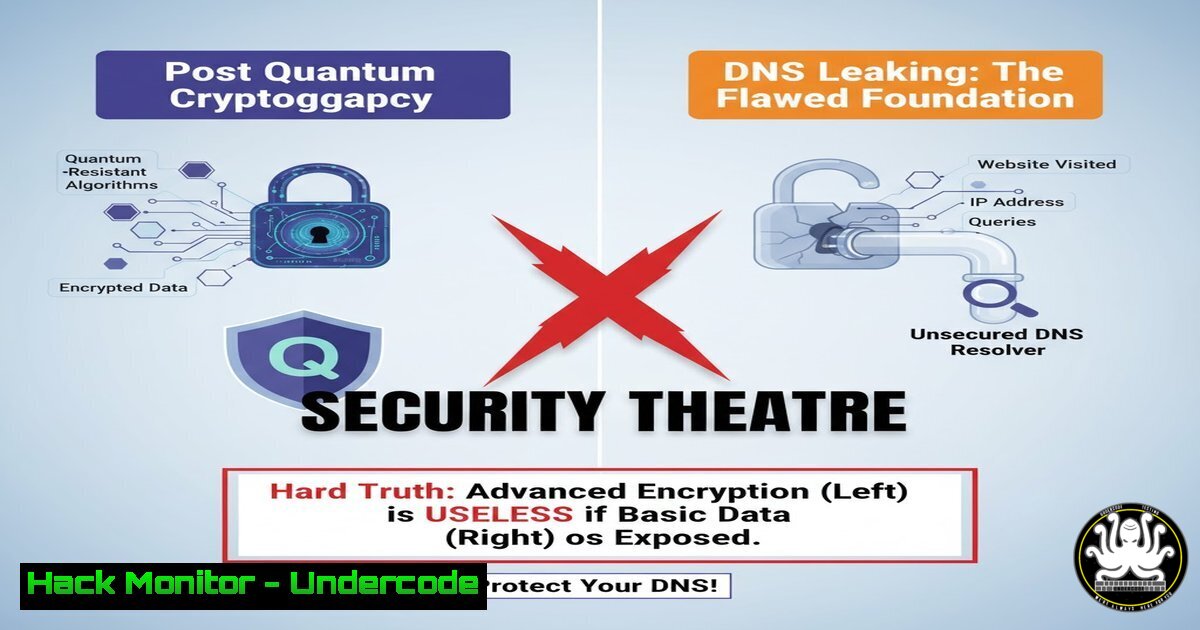
Introduction:
As the cybersecurity world braces for the quantum leap, a dangerous illusion is taking hold: that upgrading to Post-Quantum Cryptography (PQC) will automatically secure our digital future. However, as experts like Andy Jenkinson highlight, focusing solely on cryptographic algorithms while ignoring the crumbling infrastructure beneath them is the definition of “Security Theatre.” In a hybrid computing era where classical and quantum systems will coexist for decades, the real vulnerabilities lie in operational mismanagement, exposed DNS layers, and poorly configured CDNs—turning our strongest encryption into a digital facade.
Learning Objectives:
- Understand why PQC migration is ineffective without concurrent infrastructure hardening.
- Identify the critical weak points (DNS, CDN, certificate management) in data-in-flight architecture.
- Learn to audit and secure cryptographic assets using command-line tools and configuration best practices.
You Should Know:
- The DNS Layer: The Achilles’ Heel of Post-Quantum Security
The original post stresses that “critical layers such as DNS, content delivery networks (CDNs), and the broader ‘data-in-flight’ architecture remain frequent points of exposure.” Even if your TLS certificates are quantum-resistant, if an attacker can hijack your DNS, they can redirect users to a malicious server before the quantum-safe handshake even begins.
Step‑by‑step guide: Auditing DNS Security
To understand your exposure, you must audit your DNS configuration for weaknesses like missing DNSSEC or open resolvers.
Linux/macOS (using dig and delv):
- Check for DNSSEC validation: Use `delv` to see if a domain has proper signatures.
delv undercode.org +multiline
Look for the `ad` (authentic data) flag in the response. If missing, the domain is vulnerable to spoofing.
- Check for open resolvers (which can be used in amplification attacks):
dig google.com @your-nameserver +short
If this returns a result from an external IP, your resolver is open and should be restricted.
Windows (using nslookup and PowerShell):
1. Verify DNS records:
nslookup -type=MX undercode.org
2. Check for DNSSEC (requires PowerShell cmdlets):
Resolve-DnsName -Name undercode.org -Type A -DnssecOk
If the output does not include VALIDATION RESULT: Success, DNSSEC is not enforced.
2. Certificate Mismanagement: The Expired Key Catastrophe
Jenkinson references “mismanaged certificates, expired keys, poor inventory of cryptographic assets” as modern parallels to Enigma’s procedural failures. Automated certificate lifecycle management is no longer optional.
Step‑by‑step guide: Inventory and Validate Certificates
You must know every certificate in your environment before you can secure them.
Linux (using openssl and sslyze):
1. Check certificate expiry for a live server:
echo | openssl s_client -connect undercode.org:443 -servername undercode.org 2>/dev/null | openssl x509 -noout -dates
This returns `notBefore=` and `notAfter=` dates.
- For a full security audit, install and run
sslyze:sslyze --regular undercode.org
This checks for certificate issues, weak cipher suites, and protocol support.
Windows (PowerShell):
1. Check certificate expiry remotely:
$uri = [System.Uri]"https://undercode.org"
$req = [Net.HttpWebRequest]::Create($uri)
$req.GetResponse() | Out-Null
$cert = $req.ServicePoint.Certificate
$cert.GetExpirationDateString()
2. Use the `Posh-ACME` module to automate certificate renewals (ACME protocol for Let’s Encrypt).
3. Hardening Data-in-Flight: Beyond the Cipher Suite
Upgrading to PQC means nothing if your TLS configuration allows downgrade attacks or uses weak ephemeral keys. The post emphasizes that “stronger cryptography alone will not protect systems” if the operational implementation is flawed.
Step‑by‑step guide: Hardening TLS on a Web Server (Nginx/Apache)
1. Nginx Configuration:
Ensure you are prioritizing quantum-safe or hybrid ciphers (where available) and disabling legacy protocols.
server {
listen 443 ssl http2;
ssl_protocols TLSv1.3 TLSv1.2;  Disable TLSv1.1 and below
ssl_ciphers 'ECDHE-ECDSA-AES256-GCM-SHA384:ECDHE-RSA-AES256-GCM-SHA384';
ssl_prefer_server_ciphers on;
ssl_ecdh_curve X25519:prime256v1:secp384r1;
ssl_session_tickets off;
}
2. Apache Configuration:
<VirtualHost :443>
SSLEngine on
SSLProtocol –all +TLSv1.2 +TLSv1.3
SSLCipherSuite HIGH:!aNULL:!MD5
SSLCompression off
SSLSessionTickets off
</VirtualHost>
4. Operational Governance: The Enigma Lesson
The post draws a powerful parallel with Enigma: “frequently rotated keys yet was ultimately compromised through a combination of mathematical insight and procedural weaknesses.” In modern terms, this translates to poor secrets management and lack of visibility.
Step‑by‑step guide: Implementing Secrets Management with HashiCorp Vault
To prevent hardcoded keys and poor rotation policies:
1. Install Vault and enable the KV store.
2. Store a TLS private key securely:
vault kv put secret/tls/undercode [email protected] [email protected]
3. Set up automatic rotation policies using Vault’s PKI secrets engine:
vault write pki/issue/internal-dot-com common_name=undercode.org ttl=24h
This issues a short-lived certificate, forcing frequent rotation and reducing the impact of key compromise.
5. Threat Modeling the Hybrid Cloud
As we move into hybrid computing environments, misconfigurations in cloud CDNs (like AWS CloudFront or Azure Front Door) can expose back-end origins, bypassing any quantum-safe encryption at the edge.
Step‑by‑step guide: Securing AWS CloudFront Origins
- Restrict access to your origin (S3 or custom) to only CloudFront.
2. Use Origin Access Control (OAC) for S3:
- Create an OAC in CloudFront.
- Update the S3 bucket policy to only allow access from that OAC.
- Ensure Viewer Protocol Policy is set to Redirect HTTP to HTTPS or HTTPS Only.
- Enable AWS WAF on the distribution to block Layer 7 attacks that target the control plane.
What Undercode Say:
- Key Takeaway 1: Cryptography is a tool, not a strategy. The shift to PQC must be accompanied by a holistic overhaul of certificate lifecycle management, DNS hygiene, and infrastructure configuration. Without it, we are simply building a stronger lock on a rotting door.
- Key Takeaway 2: Operational failure is the new cryptanalysis. Just as the Allies exploited Enigma’s procedural flaws, future adversaries will target the gaps in your implementation—expired certificates, misconfigured CDNs, and weak access controls—rather than breaking the quantum-safe math itself.
- Key Takeaway 3: The “Theatre” of security benefits the watchers. If governments and intelligence agencies prioritize surveillance over privacy, the infrastructure will be designed with backdoors or weaknesses, rendering any technological advancement moot. The fight for privacy is as much political as it is technical.
Prediction:
Over the next five years, we will witness a wave of high-profile breaches that occur not because the quantum-safe algorithms were broken, but because organizations failed to secure the supporting infrastructure. The market will shift focus from “quantum-safe algorithms” to “quantum-safe operations,” leading to the rise of automated governance platforms that manage DNS, certificates, and CDN configurations as a unified security fabric. Those who treat PQC as a simple software update will be the cautionary tales of the 2030s.
▶️ Related Video (76% Match):
🎯Let’s Practice For Free:
IT/Security Reporter URL:
Reported By: Andy Jenkinson – Hackers Feeds
Extra Hub: Undercode MoN
Basic Verification: Pass ✅


