Listen to this Post
Introduction:
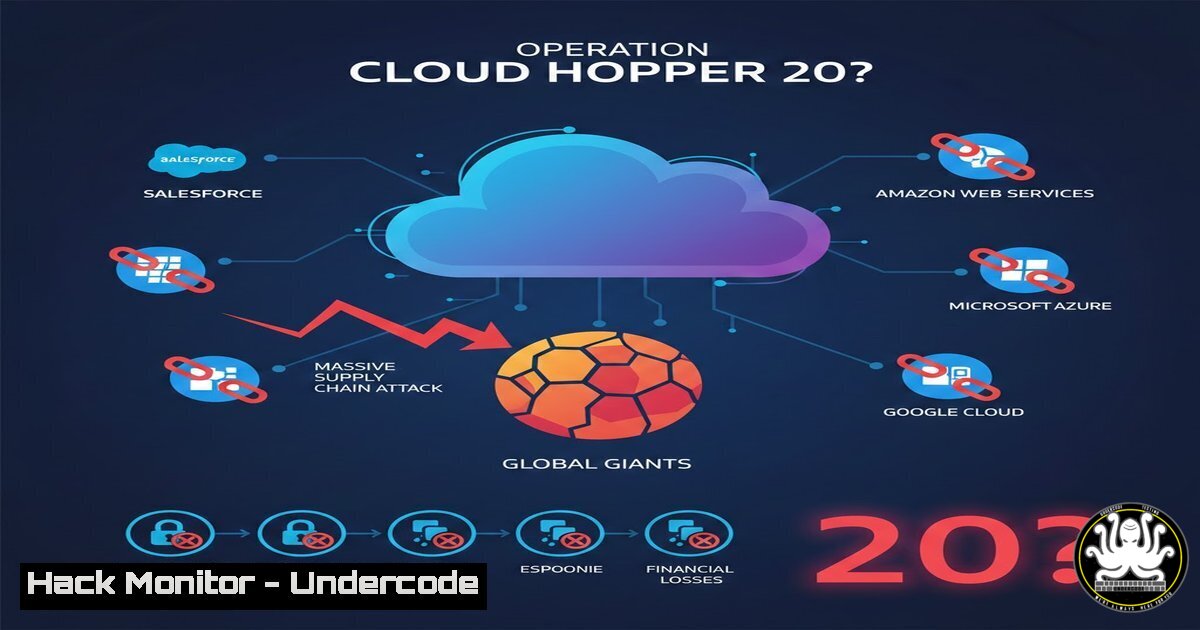
A sophisticated supply chain attack, allegedly exploiting a Salesforce platform vulnerability, has reportedly compromised a staggering list of global corporations and government agencies. This incident underscores the catastrophic ripple effect that a single point of failure in a ubiquitous SaaS provider can have, turning trusted business platforms into potent weapons for large-scale data exfiltration and espionage. The alleged leak of information from sensitive government databases like France’s TAJ (Treatment of Criminal Records) adds a layer of severe complexity, suggesting either unprecedented breach depth or a sophisticated disinformation campaign.
Learning Objectives:
- Understand the mechanics and devastating impact of SaaS-based supply chain attacks.
- Learn immediate steps to investigate potential exposure from a compromised third-party vendor.
- Implement hardening measures for cloud environments and third-party integrations.
You Should Know:
- OSINT Verification: Triangulating Breach Claims from the Dark Web
The first step in responding to such reports is verification. Security teams must scour underground forums and paste sites without directly engaging. Using OSINT (Open-Source Intelligence) tools safely from an isolated environment is crucial.
Step‑by‑step guide explaining what this does and how to use it.
Isolate Your Research Environment: Use a virtual machine or a dedicated, disposable OS (like Tails) for research.
Monitor Data Breach Repositories: Use command-line tools to search for your company’s domains or known internal email patterns across leaked datasets. Tools like `holehe` can check for account existence across various platforms, but for bulk data, `grep` is your friend.
 Example: Searching a downloaded (and safely quarantined) suspected leak file for your domain
grep -i "@yourcompany.com" suspected_leak_data.txt | head -20
 Using holehe to check for account registration (single email check)
holehe [email protected]
Leverage Threat Intelligence Platforms: Automate this with APIs from platforms like HaveIBeenPwned, DeHashed, or Intelligence X. Script a daily check for your corporate domain.
 Python example using Requests to check HaveIBeenPwned's API for your domain (truncated)
import requests
import hashlib

domain = "yourcompany.com"
url = f"https://haveibeenpwned.com/api/v3/breacheddomain/{domain}"
headers = {'hibp-api-key': 'YOUR_API_KEY'}
response = requests.get(url, headers=headers)
if response.status_code == 200:
print(f"Domain found in breaches: {response.json()}")
2. Incident Response: Scoping the Third-Party Vector
If exposure is suspected, you must immediately investigate all integrations with the named vendor (e.g., Salesforce).
Step‑by‑step guide explaining what this does and how to use it.
Inventory All Integrations: List every application, data sync, and API connection between your environment and the potentially compromised vendor. This includes Marketing Cloud, Sales Cloud, custom APIs, and SSO connections.
Audit API Keys and Connected Apps: Immediately audit and be prepared to rotate all OAuth tokens, API keys, and credentials used by the integration. In Salesforce, review “Connected Apps OAuth Usage” and “Session Management.”
Analyze Login & Data Access Logs: For the last 90-180 days, scrutinize logs for anomalous access patterns: logins from unusual geolocations, at strange times, or accessing data silos not typical for the integrating service. In a SIEM, craft alerts for these patterns.
3. Hardening Your Salesforce & Cloud Configuration
Proactive configuration can limit blast radius.
Step‑by‑step guide explaining what this does and how to use it.
Enforce Network-Based Restrictions: Implement Login IP Ranges and use Profile and Permission Set settings to restrict where users and integrations can log in from. Use Salesforce’s “Relax IP Restrictions” only for necessary, highly monitored service accounts.
Apply the Principle of Least Privilege: Critically review profiles and permission sets for all integrated users/service accounts. Does that marketing automation app really need “View All Data” or “Modify All Data”? Almost certainly not. Use “View All” and “Modify All” objects sparingly.
Enable Multi-Factor Authentication (MFA) for ALL Users: This is non-negotiable. Enforce MFA for every single user, including API users via OAuth 2.0 client credentials flow with certificates where possible. Disable any legacy authentication protocols.
- API Security Posture: Locking Down the Data Pipes
The attack vector likely involves abused API access.
Step‑by‑step guide explaining what this does and how to use it.
Implement API Rate Limiting and Monitoring: Set strict rate limits on all API endpoints to hinder mass data exfiltration. Monitor for sudden spikes in API call volume from a single endpoint or IP.
Use Certificates for Server-to-Server Auth: For critical integrations, move from simple OAuth secrets to mutual TLS (mTLS) or JWT bearer flow with certificates. This makes stolen credentials useless.
 Example openssl command to generate a key and CSR for a Salesforce connected app certificate
openssl req -new -newkey rsa:2048 -nodes -keyout server.key -out server.csr
Validate and Sanitize All Incoming Data via APIs: If the compromised service sends data to you, ensure rigorous input validation, schema checks, and sanitization to prevent injection or malware delivery through your API.
5. Supply Chain Cyber Hygiene: Continuous Vendor Assessment
Move from point-in-time checks to continuous assessment.
Step‑by‑step guide explaining what this does and how to use it.
Demand Transparency on Security Practices: Require key vendors like SaaS providers to share their SOC 2 Type II reports, penetration test summaries, and incident response playbooks.
Monitor Vendor Security Posture: Subscribe to your critical vendors’ security advisories. Use tools to monitor their infrastructure for known vulnerabilities (CVEs) that could impact you.
Create a “Break-Glass” Disconnection Plan: Have a documented, tested procedure to quickly sever data connections with a vendor in the event of a breach. This includes disabling SSO, revoking tokens, and blocking IP ranges, balanced against business continuity needs.
What Undercode Say:
- The Veracity Vortex: The inclusion of ultra-sensitive sources like the TAJ makes immediate, clear attribution impossible. This could be a state-level false flag, a hacktivist smokescreen, or an unprecedented breach. The core lesson—that trust in a major SaaS vendor is a monumental risk—stands regardless.
- The New Attack Surface is Your Partner Portal: The era of attacking a company directly is being supplanted by targeting the less-secure, often over-permissioned integrations and service accounts they use with partners. Your security perimeter is now the sum of your vendors’ security postures.
Prediction:
This event, whether fully verified or not, will catalyze a seismic shift in cloud and supply chain security. We predict a rapid move towards zero-trust architectures for B2B integrations, where implicit trust in a vendor’s platform is replaced by continuous, granular verification of every access request, regardless of source. Expect a surge in adoption of Cloud Security Posture Management (CSPM) and SaaS Security Posture Management (SSPM) tools that automate the monitoring of configurations across your own and your vendors’ shared environments. Furthermore, cybersecurity insurance will increasingly mandate stringent third-party risk management programs, making continuous vendor assessment not just a best practice, but a financial necessity. The “shared responsibility model” will be stress-tested in court, defining new liabilities for platform providers in supply chain attacks.
▶️ Related Video (82% Match):
🎯Let’s Practice For Free:
IT/Security Reporter URL:
Reported By: Jmetayer Webarchives – Hackers Feeds
Extra Hub: Undercode MoN
Basic Verification: Pass ✅


