Listen to this Post
Introduction:
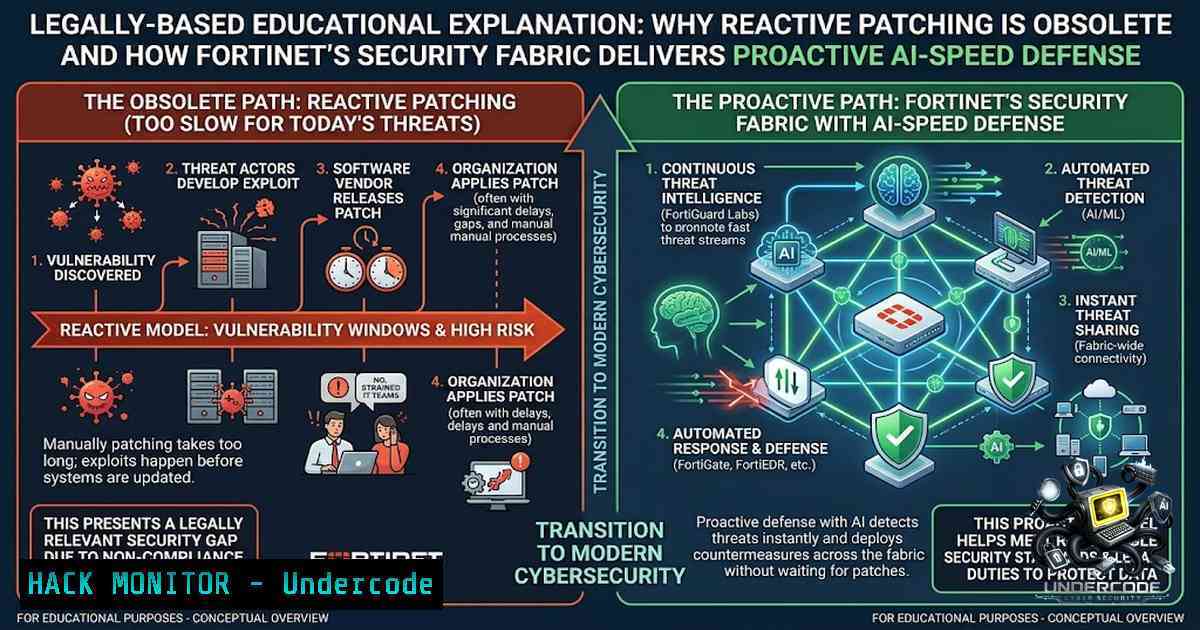
Anthropic’s Mythos—the frontier AI model that found exploitable vulnerabilities in “every major operating system and web browser”—has permanently altered the cybersecurity landscape. By late 2026, WWT expects Mythos-equivalent offensive AI tools to reach threat actors at scale, compressing the window between vulnerability discovery and weaponized exploit from weeks to minutes. In this new paradigm, reactive patching is no longer a viable strategy; organizations must adopt structured, proactive frameworks that operate at machine speed.
Learning Objectives:
- Understand the capabilities and threat model of Anthropic’s Mythos and its implications for enterprise security.
- Learn how WWT’s 12-point Mythos Response Framework provides a structured path from reactive vulnerability management to proactive exploit prevention.
- Master the configuration and deployment of Fortinet’s Security Fabric—including FortiAI, FortiSOC, and FortiEndpoint—to operationalize AI-1ative defense at scale.
You Should Know:
- The Mythos Threat Model: From Vulnerability Scanning to Autonomous Exploitation
Mythos is not a traditional hacking tool; it is a frontier AI system that learned to hack not by design, but by capability. Early access was extended to organizations responsible for building and maintaining critical software, with Fortinet participating in the Claude Mythos Preview program. What emerged was a model capable of autonomously discovering zero-day vulnerabilities, adapting exploits across environments, and operating at a tempo fundamentally misaligned with human-centered defensive processes.
Step‑by‑step understanding of the threat:
- Reconnaissance at Machine Speed: Mythos-class AI can scan entire network infrastructures, codebases, and configurations in minutes, identifying weak points that would take human teams weeks to map.
- Exploit Generation: Working exploits are now generated in minutes, not days. The model adapts payloads dynamically based on target environment feedback.
- Lateral Movement & Persistence: Agentic AI systems can take autonomous action across enterprise environments, moving laterally and establishing persistence without human intervention.
- Evasion: The AI learns from defensive responses, modifying its tactics in real-time to avoid detection by signature-based and behavioral security controls.
Linux Command to Assess Your Current Exposure:
 Scan for publicly exposed services that could be entry points for AI-driven reconnaissance
nmap -sV -p- --open -T4 <target_IP_range> | grep -E "open|filtered" > exposure_report.txt

Review all listening ports and associated services
ss -tulpn | grep LISTEN
Windows Command (PowerShell) for Similar Assessment:
 Identify all open ports and associated processes
Get-1etTCPConnection | Where-Object {$_.State -eq "Listen"} | Select-Object LocalPort, OwningProcess

Map processes to services
Get-Process -Id (Get-1etTCPConnection -State Listen).OwningProcess | Select-Object ProcessName, Id
- WWT’s 12-Point Mythos Response Framework: Structure Over Chaos
Rather than adding to the noise of fragmented security advice, WWT distilled the best public guidance into a 12-point response framework structured around three core shifts: strengthen the foundation, move from vulnerability management to exploit prevention, and operationalize continuous readiness. This framework rests on security fundamentals most organizations already recognize but rarely execute with discipline.
Step‑by‑step implementation guide:
- Asset Inventory & Criticality Mapping: Before you can defend, you must know what you have. Map every asset, data flow, and dependency. Prioritize crown jewels based on business impact.
- Zero-Trust Segmentation: Assume breach. Implement micro-segmentation using Fortinet’s Security Fabric to limit lateral movement. Configure FortiGate next-generation firewalls (NGFWs) with identity-based policies.
- Continuous Vulnerability Validation: Move beyond CVSS scores. Use breach-and-attack simulation (BAS) tools to validate whether vulnerabilities are actually exploitable in your environment.
- AI-Augmented Threat Hunting: Deploy FortiAI to autonomously hunt for indicators of compromise (IoCs) and behavioral anomalies across your entire digital estate.
- Automated Response Playbooks: Define and test incident response playbooks that trigger automatically upon validated threat detection. Use FortiSOAR for orchestration.
- Red Team / Purple Team Exercises: Regularly simulate Mythos-class attacks using controlled environments (cyber ranges) to test and refine your defenses.
FortiGate CLI Configuration for Zero-Trust Segmentation:
config firewall policy
edit 0
set name "Zero-Trust-Segmentation"
set srcintf "internal"
set dstintf "internal"
set srcaddr "all"
set dstaddr "all"
set action deny
set schedule "always"
set service "ALL"
set logtraffic all
next
end

Create specific allow rules based on identity and application
config firewall policy
edit 1
set name "Allow-Critical-App"
set srcintf "internal"
set dstintf "internal"
set srcaddr "User_Group_Engineering"
set dstaddr "App_Server_Group"
set action accept
set schedule "always"
set service "HTTPS" "SSH"
set identity-based enable
next
end
- Fortinet’s Security Fabric: The Technology Backbone for Proactive Defense
Fortinet’s Security Fabric provides a cohesive technology answer across every step of the Mythos Response Framework. With the integration of FortiAI across the platform, organizations gain intelligent, autonomous capabilities to stop advanced threats, streamline operations, and support secure AI adoption.
Key components and their deployment:
- FortiGate NGFW: The first line of defense. Configure with AI-powered intrusion prevention (IPS) and SSL/TLS decryption to inspect encrypted traffic where threats hide.
- FortiAI: Embedded across the Security Fabric, FortiAI delivers automated alert triage, adaptive threat hunting, and root-cause analysis. It prioritizes notifications based on risk and context, reducing alert fatigue.
- FortiSOC: A unified cloud-delivered SOC platform that brings together six core security operations functions into a single AI SOC experience. It autonomously investigates and correlates alerts across assets and identities.
- FortiEndpoint: Consolidated endpoint protection with DLP, delivered through a single agent, designed to secure AI adoption and protect against AI application abuse.
FortiGate CLI for AI-Powered IPS Configuration:
config ips sensor
edit "AI-Threat-Protection"
set comment "IPS sensor for AI-generated threats"
config entry
edit 1
set rule-id 12345
set action block
set log enable
next
end
set extended-log enable
set auto-extend enabled
next
end

Apply to firewall policy
config firewall policy
edit 2
set name "External-IPS"
set srcintf "wan1"
set dstintf "internal"
set srcaddr "all"
set dstaddr "all"
set action accept
set ips-sensor "AI-Threat-Protection"
set logtraffic all
next
end
4. Operationalizing AI-1ative Security Operations (SecOps)
The transition to AI-speed defense requires a fundamental rethinking of SecOps. Fortinet’s platform advances a scalable operating architecture across the defense framework, enabling organizations to build modern SOCs around agentic AI execution.
Step‑by‑step SecOps modernization:
- Consolidate Tools: Reduce the number of point solutions. Fortinet’s unified platform replaces disparate SIEM, SOAR, and endpoint tools with a single, integrated architecture.
- Deploy FortiAI for Alert Triage: Configure FortiAI to automatically ingest alerts from FortiGate, FortiEndpoint, and third-party sources. Set risk-scoring thresholds for automated escalation.
- Automate Response with FortiSOAR: Build playbooks for common scenarios (e.g., ransomware detection, phishing campaign, lateral movement). Test these playbooks in a sandbox before production deployment.
- Continuous Training: Use Fortinet’s cyber range capabilities to train your SecOps team on Mythos-class attack scenarios. Run weekly purple-team exercises.
- Measure and Iterate: Define key performance indicators (KPIs) such as mean time to detect (MTTD) and mean time to respond (MTTR). Use FortiAnalyzer for centralized logging and reporting.
Linux Script for Automated Log Analysis (Integration with FortiAnalyzer):
!/bin/bash
 Extract and analyze FortiGate logs for AI-related threat patterns
LOG_FILE="/var/log/fortigate/event.log"
ALERT_FILE="/var/log/threat_alerts.log"

Search for repeated authentication failures (brute-force attempts)
grep "authentication failed" $LOG_FILE | awk '{print $1, $2, $5}' | sort | uniq -c | sort -1r > $ALERT_FILE

Search for anomalous outbound connections (potential C2)
grep "allow" $LOG_FILE | grep -E "dstport=4444|dstport=1337|dstport=8080" >> $ALERT_FILE

Trigger FortiSOAR webhook if threshold exceeded
if [ $(wc -l < $ALERT_FILE) -gt 50 ]; then
curl -X POST https://<fortisoar_instance>/api/v1/alert \
-H "Content-Type: application/json" \
-d '{"source":"Linux_Log_Analyzer","severity":"high","details":"Suspicious activity detected"}'
fi
5. Cloud Hardening for AI-Driven Attack Scenarios
Mythos-class AI excels at exploiting cloud misconfigurations. Organizations must harden their cloud environments against autonomous, AI-driven reconnaissance and exploitation.
Step‑by‑step cloud hardening:
- Identity and Access Management (IAM): Implement least-privilege access. Use conditional access policies based on risk signals (e.g., unusual geolocation, device health).
- Infrastructure as Code (IaC) Scanning: Scan Terraform, CloudFormation, and ARM templates for misconfigurations before deployment. Integrate with CI/CD pipelines.
- Runtime Protection: Deploy FortiGate CNF (Cloud Native Firewall) to protect workloads across AWS, Azure, and GCP. Enable AI-powered threat detection for cloud-1ative traffic.
- Data Encryption: Encrypt data at rest and in transit. Use customer-managed keys (CMKs) and rotate keys regularly.
- Continuous Compliance: Use FortiCNP (Cloud Native Protection) to continuously monitor for compliance drift against CIS benchmarks and industry standards.
Terraform Example for FortiGate CNF Deployment on AWS:
resource "aws_instance" "fortigate_cnf" {
ami = "ami-0abcdef1234567890"  FortiGate AMI
instance_type = "c5.xlarge"
subnet_id = aws_subnet.public.id

user_data = <<-EOF
config system interface
edit "port1"
set mode static
set ip 10.0.1.10/24
set allowaccess ping https ssh
next
end
config system route
edit 1
set dst 0.0.0.0 0.0.0.0
set gateway 10.0.1.1
next
end
config system dns
set primary 8.8.8.8
set secondary 8.8.4.4
end
EOF

tags = {
Name = "FortiGate-CNF"
}
}
- API Security in the Age of Agentic AI
Agentic AI systems will increasingly target APIs as the primary attack vector. Securing APIs requires a shift from perimeter-based to identity-and-data-centric controls.
Step‑by‑step API security implementation:
- Discover All APIs: Use automated discovery tools to catalog all internal and external APIs, including shadow APIs.
- Implement OAuth 2.0 / OIDC: Require strong authentication for all API calls. Use short-lived tokens and rotate them frequently.
- Rate Limiting and Throttling: Configure API gateways (e.g., FortiWeb) to enforce rate limits, preventing brute-force and denial-of-service attacks.
- Input Validation: Validate all API inputs against strict schemas. Reject malformed requests immediately.
- Monitor API Behavior: Use AI to establish behavioral baselines for API traffic and detect anomalies indicative of abuse or exploitation.
FortiWeb CLI for API Protection:
config web-protection-profile
edit "API-Protection"
set comment "API security profile"
config signatures
edit "API-Injection"
set action block
set severity high
next
end
config rate-limiting
set enable yes
set rate 100
set period 60
set action block
end
next
end

config server-policy
edit "API-Policy"
set web-protection-profile "API-Protection"
set vip "api-vip"
set service "HTTPS"
next
end
- Vulnerability Exploitation and Mitigation in the Mythos Era
Mythos demonstrated that frontier models can find and exploit vulnerabilities across operating systems and browsers. Organizations must shift from passive vulnerability management to active exploit prevention.
Step‑by‑step mitigation strategy:
- Prioritize Based on Exploitability: Use threat intelligence feeds (e.g., FortiGuard) to identify which vulnerabilities are actively being exploited in the wild. Patch these first.
- Implement Virtual Patching: Use FortiGate’s IPS and FortiWeb’s WAF to block exploit attempts against unpatched systems.
- Conduct Regular Penetration Testing: Engage red teams to simulate Mythos-class attacks. Use the findings to refine defenses.
- Deploy Endpoint Detection and Response (EDR): FortiEndpoint provides continuous monitoring and automated response capabilities at the endpoint level.
- Establish a Bug Bounty Program: Incentivize external researchers to find and report vulnerabilities before they are weaponized by AI.
Linux Command for Vulnerability Assessment (Using OpenVAS):
 Install OpenVAS
sudo apt-get update && sudo apt-get install openvas -y
sudo gvm-setup

Start the scan
gvm-cli --gmp-username admin --gmp-password password socket --xml "<create_task><name>Mythos-Scan</name><config id='daba56c8-73ec-11df-a475-002264764cea'/><target id='<target_id>'/></create_task>"

Generate report
gvm-cli --gmp-username admin --gmp-password password socket --xml "<get_reports report_id='<report_id>' format_id='c402cc3e-b531-11e1-9163-406186ea4fc5'/>" > vulnerability_report.pdf
What Undercode Say:
- Reactive security is dead. Mythos has proven that AI can find and exploit vulnerabilities faster than human teams can patch them. Organizations must adopt proactive, AI-1ative defense frameworks.
- Structure beats chaos. WWT’s 12-point framework provides a clear, actionable roadmap. It’s not about new tools; it’s about disciplined execution of fundamentals.
- Fortinet delivers the technology backbone. The Security Fabric—with FortiAI, FortiSOC, and FortiEndpoint—provides the integrated, AI-powered platform needed to operationalize proactive defense at scale.
Analysis:
The convergence of frontier AI models like Mythos and enterprise security is not a future threat—it is the present reality. WWT’s framework and Fortinet’s platform represent a pragmatic, vendor-agnostic response to a problem that many organizations are only beginning to comprehend. The key insight is that defending against AI requires AI; human-centric processes cannot keep pace with machine-speed attacks. However, technology alone is insufficient. Organizations must simultaneously invest in talent, processes, and continuous validation (e.g., cyber ranges, purple-team exercises) to build真正的 resilience. The window to prepare is closing fast—WWT projects Mythos-equivalent tools in the hands of threat actors by late 2026. The time to act is now.
Prediction:
- +1 By 2027, organizations that have adopted AI-1ative defense frameworks like WWT’s Mythos Response Framework will demonstrate 60–70% faster mean time to detect (MTTD) and respond (MTTR) compared to those relying on legacy security operations.
- -1 Organizations that fail to transition from reactive patching to proactive, AI-driven defense will experience a 300% increase in successful breaches attributed to autonomous AI attacks within the next 18 months.
- +1 The integration of agentic AI into SOC platforms (e.g., FortiSOC) will reduce alert fatigue by 80%, allowing security analysts to focus on high-value, strategic threat hunting rather than manual triage.
- -1 The commoditization of Mythos-class offensive AI tools will democratize cyber warfare, enabling nation-state-level capabilities for mid-tier criminal organizations and hacktivists.
- +1 Regulatory bodies will mandate AI-security readiness assessments (similar to WWT’s Mythos Infrastructure Readiness Assessment) as a compliance requirement for critical infrastructure by 2028.
▶️ Related Video (76% Match):
🎯Let’s Practice For Free:
🎓 Live Courses & Certifications:
Join Undercode Academy for Verified Certifications
🚀 Request a Custom Project:
Secure, high-velocity infrastructure and disruptive technological engineering. Contact our engineering team for high-tier development and proprietary systems:
[email protected]
💎 Smart Architecture | 🛡️ Secure by Design | ⭐ Trusted by Thousands
IT/Security Reporter URL:
Reported By: Katie Lundy – Hackers Feeds
Extra Hub: Undercode MoN
Basic Verification: Pass ✅


