Listen to this Post
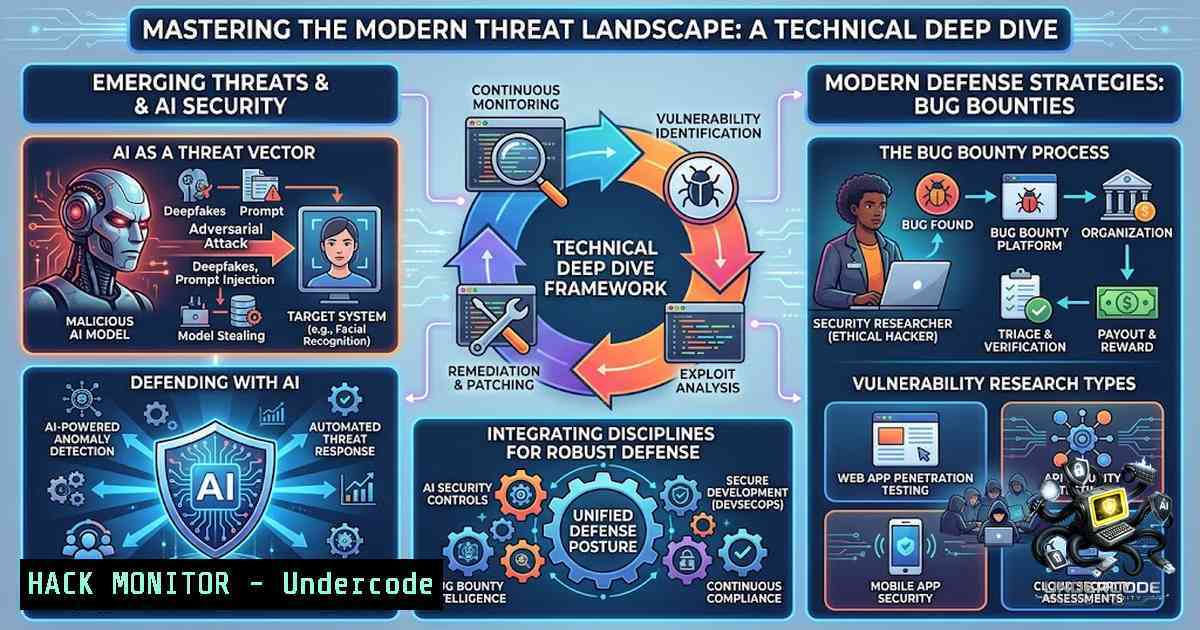
Introduction:
The rapid convergence of artificial intelligence, cloud infrastructure, and DevSecOps has fundamentally reshaped the cybersecurity battlefield. Defenders must now navigate a complex ecosystem spanning Azure AI services, GitHub Actions pipelines, and Databricks ML environments, while adversaries increasingly exploit supply chain vulnerabilities and API misconfigurations. The release of 154 free Udemy courses – including specialized practice tests for SC-500 (Microsoft AI Security), GH-200 (GitHub Actions), API Security, and Bug Bounty Hunting – presents a critical opportunity for security professionals to validate and elevate their technical competencies across these emerging domains【2†L7-L24】.
Learning Objectives:
- Master the security architecture of Azure AI services and implement robust threat detection mechanisms for AI workloads.
- Secure CI/CD pipelines by hardening GitHub Actions workflows and enforcing least-privilege access controls.
- Identify and mitigate OWASP Top 10 API vulnerabilities through hands-on testing and configuration audits.
- Apply bug bounty methodologies to discover and responsibly disclose vulnerabilities in real-world web applications.
- Operationalize machine learning security by securing Databricks environments and protecting ML models from adversarial attacks.
You Should Know:
1. Securing Azure AI Services (SC-500 Focus)
The SC-500 Microsoft AI Security practice tests cover critical aspects of securing Azure AI services, including Azure OpenAI, Cognitive Services, and Machine Learning workspaces【2†L9】. A fundamental security control is implementing network isolation and private endpoints to prevent data exfiltration.
Step-by-step guide to securing an Azure AI Service endpoint:
- Enable Managed Identity: Assign a system-assigned managed identity to your Azure AI service. This eliminates the need for hard-coded credentials.
az cognitiveservices account identity assign --1ame <your-account> --resource-group <your-rg>
-
Configure Private Endpoint: Restrict public network access and create a private endpoint to connect your AI service to a Virtual Network (VNet).
az network private-endpoint create --1ame <pe-1ame> --resource-group <your-rg> --vnet-1ame <vnet> --subnet <subnet> --private-connection-resource-id <resource-id> --group-id <group-id>
-
Implement Role-Based Access Control (RBAC): Assign the minimum necessary permissions using built-in roles like `Cognitive Services User` for consuming the service.
az role assignment create --assignee <principal-id> --role "Cognitive Services User" --scope <resource-id>
-
Enable Diagnostic Logging: Stream audit logs to a Log Analytics workspace for real-time monitoring and threat hunting.
az monitor diagnostic-settings create --1ame <settings-1ame> --resource <resource-id> --workspace <workspace-id> --logs '[{"category": "Audit","enabled": true}]'
2. Hardening GitHub Actions Pipelines (GH-200)
The GH-200 GitHub Actions practice tests emphasize securing automated workflows【2†L7】. A common attack vector is the compromise of third-party actions or the exposure of secrets in logs.
Step-by-step guide to securing a GitHub Actions workflow:
- Pin Actions by Commit Hash: Avoid using `@main` or `@v3` tags, as they can be tampered with. Pin to a specific commit SHA for immutable dependencies.
</li>
</ol>

- uses: actions/checkout@a5ac7e51b41094c92402da3b24376905380afc29  v3.5.2
- Use Environment Secrets: Store sensitive data (API keys, tokens) as encrypted secrets scoped to specific environments (e.g.,
staging,production). Never hardcode secrets in the workflow file. -
Restrict Workflow Permissions: Set the default permissions to `read-all` or `contents: read` and explicitly grant write permissions only when necessary.
permissions:
contents: read
pull-requests: write
-
Validate and Sanitize Inputs: Prevent script injection by escaping or validating inputs from `github.event.issue.title` or pull request comments.
</p></li> </ol> <p>- name: Safe command run: echo "${{ github.event.issue.title }}" | sed 's/"/\"/g'- Audit Workflow Runs: Regularly review workflow run logs for accidental secret exposure and enable secret scanning alerts for your repository.
3. API Security Fundamentals: Practical Testing and Mitigation
API Security Fundamentals practice tests cover the OWASP API Security Top 10, including broken object level authorization (BOLA), broken authentication, and excessive data exposure【2†L17】.
Step-by-step guide to testing and fixing a BOLA vulnerability:
- Identify the Vulnerability: Intercept an API request that fetches a user’s resource using a sequential ID (e.g.,
GET /api/users/123/profile). -
Test for BOLA: Modify the ID to another user’s ID (e.g.,
124) in the request. If the server returns data for user 124 without verifying the requester’s authorization, the vulnerability exists. -
Implement Proper Authorization (Backend): In your API handler, verify that the authenticated user (from the JWT or session) has the necessary permissions to access the requested resource.
Python (Flask) example @app.route('/api/users/<int:user_id>/profile') def get_profile(user_id): current_user = get_current_user() From JWT if current_user.id != user_id and not current_user.is_admin: abort(403) Forbidden return get_user_profile(user_id) -
Use UUIDs Instead of Sequential IDs: Replace integer IDs with UUIDs to make resource enumeration more difficult.
-- Instead of id INT AUTO_INCREMENT, use:
id CHAR(36) DEFAULT (UUID())
-
Rate Limiting: Implement rate limiting on sensitive endpoints to mitigate brute-force attacks on IDs.
Nginx rate limiting example
limit_req_zone $binary_remote_addr zone=api:10m rate=10r/m;
location /api/ {
limit_req zone=api burst=5 nodelay;
proxy_pass http://backend;
}
4. Bug Bounty Hunting: Reconnaissance and Exploitation
Bug Bounty Hunting practice tests prepare you for real-world web application security testing【2†L18】. The reconnaissance phase is critical for success.
Step-by-step guide to a bug bounty reconnaissance and testing workflow:
- Subdomain Enumeration: Discover subdomains using tools like `subfinder` and
amass.subfinder -d example.com -o subdomains.txt
-
Live Host Probing: Filter for live hosts using
httpx.cat subdomains.txt | httpx -status-code -title -tech-detect -o live_hosts.txt
-
Directory Brute-Forcing: Use `ffuf` to find hidden directories and files.
ffuf -u https://example.com/FUZZ -w /usr/share/wordlists/dirb/common.txt -fc 404
-
Parameter Discovery: Use `arjun` or `ffuf` with `GET` and `POST` parameters to find hidden inputs.
arjun -u https://example.com/api/endpoint -m GET
-
Exploit Common Vulnerabilities: Test for SQL Injection, XSS, and Command Injection using parameter fuzzing. For SQLi, use `sqlmap` with caution and authorization.
sqlmap -u "https://example.com/product?id=1" --dbs --batch
-
Report Responsibly: Document the vulnerability with a clear Proof of Concept (PoC), steps to reproduce, and impact analysis.
5. Databricks Machine Learning Security (DBML)
The DBML Databricks Machine Learning practice tests focus on securing ML pipelines and workspaces【2†L14】. Key areas include access control, secret management, and model governance.
Step-by-step guide to securing a Databricks ML workspace:
- Enable Unity Catalog: Unity Catalog provides fine-grained governance over data and ML assets. Enable it on your Databricks workspace to centrally manage permissions.
-
Secure Model Registry: Restrict who can register, transition, and deploy models using Databricks’ Model Registry permissions.
Using Databricks CLI to set permissions databricks permissions set /mlflow/model/<model-1ame> --json '{"access_control_list": [{"user_name": "[email protected]", "permission_level": "CAN_READ"}]}' -
Use Databricks Secrets: Store API keys and database credentials as Databricks secrets, not in notebooks.
Python in Databricks notebook storage_key = dbutils.secrets.get(scope="azure", key="storage-account-key") spark.conf.set("fs.azure.account.key.<storage>.blob.core.windows.net", storage_key) -
Monitor Cluster Activity: Enable cluster logging and stream logs to a SIEM to detect anomalous activity, such as unauthorized code execution.
Configure cluster log delivery in the Databricks UI or via API
-
Implement Model Monitoring: Use Databricks Model Monitoring to detect data drift and performance degradation, which could indicate an adversarial attack on the model.
6. Cloud Hardening: Azure and AWS Best Practices
Beyond specific services, general cloud hardening is essential. The courses on Azure AI, GitHub Actions, and Databricks implicitly require a strong foundational understanding of cloud security.
Step-by-step guide to hardening a cloud environment (Azure/AWS):
- Enable Multi-Factor Authentication (MFA): Enforce MFA for all users, especially privileged accounts.
-
Implement a Zero-Trust Network: Use micro-segmentation and service endpoints to restrict network traffic. In Azure, use Network Security Groups (NSGs) and Azure Firewall.
-
Regular Patching: Automate patching for virtual machines using Azure Automation or AWS Systems Manager.
Azure CLI to trigger patch assessment
az vm assess-patches --resource-group <rg> --1ame <vm-1ame>
-
Encrypt Data at Rest: Ensure all storage accounts, databases, and disks are encrypted using platform-managed or customer-managed keys (CMK).
-
Enable Advanced Threat Protection: Use Azure Defender or AWS GuardDuty to continuously monitor for threats and generate security alerts.
7. Continuous Learning and Certification Path
The Udemy practice tests for CISM, PMP, and various technical domains highlight the importance of continuous professional development【2†L15】【2†L23】. For cybersecurity professionals, certifications like CISM (Certified Information Security Manager) validate governance and management skills, while SC-500 validates technical proficiency in AI security【2†L9】【2†L15】.
Step-by-step guide to preparing for a certification exam using practice tests:
- Identify the Exam Objectives: Download the official exam guide from the certifying body (e.g., ISACA for CISM, Microsoft for SC-500).
-
Take a Baseline Practice Test: Attempt a full-length practice test to identify weak areas.
-
Focus on Weak Domains: Spend 70% of your study time on domains where you scored below 70%.
-
Review Explanations: For every question, read the explanation for both correct and incorrect answers to understand the underlying concepts.
-
Simulate Exam Conditions: Take at least three full practice tests under timed conditions (e.g., 150 minutes for CISM) to build stamina.
What Undercode Say:
-
Key Takeaway 1: The convergence of AI, DevOps, and security demands a multidisciplinary skillset. Professionals who can secure an Azure AI endpoint, harden a GitHub Actions pipeline, and test an API for BOLA are invaluable.
-
Key Takeaway 2: Practice tests are not just for passing exams; they are a structured method to identify knowledge gaps and apply theoretical concepts to practical scenarios, especially in fast-evolving fields like AI security and cloud-1ative development.
Analysis: The curated list of Udemy courses reflects a strategic shift in the IT industry towards specialized, practice-oriented learning. The inclusion of AI-specific security (SC-500), CI/CD security (GH-200), and API security indicates that organizations are moving beyond perimeter defense to embedded security. The bug bounty hunting course acknowledges the rise of crowdsourced security testing. The value proposition here is efficient, targeted upskilling: professionals can spend a few hours on practice tests to validate their readiness for real-world challenges or certification exams. This approach is particularly effective for busy practitioners who need to stay current without committing to lengthy, generalized training programs.
Expected Output:
Introduction:
The integration of AI into cloud services, the automation of CI/CD pipelines, and the proliferation of APIs have created a new class of security vulnerabilities. Defenders must now secure not only traditional infrastructure but also machine learning models, GitHub Actions workflows, and RESTful APIs. The availability of specialized practice tests for these domains provides a practical pathway for professionals to validate their skills and prepare for the evolving threat landscape.
What Undercode Say:
- The future of cybersecurity lies in securing the entire software development lifecycle, from AI model development to API deployment.
- Hands-on practice tests are an essential tool for bridging the gap between theoretical knowledge and practical application.
Prediction:
- +1 The demand for professionals with combined expertise in AI, cloud, and security will skyrocket, leading to the creation of new roles such as “AI Security Engineer” and “DevSecOps Architect.” This will drive significant salary premiums for those who obtain relevant certifications like SC-500 and GH-200.
-
+1 The gamification of security education through bug bounty platforms and practice tests will democratize access to high-level security skills, allowing more individuals from diverse backgrounds to enter the field.
-
-1 The rapid adoption of AI services without adequate security controls will lead to a surge in data breaches involving exposed AI models and training data. Organizations will face regulatory fines and reputational damage as a result.
-
-1 Attackers will increasingly target CI/CD pipelines, such as GitHub Actions, to inject malicious code into software builds, leading to widespread supply chain attacks that affect millions of end users.
-
+1 The development of AI-powered security tools that can automatically detect and remediate vulnerabilities in APIs and cloud configurations will mature, reducing the manual burden on security teams and allowing them to focus on more strategic threats.
-
-1 As more organizations adopt Databricks and similar ML platforms, the attack surface for data poisoning and model theft will expand. The lack of standardized security frameworks for ML will leave many environments vulnerable until industry best practices are established.
▶️ Related Video (76% Match):
https://www.youtube.com/watch?v=50e3h0Q7RTE
🎯Let’s Practice For Free:
🎓 Live Courses & Certifications:
Join Undercode Academy for Verified Certifications
🚀 Request a Custom Project:
Secure, high-velocity infrastructure and disruptive technological engineering. Contact our engineering team for high-tier development and proprietary systems:
[email protected]
💎 Smart Architecture | 🛡️ Secure by Design | ⭐ Trusted by ThousandsIT/Security Reporter URL:
Reported By: Sherly Janes – Hackers Feeds
Extra Hub: Undercode MoN
Basic Verification: Pass ✅🔐JOIN OUR CYBER WORLD [ CVE News • HackMonitor • UndercodeNews ]
📢 Follow UndercodeTesting & Stay Tuned:
- Use Environment Secrets: Store sensitive data (API keys, tokens) as encrypted secrets scoped to specific environments (e.g.,


