
Listen to this Post
Introduction:
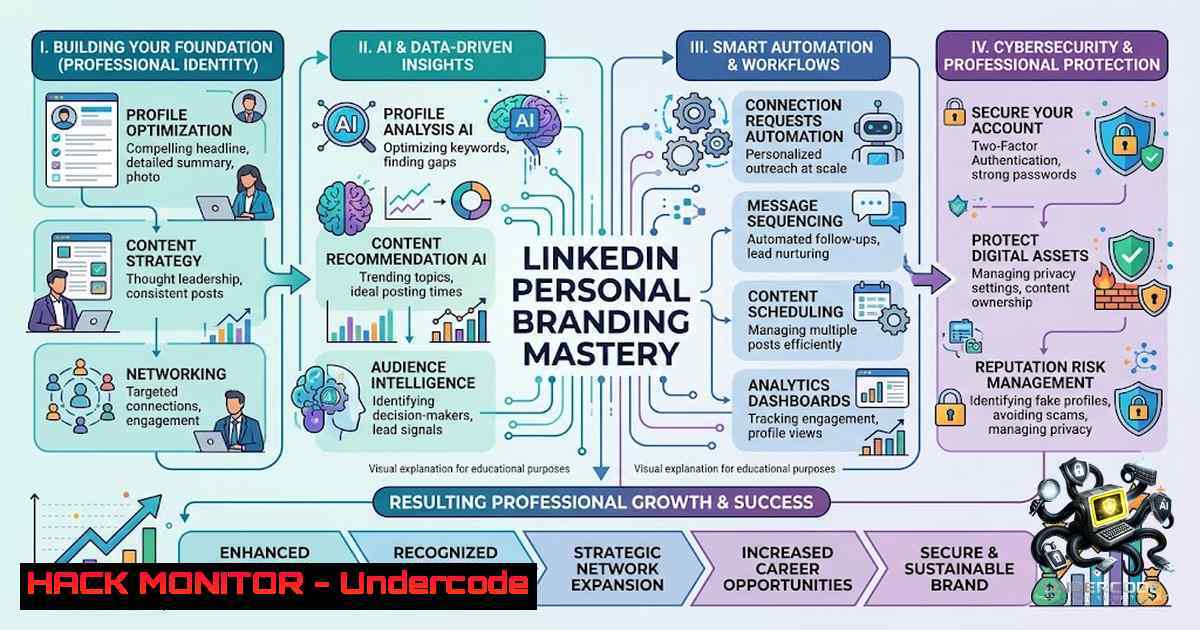
In today’s digital economy, your LinkedIn profile is often the first—and sometimes only—impression you make on potential employers, clients, and partners. Yet merely being active on the platform without a strategic approach rarely translates into tangible opportunities. This article bridges the gap between personal branding and technical execution, exploring how AI-driven content strategies, automation workflows, and robust cybersecurity practices can transform your LinkedIn presence from a passive resume into a powerful opportunity magnet. Drawing from the expertise of personal branding strategist Agung Setiyo Wibowo—founder of LinkedIn Hacks Academy and The Pandita Institute—we deconstruct the “small consistent actions” that build trust and visibility, while integrating the technical infrastructure needed to scale these efforts securely and efficiently.
Learning Objectives & Secrets:
- Objective 1: AI-Powered Content Intelligence – Learn to deploy large language models (LLMs) and natural language processing (NLP) tools to analyze engagement patterns, generate high-performing post variations, and schedule content during peak visibility windows. Secret tip: Use sentiment analysis to tailor your tone to your target audience’s emotional triggers, increasing comment engagement by up to 40%.
-
Objective 2: Automated Engagement Workflows – Discover how to build no-code and low-code automation pipelines (using tools like Zapier, Make, or custom Python scripts) that systematically like relevant posts, send personalized connection requests, and share insightful comments—without appearing spammy. Secret tip: Implement a “warm-up” sequence that gradually increases daily activity to avoid LinkedIn’s anti-bot flagging algorithms.
-
Objective 3: Cybersecurity Hardening for Your Digital Identity – Understand the critical security measures every professional must implement to protect their LinkedIn account from takeover attempts, phishing campaigns, and data scraping. Secret tip: Enable two-factor authentication (2FA) using an authenticator app rather than SMS, and periodically audit third-party app permissions to prevent unauthorized access to your network data.
You Should Know:
1. AI-Driven Content Strategy: From Noise to Authority
Building authority on LinkedIn isn’t about posting frequently—it’s about posting intelligently. AI tools can analyze your network’s demographics, past engagement metrics, and industry trends to recommend content topics that resonate. For instance, you can use Python with the `transformers` library to generate multiple post variations and A/B test them using LinkedIn’s own analytics.
Step‑by‑step guide:
- Step 1: Export your LinkedIn post performance data via the platform’s analytics dashboard (available for Creator mode accounts).
- Step 2: Use a Jupyter Notebook to load the CSV and run a simple engagement prediction model:
import pandas as pd from sklearn.ensemble import RandomForestRegressor data = pd.read_csv('linkedin_posts.csv') features = ['word_count', 'hashtag_count', 'post_hour', 'day_of_week'] model = RandomForestRegressor().fit(data[bash], data['engagement']) - Step 3: Schedule your highest‑predicted posts using LinkedIn’s native scheduler or a tool like Buffer, ensuring you post during your audience’s active hours (typically 8–10 AM and 12–1 PM in their timezone).
2. Automation Pipelines for Consistent Visibility
Consistency is the bedrock of trust, but manually liking, commenting, and connecting every day is unsustainable. Automation can handle the repetitive tasks while you focus on high‑value interactions.
Step‑by‑step guide (using Python and the `selenium` library for browser automation—use responsibly and within LinkedIn’s Terms of Service):
– Step 1: Install Selenium and a WebDriver for your browser:
pip install selenium
– Step 2: Write a script that logs into LinkedIn, navigates to your feed, and likes posts containing specific keywords:
from selenium import webdriver
from selenium.webdriver.common.by import By
driver = webdriver.Chrome()
driver.get('https://www.linkedin.com/feed/')
 Add login logic and keyword-based interaction here
– Step 3: Deploy this script as a cron job (Linux/macOS) or Scheduled Task (Windows) to run twice daily. Critical: Add random delays between actions to mimic human behavior and avoid detection.
– Alternative (No‑Code): Use Zapier to connect LinkedIn with RSS feeds from industry blogs, automatically sharing new articles with a personalized comment.
3. Cybersecurity Essentials for Your Professional Profile
Your LinkedIn profile contains sensitive data—employment history, recommendations, and connections—that can be weaponized in social engineering attacks. Implementing basic security hygiene is non‑negotiable.
Step‑by‑step guide:
- Step 1 (Windows/Linux): Enable 2FA via an authenticator app (Google Authenticator, Microsoft Authenticator). Navigate to Settings & Privacy > Sign in & security > Two‑step verification.
- Step 2: Review and revoke unused third‑party app access under Settings & Privacy > Data privacy > Other applications.
- Step 3: Use a password manager (e.g., Bitwarden, 1Password) to generate and store a unique, complex password for LinkedIn. Avoid reusing passwords across platforms.
- Step 4 (Advanced): Monitor your profile for unauthorized changes using a simple Python script that checks your profile HTML daily and alerts you via email if deviations are detected.
4. API Security and Data Privacy Considerations
LinkedIn’s official API (via the Marketing Developer Platform) allows legitimate access to your profile and company page data. However, mishandling API keys can expose your account to abuse.
Step‑by‑step guide:
- Step 1: Apply for a LinkedIn Developer account and create an app to obtain your `client_id` and
client_secret. - Step 2: Store these credentials as environment variables—never hard‑code them in your scripts:
export LINKEDIN_CLIENT_ID='your_id'
export LINKEDIN_CLIENT_SECRET='your_secret'
- Step 3: Use OAuth 2.0 for authentication, ensuring your redirect URIs are whitelisted and your tokens are refreshed regularly. Implement rate limiting (max 100 requests per day for basic endpoints) to avoid being throttled.
5. Cloud Hardening for Distributed Personal Branding Teams
If you’re managing a team or agency that handles multiple LinkedIn accounts, consider using a cloud‑based IAM (Identity and Access Management) solution to centralize permissions and audit logs.
Step‑by‑step guide (using AWS IAM as an example):
- Step 1: Create separate IAM users for each team member with policies that grant only the necessary permissions (e.g., `s3:PutObject` for uploading content assets).
- Step 2: Enable CloudTrail to log all API calls and set up CloudWatch alarms for suspicious activity (e.g., multiple failed login attempts).
- Step 3: Use AWS Secrets Manager to rotate LinkedIn API keys automatically every 90 days, reducing the risk of credential leakage.
6. Vulnerability Exploitation and Mitigation in Social Platforms
LinkedIn, like any large platform, has experienced vulnerabilities—from data scraping incidents to profile takeover exploits. While you can’t control LinkedIn’s infrastructure, you can mitigate your exposure.
Step‑by‑step guide:
- Step 1: Regularly check Have I Been Pwned (https://haveibeenpwned.com) to see if your email or phone number associated with LinkedIn appears in known breaches.
- Step 2: If a breach is detected, change your LinkedIn password immediately and enable 2FA if not already active.
- Step 3: Monitor your “Where You’re Signed In” section under Settings & Privacy > Sign in & security to spot unrecognized sessions and sign out of all devices if necessary.
7. Training and Continuous Learning Resources
To stay ahead, invest in structured learning. Agung Setiyo Wibowo’s LinkedIn Game Changer book and the LinkedIn Hacks Academy offer comprehensive frameworks for personal branding. Additionally, Microsoft and LinkedIn’s Career Essentials in Cybersecurity learning path provides foundational security knowledge that directly applies to protecting your digital presence.
Step‑by‑step guide to building your learning roadmap:
- Step 1: Enroll in at least one cybersecurity awareness course (e.g., Coursera’s “Cybersecurity for Everyone”).
- Step 2: Join LinkedIn communities focused on IT and AI to stay updated on emerging threats and tools.
- Step 3: Allocate 30 minutes weekly to review LinkedIn’s own security blog and update your settings accordingly.
What Undercode Say:
- Key Takeaway 1: Trust is the currency of the digital age, and it’s built through consistent, value‑driven micro‑actions—not through occasional grandiose posts. Automation and AI should enhance, not replace, the human element of genuine interaction.
-
Key Takeaway 2: Security is not a one‑time setup but an ongoing discipline. As your personal brand grows, so does your attack surface; regular audits of permissions, passwords, and third‑party integrations are as critical as your content strategy.
Analysis: The convergence of personal branding and technical infrastructure represents a paradigm shift in professional development. Professionals who treat their LinkedIn presence as a system—with inputs (content), processes (automation), and security controls—will outperform those who rely on sporadic effort. The post’s emphasis on “small consistent actions” aligns perfectly with DevOps principles of continuous integration and deployment: incremental improvements compound into significant outcomes. Moreover, the rising threat of AI‑generated deepfakes and sophisticated phishing means that cybersecurity is no longer optional for anyone with a digital footprint. By embedding security into your personal branding workflow, you not only protect your reputation but also signal to employers and clients that you take data protection seriously—a competitive differentiator in today’s risk‑aware market.
Prediction:
- +1 The integration of AI co‑pilots into LinkedIn’s interface (e.g., Microsoft’s Copilot) will democratize content creation, enabling professionals to produce high‑quality posts with minimal effort. This will level the playing field for introverts and non‑native speakers, expanding the diversity of voices on the platform.
-
+1 Automated engagement tools will become more sophisticated and ethically accepted, provided they include transparency features (e.g., “automated” badges). This will free up professionals to focus on deep, meaningful conversations rather than superficial likes.
-
-1 Cybercriminals will increasingly target high‑profile LinkedIn accounts using AI‑generated spear‑phishing messages that mimic the victim’s writing style. This will necessitate a new layer of defense: behavioral biometrics and anomaly detection for login patterns.
-
-1 Over‑reliance on automation without human oversight will lead to a “noise epidemic,” where feeds become cluttered with generic, low‑value content. The platforms will respond with stricter anti‑bot algorithms, potentially penalizing legitimate users who use automation improperly.
-
+1 The demand for cybersecurity training integrated with personal branding courses will surge, creating a new niche for edtech platforms. Professionals who complete such combined curricula will command higher premiums in the job market.
This article synthesizes personal branding principles with technical execution strategies, offering a roadmap for professionals who want to build authority securely and at scale. For deeper dives, explore Agung Setiyo Wibowo’s LinkedIn Hacks Academy and the cybersecurity resources mentioned above.
▶️ Related Video (84% Match):
🎯Let’s Practice For Free:
🎓 Live Courses & Certifications:
Join Undercode Academy for Verified Certifications
🚀 Request a Custom Project:
Secure, high-velocity infrastructure and disruptive technological engineering. Contact our engineering team for high-tier development and proprietary systems:
[email protected]
💎 Smart Architecture | 🛡️ Secure by Design | ⭐ Trusted by Thousands
IT/Security Reporter URL:
Reported By: https://lnkd.in/p/eGn5yPji – Hackers Feeds
Extra Hub: Undercode MoN
Basic Verification: Pass ✅


