Listen to this Post
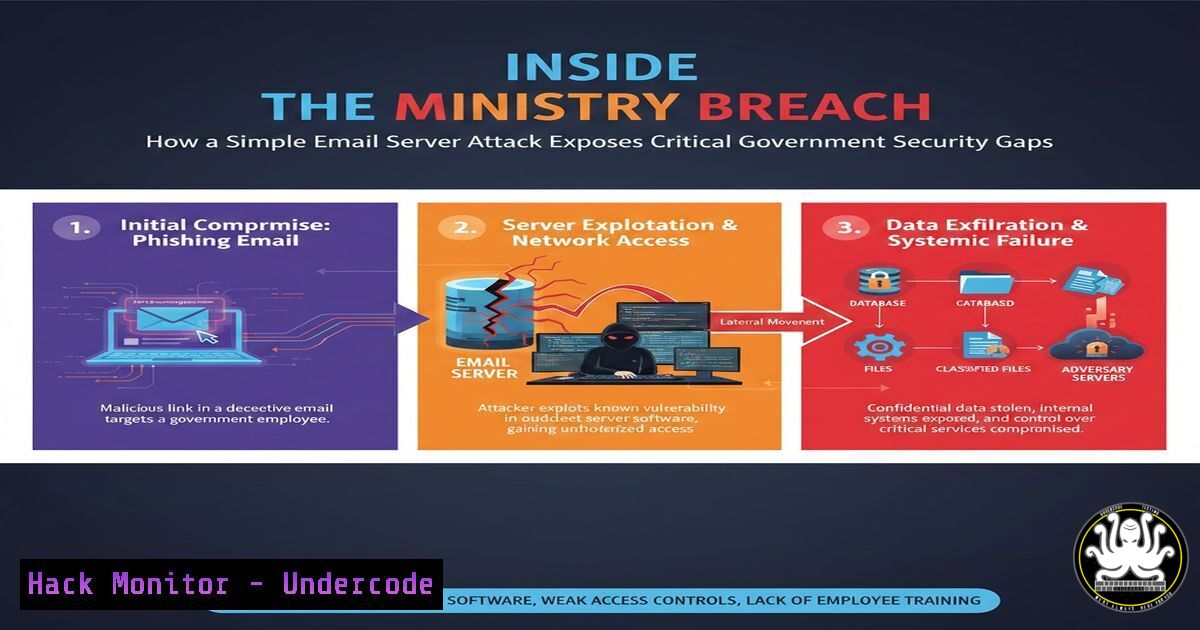
Introduction:
A cyberattack targeting the French Ministry of the Interior’s email servers has thrust government cybersecurity into the spotlight. While officials state there is no trace of “grave” compromise, the incident reveals significant vulnerabilities in foundational security practices, particularly around access controls and third-party risk management. This analysis dissects the technical lapses likely exploited and provides a actionable blueprint for hardening critical infrastructure against similar intrusions.
Learning Objectives:
- Understand the critical role of Multi-Factor Authentication (MFA) and how to enforce it across Windows and Linux systems.
- Learn to conduct proactive vulnerability assessments and harden email server infrastructure.
- Implement enhanced security monitoring and manage third-party supply chain risks effectively.
You Should Know:
1. The Non-Negotiable: Enforcing Multi-Factor Authentication (MFA) Everywhere
The minister’s announcement of imposing MFA “at all critical levels” suggests it was not universally applied—a likely entry vector. MFA is the most effective barrier against credential theft and must be mandatory for all users, not just privileged accounts.
Step‑by‑step guide explaining what this does and how to use it.
For Linux (SSH Access): Use Google Authenticator with PAM. First, install the module: sudo apt install libpam-google-authenticator. Then, run `google-authenticator` to generate a QR code for your authenticator app. Edit the `/etc/pam.d/sshd` file to add auth required pam_google_authenticator.so. Finally, in /etc/ssh/sshd_config, set `ChallengeResponseAuthentication yes` and restart SSH: sudo systemctl restart sshd.
For Windows/Office 365 (Microsoft Entra ID): Enforce MFA through conditional access policies. In the Microsoft Entra admin center, navigate to Security > Conditional Access > Policies and create a new policy. Target “All users” and select “All cloud apps.” Under Access controls, grant access but require “Require multifactor authentication.” Enable the policy immediately.
- Proactive Vulnerability Assessment: Don’t Wait for the Attack
The ministry’s “proactive analysis” post-breach is a reactive measure. Continuous vulnerability scanning identifies weaknesses before attackers do, focusing on internet-facing services like email servers (Exchange, Postfix).
Step‑by‑step guide explaining what this does and how to use it.
Utilize an open-source tool like OpenVAS to set up internal scans. After installation, initiate a scan targeting your email server’s IP range. Configure the scan to use the “Full and fast” scan policy. Analyze the report, prioritizing critical and high-severity vulnerabilities related to services like SMTP, IMAP, and webmail interfaces. Schedule weekly automated scans and integrate findings into a patch management workflow. For a quick command-line check on Linux servers, use `nmap -sV –script vuln
3. Hardening Email Server Infrastructure
Email servers are high-value targets. This attack likely exploited misconfigurations or unpatched software in the ministry’s mail infrastructure.
Step‑by‑step guide explaining what this does and how to use it.
For an on-premises Microsoft Exchange Server, immediately disable legacy authentication protocols (Basic Authentication) which bypass MFA. Use PowerShell: Set-OrganizationConfig -OAuth2ClientProfileEnabled $true. Then, create authentication policies to block legacy auth. For Linux/Postfix servers, enforce encrypted connections by modifying /etc/postfix/main.cf: set `smtpd_tls_security_level=encrypt` and disable SSLv2/SSLv3. Implement strict SPF, DKIM, and DMARC records in your DNS to prevent spoofing. Regularly audit mail flow rules for malicious additions.
4. Implementing Enhanced Security Monitoring and Logging
“Reinforcement of mail supervision” indicates a need for better detection. Centralized log analysis is crucial for identifying suspicious activities, like anomalous logins or large data exports.
Step‑by‑step guide explaining what this does and how to use it.
Deploy a SIEM (Security Information and Event Management) solution like the Elastic Stack (ELK). First, install Elasticsearch and Kibana. Then, set up a log shipper (Filebeat) on your email servers. Configure Filebeat to forward critical logs (e.g., `/var/log/mail.log` for Postfix, Windows Security logs for Exchange) to Elasticsearch. In Kibana, create detection rules. For example, a rule to alert on “Multiple failed logins from a foreign IP followed by a successful login.” A sample query in Kibana Query Language (KQL) might be: `event.category:authentication and event.outcome:failure and geoip.country_iso_code:not FR` followed by a success from the same source IP.
5. Managing Third-Party and Supply Chain Risk
A comment from a past auditor revealed that contractors had credentials for DEV, UAT, and PROD environments stored in repositories—a catastrophic supply chain risk. This is a common attack vector.
Step‑by‑step guide explaining what this does and how to use it.
Implement a privileged access management (PAM) solution to control third-party access. Require contractors to connect through a jump server or VPN with individual, time-limited credentials. Audit all code repositories for hardcoded secrets using tools like `truffleHog` or GitGuardian. Scan with command: truffleHog git <repo_url> --only-verified. Enforce the principle of least privilege for all service accounts used by external providers. Regularly review and revoke access that is no longer needed. Mandate cybersecurity assessments as part of all third-party contracts.
What Undercode Say:
Key Takeaway 1: The absence of universal MFA is a glaring, unacceptable vulnerability in any critical organization, often serving as the primary entry point for attackers. It must be the non-negotiable baseline.
Key Takeaway 2: The enemy is often inside the perimeter—not through malice, but through negligent third-party access and poorly managed service accounts. Supply chain risk is not an abstract concept; it’s credentials in a contractor’s config file.
Analysis: This incident is not sophisticated; it’s a failure of cybersecurity fundamentals. The minister’s vague hypotheses (“foreign interference” vs. “cybercriminality”) indicate a lack of forensic clarity, which itself is a symptom of insufficient logging and monitoring. The public’s cynicism, as seen in the comments, stems from a pattern of reactive security in government. True security maturity, as highlighted by one commenter referencing NIS2, is built continuously, not during a crisis. The technical measures announced are correct, but their implementation post-breach reveals a complacent culture that prioritized convenience over security, a fatal error for an interior ministry.
Prediction:
This attack will serve as a catalyst, not just for the French government but for critical infrastructure operators globally. We will see a rapid acceleration in the mandatory enforcement of MFA and zero-trust network models within public sectors, likely driven by stricter regulatory penalties under frameworks like NIS2. However, threat actors will adapt, shifting further towards exploiting the human element and software supply chains with AI-enhanced phishing and more stealthy, persistent attacks that dwell within environments to evade post-breach monitoring. The era of assuming perimeter security is sufficient is definitively over.
▶️ Related Video (78% Match):
🎯Let’s Practice For Free:
IT/Security Reporter URL:
Reported By: Cyber It – Hackers Feeds
Extra Hub: Undercode MoN
Basic Verification: Pass ✅


