Listen to this Post
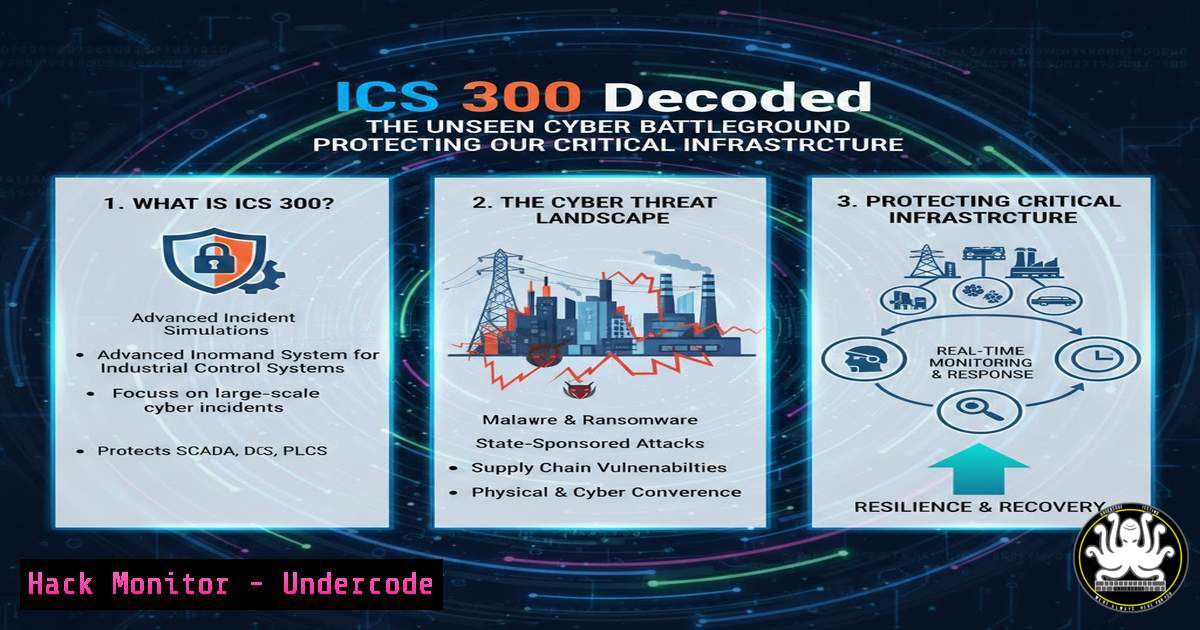
Introduction:
The digital frontier of warfare has expanded beyond corporate networks into the physical world of industrial control systems (ICS). These systems, which manage critical infrastructure like power grids, water treatment plants, and manufacturing facilities, represent a high-value target for nation-states and cybercriminals. The CISA ICS 300 course provides the foundational knowledge required to defend these complex environments where a cyber incident can have catastrophic physical consequences.
Learning Objectives:
- Understand the core components and architecture of Industrial Control Systems and how they differ from traditional IT.
- Identify the most critical vulnerabilities in OT/ICS environments and the methodologies attackers use to exploit them.
- Implement a defense-in-depth strategy that integrates people, processes, and technology to protect critical infrastructure.
You Should Know:
1. The Fundamental Architecture of an ICS Environment
Industrial Control Systems are not simply corporate networks with different hardware. They comprise a layered architecture that begins with the physical process (e.g., valves, pumps, sensors) controlled by devices like Programmable Logic Controllers (PLCs) and Remote Terminal Units (RTUs). These are managed by Supervisory Control and Data Acquisition (SCADA) systems and Human-Machine Interfaces (HMIs), which ultimately may connect to corporate IT networks. Understanding this “Purdue Model” hierarchy is the first step in security, as each level has unique communication protocols (e.g., Modbus, DNP3) and security concerns.
Step-by-step guide:
Step 1: Network Mapping. Use passive network monitoring tools to discover assets without disrupting the process. A tool like `Wireshark` can be used with filters for common OT protocols.
Command: `wireshark -f “tcp port 502″` (to capture Modbus TCP traffic)
Step 2: Identify Control Devices. Actively scan non-critical segments with specialized tools to fingerprint PLCs and RTUs. Caution: Always get authorization and conduct during a maintenance window.
Tool: `nmap` with the `-sC` (default scripts) and `-sV` (version detection) options can identify open ports.
Command: `nmap -sC -sV -p 1-1000 `
Step 3: Document the Data Flow. Create diagrams showing how data moves from the field devices to the HMI and historians. This reveals potential choke points and unauthorized connections.
2. Common Weaknesses and Attack Vectors in ICS
ICS environments are vulnerable due to their longevity, use of legacy systems, and initial design for isolation. Common weaknesses include default credentials on HMIs, unpatched operating systems on engineering workstations, lack of network segmentation, and the use of unencrypted protocols. Attackers think in terms of causing physical impact: manipulating sensor readings to hide a tank overflow, changing setpoints on a PLC to damage equipment, or locking an HMI to disrupt operator control.
Step-by-step guide:
Step 1: Protocol Exploitation Analysis. Use a Python script with the `pyModbus` library to test for unauthorized command execution on a lab PLC.
Code Snippet:
from pymodbus.client import ModbusTcpClient

client = ModbusTcpClient('192.168.1.10')  Target PLC IP
connection = client.connect()
if connection:
 Attempt to write to a holding register (e.g., a motor speed setpoint)
write = client.write_register(address=1, value=1000, unit=1)
print("Write operation successful:", write)
client.close()
Mitigation: Implement firewall rules to restrict Modbus TCP (port 502) traffic only to authorized HMIs and engineering stations.
Step 2: Credential Hardening. Script the changing of default credentials on Windows-based HMIs.
PowerShell Command (Windows): `Set-LocalUser -Name “Administrator” -Password (Read-Host -AsSecureString)`
Mitigation: Use Group Policy Objects (GPOs) to enforce strong password policies across the ICS domain.
3. Implementing a True Defense-in-Depth Strategy
Defense-in-depth in ICS is not just about stacking firewalls. It involves creating layered, independent security controls across the entire environment—physical, network, system, and application. This ensures that if one control fails, others are in place to prevent a catastrophic breach.
Step-by-step guide:
Step 1: Network Segmentation. Create an “Industrial Demilitarized Zone (IDMZ)” between the corporate IT network and the OT network. This prevents direct routing and forces all communication through secured proxies and data diodes.
Step 2: Host Hardening. Harden Windows-based HMIs and servers by disabling unnecessary services.
PowerShell Command: `Get-Service | Where-Object {$_.Name -eq “Spooler”} | Stop-Service -PassThru | Set-Service -StartupType disabled` (Disables the Print Spooler service, a common attack vector)
Step 3: Application Whitelisting. Deploy whitelisting solutions like Windows AppLocker to ensure only authorized applications (e.g., the HMI software) can run on critical stations.
- The Critical Role of Asset Inventory and Vulnerability Management
You cannot protect what you do not know exists. A comprehensive, live asset inventory is the cornerstone of ICS cybersecurity. This goes beyond IT assets to include all controllers, network devices, and field instruments. Vulnerability management must be adapted for OT, prioritizing patches based on physical safety impact rather than just CVSS scores.
Step-by-step guide:
Step 1: Passive Asset Discovery. Deploy a tool like Rockwell Automation’s FactoryTalk® AssetCentre or Tenable.ot to continuously monitor network traffic and build an asset inventory.
Step 2: Risk-Based Patching. Create a patch management policy that requires testing all patches in a non-production environment first. Prioritize patches for vulnerabilities that are remotely exploitable and could lead to a loss of view or control.
Step 3: Configuration Backup. Regularly back up the configurations of all PLCs and network devices. For a Cisco switch in the control network:
Command: `copy running-config tftp:///switch_config.cfg`
5. Building an ICS-Specific Incident Response Plan
An incident in an OT environment is handled differently than in IT. The primary goal is to maintain safety and operational continuity. Shutting down a system immediately may not be an option. The response plan must involve process engineers, operators, and safety personnel alongside the cybersecurity team.
Step-by-step guide:
Step 1: Preparation. Develop playbooks for specific scenarios (e.g., ransomware on an HMI, manipulated sensor data). Ensure communication plans include off-hours contact info for key operational staff.
Step 2: Detection & Analysis. Correlate alerts from the ICS network monitoring tool with operational anomalies reported by engineers. A sudden, unexplainable change in a process variable could be a key indicator of compromise.
Step 3: Containment & Eradication. Work with operations to safely isolate compromised devices. This may involve putting a controller in manual mode or switching to a redundant system before taking a compromised workstation offline for forensic analysis.
Step 4: Recovery & Lessons Learned. Restore systems from known-good backups. Conduct a root cause analysis with all stakeholders to update policies and technical controls to prevent recurrence.
What Undercode Say:
- Context is King: Technical controls are useless without a deep understanding of the physical process they protect. The most effective ICS defenders speak the language of both the control room and the server room.
- Safety Trumps Everything: In ICS security, the ultimate metric of success is not data confidentiality, but the integrity and availability of the process to prevent harm to human life and the environment.
The paradigm shift from IT-centric security to OT-centric security is the single most important takeaway from advanced training like ICS 300. It moves the focus from protecting data to ensuring the reliability and safety of critical physical processes. This requires a collaborative model where cybersecurity professionals are embedded within operational teams, fostering a shared responsibility for resilience. The skills gap in this niche is significant, making this expertise highly valuable and critical to national security.
Prediction:
The convergence of IT and OT will accelerate with the adoption of Industrial IoT (IIoT) and 5G, dramatically expanding the attack surface. We will see a rise in AI-powered attacks that can learn process behaviors to execute more subtle and destructive manipulations, potentially causing equipment failure or long-term degradation without immediate detection. In response, the industry will pivot towards “resilience by design,” embedding security and redundancy directly into new control system architectures and leveraging AI for anomaly detection that can predict and mitigate attacks before they cause physical impact.
🎯Let’s Practice For Free:
IT/Security Reporter URL:
Reported By: Felix Mwangi – Hackers Feeds
Extra Hub: Undercode MoN
Basic Verification: Pass ✅


