
Listen to this Post
Introduction:
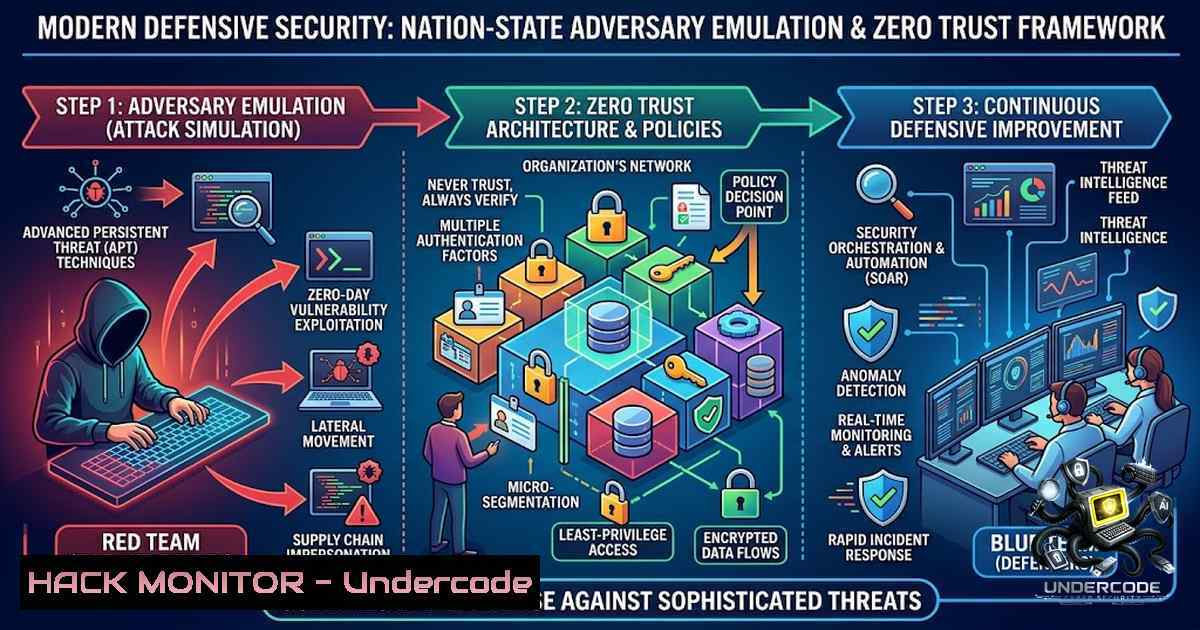
In the modern cybersecurity landscape, the line between offensive and defensive security is increasingly blurred by the adoption of nation-state tradecraft in commercial environments. Adopting a national security mindset means moving beyond compliance checklists to simulate the sophisticated, persistent techniques used by advanced persistent threats (APTs) against critical infrastructure. This approach, which integrates tools like Kali Linux with frameworks such as NIST 800-53 and Zero Trust architectures, transforms penetration testing from a simple vulnerability scan into a comprehensive exercise in adversary emulation and resilience building.
Learning Objectives & Secrets:
- Objective 1: Master the Reconnaissance Lifecycle – Learn to map an organization’s entire external attack surface using OSINT and active scanning techniques, going beyond simple port scans to identify cloud assets, subdomains, and leaked credentials.
-
Objective 2 Secret Tip: Weaponize Threat Modeling – Instead of treating threat modeling as a paperwork exercise, use it to dynamically prioritize penetration testing efforts. By aligning test cases with a STRIDE-based threat model, you can focus on the attack paths that pose the greatest business risk.
-
Objective 3 Secret Tip: Turn Attacks into Defenses – The true secret of nation-state style testing is using every exploit and successful breach to immediately engineer a detection rule. This ensures that every offensive action directly contributes to improving SIEM alerts, incident response playbooks, and overall defensive posture.
You Should Know:
- Reconnaissance – Mapping the Attack Surface Like an Adversary
Reconnaissance is the foundational phase of any nation-state style operation. The goal is to discover every publicly accessible asset, subdomain, and potential entry point before an attacker does. This involves both passive intelligence gathering and active scanning.
Step‑by‑Step Guide:
- Passive OSINT Gathering: Use `theHarvester` to gather emails, subdomains, and hosts from public sources.
theHarvester -d example.com -b google,linkedin,bing
This command searches Google, LinkedIn, and Bing for information related to the target domain, revealing potential employee emails and associated subdomains.
-
Subdomain Discovery: Utilize `amass` for comprehensive subdomain enumeration.
amass enum -d example.com
`amass` performs extensive DNS enumeration and can uncover subdomains that are often overlooked, representing unsecured entry points.
-
Active Network Scanning: Perform a fast, stealthy SYN scan with `nmap` to identify open ports and services.
nmap -sS -T4 -p- 192.168.1.0/24
The `-sS` flag executes a half-open SYN scan, which is faster and less likely to be logged by the target system than a full TCP connect scan.
-
Web Application Fingerprinting: Identify the technologies powering a web application.
whatweb example.com
This tool reveals the web server type, CMS, JavaScript libraries, and other technologies that could harbor specific vulnerabilities.
- Web Application Testing – Evaluating Authentication, APIs, and OWASP Vulnerabilities
Modern web platforms are complex, combining traditional web interfaces with APIs and cloud services. A nation-state mindset requires testing all these components, focusing on OWASP Top 10 vulnerabilities like injection, broken authentication, and insecure API endpoints.
Step‑by‑Step Guide:
- Automated Web Vulnerability Scanning: Use `nikto` for a broad scan of a web server for known vulnerabilities.
nikto -h https://example.com
`nikto` checks for over 6,700 potentially dangerous files, outdated server versions, and misconfigurations.
-
API and Parameter Fuzzing: Use `ffuf` to fuzz for hidden directories, files, and API endpoints.
ffuf -u https://example.com/FUZZ -w /usr/share/wordlists/dirb/common.txt
Fuzzing is crucial for discovering unlinked administrative panels or debug endpoints that are not meant to be public.
-
SQL Injection Testing: Automate the detection and exploitation of SQL injection flaws using
sqlmap.sqlmap -u "https://example.com/product?id=1" --dbs
This command attempts to identify and exploit SQL injection vulnerabilities to enumerate databases, a common technique for data exfiltration.
-
API Security Assessment: For REST APIs, use tools like `Postman` or `Burp Suite` to test for broken object-level authorization (BOLA). Manually intercept requests and modify object IDs (e.g., `/api/user/123` to
/api/user/124) to see if you can access another user’s data.
- Social Engineering Assessments – Exploiting the Human Element
Social engineering remains one of the most effective attack vectors. Adversaries use publicly available professional information from sites like LinkedIn to craft highly targeted spear-phishing campaigns. The Social-Engineer Toolkit (SET) in Kali Linux is the primary tool for simulating these attacks in an authorized environment.
Step‑by‑Step Guide:
- Launching the Social-Engineer Toolkit:
sudo setoolkit
This command starts the SET interface. You will be presented with a menu of attack vectors.
-
Creating a Spear-Phishing Attack: From the SET main menu, select:
1. `Social-Engineering Attacks`
2. `Spear-Phishing Attack Vectors`
3. `Create a template or use a built-in template`
– Configuring the Payload and Listener: SET will guide you through setting up a malicious payload (e.g., a reverse shell) and a listener to catch the connection when a victim interacts with the phishing email or link.
- Analysis: The success of a social engineering assessment is measured not just by clicks, but by the quality of information gathered and the speed of detection. A successful engagement will yield data on user awareness levels and the effectiveness of email filtering controls.
- Threat Modeling – Identifying What an Adversary Would Target
Threat modeling is the strategic core of a nation-state security assessment. It moves the conversation from “what is vulnerable” to “what is critical and how could it be compromised?” The STRIDE methodology (Spoofing, Tampering, Repudiation, Information Disclosure, Denial of Service, Elevation of Privilege) is a robust framework for this exercise.
Step‑by‑Step Guide:
- Define the System: Create a data flow diagram (DFD) of the target system, identifying all components, data stores, and trust boundaries.
-
Apply STRIDE: For each element in the DFD, ask questions corresponding to each STRIDE category.
- Spoofing: Can an attacker impersonate a user or service?
- Tampering: Can data be modified in transit or at rest?
- Repudiation: Can a user deny performing an action?
- Information Disclosure: Can sensitive data be exposed?
- Denial of Service: Can the system be made unavailable?
-
Elevation of Privilege: Can a normal user gain administrative rights?
-
Prioritize Threats: Rank identified threats by their potential business impact and likelihood of exploitation. This prioritized list directly informs the penetration testing scope and resource allocation.
5. Detection Engineering – Turning Attacks into Defenses
The final and most critical step in the nation-state methodology is using the insights gained from offensive testing to build better defenses. This is the practice of detection engineering—creating high-fidelity alerts and incident response playbooks based on observed adversary behavior.
Step‑by‑Step Guide:
- Map to MITRE ATT&CK: For every successful attack technique used during the test, map it to a specific tactic and technique in the MITRE ATT&CK framework. For example, a successful SQL injection maps to
T1190 (Exploit Public-Facing Application). -
Develop SIEM Queries: Create SIEM queries to hunt for the indicators of compromise (IoCs) and behaviors observed. For example, to detect potential SQL injection attempts, you might query web server logs for specific SQL keywords.
index=web_logs uri_path=".php" uri_query="SELECT" OR uri_query="UNION"
This Splunk query searches for web logs containing SQL keywords in the query string.
-
Build Automated Response Playbooks: Develop SOAR (Security Orchestration, Automation, and Response) playbooks that automatically trigger containment actions when a high-fidelity alert fires. For instance, a playbook could automatically isolate a compromised host from the network upon detection of a reverse shell.
What Undercode Say:
- Key Takeaway 1: The fusion of offensive tools (Kali Linux) with defensive frameworks (NIST, Zero Trust) is the new gold standard for enterprise security. It bridges the gap between red and blue teams, fostering a culture of continuous improvement.
- Key Takeaway 2: The ultimate objective of a nation-state style penetration test is not to “hack” the system but to generate actionable intelligence that strengthens the organization’s security posture. Every exploit found is a lesson learned and an opportunity to build a more resilient defense.
Prediction:
- +1 The adoption of this integrated, threat-informed defense approach will become a mandatory requirement for organizations seeking cyber insurance and complying with new, stricter data protection regulations over the next 2–3 years.
- +1 AI-driven penetration testing tools will increasingly automate the reconnaissance and vulnerability scanning phases, allowing human testers to focus on complex, multi-stage attack chains and sophisticated social engineering.
- -1 As commercial penetration testing matures to emulate nation-state tactics, we will see a corresponding rise in the sophistication of criminal ransomware gangs who adopt these same advanced techniques, leading to a temporary spike in successful, high-impact breaches before defenses catch up.
▶️ Related Video (74% Match):
https://www.youtube.com/watch?v=18SallFbyqo
🎯Let’s Practice For Free:
🎓 Live Courses & Certifications:
Join Undercode Academy for Verified Certifications
🚀 Request a Custom Project:
Secure, high-velocity infrastructure and disruptive technological engineering. Contact our engineering team for high-tier development and proprietary systems:
[email protected]
💎 Smart Architecture | 🛡️ Secure by Design | ⭐ Trusted by Thousands
IT/Security Reporter URL:
Reported By: https://lnkd.in/p/evbYZ7F9 – Hackers Feeds
Extra Hub: Undercode MoN
Basic Verification: Pass ✅


