Listen to this Post
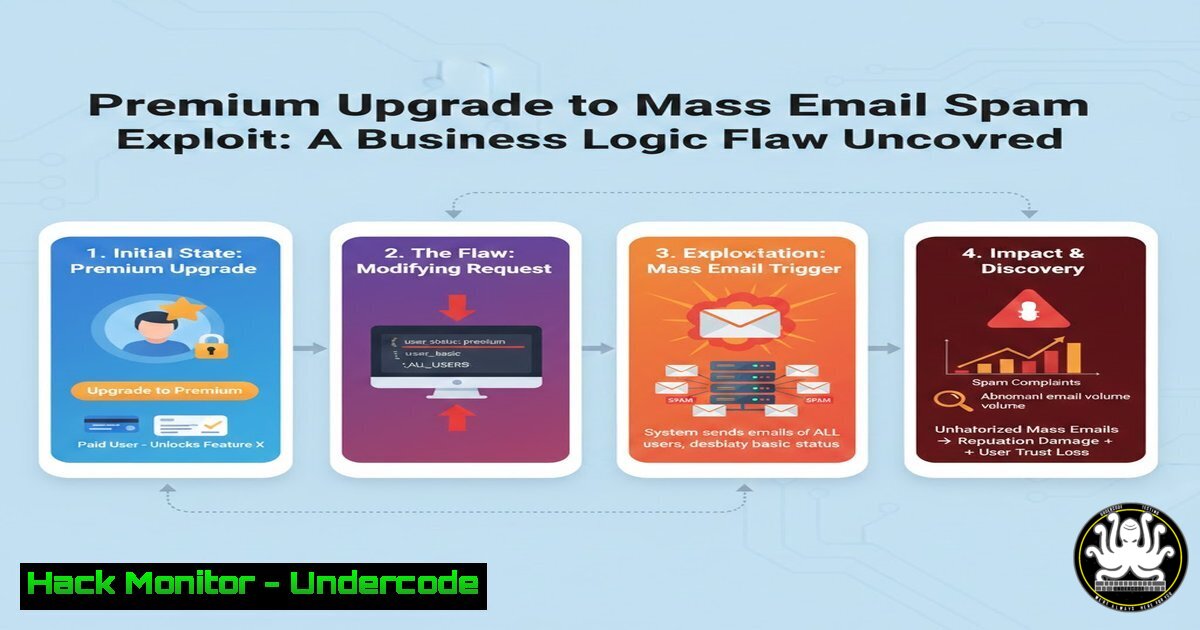
Introduction:
In the evolving landscape of cybersecurity, business logic vulnerabilities often fly under the radar, yet they can lead to high-impact abuses like mass email spam and infrastructure damage. This article delves into a real-world bug bounty case where a researcher exploited an invoicing flow weakness, emphasizing how unconventional testing approaches—such as upgrading to premium plans—can reveal hidden attack vectors. We’ll explore the technical nuances of server-side limit testing and array-based input abuse that turned a simple validation gap into a lucrative bounty.
Learning Objectives:
- Understand the nature of business logic vulnerabilities in web applications and their potential for abuse beyond typical security bugs.
- Learn practical techniques for testing server-side limits and array-based inputs in invoicing or similar flows.
- Discover methods to identify and exploit email spam vectors through application functionality, including tools and commands for replication.
You Should Know:
1. The Anatomy of Business Logic Vulnerabilities
Business logic flaws occur when an application’s intended workflow is manipulated, often due to missing server-side checks. Unlike common injection attacks, these issues stem from design errors, allowing attackers to bypass constraints—like purchase limits or access controls. In this case, the invoicing system lacked rate limiting on email generation, enabling abuse for spam campaigns. To test for such flaws, start by mapping application flows: use proxies like Burp Suite to intercept requests and analyze parameters for logical gaps. For instance, if an invoice creation endpoint accepts an array of email addresses without validation, it could be exploited to send bulk emails.
Step-by-step guide:
- Step 1: Identify key functionalities, such as invoice generation or user management, using manual exploration or tools like OWASP ZAP.
- Step 2: Intercept HTTP requests with Burp Suite. Look for parameters that control quantities or lists, like `email[]` or
quantity, and modify them to exceed expected limits. - Step 3: Use command-line tools like `curl` to test for server-side limits. For example, on Linux, run:
curl -X POST https://target.com/api/invoice -H "Content-Type: application/json" -d '{"emails": ["[email protected]", "[email protected]", ... repeat 1000 times]}'If the server processes thousands of emails without throttling, it indicates a vulnerability. On Windows, use PowerShell’s `Invoke-RestMethod` for similar tests.
- Premium Account Testing: Gaining Visibility into Hidden Flows
As highlighted in the report, upgrading to a premium plan can unveil new application paths that are otherwise inaccessible. This approach, often called “şesi trick” (a colloquial term for clever techniques), involves investing in paid tiers to test privileged functionalities. Many bug bounty hunters overlook this, but premium features may have weaker security due to less frequent testing. To replicate, purchase a trial or low-cost premium account, then use browser developer tools or network sniffers to capture requests unique to that tier. Focus on flows like bulk invoicing or advanced settings that could lack robust checks.
Step-by-step guide:
- Step 1: Acquire a premium account through legitimate means, such as a trial offer, ensuring compliance with bug bounty program rules.
- Step 2: Use browser extensions like Burp Suite’s proxy to log all HTTP traffic while navigating premium features. Filter for endpoints related to invoicing or email notifications.
- Step 3: Analyze captured requests for parameters that might be abused. For example, if a premium invoicing endpoint allows uploading CSV files with email lists, test for missing file size or row limits by uploading a file with 10,000 entries. On Linux, generate a test CSV with:
seq 1 10000 | awk '{print "user" $1 "@domain.com"}' > emails.csvThen, use `curl` to upload it and observe if the server processes all entries without validation.
3. Testing Array-Based Inputs for Missing Server-Side Limits
Array inputs, such as lists of email addresses or product IDs, are common in modern APIs and can be vulnerable if not properly validated. The researcher found that the invoicing system accepted an array of emails without enforcing a maximum count, leading to mass spam. To test this, manipulate JSON or form-data arrays in requests to exceed typical limits. Use automated scripts to send repeated requests and monitor for performance issues or email floods.
Step-by-step guide:
- Step 1: Locate API endpoints that handle arrays. Tools like Postman or `curl` can help craft requests. For example, inspect a sample invoice request:
{"items": [{"id": 1, "email": "[email protected]"}], "settings": {"notify": true}} - Step 2: Modify the array to include hundreds of items. In Linux, use Python to generate a payload:
import requests payload = {"emails": ["test" + str(i) + "@example.com" for i in range(1000)]} response = requests.post("https://target.com/api/send-invoice", json=payload) print(response.status_code) - Step 3: Monitor email delivery via test accounts or logging. If the server sends all emails without delay or error, it confirms a lack of server-side limits. Additionally, test for input sanitization by including malformed emails to check for injection points.
- Abusing Invoicing Flows for Email Spam and Reputation Damage
This vulnerability allowed abuse of the invoicing flow to send unsolicited emails, potentially overwhelming mail servers and damaging sender reputation. Attackers could exploit this for phishing or denial-of-service attacks. To understand the impact, set up a controlled environment with a local SMTP server or use services like Mailtrap. Simulate the exploit by triggering invoice notifications with a large recipient list and observe the mail server’s behavior.
Step-by-step guide:
- Step 1: Set up a test mail server using Postfix on Linux or hMailServer on Windows to capture outgoing emails. For Linux, install Postfix:
sudo apt-get update && sudo apt-get install postfix
Configure it to log all transactions.
- Step 2: Craft a malicious invoice request using the vulnerable endpoint. For example, with
curl:curl -X POST https://target.com/invoice/create -d "email[][email protected]&email[][email protected]" --repeat 100
- Step 3: Analyze mail server logs for volume spikes. On Linux, check `/var/log/mail.log` for entries. If the application sends emails rapidly without queueing, it can lead to IP blacklisting. Implement rate limiting in your tests using tools like `siege` to simulate load:
siege -c 10 -t 30s "https://target.com/invoice/create POST email[][email protected]"
5. Mitigating Server-Side Validation Gaps in Cloud Applications
To prevent such issues, developers must enforce server-side checks on inputs, especially in cloud-based invoicing systems. This includes validating array sizes, implementing rate limiting, and using cloud-native services like AWS WAF or Azure API Management for protection. For penetration testers, verifying these mitigations involves testing endpoints with automated tools and reviewing code for logic flaws.
Step-by-step guide:
- Step 1: Implement server-side validation in your applications. For example, in Node.js, limit array length:
if (req.body.emails.length > 100) { return res.status(400).send("Too many emails"); } - Step 2: Use cloud security tools to enforce limits. In AWS, configure API Gateway with usage plans to throttle requests. Test this by attempting to exceed limits with
curl:for i in {1..200}; do curl -X POST https://api.target.com/invoice; doneExpect HTTP 429 responses if rate limiting is active.
- Step 3: Conduct regular audits with OWASP ASVS guidelines, focusing on business logic. Tools like Semgrep can scan code for missing validations. On Linux, run:
semgrep --config "p/business-logic" /path/to/code
- Tools and Commands for Comprehensive Business Logic Testing
Effective testing requires a toolkit for manipulating requests and analyzing responses. Beyond Burp Suite, command-line utilities and custom scripts play a key role. Integrate these into your workflow for bug bounty hunting or security assessments.
Step-by-step guide:
- Step 1: Use Burp Suite’s Intruder or Repeater to fuzz array parameters. Set up payloads with incremental counts to detect limits.
- Step 2: On Linux, leverage `jq` for JSON manipulation and `awk` for data processing. For example, to test email arrays:
cat payload.json | jq '.emails |= [range(1000) | "test(.)@example.com"]' | curl -X POST -H "Content-Type: application/json" -d @- https://target.com/api
- Step 3: Automate with Python scripts using libraries like `requests` and `multiprocessing` to simulate concurrent abuse. Always ensure you have authorization before testing.
- Reporting and Earning Bounties on Platforms Like HackerOne
After identifying a vulnerability, document it thoroughly for submission on bug bounty platforms. Include steps to reproduce, impact analysis, and proof-of-concept code. The researcher’s success stemmed from clear reporting and highlighting the business risk—such as mail server reputation damage.
Step-by-step guide:
- Step 1: Capture evidence with screenshots, video recordings, and logs. Use tools like OBS Studio for recordings and `tcpdump` for network traffic:
sudo tcpdump -i eth0 -w traffic.pcap host target.com
- Step 2: Write a detailed report with CVSS scoring, referencing standards like CWE-840: Business Logic Errors. Provide mitigation recommendations.
- Step 3: Submit via HackerOne, ensuring compliance with program scope. Follow up with program managers to clarify technical details and maximize bounty rewards.
What Undercode Say:
- Key Takeaway 1: Business logic vulnerabilities, such as missing server-side limits in invoicing flows, represent a critical attack vector that can lead to high-impact abuses like mass email spam and infrastructure damage. These flaws often require creative testing methods, including premium account access, to uncover hidden functionalities.
- Key Takeaway 2: Proactive testing of array-based inputs and rate limiting is essential for both attackers and defenders. Organizations must implement robust server-side validation in cloud environments, while bug bounty hunters should prioritize logic flaws over common vulnerabilities for potentially higher rewards.
Analysis: The case underscores a growing trend in cybersecurity where attackers exploit design weaknesses rather than technical bugs, making them harder to detect with automated tools. The researcher’s approach of upgrading to a premium plan highlights the importance of thorough reconnaissance in paid tiers, which are often less audited. This vulnerability not only risks email spam but also could facilitate phishing campaigns or service disruption, emphasizing the need for continuous logic testing in development lifecycles. As applications become more complex, integrating business logic checks into CI/CD pipelines will be crucial to prevent such exploits.
Prediction:
In the future, business logic vulnerabilities will increasingly target AI-driven and cloud-native applications, where automated workflows may lack human oversight. Attackers will leverage these flaws for large-scale abuse, such as manipulating AI training data or exploiting serverless functions for resource exhaustion. Bug bounty programs will expand to incentivize logic testing, leading to higher payouts for innovative findings. Organizations that fail to adopt logic-aware security testing will face reputational and financial losses, especially in sectors relying on email communications or invoicing systems.
▶️ Related Video (76% Match):
🎯Let’s Practice For Free:
IT/Security Reporter URL:
Reported By: Memmedrehimzade Hackerone – Hackers Feeds
Extra Hub: Undercode MoN
Basic Verification: Pass ✅


