Listen to this Post
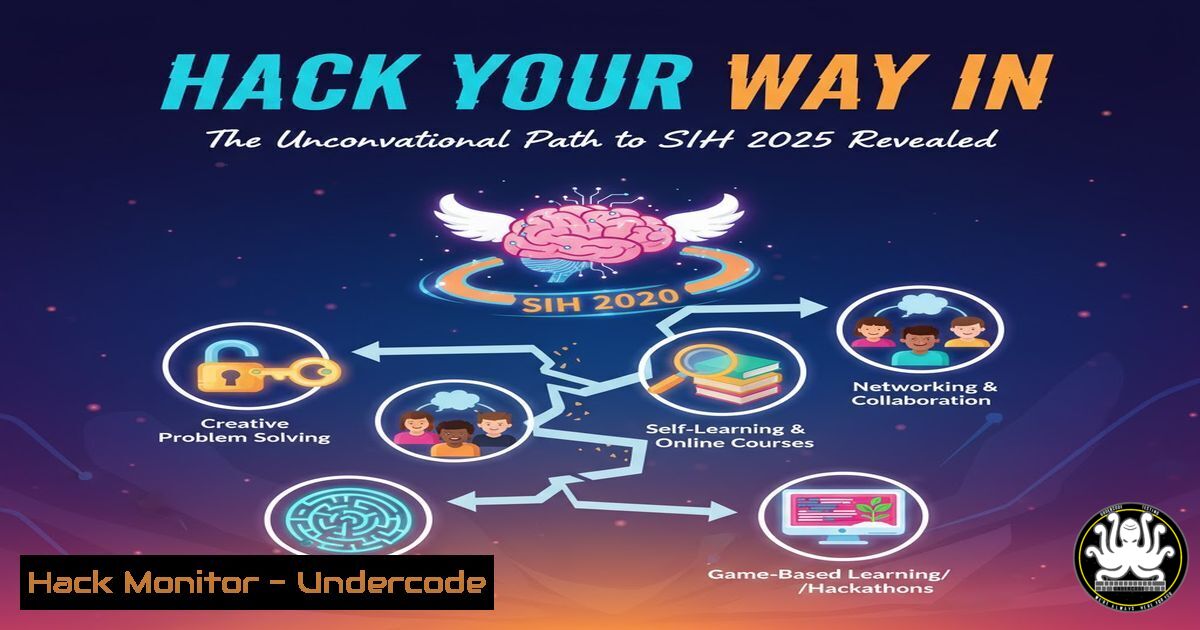
Introduction:
The anticipation for the Smart India Hackathon (SIH) 2025 results is at a fever pitch, with thousands of students awaiting their fate. Beyond the official selection process, however, lies a lesser-known, strategic pathway to participation: the wildcard entry. This article delves into the cybersecurity and technical skills that can make you an indispensable asset to a competing team, even after initial selections are made.
Learning Objectives:
- Understand the critical IT and cybersecurity skills sought by SIH finalist teams.
- Master essential commands and tools for rapid prototyping and security auditing.
- Learn how to proactively demonstrate your technical value to secure a wildcard position.
You Should Know:
- Proving Your Mettle with a Secure Web Prototype
Verified commands and code snippets for quickly standing up a secure web application prototype.
Linux/MacOS (Terminal):
`git clone https://github.com/your-repo/secure-app-template.git`
`cd secure-app-template</h2>
<h2 style="color: yellow;">npm install && npm audit fix</h2>
<h2 style="color: yellow;">export SESSION_SECRET=’your-crypto-random-secret-here’</h2>
<h2 style="color: yellow;">node app.js`
<h2 style="color: yellow;">
<h2 style="color: yellow;">
<h2 style="color: yellow;">
Explanation: This sequence clones a pre-built template, installs dependencies, automatically fixes known vulnerabilities via npm audit, sets a crucial environment variable for session security, and starts the application. Demonstrating knowledge of dependency auditing and environment-based secret management shows immediate security awareness.
2. Rapid API Development and Hardening
Verified commands for creating and securing a RESTful API, a common SIH project component.
Code Snippet (Node.js/Express):
`const express = require(‘express’);
const helmet = require(‘helmet’);
const rateLimit = require(‘express-rate-limit’);
const app = express();
app.use(helmet());
const limiter = rateLimit({ windowMs: 15 60 1000, max: 100 });
app.use(limiter);
app.use(express.json({ limit: ’10kb’ })); // Anti-DoS JSON limit
// Your API routes here
app.listen(3000);`
Explanation: This code initializes an Express server and immediately applies critical security middleware. `Helmet` sets various HTTP headers for security, `rateLimit` mitigates brute-force attacks, and a JSON body size limit helps prevent denial-of-service attempts. Showcasing this code proves you build security in from the start.
3. Database Security and Sanitization
Verified commands to set up and interact with a database securely.
Code Snippet (SQL with Parameterization):
`// UNSAFE – Vulnerable to SQL Injection
const query = SELECT FROM users WHERE email = '${email}';
// SAFE – Using Parameterized Queries
const safeQuery = ‘SELECT FROM users WHERE email = ?’;
connection.execute(safeQuery, [bash], (err, results) => { … });`
Windows/Linux (Docker for DB):
`docker run –name sih-postgres -e POSTGRES_PASSWORD=strong_password -d -p 5432:5432 postgres:13`
`psql -h localhost -U postgres -d postgres -c “CREATE USER app_user WITH PASSWORD ‘different_strong_pass’;”`
Explanation: This demonstrates the fundamental difference between vulnerable and secure database interactions. Using Docker to quickly spin up a isolated database instance and creating a dedicated, least-privilege user are hallmarks of professional IT practice.
4. Cloud Deployment and Hardening (AWS CLI)
Verified commands to deploy and secure an application on a cloud platform.
Linux/Windows (AWS CLI):
`aws ec2 run-instances –image-id ami-0abcdef1234567890 –count 1 –instance-type t2.micro –key-name MyKeyPair –security-group-ids sg-903004f8 –subnet-id subnet-6e7f829e`
`aws ec2 authorize-security-group-ingress –group-id sg-903004f8 –protocol tcp –port 22 –cidr 203.0.113.0/24`
`aws ec2 authorize-security-group-ingress –group-id sg-903004f8 –protocol tcp –port 80 –cidr 0.0.0.0/0`
Explanation: These commands launch an EC2 instance and configure its security group—a virtual firewall. The first rule restricts SSH access to a specific IP range, a critical hardening step. The second opens HTTP to the world. Understanding cloud security groups is a highly valuable skill for any hackathon project needing deployment.
5. Web Application Vulnerability Scanning
Using open-source tools to audit a team’s project for common flaws.
Linux (Kali/Bash):
`sudo apt update && sudo apt install nikto`
`nikto -h http://target-sih-project.local`
`nmap -sV –script vuln target-sih-project.local -p 80,443,3000`
Explanation: `Nikto` is a classic web server scanner that identifies outdated servers and known vulnerabilities. `Nmap` with the `vuln` script performs a broad vulnerability scan. Offering to perform a security audit for a potential team demonstrates proactive risk management, a trait of a top-tier teammate.
6. Version Control for Collaboration and CI/CD
Advanced Git commands to showcase collaboration readiness.
Linux/Windows (Git Bash):
`git log –oneline –graph –all –decorate`
`git rebase -i HEAD~3`
`git push origin –delete feature/old-branch`
`git config –global alias.ci commit`
`git config –global alias.st status`
Explanation: These commands go beyond basic git add/commit/push. They show you can visualize project history, clean up commit history interactively, manage remote branches, and create efficient aliases. Clean, professional version control is essential for team-based development.
7. Automating Security with Scripts
A Bash/PowerShell script to automate initial server hardening checks.
Linux (Bash):
`!/bin/bash
echo “Checking for unnecessary services…”
systemctl list-units –type=service –state=running | grep -E ‘(ftp|telnet)’
echo “Checking firewall status…”
ufw status verbose
echo “Checking for root login in SSH config…”
grep -i “PermitRootLogin” /etc/ssh/sshd_config`
Windows (PowerShell):
Get-Service | Where-Object {$_.Status -eq 'Running' -and ($_.Name -like 'ftp' -or $_.Name -like 'telnet')}

<h2 style="color: yellow;">Get-NetFirewallProfile | Format-Table Name, Enabled</h2>

<h2 style="color: yellow;">Get-Content C:\Windows\System32\OpenSSH\sshd_config | Select-String "PermitRootLogin"
Explanation: Providing a script that automates basic security checks shows initiative and an automated, scalable approach to IT tasks. This is a powerful way to demonstrate practical sysadmin and DevSecOps skills.
What Undercode Say:
- Skill Demonstrability Trumps Passive Waiting: The most reliable way to secure a wildcard entry is to have a tangible, verifiable portfolio of technical skills, particularly in high-demand areas like security and cloud.
- Proactive Security is a Key Differentiator: In a field of developers, the one who demonstrates an understanding of security fundamentals—from parameterized queries to hardened cloud configurations—instantly stands out as a more valuable and mature team member.
The analysis from the original post reveals a critical market inefficiency in the hackathon ecosystem: the demand for specialized skills often outpaces the initial selection process. Teams that have passed the first round may realize they lack expertise in critical areas like securing a web API or deploying to the cloud. This creates a direct opportunity for individuals who can immediately fill those gaps. The advice to “build something small, update your GitHub, and reach out” is essentially a call to action for personal branding and technical marketing. By focusing on in-demand, practical IT and cybersecurity skills, a candidate doesn’t just ask for a spot; they present themselves as a solution to a problem the team didn’t know they had. This shifts the power dynamic from one of hopeful waiting to strategic positioning.
Prediction:
This “wildcard” strategy will become increasingly formalized. We predict the emergence of dedicated “SIH Talent Boards” or GitHub repositories where selected teams can post their required skill gaps, and skilled individuals can showcase their portfolios. This will create a more efficient matching ecosystem, further emphasizing the need for participants to possess and demonstrably prove a strong, security-focused technical skill set beyond pure coding ability. The hackathons of the future will not only test a team’s initial idea but also its ability to dynamically recruit and integrate specialized talent.
🎯Let’s Practice For Free:
IT/Security Reporter URL:
Reported By: Surrvesh K – Hackers Feeds
Extra Hub: Undercode MoN
Basic Verification: Pass ✅


