Listen to this Post
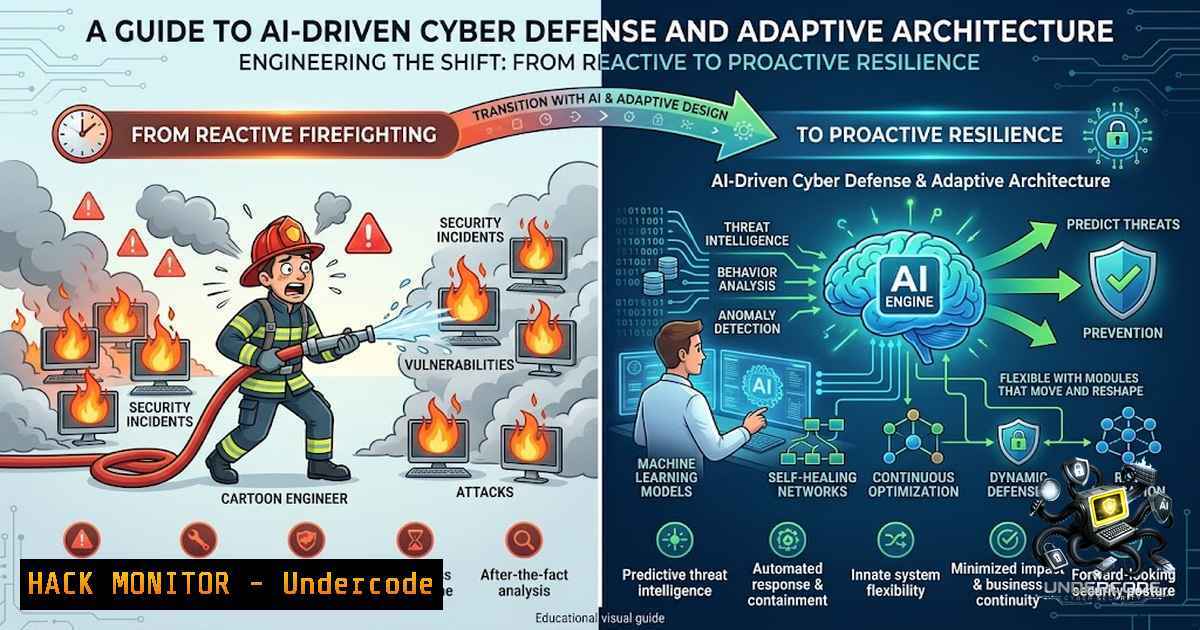
Introduction:
The modern threat landscape is characterized by the speed of adversarial innovation, rendering perimeter-based security models obsolete. As articulated by industry leaders, the strategic pivot from “breach prevention” to “breach resilience” is no longer optional; it is an engineering necessity. This article moves beyond theoretical discourse to provide a technical blueprint for embedding adaptive security controls—leveraging AI for threat hunting, automating incident response, and hardening hybrid cloud environments—to ensure your systems not only withstand attacks but evolve stronger from each engagement.
Learning Objectives:
- Objective 1: Implement AI-enhanced anomaly detection using open-source machine learning frameworks and SIEM data pipelines.
- Objective 2: Automate incident containment and recovery via Infrastructure as Code (IaC) and SOAR playbooks to minimize dwell time.
- Objective 3: Harden CI/CD pipelines and cloud identities against supply chain attacks and privilege escalation vectors.
You Should Know:
- Operationalizing AI for Predictive Threat Detection (Beyond the Hype)
The shift from reactive to proactive defense requires integrating AI models into the Security Operations Center (SOC). However, success hinges on proper data engineering and feature selection rather than simply deploying a black-box algorithm. For network anomaly detection, we utilize a combination of unsupervised learning (Isolation Forests) for outlier detection and supervised learning (XGBoost) for classifying known attack patterns. The real bottleneck is data normalization: ingesting Windows Event Logs, Linux auditd, and cloud API logs into a unified Parquet format.
Step‑by‑step guide:
- Step 1: Set up a data ingestion pipeline. On Linux, use `auditd` to capture system calls:
auditctl -a always,exit -F arch=b64 -S execve -k process_exec. For Windows, enable PowerShell logging via GPO and forward events to your SIEM. - Step 2: Build a feature store using Python. Extract features like entropy of process names, frequency of outbound connections, and user login velocity.
- Step 3: Train a baseline model using
scikit-learn. Example:model = IsolationForest(contamination=0.01, random_state=42). - Step 4: Deploy the model as a microservice (e.g., FastAPI) that listens for new logs from Kafka and pushes alerts to a Slack/Teams webhook or TheHive for incident management.
- Step 5: Implement continuous feedback loops. When a threat is confirmed, label the data and retrain the model on a weekly cron job to reduce false positives:
0 2 0 /usr/local/bin/retrain_model.sh.
- Automating Incident Response with SOAR and Infrastructure as Code
Resilience is measured by Mean Time to Respond (MTTR). By integrating a SOAR platform with your cloud provider’s APIs, you can automate containment actions. For instance, if an AI model detects a cryptocurrency miner consuming excessive CPU, the system can automatically isolate the instance and trigger a forensic snapshot. Leveraging Terraform for “self-healing” infrastructure allows for the automatic destruction of compromised workloads and the provisioning of clean replacements in a quarantined Virtual Private Cloud (VPC).
Step‑by‑step guide for cloud isolation:
- Step 1: Write a Terraform module to tag resources based on environment and trust level.
- Step 2: Create a Python script that calls the AWS CLI (or Azure CLI) to modify Security Group rules. Command:
aws ec2 revoke-security-group-ingress --group-id sg-12345 --protocol tcp --port 22 --cidr 0.0.0.0/0. - Step 3: Integrate this script with a SOAR platform (like Shuffle or Cortex XSOAR). Parse the incoming alert JSON to extract the Instance ID and User ID.
- Step 4: Trigger a playbook that executes the isolation script, rotates the compromised IAM keys:
aws iam create-access-key --user-1ame compromised_user, and sends a “resilience win” notification. - Step 5: Utilize `systemd` on Linux hosts to run health-check agents that report back to the SOAR, ensuring that if the endpoint goes offline, the SOAR orchestrates the scale-up of a new instance.
3. Hardening the Identity Fabric and Privileged Access
The human factor is often the weakest link, but technology can enforce zero-trust access policies. Moving beyond basic multi-factor authentication, we must implement Just-In-Time (JIT) access and Privileged Access Management (PAM) tied to risk scores. This reduces the attack surface by ensuring that administrative privileges are ephemeral.
Step‑by‑step guide for Linux and Windows integration:
- Linux (FreeIPA/PAM): Configure `pam_access.so` and integrate with OAuth2. Set up session recording using `script` or
sudosh. - Windows (Active Directory): Use PowerShell to query risk-based access policies. Command:
Get-ADUser -Filter {Enabled -eq $true} | Where-Object { (Get-AzureADUserRisk -ObjectId $_.UserPrincipalName).RiskLevel -eq 'High' }. If risk is high, disable the account:Disable-ADAccount -Identity $username. - API Security: Enforce mTLS for service-to-service communication. Generate client certificates:
openssl req -1ew -x509 -days 365 -key client.key -out client.crt. Configure Kong or NGINX to reject requests without valid certificates. - Secrets Management: Rotate secrets automatically using HashiCorp Vault. Trigger rotation via
vault write -force sys/rotation/role/my-role.
4. Cultivating a Security-First Culture through Continuous Upskilling
Technology fails without skilled operators. The shift to resilience demands that development teams understand the “why” behind security controls. This means integrating “Security Champions” into squads and gamifying attack simulations. Organizations must move beyond annual compliance training and foster an environment where penetration testing reports are viewed as development roadmaps, not blame documents.
Step‑by‑step guide for training integration:
- Step 1: Set up a vulnerable-by-design application (like WebGoat or Juice Shop) in a Docker container.
- Step 2: Use this to run internal CTF (Capture The Flag) events. Focus on OWASP Top 10 vulnerabilities, specifically Broken Access Control (IDOR) and Injection flaws.
- Step 3: For threat modeling, use the STRIDE methodology during sprint planning. Create a template in Jira or Confluence to record trust boundaries and data flows.
- Step 4: Implement a “bug bounty” style program internally. Reward developers who find vulnerabilities in staging environments.
- Step 5: Regularly share post-mortems of past incidents, focusing on the “golden signals” (Latency, Traffic, Errors, Saturation) that indicated the breach, using a blameless engineering analysis.
5. Cloud Hardening and Supply Chain Security
Modern resilience requires securing the software supply chain. Attackers increasingly target dependencies and build pipelines. This requires strict controls on base images, scanning of packages for CVEs, and signing of artifacts.
Step‑by‑step guide:
- Hardening Linux Base Images: Use `Docker` and `Snyk` or `Trivy` to scan images:
trivy image --severity HIGH,CRITICAL myapp:latest. - Windows Hardening: Use PowerShell to run `Get-WindowsCapability` and remove unnecessary SMB 1.0/CIFS File Sharing Support to reduce lateral movement risk.
- CI/CD Security: For GitHub Actions, enforce OIDC instead of storing long-lived secrets. For GitLab, use secret detection in commits:
gitlab-secret-detection. - Firewall Configuration: For Linux, use `nftables` to drop invalid packets:
nft add rule inet filter input ct state invalid drop. For Windows, utilizeNew-1etFirewallRule -DisplayName "Block Port" -Direction Inbound -LocalPort 445 -Protocol TCP -Action Block.
What Undercode Say:
- Key Takeaway 1: The article reinforces that security is a system design problem, not a feature. By embedding detection and response into the code (IaC) and infrastructure, we shift from “auditing for compliance” to “engineering for resilience.”
- Key Takeaway 2: The emphasis on upskilling and collaborative “transformation” highlights that the greatest ROI comes from aligning developer agility with security boundaries. It is about making the secure path the easiest path for the engineer.
Analysis: This engineering perspective validates the LinkedIn discourse by translating the “future of cybersecurity” into tangible CLI commands and architecture patterns. The use of AI is demystified into logistic functions and anomaly scores, proving that adaptability is a function of data quality and automation speed. The convergence of IT, OT, and cloud is managed through strict identity controls, transforming “risk” into a manageable, quantifiable metric for leadership.
Prediction:
- +1: We will see a surge in “Autonomous Security Operations” where AI agents will autonomously generate Terraform plans to patch zero-day vulnerabilities without human approval, reducing remediation time from hours to seconds.
- +1: The rise of “Resilience Engineering” teams will become standard, merging Site Reliability Engineering (SRE) with Security, leading to the development of chaos engineering tools specifically designed for security (e.g., injecting false data into AI models to test response).
- -1: The skill gap will widen drastically, as legacy security vendors fail to adapt to AI-driven code bases, leaving many organizations reliant on outdated signatures. Those who do not upskill their teams to understand Python and APIs will face catastrophic breaches, creating a systemic risk for the global digital economy.
▶️ Related Video (76% Match):
🎯Let’s Practice For Free:
🎓 Live Courses & Certifications:
Join Undercode Academy for Verified Certifications
🚀 Request a Custom Project:
Secure, high-velocity infrastructure and disruptive technological engineering. Contact our engineering team for high-tier development and proprietary systems:
[email protected]
💎 Smart Architecture | 🛡️ Secure by Design | ⭐ Trusted by Thousands
IT/Security Reporter URL:
Reported By: Atul Yadav – Hackers Feeds
Extra Hub: Undercode MoN
Basic Verification: Pass ✅


