
Listen to this Post
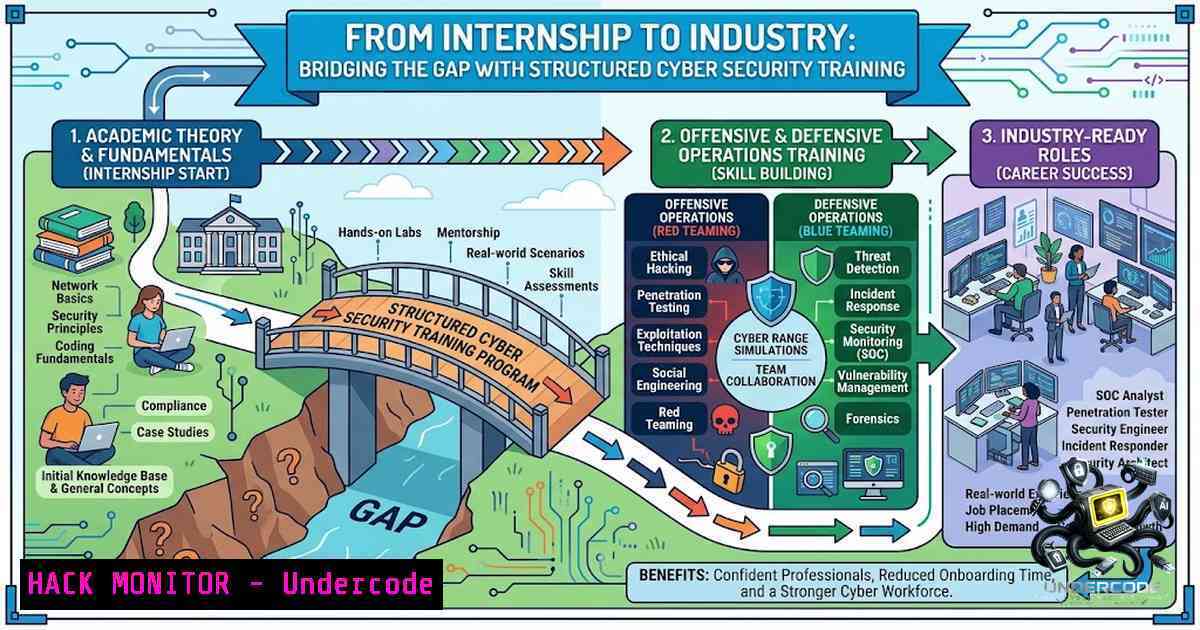
Introduction:
The rapid digitization of global infrastructure has intensified the demand for skilled professionals who can navigate both the offensive and defensive spectrums of cyber security. Internships that combine theoretical frameworks with intensive hands-on lab work, such as the program offered by TheAISCHOOL in collaboration with ICT Academy, are becoming critical incubation grounds for next-generation talent. This article dissects the core technical pillars covered in such comprehensive programs, translating foundational concepts into actionable command-line intelligence, security tool configurations, and vulnerability exploitation tactics that are immediately applicable in real-world Security Operations Centers (SOCs) and penetration testing engagements.
Learning Objectives & Secrets:
- Objective 1: Master the Intelligence Gathering Lifecycle – Transform passive reconnaissance into active threat modeling by leveraging OSINT frameworks and DNS interrogation tools.
- Objective 2: Refine Post-Exploitation Tradecraft – Move beyond initial access; learn to maintain persistence and exfiltrate data stealthily using native Windows/Linux binaries.
- Objective 3: Correlate Network Anomalies with Attack Signatures – Use Wireshark and Snort to distinguish between benign traffic spikes and sophisticated DDoS or session hijacking attempts.
You Should Know:
- Virtual Lab Fortification: Building a Resilient Pentesting Environment
A robust virtual lab is the backbone of ethical hacking. For Windows environments, utilizing Hyper-V or VMware Workstation is essential. However, for a lightweight, modular approach, Linux users leverage Kernel-based Virtual Machine (KVM). To set up a segmented network that mimics an enterprise environment, you need to create isolated virtual switches.
– Command (Linux – KVM Network Bridge):
sudo apt install bridge-utils
sudo brctl addbr br0
sudo ifconfig br0 192.168.100.1 netmask 255.255.255.0 up
What this does: This establishes a bridge interface, allowing virtual machines to communicate on the same subnet as the host, facilitating ARP spoofing and man-in-the-middle (MITM) attack simulations.
– Windows (Hyper-V Virtual Switch): Use PowerShell to create a Private virtual switch to isolate malicious VMs:
New-VMSwitch -1ame "IsolatedLab" -SwitchType Private
– Tip: Always snapshot your base image (Kali/Parrot OS) before running exploit scripts to ensure rapid rollback.
2. Information Gathering & OSINT Mastery
Reconnaissance is 70% of a successful attack. Beyond simple `ping` sweeps, modern pentesters utilize `theHarvester` and `Recon-1g` for domain enumeration. To extract subdomains and potential attack surfaces, use sublist3r.
– Command: `python sublist3r.py -d target.com -o subdomains.txt`
– Pro Tip (Secret): Combine this with `dnsrecon` to brute-force DNS records effectively: dnsrecon -d target.com -t brt -D subdomains.txt. If you are on a Windows machine without native tools, utilize `nslookup` interactively to query specific nameservers for zone transfers (even if deprecated, misconfigurations still occur).
3. Vulnerability Assessment and Automated Exploitation
Transitioning from identification to exploitation requires precise tooling. While Nessus handles comprehensive scanning, `Nmap` scripts (NSE) remain the fastest method for verification.
– Vulnerability Scan Example: nmap -sV --script vulners -p 443,80,22 10.10.10.1. This script queries the Vulners database, matching service versions against known CVEs.
– Windows Alternative: Use the built-in `Test-1etConnection` with custom ports, but rely on `Sysinternals` tools for process vulnerability checking. To check for SMBv1 vulnerabilities (EternalBlue remnants), execute:
nmap -p 445 --script smb-vuln-ms17-010 10.10.10.1
– Mitigation: If vulnerable, patch immediately. On Windows Server, use `wmic qfe list` to view installed security hotfixes.
4. SQL Injection and Web Server Hardening
Manual SQL injection testing is still superior to automated tools when bypassing WAFs. Use `sqlmap` with the `–tamper` option to obfuscate payloads.
– Command: `sqlmap -u “https://target.com/product?id=1” –dbms=mysql –tamper=space2comment –dbs`
– Server Hardening (Linux Apache): To mitigate, disable server signature exposure. Edit `/etc/apache2/conf-available/security.conf` and set:
ServerTokens Prod
ServerSignature Off
– Windows IIS: Use the `appcmd` tool to set custom error pages and remove the `X-Powered-By` header to obscure the backend technology.
5. Wireshark Network Analysis and Session Hijacking Detection
Network forensics relies heavily on understanding normal traffic baselines. During a session hijacking attempt, an attacker uses a forged TCP reset or ACK storm.
– Command (TShark – CLI Wireshark): `tshark -i eth0 -Y “tcp.flags.reset==1” -T fields -e ip.src -e ip.dst`
– Python Script (Scapy): For simulating a spoofed packet to test IDS detection:
from scapy.all import
ip = IP(src="192.168.1.5", dst="192.168.1.10")
tcp = TCP(sport=1234, dport=80, flags="R")
send(ip/tcp)
– Prevention: Enable `tcp_timestamps` security features on Linux (net.ipv4.tcp_tw_reuse = 0) and in Windows, enforce SMB signing to prevent relay attacks.
6. Cloud Security, IoT Hacking, and Cryptography
The convergence of IoT and Cloud (Edge Computing) introduces APIs as the primary attack vector.
– API Security Test (Curl): Test for Broken Object Level Authorization (BOLA) by manipulating user IDs in API endpoints: curl -X GET https://api.cloud.com/user/1234 -H "Authorization: Bearer $TOKEN". Change `1234` to `1233` to test if the token allows horizontal privilege escalation.
– Steganography: Hide a payload inside an image using `steghide` on Linux: steghide embed -cf cover.jpg -ef secret.txt -p password.
– Windows Command (Certutil): Encode/decode base64 to transfer encrypted files securely: certutil -encode secret.txt encoded.txt.
7. AI in Cyber Security: Automating Threat Response
Integrating AI doesn’t replace the analyst but automates log correlation. Using `ELK` stack (Elasticsearch, Logstash, Kibana) with machine learning plugins can detect anomalies in user behavior.
– Command (Logstash Config): Monitor for failed login attempts using a grok filter:
filter {
grok {
match => { "message" => "%{WORD:user} failed login from %{IP:source_ip}" }
}
}
– Training Tip: Utilize `Splunk` free version to practice SPL queries (Search Processing Language) to hunt for threats, such as: index=main sourcetype=WinEventLog:Security EventCode=4625 | stats count by Account_Name.
What Undercode Say:
- Key Takeaway 1: The era of “click-and-hack” is over. Blue teams are deploying dynamic EDRs; thus, red teamers must master living-off-the-land (LOLBins) techniques. Memorize Windows `rundll32` and `mshta` execution syntaxes to evade detection.
- Key Takeaway 2: Security is a constant cycle of assessment and hardening. While this internship covered the spectrum from scanning to cryptography, the secret is that the real world demands proficiency in writing custom exploit scripts (Python/Bash) and understanding regulatory compliance (GDPR/HIPAA) to justify the testing scope.
Analysis: The curriculum structure—starting from networking basics to AI integration—reflects the industry’s shift from siloed operations to unified DevSecOps. However, the inclusion of “System Hacking” and “Malware Threats” without a deep dive into reverse engineering (x86/x64 assembly) suggests an introductory but robust foundational level. The collaboration with ICT Academy adds legitimacy, indicating that public-private partnerships are essential for standardizing the chaotic nature of cybersecurity training. Interns often overlook documentation; the real differentiator is building a detailed write-up for every vulnerability discovered, creating a “lessons learned” repository that is more valuable than the certificate itself.
Prediction:
- +1 The integration of AI into the curriculum, especially as a final module, suggests future training programs will pivot heavily towards AI-driven orchestration. We can expect automated vulnerability remediation tools to become standard in entry-level roles by 2027.
- +1 As cloud footprints expand, IoT hacking modules will evolve from local network sniffing to attacking managed Kubernetes clusters, with multi-cloud misconfigurations becoming the most lucrative skill set.
- -1 The heavy reliance on virtual labs creates a gap: interns may struggle with physical hardware security or RF (Radio Frequency) hacking, which are often neglected. This could lead to a generation of analysts who are proficient in software but blind to physical attack vectors like side-channel attacks or BadUSB firmware implants.
- +1 The practical application of tools like Wireshark and `sqlmap` ensures that future professionals are not just “paper-certified” but can solve real-time latency and packet analysis issues, leading to shorter detection times (MTTD).
- -1 Despite covering DDoS and DoS attacks, the curriculum lacks detailed mitigation strategies involving Cloudflare or AWS Shield, which might leave interns unprepared for large-scale enterprise defense against volumetric attacks exceeding 500 Gbps.
▶️ Related Video (74% Match):
🎯Let’s Practice For Free:
🎓 Live Courses & Certifications:
Join Undercode Academy for Verified Certifications
🚀 Request a Custom Project:
Secure, high-velocity infrastructure and disruptive technological engineering. Contact our engineering team for high-tier development and proprietary systems:
[email protected]
💎 Smart Architecture | 🛡️ Secure by Design | ⭐ Trusted by Thousands
IT/Security Reporter URL:
Reported By: https://lnkd.in/p/eB2r6q8s – Hackers Feeds
Extra Hub: Undercode MoN
Basic Verification: Pass ✅


