Listen to this Post
Introduction:
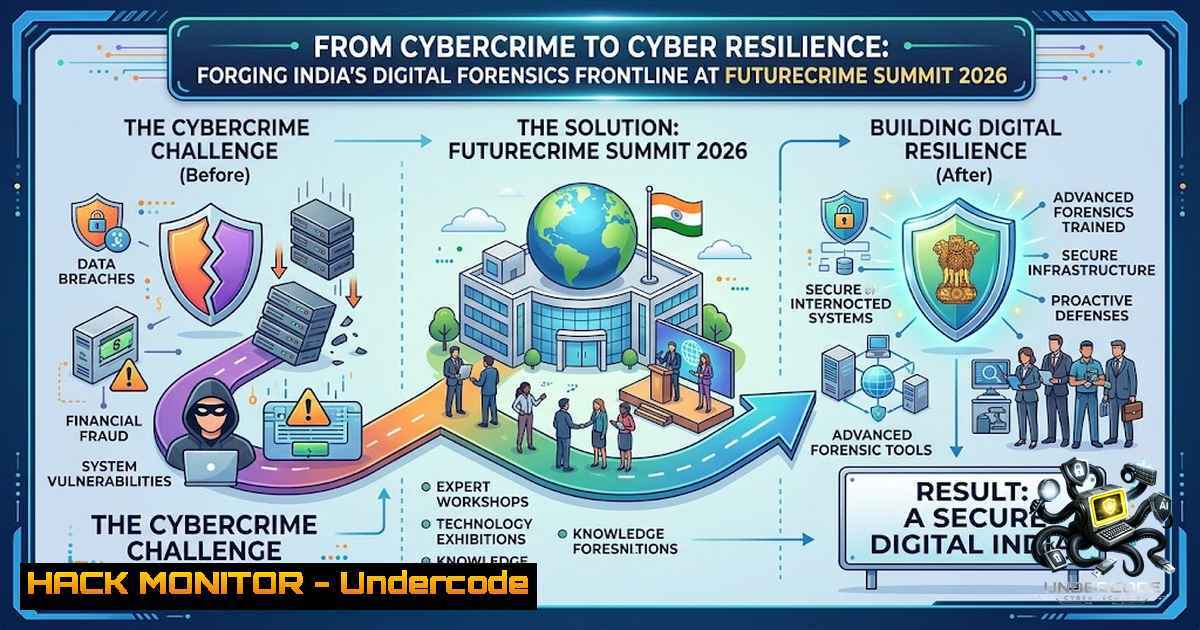
As cybercrime damages surge past a projected $10 trillion annually and digital evidence now underpins nearly 90% of all modern investigations, the digital forensics community faces unprecedented pressure to evolve. The FutureCrime Summit 2026, held on 6–7 August at Bharat Mandapam, New Delhi, has convened India’s largest gathering of cybersecurity professionals, law enforcement, and forensic experts to address this exact challenge. With mh Service joining as a Gold Partner and showcasing its portfolio of ‘Make in India’ forensic technologies, the summit represents a critical inflection point where investigative methodology, artificial intelligence, and national cyber resilience converge.
Learning Objectives:
- Understand the evolving threat landscape of AI-powered cybercrime and machine-speed digital fraud
- Master the core methodologies of modern Digital Forensics and Incident Response (DFIR), including mobile, computer, and cloud forensics
- Learn practical command-line and tool-based techniques for evidence acquisition, analysis, and incident containment
- Explore the integration of OSINT, blockchain analytics, and quantum-safe security into investigative workflows
You Should Know:
- The New Frontier of AI-Powered Investigations and Cyber Warfare
The third edition of the FutureCrime Summit has moved beyond theoretical discourse, positioning itself at the intersection of cyber warfare, AI-powered crime, and the future of policing. A major panel titled “Crime at Machine Speed: AI-Powered Cybercrime and the New Threat Landscape” examined how autonomous systems and generative AI are fundamentally transforming digital warfare and legal liability. This is not abstract—the Indian Cyber Crime Coordination Centre (I4C) led a dedicated workshop on AI-powered policing and investigation, offering practical insights into how machine learning can support evidence analysis and cybercrime investigation.
Step-by-Step: Deploying AI-Assisted Forensic Analysis
For investigators looking to integrate AI into their workflows, consider the following approach using open-source and commercial tools:
1. Data Triage: Use tools like `bulk_extractor` or `Autopsy` to perform initial scanning of disk images, identifying potential evidence categories (emails, images, documents).
2. AI-Powered Indexing: Employ platforms like `Elasticsearch` with machine learning plugins to index and correlate vast datasets, reducing manual review time.
3. Pattern Recognition: Utilize `YARA` rules to detect known malware families or suspicious file patterns. Example rule snippet:
rule Suspicious_APT_Indicator {
strings:
$a = "C2_Server_Address" wide ascii
$b = "Encryption_Routine" wide ascii
condition:
$a or $b
}
4. Automated Reporting: Leverage scripting (Python with `pandas` and matplotlib) to generate visual timelines of user activity and file system changes, providing rapid actionable intelligence for stakeholders.
2. Mobile Forensics: Unlocking the Digital Witness
With over 80% of critical evidence today residing on mobile devices, cloud platforms, and social media, mobile forensics has become a frontline requirement. mh Service, through its distribution partnerships with global leaders like Oxygen Forensics and GMDSOFT, is bringing cutting-edge mobile, video, and drone forensics solutions to India. Oxygen Forensic Detective, for instance, now offers exclusive access to Samsung Secure Folder and enhanced lock bypass methods, enabling investigators to extract data from previously inaccessible applications.
Step-by-Step: Mobile Device Evidence Acquisition (Logical Extraction)
For a standard Android device acquisition using a tool like `adb` (Android Debug Bridge) combined with forensic software:
1. Enable Developer Options: On the Android device, go to Settings > About Phone and tap “Build Number” seven times.
2. Enable USB Debugging: Navigate to Settings > Developer Options and enable “USB Debugging.”
3. Connect and Verify: Connect the device to your forensic workstation and run `adb devices` to confirm the connection.
C:> adb devices
List of devices attached
ABC123DEF456 device
4. Create a Forensic Backup (ADB Backup): Create a backup of application data (non-system) using:
adb backup -apk -shared -all -system -f C:\Forensics\device_backup.ab
5. Analyze the Backup: Use tools like `Android Backup Extractor` or commercial software (e.g., Oxygen Forensic Detective) to parse the `.ab` file, extracting call logs, messages, contacts, and application data for review.
3. Cloud Forensics and Incident Response (DFIR)
The migration of data to the cloud has complicated traditional forensic acquisition. The FutureCrime Summit addressed the “next evidence frontier,” covering cloud, blockchain, and the challenges of decentralized data. mh Service’s solutions, including the Oxygen Cloud Extractor, are designed to securely collect cloud-based evidence for enterprise investigations, eDiscovery, and compliance. This allows authorized acquisition of data from platforms like Google Drive, OneDrive, and iCloud without physical device access.
Step-by-Step: Cloud Evidence Collection with Oxygen Cloud Extractor
- Authorization: Obtain proper legal authorization and credentials for the target cloud account.
- Initiate Collection: Within the Oxygen Remote Explorer interface, select “Cloud Extraction.”
- Configure Target: Input the target’s email address and configure the specific cloud services to query (e.g., Gmail, Google Drive, Contacts).
- Authenticate: Use OAuth or provided credentials to establish a secure, authorized connection to the cloud provider’s API.
- Execute and Parse: Run the extraction. The tool will collect metadata, file contents, emails, and chat logs, parsing them into a structured format for review within the Oxygen Forensic Detective interface.
4. OSINT and Dark Web Monitoring
Modern investigations rarely remain confined to a single device. Investigators must trace cryptocurrency, map mule-account networks, and investigate social-media activity. The summit highlighted the demand for OSINT products and dark-web monitoring tools. For Linux-based OSINT investigations, the command line remains indispensable.
Step-by-Step: Basic OSINT Reconnaissance with Linux Commands
1. WHOIS Lookup: Gather domain registration information.
whois example.com
2. DNS Enumeration: Use `dig` to find subdomains and DNS records.
dig example.com ANY
dig axfr @ns1.example.com example.com  Test for DNS zone transfer
3. Email Verification: Use `whatweb` or `theHarvester` to gather emails and subdomains associated with a domain.
theHarvester -d example.com -b google,bing,linkedin
4. Blockchain Analysis: For cryptocurrency tracing, use tools like `BlockCypher` API or `Chainalysis` to track transaction flows, identifying wallet clusters and exchange interactions.
5. Hardening Against Quantum and Emerging Threats
The summit’s agenda included a forward-looking session: “Beyond Encryption: Quantum-Safe Security and Future Tech-Crimes”. As quantum computing advances, current encryption standards (RSA, ECC) will become vulnerable. Organizations must begin planning for post-quantum cryptography (PQC).
Step-by-Step: Implementing Quantum-Safe Cryptography (Conceptual)
- Inventory: Conduct an inventory of all cryptographic assets within your organization, identifying where RSA and ECC are used.
- Evaluate NIST Standards: Review the NIST-approved post-quantum algorithms (e.g., CRYSTALS-Kyber for key encapsulation, CRYSTALS-Dilithium for digital signatures).
- Test Integration: Set up a test environment using a library like `liboqs` (Open Quantum Safe) to benchmark performance.
Example: Using OpenSSL with a PQC library (conceptual)
openssl s_client -connect example.com:443 -cipher 'KYBER512'
- Hybrid Deployment: Plan a phased migration, initially deploying hybrid certificates that combine traditional and PQC algorithms to ensure backward compatibility while future-proofing security.
What Undercode Say:
- The FutureCrime Summit 2026 marks a definitive shift from reactive cybersecurity to proactive, intelligence-driven digital resilience, placing India at the forefront of the global fight against cybercrime.
- mh Service’s Gold Partnership and its focus on ‘Make in India’ forensic technologies signify a critical maturation of the domestic cybersecurity industry, moving beyond consumption to innovation and manufacturing.
- The integration of AI, OSINT, and quantum-safe protocols is not optional—it is an operational necessity for any organization serious about defending against the machine-speed threats of tomorrow.
Prediction:
- +1 India’s investment in indigenous forensic hardware and software, as exemplified by mh Service and the FCRF’s initiatives, will position the country as a net exporter of cybersecurity solutions to the Global South within the next five years.
- +1 The adoption of AI-driven policing and investigation frameworks will dramatically reduce investigation times for financial fraud and cybercrime, potentially recovering billions in stolen assets annually.
- -1 The rapid proliferation of AI-powered cybercrime tools will outpace the current deployment of defensive AI, leading to a significant “attacker advantage” in the short term (12-18 months) before defensive capabilities catch up.
- -1 Without widespread adoption of quantum-safe cryptography, critical infrastructure and financial systems remain vulnerable to “harvest now, decrypt later” attacks, posing an existential risk to national security.
- +1 Collaborative platforms like the FutureCrime Summit will become indispensable for public-private partnerships, fostering the information-sharing ecosystems necessary to combat transnational cyber threats effectively.
▶️ Related Video (80% Match):
🎯Let’s Practice For Free:
🎓 Live Courses & Certifications:
Join Undercode Academy for Verified Certifications
🚀 Request a Custom Project:
Secure, high-velocity infrastructure and disruptive technological engineering. Contact our engineering team for high-tier development and proprietary systems:
[email protected]
💎 Smart Architecture | 🛡️ Secure by Design | ⭐ Trusted by Thousands
IT/Security Reporter URL:
Reported By: Digitalforensics Itforensics – Hackers Feeds
Extra Hub: Undercode MoN
Basic Verification: Pass ✅


