Listen to this Post
Introduction:
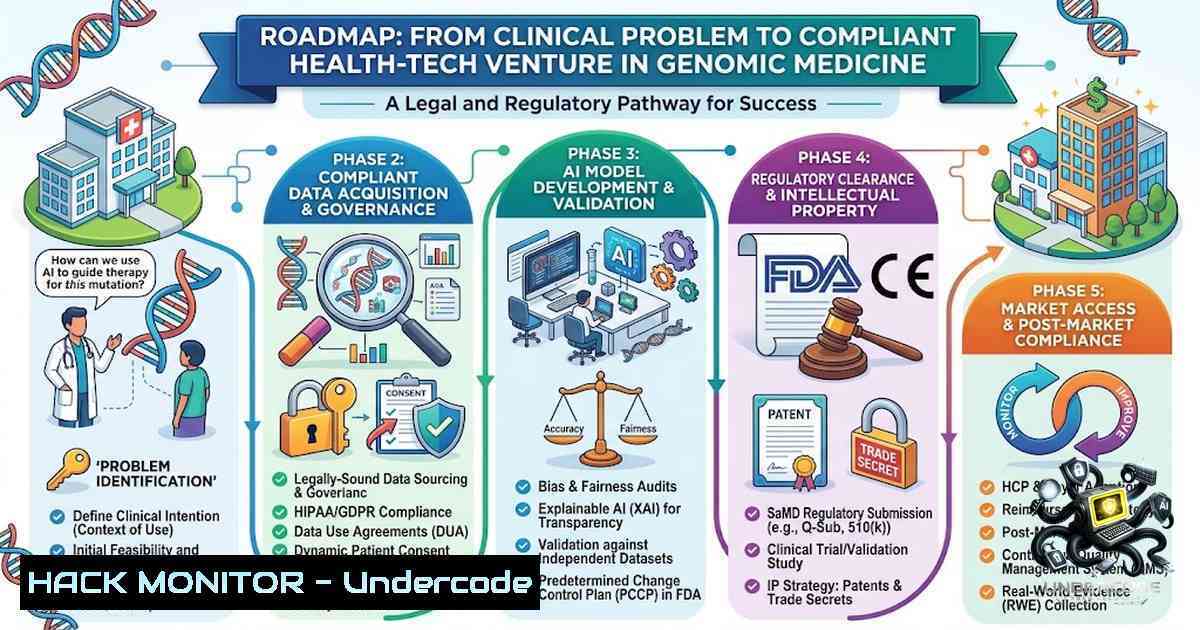
The intersection of artificial intelligence and genomic medicine represents one of the most promising frontiers in healthcare technology, yet it also presents some of the most complex challenges in data security, regulatory compliance, and clinical validation. As health-tech ventures like SEEVAD’s Generesis AI emerge to address the diagnostic odyssey faced by families with rare pediatric diseases—averaging 4.8 years and 7.3 specialists—the technical architecture behind these solutions must balance cutting-edge AI capabilities with rigorous security, interoperability, and compliance frameworks. This article examines the technical pillars required to build trustworthy clinical AI systems, drawing from the insights shared at the Tech Brews London x Seedhouse Community Network event and exploring the infrastructure needed to responsibly activate the NHS’s cradle-to-grave longitudinal data.
Learning Objectives:
- Understand the core technical components of genomic AI systems, including retrieval-augmented generation architectures and multi-layer data integration
- Master the compliance and security frameworks required for handling NHS patient data and genomic information
- Learn practical implementation strategies for building interoperable, clinically validated AI systems in regulated healthcare environments
You Should Know:
1. Building the Technical Foundation: Genomic AI Architecture
At the heart of any clinical genomic intelligence platform lies a sophisticated architecture designed to synthesize disparate data sources into actionable clinical insights. Generesis AI, as described by SEEVAD, synthesizes patient records, sequencing data, and over 40 million published papers to deliver evidence-based intelligence in minutes. This requires a multi-layered approach to data ingestion, retrieval, and reasoning.
The architecture typically comprises several key layers:
- Data Ingestion Layer: Handles structured data (EHR/EMR systems, lab results, sequencing outputs) and unstructured data (clinical notes, research papers, imaging reports). For NHS integration, this must comply with the Data Security and Protection Toolkit (DSPT) standards, which require organisations handling genetic information to complete Cyber Assessment Framework (CAF)-aligned assessments.
-
Retrieval Layer: Modern genomic AI systems employ hybrid retrieval strategies. Drawing from similar architectures in the field, a 4-layer hybrid retrieval approach combining vector search (e.g., Qdrant) with full-text search (e.g., SQLite FTS5) via Reciprocal Rank Fusion enables efficient knowledge access across millions of documents. This allows the system to retrieve relevant research papers, clinical guidelines, and similar case histories.
-
Reasoning Layer: Large language models fine-tuned on genomic and clinical data perform the synthesis and reasoning. The emergence of genomic foundation models—such as Genos’s 10-billion-parameter human genome model—demonstrates the feasibility of applying transformer architectures to DNA sequence understanding. These models can identify pathogenic variants, suggest potential diagnoses, and generate evidence-based recommendations.
-
Verification Layer: Critical for clinical applications, this layer ensures traceability. As SEEVAD emphasises, “Every answer traceable to its source”. This involves citation linking, confidence scoring, and audit trails for all generated recommendations.
Step-by-Step Guide: Implementing a Genomic AI Retrieval Pipeline
-
Set up a vector database for semantic search across research papers:
Using Qdrant (Docker deployment)
docker run -p 6333:6333 qdrant/qdrant
-
Index genomic variant data using a structured format like VCF (Variant Call Format):
Extract variant information using bcftools
bcftools query -f '%CHROM\t%POS\t%REF\t%ALT\t%INFO/ANN\n' sample.vcf > variants_annotated.tsv
-
Implement hybrid search combining vector similarity with keyword matching:
Pseudo-code for Reciprocal Rank Fusion def reciprocal_rank_fusion(vector_results, keyword_results, k=60): scores = {} for rank, doc in enumerate(vector_results): scores[doc.id] = scores.get(doc.id, 0) + 1 / (k + rank + 1) for rank, doc in enumerate(keyword_results): scores[doc.id] = scores.get(doc.id, 0) + 1 / (k + rank + 1) return sorted(scores.items(), key=lambda x: x[bash], reverse=True) -
Implement traceability by storing source mappings for each generated claim in a graph database (e.g., Neo4j).
2. Compliance and Data Security: The True Moat
As highlighted in the Tech Brews discussion, “robust architecture, strict compliance, and interoperability are the true moats” for health-tech ventures. In the UK context, this means navigating a complex regulatory landscape that includes the NHS Data Security and Protection Toolkit, UK GDPR, and the Health Research Authority’s Confidentiality Advisory Group (CAG) requirements.
Key Compliance Requirements:
- Data Protection Impact Assessment (DPIA): Must be completed prior to implementing AI-based technologies in NHS settings, assessing and mitigating potential harm to individuals.
-
Secure Data Environments (SDEs): NHS England has established regional SDEs across the country to manage secure access to patient data for research. These hold ISO 27001 certification and undergo regular testing.
-
Medical Device Registration: AI tools that summarise or interpret clinical inputs may need to be registered as Class I medical devices with the Medicines and Healthcare Products Regulatory Agency (MHRA).
-
Genomic Data Specifics: Organisations handling genomic data must complete CAF-aligned DSPT assessments. Patients undergoing whole genome sequencing through the NHS can consent to having their data stored in the National Genomic Research Library (NGRL), managed by Genomics England.
Step-by-Step Guide: NHS Data Security and Protection Toolkit Compliance
- Register your organisation on the DSPT platform (https://www.dsptoolkit.nhs.uk).
-
Complete the Cyber Assessment Framework (CAF) aligned assessment, which evaluates:
– Governance and risk management
– Security culture and training
– Identity and access management
– Data security and protection
3. Implement technical controls including:
 Enable audit logging on Linux systems
sudo auditctl -w /var/log/ -p wa -k data_access

Configure encrypted storage for sensitive data
sudo cryptsetup luksFormat /dev/sdX
sudo cryptsetup open /dev/sdX encrypted_data
4. Conduct a Data Protection Impact Assessment documenting:
- Data flows and processing purposes
- Risk assessment and mitigation measures
- Data subject rights and consent mechanisms
- Submit your DSPT annually and maintain ongoing compliance monitoring.
3. Interoperability: Connecting the Clinical Ecosystem
Interoperability remains one of the greatest technical challenges in health-tech. The NHS uses a complex ecosystem of systems including GP systems (EMIS, SystmOne), hospital EHRs, and specialised genomic databases. For a genomic AI platform to be clinically useful, it must integrate seamlessly with these existing workflows.
Key Interoperability Standards:
- FHIR (Fast Healthcare Interoperability Resources): The HL7 FHIR standard is increasingly adopted across NHS systems for exchanging healthcare data.
-
SNOMED CT: The clinical terminology system used in NHS England for recording clinical information.
-
HL7 v2/v3: Legacy messaging standards still widely used in hospital systems.
Step-by-Step Guide: Implementing FHIR Integration
1. Set up a FHIR server for testing:
 Using HAPI FHIR (Docker)
docker run -p 8080:8080 hapiprojects/hapi-fhir-jpaserver-starter
2. Query patient data using FHIR RESTful APIs:
curl -X GET "http://localhost:8080/fhir/Patient?identifier= NHS_NUMBER" \
-H "Accept: application/fhir+json"
- Map genomic data to FHIR using the Genomics Reporting Implementation Guide:
Create a FHIR Observation resource for a genetic variant observation = { "resourceType": "Observation", "code": { "coding": [{ "system": "http://loinc.org", "code": "69548-6", "display": "Genetic variant assessment" }] }, "valueCodeableConcept": { "coding": [{ "system": "http://snomed.info/sct", "code": "412734009", "display": "Pathogenic variant" }] } } -
Implement secure API authentication using OAuth2 and NHS SMART on FHIR profiles.
4. Clinical Validation and the “Mum Test” Approach
The concept of “The Mum Test”—never ask if your idea is good, instead ask about past actions and specific facts—applies equally to technical validation in healthcare. Before deploying AI in clinical settings, ventures must validate their systems against real-world clinical workflows and data.
Validation Steps:
- Shadow clinicians to understand actual workflows and pain points.
-
Run retrospective studies comparing AI recommendations against actual clinical outcomes.
-
Conduct prospective pilots in controlled clinical settings with appropriate oversight.
-
Measure tangible outcomes: reduction in diagnostic time, improvement in accuracy, changes in clinician workflow efficiency.
Technical Validation Commands:
 Calculate model performance metrics
python -c "
import numpy as np
from sklearn.metrics import accuracy_score, precision_score, recall_score, f1_score

y_true = np.load('ground_truth.npy')
y_pred = np.load('predictions.npy')

print(f'Accuracy: {accuracy_score(y_true, y_pred):.3f}')
print(f'Precision: {precision_score(y_true, y_pred, average=\"weighted\"):.3f}')
print(f'Recall: {recall_score(y_true, y_pred, average=\"weighted\"):.3f}')
print(f'F1: {f1_score(y_true, y_pred, average=\"weighted\"):.3f}')
"
5. Deployment and Monitoring in Clinical Environments
Deploying AI in NHS environments requires careful consideration of infrastructure, security, and ongoing monitoring.
Deployment Checklist:
- Infrastructure: Determine whether on-premise, cloud (NHS-approved), or hybrid deployment is appropriate. NHS England does not allow NHS data to be shared with insurance companies or marketing entities.
-
Security: Implement network segmentation, zero-trust architecture, and continuous monitoring.
-
Monitoring: Track model drift, performance degradation, and security events.
Monitoring Commands:
 Monitor system resources
htop

Monitor application logs for anomalies
tail -f /var/log/application.log | grep -E "ERROR|WARNING|SECURITY"

Set up Prometheus for metrics collection (Docker)
docker run -p 9090:9090 prom/prometheus
What Undercode Say:
- Key Takeaway 1: The technical moat in health-tech AI lies not just in the AI models themselves, but in the comprehensive architecture that ensures security, compliance, interoperability, and clinical traceability. Ventures that treat compliance as a core technical requirement rather than an afterthought will have a significant competitive advantage.
-
Key Takeaway 2: The “Mum Test” principle—focusing on past actions and specific facts rather than polite validation—is equally critical in technical development. Building what clinicians actually need, validated through direct observation and retrospective studies, creates products that solve real problems rather than imagined ones.
The UK health-tech scene is positioned for significant growth, with the NHS Clinical Entrepreneur Programme (Cohort 11) accepting applications from 19 October to 20 November 2026. Ventures like SEEVAD’s Generesis AI represent the convergence of frontier AI capabilities with deep clinical understanding. However, success requires more than just powerful models—it demands rigorous attention to security, compliance, interoperability, and clinical validation. The teams that master these technical pillars while maintaining focus on genuine clinical problems will build the future of healthcare. The future won’t happen by accident—it requires deliberate, technically sound, and clinically grounded engineering.
Prediction:
- +1 The convergence of genomic AI platforms with NHS infrastructure will accelerate rare disease diagnosis timelines from years to weeks, dramatically improving patient outcomes and reducing healthcare system costs.
-
+1 The establishment of Secure Data Environments and standardised compliance frameworks will create a fertile ground for health-tech innovation, enabling smaller ventures to compete with established players by leveraging shared infrastructure.
-
-1 The complexity of NHS compliance and interoperability requirements will continue to be a significant barrier to entry, potentially limiting innovation to well-funded ventures that can afford extensive legal and technical compliance resources.
-
+1 The integration of retrieval-augmented generation with genomic data will enable increasingly sophisticated clinical decision support, moving beyond variant interpretation to comprehensive treatment recommendation and monitoring.
-
-1 Without careful attention to model validation and continuous monitoring, the risk of algorithmic bias and diagnostic errors in genomic AI could undermine clinician trust and patient safety, potentially setting back adoption by years.
▶️ Related Video (84% Match):
https://www.youtube.com/watch?v=2H8S_yeXCGU
🎯Let’s Practice For Free:
🎓 Live Courses & Certifications:
Join Undercode Academy for Verified Certifications
🚀 Request a Custom Project:
Secure, high-velocity infrastructure and disruptive technological engineering. Contact our engineering team for high-tier development and proprietary systems:
[email protected]
💎 Smart Architecture | 🛡️ Secure by Design | ⭐ Trusted by Thousands
IT/Security Reporter URL:
Reported By: https://lnkd.in/p/edkc7F6q – Hackers Feeds
Extra Hub: Undercode MoN
Basic Verification: Pass ✅


