Listen to this Post
Introduction:
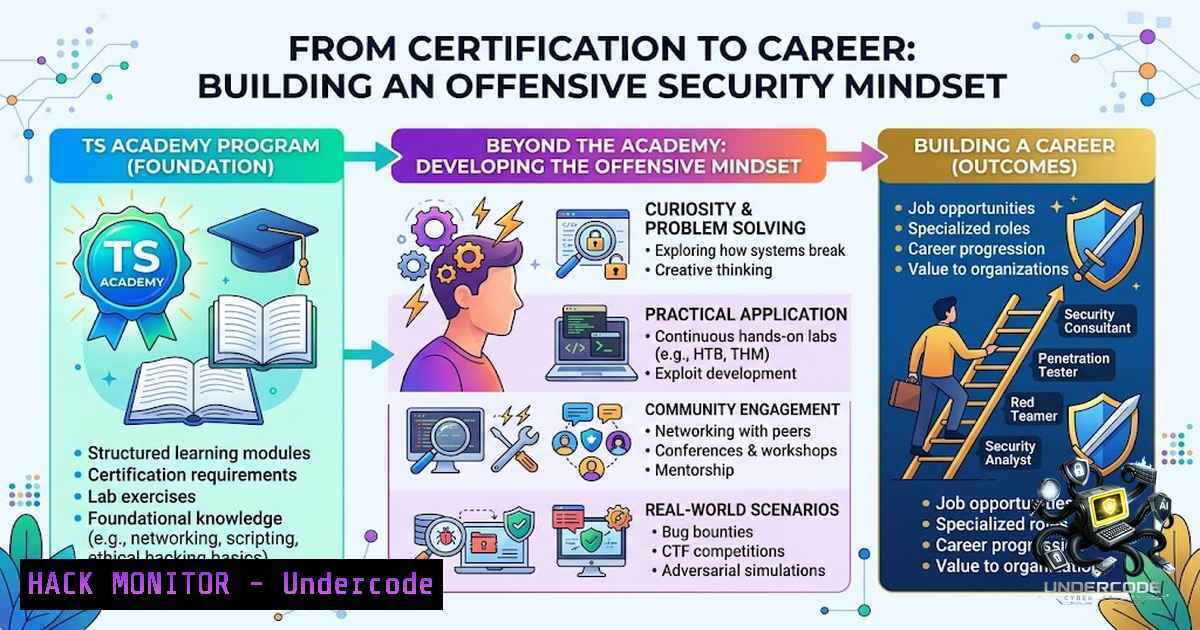
In the rapidly evolving landscape of information security, the transition from theoretical knowledge to practical application remains the most significant hurdle for aspiring professionals. The recent completion of a comprehensive cybersecurity program, as highlighted by security learner Asibecheh Savoir De Dieu Tebong, marks a critical inflection point where foundational concepts meet real-world adversarial thinking. This milestone underscores a crucial industry truth: certifications validate baseline knowledge, but true expertise in offensive security, bug bounty hunting, and application security demands continuous, self-directed exploration beyond structured curricula.
Learning Objectives & Secrets:
- Objective 1: Master the Reconnaissance Lifecycle. Effective penetration testing begins long before a single exploit is launched. Understand how to leverage OSINT (Open-Source Intelligence) frameworks like theHarvester, Shodan, and Recon-1g to build comprehensive digital profiles, moving beyond simple port scanning to understand the human and technical attack surface.
-
Objective 2: Automate Exploitation with Custom Scripts. While tools like Metasploit are powerful, relying solely on them limits your adaptability. Learn to write Python and Bash scripts to automate exploitation tasks, create custom payloads, and modify existing exploits to bypass basic security controls. This skill is the secret to standing out in bug bounty programs.
-
Objective 3: Shift Left with AI Security. The future of security lies in anticipating vulnerabilities during the development lifecycle. Integrate threat modeling and static application security testing (SAST) into your workflow early. This proactive approach, rather than solely reactive penetration testing, is the secret to modern application security and preparing for the complexities of AI-driven systems.
You Should Know:
1. Setting Up an Isolated Home Lab Environment
To safely practice offensive techniques and understand defensive configurations, a dedicated home lab is non-1egotiable. This environment allows you to break systems without legal repercussions and test mitigations.
- Step 1: Choose Your Hypervisor. Install VMware Workstation Pro (Windows/Linux) or VMware Fusion (macOS). Alternatively, use VirtualBox for a free, open-source option. This serves as the foundation for running multiple virtual machines simultaneously.
-
Step 2: Deploy the Attack Machine. Install Kali Linux. This distribution comes pre-installed with hundreds of security tools. Ensure you configure its network adapter to “Host-Only” or a custom “NAT” network to prevent accidental scanning of your corporate or home network devices.
-
Step 3: Create Vulnerable Targets. Download and install pre-built vulnerable virtual machines like Metasploitable 2, Metasploitable 3, or Hack The Box’s “Machines.” For web application testing, deploy OWASP WebGoat and OWASP Juice Shop locally using Docker: `docker run -p 8080:8080 webgoat/webgoat` and
docker run -p 3000:3000 bkimminich/juice-shop. -
Step 4: Network Segmentation. Create a virtual network within your hypervisor that is isolated from your host machine’s internet connection. This prevents accidental data exfiltration or damage to your personal files.
-
Step 5: Snapshotting. Before attacking any target, take a “snapshot” of the VM state. This allows you to instantly revert to a clean, untouched configuration after testing, ensuring you don’t have to reinstall the OS for each practice session.
2. The Art of OSINT and Passive Reconnaissance
Before launching a single packet against a target, an ethical hacker should possess as much knowledge as possible about their target. This reduces the attack surface and increases the likelihood of finding low-hanging fruit.
- Step 1: Domain and Subdomain Enumeration. Use tools like `Sublist3r` or `Amass` to enumerate subdomains associated with a target domain. Command example: `python sublist3r.py -d example.com` or
amass enum -d example.com. -
Step 2: Email Harvesting and Password Dumps. Use `theHarvester` to gather email addresses associated with a domain:
theHarvester -d example.com -l 500 -b google. Cross-reference found emails with sites like `Have I Been Pwned` (using their API) to check for credential leaks. -
Step 3: Technology Fingerprinting. Utilize `Wappalyzer` (browser extension) or `WhatWeb` to identify technologies running on the target’s web server:
whatweb example.com. This reveals the software versions that could be vulnerable. -
Step 4: Analyzing Public Repositories. Search GitHub or Pastebin for accidentally exposed API keys or internal code snippets using `github-dorks` or manual searches like
"api_key" site:github.com example.com.
3. Mastering the Exploit Research Cycle
Finding a CVE (Common Vulnerabilities and Exposures) is only half the battle; writing a working proof-of-concept is where true learning happens.
- Step 1: Vulnerability Discovery. Subscribe to the National Vulnerability Database (NVD) RSS feeds or follow security researchers on X/Twitter to stay updated on recently disclosed vulnerabilities.
-
Step 2: Analyzing the Advisory. Read the security advisory carefully. Look for the patch notes and commit logs in the source code repository (e.g., GitHub) to identify the exact lines of code that were changed. This reveals exactly where the vulnerability existed.
-
Step 3: Setting Up a Test Environment. Replicate the vulnerable software version in your home lab. This is critical. Never test exploits in production.
-
Step 4: Modifying Metasploit Modules. If the exploit exists in Metasploit, analyze its Ruby code. Try modifying the `PAYLOAD` or the target’s `RHOSTS` and `RPORT` values. If it doesn’t exist, write a `local_exploit_suggester` module to automate the process.
4. Core Linux Commands for Security Analysis
Command-line proficiency is the backbone of penetration testing. Master these commands to navigate, manipulate, and extract data from target systems.
netstat -tulpn: Display active listening ports and established connections on a Linux system. Essential for identifying open services.ss -tulpan: A modern replacement for `netstat` on Linux, providing similar information with more detail.ps aux | grep [bash]: Find the Process ID (PID) of a specific running process.find / -perm -4000 2>/dev/null: Search for SUID binaries. These files can be exploited to escalate privileges.cat /etc/passwd | awk -F: '{print $1}': Dump all local users on a Unix-like system.grep -r "password" /var/www/: Recursively search for the word “password” in web server files.- `curl -I http://target-ip`: Fetch HTTP headers to see server software and cookies.
- For Windows: `Get-WmiObject -Class Win32_Product | Format-Table IdentifyingNumber, Name, Vendor -AutoSize` to list installed software and its GUIDs.
5. API Security: Understanding OAuth 2.0 Flaws
As application security (AppSec) becomes dominant, understanding API vulnerabilities is crucial.
- Step 1: Understanding OAuth Flows. Grasp the differences between Authorization Code Grant, Implicit Grant, and Client Credentials Grant. Recognize where the vulnerabilities lie, such as in redirect_uri validation.
- Step 2: Testing for IDOR (Insecure Direct Object References). Use Burp Suite’s Repeater to intercept an API request like
/api/user/123. Change the ID to `/api/user/124` to see if the server returns another user’s data without proper authorization checks. - Step 3: Testing for Mass Assignment. Analyze the JSON payload sent to an API endpoint. Try adding unexpected parameters like `”admin”:true` or `”role”:”administrator”` to see if the server automatically processes them.
- Introduction to Cloud Hardening and IAM (AWS Example)
Securing cloud infrastructure is non-1egotiable. Understanding Identity and Access Management (IAM) is the first line of defense.
- Step 1: Principle of Least Privilege. When creating IAM policies, never assign `”Action”: “”` and
"Resource": "". Instead, use specific Amazon Resource Names (ARNs). Example:"Resource": "arn:aws:s3:::my-secure-bucket/". - Step 2: Investigate S3 Bucket Permissions. Use the command `aws s3 ls –recursive –human-readable` to list buckets. Check public accessibility with
aws s3api get-bucket-acl --bucket bucket-1ame. - Step 3: Configuration Audits. Utilize tools like `Prowler` or `ScoutSuite` to conduct automated security assessments of your AWS environment. Install Prowler with `pip install prowler` and run
prowler aws --region us-east-1.
What Undercode Say:
- Key Takeaway 1: The “Keeper” of the Keepers. In the cybersecurity ecosystem, we often celebrate the “breaking” aspect—the exploits, the hacks, the 0-days. However, the true unsung heroes are those who understand the fundamentals of building. The certificate from TS Academy is not a ticket to being an attacker; it is a license to understand how to be the best possible defender. It provides the essential blueprint of “how things work,” which is the only prerequisite to understanding “how things break.”
- Key Takeaway 2: Resilience over Vulnerability. The mention of “discipline and the willingness to keep breaking and rebuilding your understanding” is the core of this profession. The cybersecurity landscape is a fog of war. Tools become obsolete, vulnerabilities are patched, and attack vectors shift. The ability to unlearn and re-learn is more valuable than memorizing a specific exploit. This journey to AI security is not just about the destination but about cultivating the intellectual rigor to navigate an uncertain future.
Prediction:
- +1: The journey from certification to AI security will see a surge in “Prompt Injections” and “Data Poisoning” attacks. This will drive demand for cybersecurity professionals who not only understand code but also the logic and decision-making processes of Large Language Models (LLMs), creating lucrative niche consulting roles.
- +1: The gamification of skills development through platforms like Hack The Box and TryHackMe, alongside foundational programs like TS Academy, will democratize access to advanced cybersecurity knowledge. This will lead to a more diverse pool of talent entering the industry.
- -1: The rapid deployment of AI-powered development tools (like GitHub Copilot) will introduce a new wave of vulnerabilities into codebases. Developers, in their haste, may accept insecure code suggestions, making application security and code review skills more critical than ever.
- -1: The lack of standardization in “AI Security” curricula will lead to a skills gap bubble. Many early-career professionals will struggle to transition to this field without a firm grasp of core principles like cryptography, network architecture, and secure coding practices.
- +1: The focus on “continuous learning” will transform the career path. Traditional one-time certifications will decline in value, replaced by verified, real-time skill assessments and project portfolios. This shift empowers hands-on learners to succeed based on demonstrable ability rather than test-taking skills.
▶️ Related Video (80% Match):
🎯Let’s Practice For Free:
🎓 Live Courses & Certifications:
Join Undercode Academy for Verified Certifications
🚀 Request a Custom Project:
Secure, high-velocity infrastructure and disruptive technological engineering. Contact our engineering team for high-tier development and proprietary systems:
[email protected]
💎 Smart Architecture | 🛡️ Secure by Design | ⭐ Trusted by Thousands
IT/Security Reporter URL:
Reported By: https://lnkd.in/p/em-jHjta – Hackers Feeds
Extra Hub: Undercode MoN
Basic Verification: Pass ✅


