
Listen to this Post
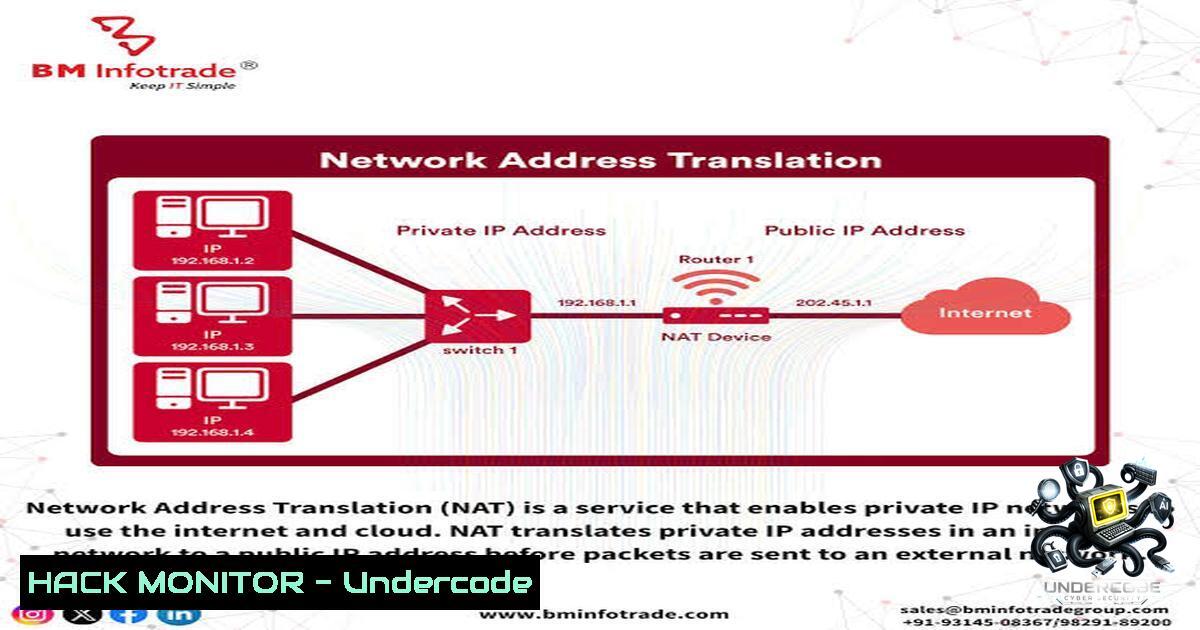
Introduction:
The average home network operates under a dangerous misconception: that hiding behind a single public IP address somehow provides security. While Network Address Translation (NAT) is often mistaken for a firewall, it is fundamentally a traffic cop, not a security guard. It routes packets without asking if they are malicious, leaving a false sense of protection until a real firewall steps in to enforce the rules of engagement.
Learning Objectives:
- Understand the difference between NAT, PAT, and Stateful Firewalls in modern network architecture.
- Master the configuration of `iptables` (Linux) and Windows Defender Firewall for host-based security.
- Explore how cloud security groups (AWS/NGFW) enforce “Default Deny” as a critical infrastructure rule.
You Should Know:
- Network Address Translation (NAT) – The Receptionist, Not the Bouncer
Before you can secure a network, you must understand how devices are mapped. NAT is the process of modifying IP address information in packet headers while in transit. The post correctly outlines the three types: Static NAT (1-to-1 mapping), Dynamic NAT (pool borrowing), and PAT (Port Address Translation). PAT is what enables your home router—with a single public IP—to let your laptop, phone, and TV browse the internet simultaneously.
The Danger of NAT-Only Networks
Many engineers rely on NAT as a layer of obscurity. However, NAT is stateless concerning security; if an attacker sends a crafted packet to your public IP, NAT will drop the packet only if no port mapping exists. It does not inspect the packet’s payload for malware or exploits. To test this, you can check your NAT table on a Linux router using conntrack:
sudo conntrack -L -1 View active NAT sessions on Linux
On Windows, you can view the state of NAT bindings using:
netsh interface ipv4 show nat
- The Firewall – The Security Guard at the Door
While NAT asks “Where do I send this?”, the Firewall asks “Do I allow this?” Firewalls enforce policies based on rules. The post mentions “Default Allow” (allow all, block specific) and “Default Deny” (block all, allow specific). In cybersecurity, “Default Deny” is the golden standard because it aligns with the Principle of Least Privilege (PoLP).
Step‑by‑Step: Configuring Default Deny on Linux (iptables)
To convert a Linux server into a basic firewall, you must flush existing rules and set the default policy to DROP.
1. Flush existing rules and set default policies:
sudo iptables -P INPUT DROP
sudo iptables -P FORWARD DROP
sudo iptables -P OUTPUT ACCEPT  Allow outgoing by default
2. Allow established/related connections (stateful inspection):
sudo iptables -A INPUT -m conntrack --ctstate ESTABLISHED,RELATED -j ACCEPT
3. Allow SSH explicitly (to avoid locking yourself out):
sudo iptables -A INPUT -p tcp --dport 22 -j ACCEPT
4. Save the rules permanently (Ubuntu/Debian):
sudo netfilter-persistent save
3. Stateless vs. Stateful Firewall Logic
The post highlights a critical distinction:
- Stateless: Treats each packet independently. It looks at source IP, dest IP, and port, but it has no memory of previous packets. This is faster but vulnerable to spoofing.
- Stateful: Maintains a state table. If a packet is part of an established session (e.g., a TCP handshake), it is automatically allowed back in. This reduces the attack surface.
Lab: Simulating Stateful Tracking
You can observe this logic via `iptables` and tcpdump. Run the following to monitor active connections:
sudo watch -1 1 'iptables -L -v -1 | grep -v "0 0"' Monitor rule hits
If you ping an external server, the stateful rule (ESTABLISHED) will allow the ICMP reply without an explicit inbound rule, proving the firewall “remembers” the conversation.
- Practical Cloud Hardening (Security Groups as Next-Gen Firewalls)
In cloud environments (AWS, Azure, GCP), Security Groups act as virtual stateful firewalls. The fundamental flaw is often leaving SSH (port 22) or RDP (port 3389) open to0.0.0.0/0. If you are using NAT-only instances, you lack deep packet inspection.
Command Line Audit (AWS CLI):
To audit your security groups for overly permissive rules:
aws ec2 describe-security-groups --filters Name=ip-permission.cidr,Values='0.0.0.0/0' --query 'SecurityGroups[].GroupName' --output table
Mitigation: Implement “Default Deny” in your VPC. Use Bastion hosts (jump boxes) for SSH access, and ensure your security groups only allow traffic from specific IPs or the Bastion’s private IP.
5. Windows Defender Firewall – Advanced Security Configuration
Home routers hide behind NAT, but endpoints require host-based firewalls. On Windows, you can manage inbound rules via PowerShell to enforce a default deny for specific services.
– Step 1: Open Windows Defender Firewall with Advanced Security.
– Step 2: Block all inbound connections by default (recommended).
– Step 3: Create an inbound rule allowing only your specific remote IP for RDP.
– Step 4 (CLI): Add a rule to block a specific port:
New-1etFirewallRule -DisplayName "Block Port 445" -Direction Inbound -LocalPort 445 -Protocol TCP -Action Block
- The “Receptionist” vs. “Guard” Analogy in API Security
The analogy extends to microservices. In Kubernetes, a “Service” acts like NAT—routing traffic to pods. An “Ingress Controller” or “Service Mesh” (like Istio) acts as the Firewall, enforcing mTLS and authorization policies. If you rely solely on cluster IPs (NAT), you bypass zero-trust. You must enforce Network Policies.
YAML Example (NetworkPolicy – Default Deny):
apiVersion: networking.k8s.io/v1
kind: NetworkPolicy
metadata:
name: default-deny
spec:
podSelector: {}
policyTypes:
- Ingress
7. Troubleshooting: Why Do “Allowed” Packets Get Dropped?
Sometimes, even with a firewall, packets are dropped due to the NAT table being full or route issues.
– Check NAT session exhaustion (Linux):
cat /proc/sys/net/netfilter/nf_conntrack_max
– Check active sessions:
wc -l /proc/net/nf_conntrack
If active connections exceed the limit, new packets are dropped—a type of “receptionist” overload, not a firewall rule.
– Windows Route Issue: If NAT fails, check the Routing table.
route print -4
What Undercode Say:
- Key Takeaway 1: NAT is not a security control. It is an address conservation mechanism. Relying on it for protection is akin to hiding your house keys under the mat; it offers no resistance to a determined attacker.
- Key Takeaway 2: The “Default Deny” philosophy is the only viable strategy in modern threat landscapes. Zero Trust dictates that you must block everything and explicitly allow the essentials, ensuring that even undiscovered zero-day exploits cannot enter through an open gate.
- Analysis: The industry shift towards “Zero Trust Network Access” (ZTNA) is essentially a rebranding of stateful firewall logic applied to users and devices. The intern’s exploration correctly identifies that network engineers often conflate these services. The reality is that a stateful firewall operating on a “Default Deny” policy not only stops unsolicited malicious traffic but also provides rich logging for threat hunting. However, organizations often fail because they implement these rules and neglect to log or monitor the “Drops.” Understanding the `conntrack` table and firewalls is crucial, but the real skill lies in analyzing the `DROP` logs to identify lateral movement attempts—a practice that turns a simple firewall into an active Intrusion Prevention System (IPS).
Prediction:
- +1 The proliferation of IPv6 will eliminate the need for NAT, forcing organizations to rely strictly on firewall policies rather than address scarcity. This will increase the demand for skilled engineers who understand packet filtering at scale.
- +1 Stateful firewalls will evolve to incorporate AI-driven anomaly detection, where the “state” is not just a port number but behavioral profiling of user traffic.
- -1 The reliance on “Default Allow” in many legacy industrial control systems (ICS/SCADA) continues to pose a critical infrastructure risk. As IoT devices grow, the failure to implement basic stateful inspection will lead to catastrophic botnet attacks in 2026.
🎯Let’s Practice For Free:
🎓 Live Courses & Certifications:
Join Undercode Academy for Verified Certifications
🚀 Request a Custom Project:
Secure, high-velocity infrastructure and disruptive technological engineering. Contact our engineering team for high-tier development and proprietary systems:
[email protected]
💎 Smart Architecture | 🛡️ Secure by Design | ⭐ Trusted by Thousands
IT/Security Reporter URL:
Reported By: Vishwaa R – Hackers Feeds
Extra Hub: Undercode MoN
Basic Verification: Pass ✅


