Listen to this Post
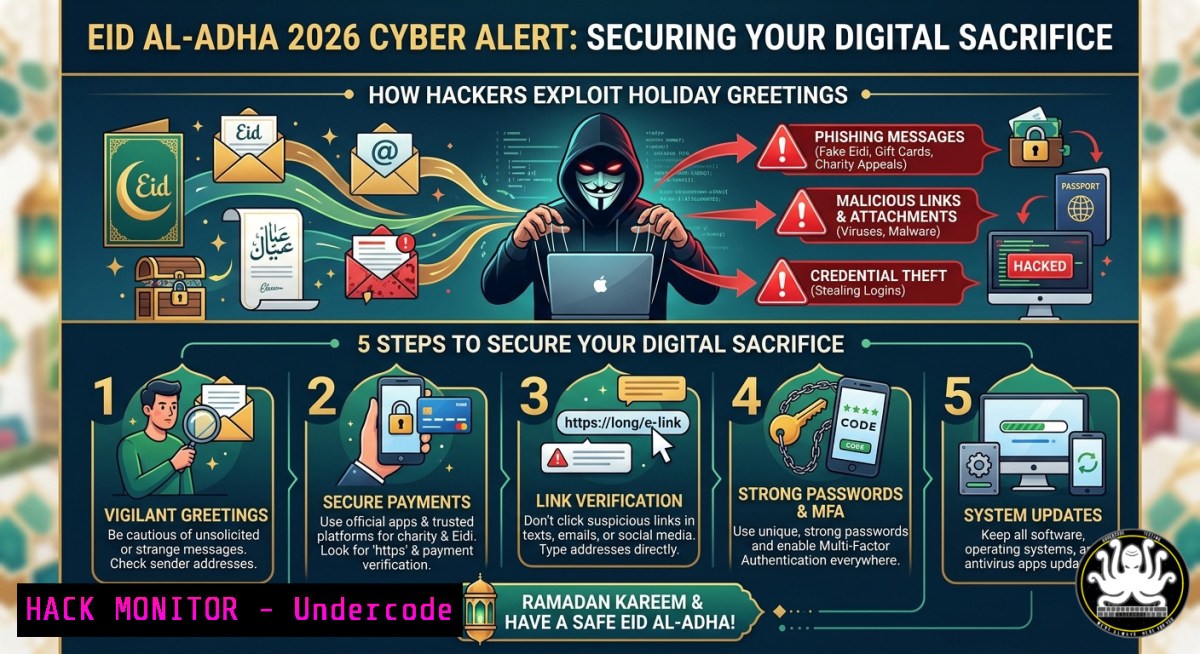
Introduction:
Holiday seasons like Eid Al-Adha see a surge in email and social media greetings—but cybercriminals leverage this goodwill to distribute malicious links, fake donation campaigns, and social engineering traps. The Global Information Security Society for Professionals of Pakistan (GISPP) reminds members that even a seemingly innocent “Eid Mubarak” post can hide URL redirects, credential harvesters, or payload droppers. This article dissects real-world holiday-themed attack vectors and provides actionable defense techniques using OSINT, email header analysis, and endpoint hardening.
Learning Objectives:
- Identify and analyze malicious holiday greeting URLs using command-line tools and sandboxing.
- Implement email filtering rules and SIEM alerts to detect phishing campaigns masquerading as Eid-related messages.
- Harden Windows and Linux endpoints against social engineering and drive-by download attacks common during peak cultural celebrations.
You Should Know:
- Deconstructing a Malicious “Eid Mubarak” URL – Step‑by‑Step Analysis
Attackers often shorten or obfuscate links in posts like the GISPP’s legitimate greeting. However, fake pages mimic legitimate societies. Here’s how to inspect a suspicious link:
Linux – Extract and follow redirects without loading content:
 Use curl to show only headers and follow redirects
curl -IL "http://bit.ly/fake-eid-greeting" | grep -i location

Check URL with VirusTotal CLI (requires API key)
curl -s "https://www.virustotal.com/api/v3/urls" -X POST -H "x-apikey: YOUR_API_KEY" -d "url=http://suspicious-link.com/eid"
Windows – PowerShell URL expansion:
 Resolve shortened URL
(Invoke-WebRequest -Uri "http://tinyurl.com/fake-eid" -MaximumRedirection 0 -ErrorAction SilentlyContinue).Headers.Location
Step‑by‑step guide:
- Copy the suspicious URL from a post or email.
- Run the `curl -IL` command to see the final destination without rendering content.
- Compare the final domain against known malicious IOC lists (e.g., threatfox.abuse.ch).
- Use `whois` on Linux to check domain registration date (recent domains are high risk):
`whois suspicious-eid.com | grep -E ‘Creation Date|Registrant’`
- If the link leads to a credential harvester (fake GISPP login), immediately block the domain via DNS sinkhole or hosts file:
`echo “0.0.0.0 malicious-eid.com” >> /etc/hosts` (Linux)
`Add-Content -Path C:\Windows\System32\drivers\etc\hosts -Value “0.0.0.0 malicious-eid.com”` (Admin PowerShell)
2. Email Header Forensics for Holiday Phishing Campaigns
Attackers send “Eid donation” or “GISPP webinar invitation” emails with spoofed sender addresses. Use these commands to extract and analyze headers.
Linux – Fetch and parse headers:
 Save raw email as eml file, then:
cat suspicious_eid.eml | grep -E "From:|Return-Path:|Reply-To:|Received:|Authentication-Results"

Trace the first received IP
grep "Received: from" suspicious_eid.eml | head -1 | awk '{print $NF}'
Windows – Open EML in Notepad or use PowerShell:
 Display key header fields
Get-Content .\suspicious_eid.eml | Select-String -Pattern "From:|Return-Path:|DKIM-Signature|SPF"
Step‑by‑step guide:
1. Open the suspicious email as raw/eml source.
- Check `Return-Path` and `Reply-To` – if different from the display
From, it’s spoofed. - Verify SPF/DKIM/DMARC using `Authentication-Results` header. A “fail” or “none” indicates forgery.
- Extract the originating IP from the first `Received` header and query it:
`curl ipinfo.io/192.0.2.45` – if the IP belongs to a VPN or hostile ASN, block it. - Configure your mail gateway to reject emails with missing or failed SPF for your domain:
`v=spf1 include:spf.protection.outlook.com -all` (add this TXT record for your organization). -
Endpoint Hardening Against Drive‑by Downloads from Fake Greeting Posts
Cybercriminals embed scripts in fake “Eid Al-Adha 2026” HTML cards. Prevent execution with these controls.
Linux – Disable JavaScript in browser via command line (Firefox):
 Lock down Firefox preferences
echo 'user_pref("javascript.enabled", false);' >> ~/.mozilla/firefox/.default/prefs.js
Windows – Use AppLocker to block script interpreters:
 Block PowerShell from running downloaded scripts
Set-ExecutionPolicy -ExecutionPolicy RemoteSigned -Scope LocalMachine

Add a Deny rule for wscript.exe and cscript.exe via PowerShell (run as admin)
$rule = New-AppLockerPolicy -RuleType Exe -User Everyone -Action Deny -Path "%systemroot%\system32\wscript.exe"
Set-AppLockerPolicy -Policy $rule
Step‑by‑step guide:
- For all company devices, enforce browser security settings to disable automatic downloads.
- Deploy a local DNS filter (e.g., Pi-hole) to block known malware domains:
`curl -sSL https://raw.githubusercontent.com/StevenBlack/hosts/master/hosts >> /etc/hosts` (Linux) - On Windows, enable Controlled Folder Access to block ransomware pretending to be holiday photos:
`Set-MpPreference -EnableControlledFolderAccess Enabled`
- Audit scheduled tasks that may have been planted by fake greetings:
Linux: `crontab -l` and `systemctl list-timers`
Windows: `schtasks /query /fo LIST /v`
- Finally, implement browser extension policies to block tracking and malicious redirects – e.g., uBlock Origin deployed via group policy.
4. Building SIEM Alerts for Holiday Themed IOCs
Use the following Sigma rule (convert to your SIEM’s syntax) to detect Eid-related phishing.
title: Eid Al-Adha Phishing Keywords
status: experimental
logsource:
product: windows
service: security
detection:
selection:
EventID: 4663  File access
ObjectName|contains:
- 'Eid'
- 'Adha'
- 'Qurbani'
condition: selection
Convert to Splunk query:
`index=email subject=”Eid” OR subject=”Adha” | stats count by sender, link_domain`
Step‑by‑step guide:
- Ingest email gateway logs and proxy logs into your SIEM.
- Create detection rules for high-volume outbound POST requests to newly registered domains (age < 7 days) with referrer headers from social media.
- Set up an alert when any user clicks a URL containing “Eid” but the final destination domain differs from `gispp.org.pk` (or your known legitimate domains).
- Automate blocklist updates from threat feeds (e.g., MISP, AlienVault OTX) – use cron or Task Scheduler:
Linux: `0 /6 curl -s https://otx.alienvault.com/api/v1/pulses/subscribed?api_key=YOURKEY | jq ‘.results[].indicators[].indicator’ >> /etc/blocklist.txt`
5. Test the alert by simulating a fake Eid link using `canarytokens.org` – ensure your SOC receives the notification. -
Cloud Hardening Against Account Takeover via Holiday Social Engineering
Attackers send “GISPP Eid gift” links that lead to fake Microsoft/Google login pages. Mitigate with Conditional Access and MFA policies.
Azure AD / Microsoft 365 – Require MFA for all logins except trusted IPs:
 Connect to MSOnline first
New-MgConditionalAccessPolicy -DisplayName "Require MFA for Eid sensitive accounts" -Conditions @{ Applications = @{ IncludeApplications = @("All") }; Locations = @{ ExcludeLocations = @("TrustedIPs") } } -GrantControls @{ BuiltInControls = @("mfa") }
AWS – Create a deny policy for suspicious user-agent strings (e.g., “EidBot”):
{
"Version": "2012-10-17",
"Statement": [{
"Effect": "Deny",
"Action": "",
"Resource": "",
"Condition": {
"StringLike": {
"aws:UserAgent": ["Eid", "Adha", "Qurbani"]
}
}
}]
}
Step‑by‑step guide:
- Enforce number matching in Microsoft Authenticator to prevent MFA fatigue attacks during holiday weekends.
- Create a risk-based policy in Azure: block sign-ins from countries that are not your organization’s operating regions (add “Pakistan” as allowed for GISPP members).
- For Google Workspace, enable Advanced Protection Program for executive accounts.
- Run a holiday-themed phishing simulation using open-source tools like GoPhish – measure click rates on “Eid Mubarak” lures.
- Post-simulation, revoke all session tokens to flush any undetected compromise:
Azure: `Revoke-AzureADUserAllRefreshToken -ObjectId [email protected]`
AWS: `aws cognito-idp admin-user-global-sign-out –user-pool-id –username `
What Undercode Say:
- Key Takeaway 1: Holiday greetings in professional cybersecurity communities are double-edged swords; while GISPP’s post is genuine, attackers will clone the exact phrasing and imagery within hours. Always verify shortened URLs via `curl -IL` and never enter credentials after clicking a social media link.
- Key Takeaway 2: Defense must shift from reactive to proactive during cultural peaks – deploy SIEM alerts for celebration-related keywords, enforce MFA relentlessly, and train users to report any “Eid Mubarak” message that requests an action or download, regardless of the sender’s display name.
Analysis: The GISPP Eid post appears harmless, but an adversary can scrape it, replace the image link with a malicious payload, and repost in fake groups. Without URL sandboxing and email authentication, even security professionals fall victim. The 2026 threat landscape includes AI-generated personalized holiday messages with perfect grammar and cultural references, bypassing traditional spam filters. The commands provided – from header analysis to Conditional Access – form a layered defense that transforms a simple greeting into a security teaching moment. Organizations must treat every seasonal post as a potential IOC and automate threat hunting accordingly.
Prediction:
By Eid Al-Adha 2027, we will see deepfake video greetings impersonating society presidents, distributing infostealers via fake Zoom meeting links. AI will generate context-aware lures referencing individual members’ past donations or prayer timings. Defenders will adopt real-time URL isolation and browser-based AI anomaly detection to counter this. The Global Information Security Society for Professionals of Pakistan will likely publish an annual “Holiday Threat Intelligence Report” – and those who ignore today’s hardening steps will face account compromises that echo long after the festivities end.
▶️ Related Video (72% Match):
🎯Let’s Practice For Free:
IT/Security Reporter URL:
Reported By: Gispp Eidaladha2026 – Hackers Feeds
Extra Hub: Undercode MoN
Basic Verification: Pass ✅
🎓 Live Courses & Certifications:
Join Undercode Academy for Verified Certifications
🚀 Request a Custom Project:
Secure, high-velocity infrastructure and disruptive technological engineering. Contact our engineering team for high-tier development and proprietary systems:
[email protected]


