Listen to this Post
Introduction:
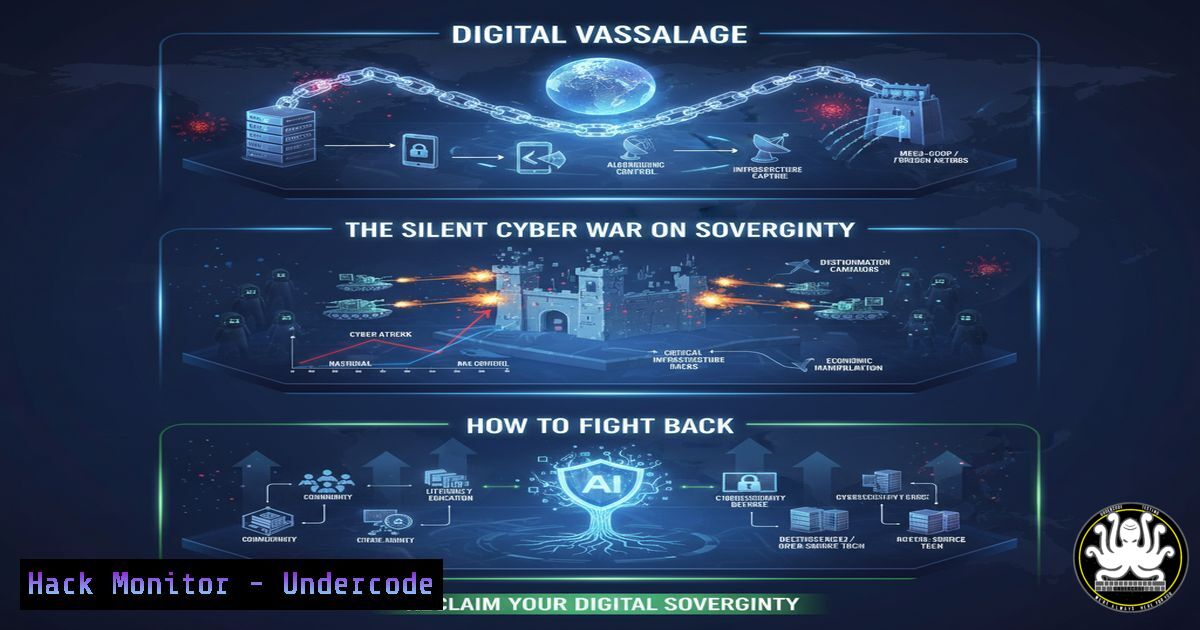
The concentration of critical infrastructure and data within a handful of tech monopolies has created a new form of digital colonialism. This centralization, often facilitated by government partnerships, presents an unprecedented attack surface for state-sponsored espionage, cybercrime, and mass surveillance. Understanding the technical mechanisms of this control is the first step toward building resilient, sovereign systems.
Learning Objectives:
- Identify critical vulnerabilities inherent in centralized cloud and DNS infrastructures.
- Implement defensive commands and configurations to harden systems against mass data collection.
- Develop skills for auditing and securing assets from unauthorized platform access and surveillance.
You Should Know:
1. Hardening Cloud IAM and Access Logging
The centralized control tech giants exert is often enabled by misconfigured Identity and Access Management (IAM). Comprehensive logging is your first line of defense.
 AWS CLI: Enable and view CloudTrail logs across all regions
aws cloudtrail create-trail --name global-trail --s3-bucket-name my-audit-bucket --is-multi-region-trail
aws cloudtrail lookup-events --lookup-attributes AttributeKey=Username,AttributeValue=admin --start-time 2023-10-01
Step-by-step guide:
- The first command creates a multi-region CloudTrail trail named
global-trail, sending all API activity logs to the specified S3 bucket (my-audit-bucket). This is crucial for tracking unauthorized access attempts across your entire environment. - The second command performs a lookup on these logs, filtering for events associated with the username “admin” since a specific date. Use this to audit privileged user activity and detect potential credential misuse or insider threats.
2. DNS Security and Sovereignty
DNS is a foundational control point. Moving away from default or monopolized DNS providers can prevent tracking and hijacking.
 Using dig to verify DNSSEC validation and trace resolution
dig +dnssec @8.8.8.8 A example.com
dig +trace @1.1.1.1 NS example.com
Step-by-step guide:
- The first command queries Google’s DNS (8.8.8.8) for the A record of `example.com` with the `+dnssec` flag. Check for the `ad` (authentic data) flag in the response to confirm DNSSEC validation is working, ensuring the response hasn’t been tampered with.
- The `+trace` command performs a recursive lookup from the root servers down, showing the entire delegation path for
example.com. This helps identify unauthorized DNS hijacking or misconfiguration by visualizing the chain of trust.
3. Detecting Data Exfiltration Attempts
Monitor your network for large, unexpected outbound transfers, a key indicator of data being siphoned to external entities.
 Linux: Use netstat and tcpdump to monitor connections
netstat -tunap | grep ESTABLISHED
sudo tcpdump -i any -n port 443 and host 52.94.234.183 -w exfil_suspect.pcap
Step-by-step guide:
1. `netstat -tunap` lists all established TCP (-t) and UDP (-u) connections, showing the process (-p) and numerical addresses (-n). Pipe this to `grep ESTABLISHED` to filter for active connections, watching for unknown remote IPs.
2. The `tcpdump` command captures all traffic on any interface (-i any) to or from a specific suspicious IP (e.g., a cloud storage endpoint) on port 443 (HTTPS). The `-w` flag writes the packets to a file (exfil_suspect.pcap) for later forensic analysis in Wireshark.
4. Securing API Endpoints from Unauthorized Access
APIs are the primary conduit for data exchange with cloud platforms. Securing them is non-negotiable.
 Using curl to test API security headers
curl -I -X GET https://api.yourservice.com/v1/data
nmap -p 443 --script ssl-enum-ciphers api.yourservice.com
Step-by-step guide:
- The `curl -I` command fetches only the headers from the API response. Verify the presence of
Strict-Transport-Security,X-Content-Type-Options: nosniff, and the absence of overly permissive `Access-Control-Allow-Origin` headers. - The `nmap` command probes the API’s SSL/TLS implementation on port 443, using the `ssl-enum-ciphers` script to enumerate the supported cipher suites. This identifies weak or deprecated ciphers that could be exploited to decrypt communications.
5. Linux Process and User Accountability Auditing
Maintain sovereignty over your own systems by ensuring full visibility into user and process activity.
 Linux auditd rules for monitoring privileged access
sudo auditctl -a always,exit -F arch=b64 -S execve -k EXEC_TRACKING
sudo ausearch -k EXEC_TRACKING -i
Step-by-step guide:
- The `auditctl` command adds a rule (
-a) to always log on exit (always,exit) for the 64-bit architecture, monitoring the `execve` system call (which executes programs). It tags these events with the keyEXEC_TRACKING.
2. `ausearch` is then used to query the audit log for events with the `EXEC_TRACKING` key, with the `-i` flag interpreting numerical data into human-readable form. This creates an audit trail of every command executed on the system.
6. Windows Command Line Forensics and Persistence Hunting
Adversaries and legitimate platforms alike often establish persistence on Windows systems.
 PowerShell: Hunt for common persistence mechanisms
Get-CimInstance Win32_StartupCommand | Select-Name, Command, Location, User
Get-ScheduledTask | Where-Object {$_.State -eq "Ready"} | Get-ScheduledTaskInfo
Step-by-step guide:
- The first command uses `Get-CimInstance` to query the `Win32_StartupCommand` WMI class, which lists applications that run automatically upon user login. Review the `Command` and `Location` fields for unrecognized entries.
- The second command pipeline gets all scheduled tasks that are in a “Ready” state and then retrieves their detailed info. This is a common method for persistence; scrutinize tasks with triggers like “At startup” or “At logon” from unknown authors.
7. Container Escape Mitigation and Isolation Verification
In a centralized cloud, your workloads often run in containers. Ensuring they cannot break isolation is critical.
 Docker Security Commands
docker ps --format "table {{.Names}}\t{{.RunningFor}}\t{{.Command}}"
docker container update --memory 512m --memory-swap 1g container_name
Step-by-step guide:
1. `docker ps` lists running containers. The `–format` flag provides a customizable table showing the container name, how long it’s been running, and the command it started with. This helps identify suspicious or long-running containers.
2. The `docker container update` command modifies a running container’s resource limits. Here, it sets a hard memory limit of 512MB and a swap limit of 1GB for container_name. This helps mitigate resource exhaustion attacks and limits the impact of a potential compromise.
What Undercode Say:
- The core vulnerability is not a software bug, but a structural one: the deliberate centralization of power and data.
- Technical sovereignty, achieved through distributed architectures and deep system hardening, is the only effective countermeasure.
The post’s thesis of “Digital Vassalage” is not merely philosophical but a precise technical reality. The attack vectors are the APIs, the DNS queries, the IAM policies, and the container configurations that cede control to a third party. The mitigation is not just policy but practice: aggressive logging, cryptographic verification of services, and a zero-trust approach to even “trusted” platform services. The tools of control are technical, and so must be the tools of liberation. The future of cybersecurity is the fight for architectural sovereignty.
Prediction:
The continued centralization of digital infrastructure will lead to a catastrophic, multi-vector “Cyber Pearl Harbor” event. This will not be a single attack but a cascading failure, where a compromise or policy change within a key tech monopoly disrupts global financial, energy, and communications systems. This will inevitably spark a rapid, forced decentralization of critical infrastructure, with nations and corporations mandating sovereign, air-gapped, and multi-cloud redundancy strategies, fundamentally reshaping the internet’s architecture toward fragmentation and resilience over convenience.
🎯Let’s Practice For Free:
IT/Security Reporter URL:
Reported By: Andy Jenkinson – Hackers Feeds
Extra Hub: Undercode MoN
Basic Verification: Pass ✅


