
Listen to this Post
Introduction:
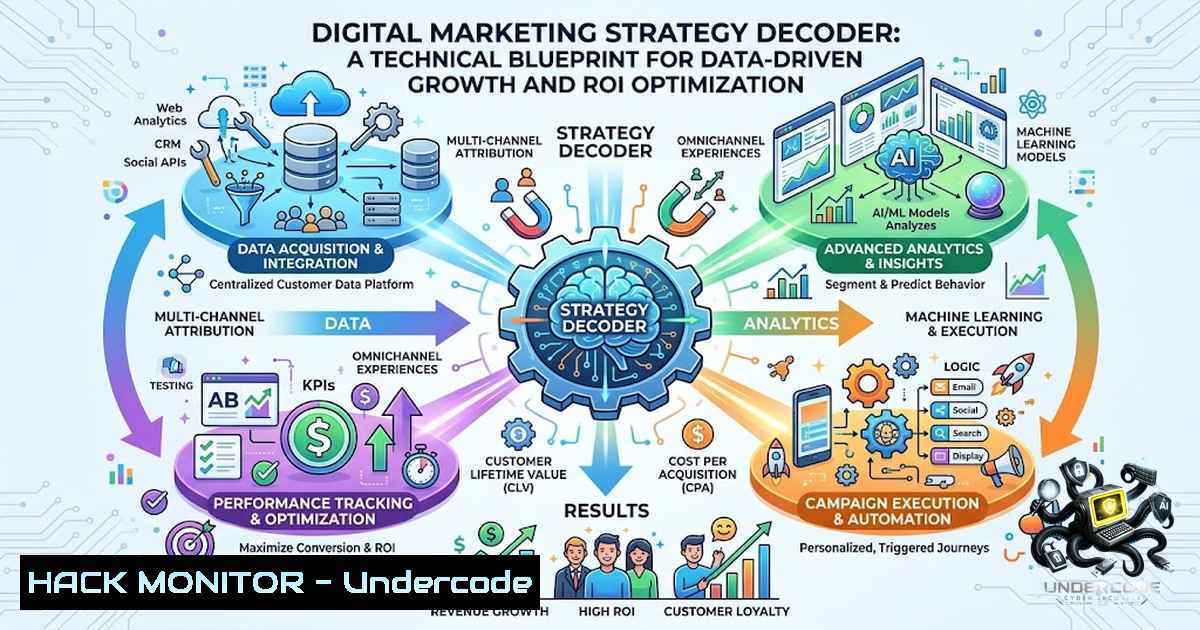
In the rapidly evolving landscape of digital business, the failure of marketing initiatives often stems not from a lack of channels, but from the absence of a robust, data-driven strategy. The core of successful digital marketing lies in transforming raw data—from website analytics, SEO rankings, and customer behavior—into actionable insights that drive measurable outcomes. This article deconstructs the strategic framework required to audit performance, set intelligence-driven goals, and leverage technical tools across AI, analytics, and cloud platforms to build a resilient and effective marketing operation.
Learning Objectives & Secrets:
- Objective 1: Master the technical audit process to benchmark current marketing performance across web, social, and search channels.
- Objective 2 (Secret Tip): Utilize Python scripts and Google Looker Studio to automate the extraction of SEO and engagement data, uncovering hidden patterns and gaps.
- Objective 3 (Secret Tip): Implement advanced attribution models using UTM parameters and Google Tag Manager to map the complete customer journey, ensuring budget is allocated to high-performing touchpoints.
You Should Know:
1. Conducting a Comprehensive Technical Marketing Audit
A marketing audit is the foundational step to understand your current digital footprint. It involves analyzing website performance metrics, existing content effectiveness, and technical SEO health. To do this effectively, you must go beyond surface-level data and dive into server logs, page speed insights, and indexation status. For example, you can use `curl` and `wget` to test server response times and headers from the command line, which is crucial for identifying bottlenecks that affect user experience and SEO rankings.
Step‑by‑Step Guide:
- Linux/Mac: Use `curl -I https://www.example.com` to fetch HTTP headers and check for status codes, cache policies, and server type.
- Windows: Use `Test-1etConnection www.example.com -Port 443` in PowerShell to verify connectivity and SSL certificate validity.
- SEO Tools: Leverage tools like Screaming Frog (which supports CLI) to crawl your site and generate a list of all URLs, identifying broken links, missing meta descriptions, and duplicate content.
- Analysis: Import your data into a visualization tool like Microsoft Power BI to correlate bounce rates with page load times, identifying priority pages for optimization.
2. Setting Measurable and Data-Backed Goals
Transitioning from vague ambitions to SMART goals requires a deep understanding of your current baseline. This involves setting up proper analytics tracking and defining key performance indicators (KPIs) that align with business objectives. The secret is to use historical data to forecast achievable targets. Instead of “increase traffic,” you should aim to “increase organic traffic by 30% in 6 months,” which requires a detailed analysis of your current organic session volume and the expected impact of your SEO strategy.
Step‑by‑Step Guide:
- Google Analytics 4 Setup: Ensure your GA4 property is configured correctly with event-based tracking. Use the GA4 Measurement Protocol to send server-side events for more reliable data collection, especially if you are concerned about ad-blockers.
- Goal Configuration: In Google Analytics, create custom conversions for micro-conversions (e.g., newsletter sign-ups) and macro-conversions (e.g., purchases).
- Forecasting: Use Excel’s FORECAST.ETS function to predict future traffic based on historical data, helping you set realistic and challenging targets.
- Attribution Setup: Implement Google Ads and Google Analytics cross-channel attribution to understand which channels (e.g., paid ads vs. organic) drive the most revenue.
3. Technical Audience Understanding and Segmentation
Understanding your audience isn’t just about demographics; it’s about behavioral intent. This involves collecting and analyzing first-party data to build detailed customer personas. You can use event tracking to understand how users interact with your site—what they click, how long they stay, and where they drop off. This data is best segmented using a data warehouse (like BigQuery) to run complex SQL queries that reveal buying patterns and preferences.
Step‑by‑Step Guide:
- Data Collection: Implement a customer data platform (CDP) or use a tag manager to consolidate user interactions from your website, mobile app, and email campaigns.
- Segmentation in SQL: Write SQL queries to segment users based on behavior. For example, `SELECT user_id, COUNT(purchase_id) FROM transactions GROUP BY user_id HAVING COUNT(purchase_id) > 1` identifies repeat customers.
- Python Analysis: Use Python libraries like `pandas` and `matplotlib` to cluster user data and identify distinct personas based on their interaction with your content.
- Privacy and Security: Ensure all data collection complies with GDPR/CCPA by implementing cookie consent mechanisms and pseudonymizing user IDs.
- Selecting the Right Channels: A Security & Performance Perspective
You don’t need to be on every platform; you need to be on the right ones. The decision of which channels to focus on should be driven by data and testing. When using paid ads or email marketing, it is critical to secure your campaigns against threats like ad fraud and account takeover (ATO). For email marketing, implement Domain-based Message Authentication, Reporting & Conformance (DMARC), SPF, and DKIM to prevent spoofing and protect your brand’s reputation.
Step‑by‑Step Guide:
- Security Configuration: Set up SPF, DKIM, and DMARC records in your DNS to authenticate your email-sending domains. For example, a DMARC policy of `p=quarantine` or `p=reject` can significantly reduce phishing attacks.
- Ad Fraud Protection: Use tools like Google Ads’ invalid click detection and consider implementing cloud-based Web Application Firewalls (WAF) to filter out bot traffic before it reaches your ads.
- Data Integration: Use APIs to connect your CRM (Salesforce, HubSpot) to your analytics platform. This ensures that data flows seamlessly, allowing for personalized and timely communication with leads.
- Testing: Run A/B tests on your landing pages for each channel to verify conversion rates and identify which platforms provide the highest quality leads at the lowest cost.
5. Continuous Tracking, Optimization, and AI Integration
Marketing is a continuous cycle of hypothesis, testing, and iteration. Leverage AI and machine learning to automate bid management, predict customer churn, and personalize content. Security is equally important here; monitor your APIs and third-party integrations to ensure they are not leaking sensitive data. IBM and Emory University offer robust courses on AI for marketing, emphasizing the importance of model governance and data integrity.
Step‑by‑Step Guide:
- API Monitoring: Use tools like Postman to test your marketing APIs regularly. Implement rate limiting and IP allowlisting to secure your endpoints.
- AI Implementation: Train a machine learning model using historical purchase data to predict future lifetime value. This model can be integrated into your CRM to score leads automatically.
- Data Visualization: Connect your data sources (GA4, CRM, Ad platforms) to Power BI or Google Looker Studio. This creates a single source of truth for your KPIs, allowing for real-time monitoring and agile decision-making.
- Continuous Learning: Enroll in specialized courses such as Google Digital Marketing & E-commerce Professional Certificate and IBM Digital Marketing and Growth Hacking with GenAI Professional Certificate to stay current with the latest tools and strategies.
What Undercode Say:
- Key Takeaway 1: A successful digital marketing strategy is a technical project that requires data integrity, security, and automation. Without a clear roadmap and technical infrastructure, businesses waste budgets and miss growth opportunities.
- Key Takeaway 2: Continuous learning and upskilling in areas like AI and marketing analytics are not optional; they are essential for maintaining a competitive edge. The ability to interpret data and convert it into actionable business insights is the most valuable skill in the modern marketing landscape.
Analysis:
The future of digital marketing lies in the convergence of data science, cybersecurity, and creative strategy. As businesses collect more data, the ethical and secure handling of that data becomes paramount. Marketers must evolve into technologists who can navigate complex analytics platforms, protect customer privacy, and automate campaign optimization. The courses highlighted by the source post provide a strong foundation, but practical application through hands-on experimentation with tools like SQL, Python, and cloud infrastructure is what truly builds expertise. The move towards AI-driven personalization will continue to accelerate, and those who can harness this power responsibly will lead the market.
Prediction:
- +1: The integration of Generative AI in marketing will democratize content creation, allowing small businesses to compete with larger enterprises in personalization and efficiency.
- +1: There will be a surge in demand for professionals who can translate complex data from cybersecurity tools into marketing insights, creating a new hybrid role of “Security Marketing Engineer.”
- -1: As AI models become more sophisticated, the threat of adversarial AI attacks on marketing automation systems will grow, requiring constant vigilance and advanced threat modeling.
- -1: Stricter data privacy regulations across the globe could fragment audience data, making unified customer tracking and personalization more challenging and costly.
▶️ Related Video (82% Match):
🎯Let’s Practice For Free:
🎓 Live Courses & Certifications:
Join Undercode Academy for Verified Certifications
🚀 Request a Custom Project:
Secure, high-velocity infrastructure and disruptive technological engineering. Contact our engineering team for high-tier development and proprietary systems:
[email protected]
💎 Smart Architecture | 🛡️ Secure by Design | ⭐ Trusted by Thousands
IT/Security Reporter URL:
Reported By: https://lnkd.in/p/eKbAxK8Z – Hackers Feeds
Extra Hub: Undercode MoN
Basic Verification: Pass ✅


