Listen to this Post
Introduction:
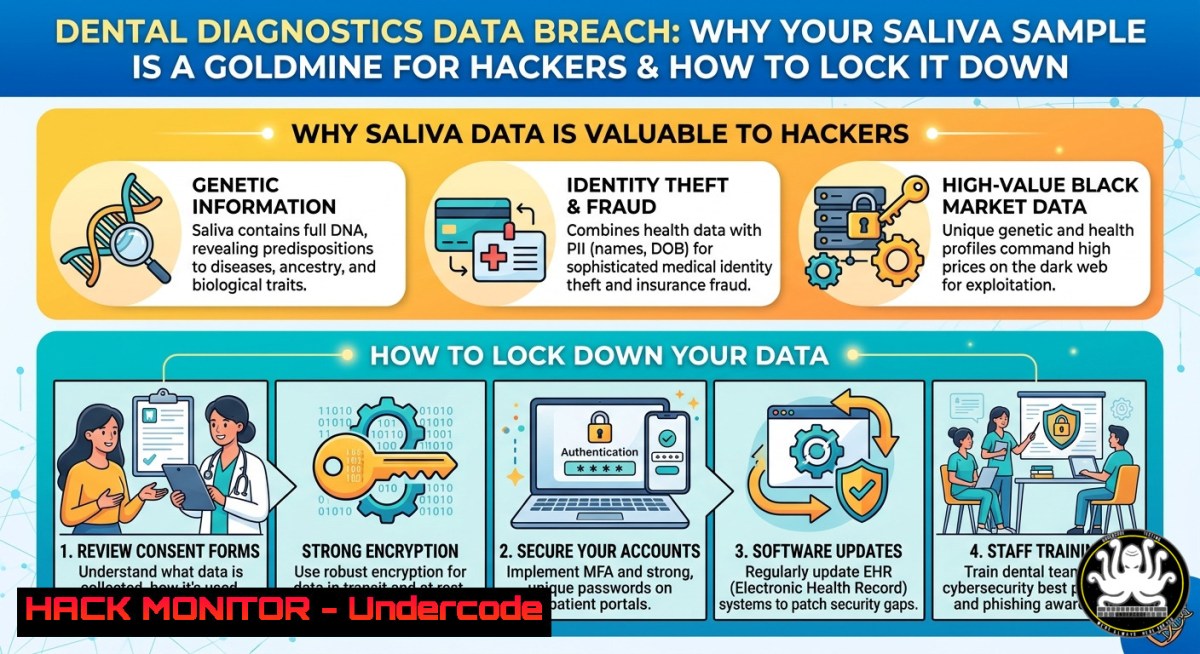
The convergence of AI, microbial diagnostics, and connected medical devices is revolutionizing dentistry. Yet, this new frontier of data-driven care brings a hidden adversary: cybercriminals who now view saliva-based diagnostic data as a prime target for theft and ransomware attacks.
Learning Objectives:
- Identify the unique cybersecurity risks associated with microbial and saliva-based diagnostic data.
- Implement practical, step-by-step hardening measures for connected dental devices and diagnostic workflows.
- Apply Linux and Windows commands to encrypt, monitor, and protect sensitive patient information.
You Should Know:
- The IoDT Vulnerability: How Your Diagnostic Data is a Target
Every connected diagnostic device in a dental practice—from intraoral scanners to saliva analysis tools—is a potential entry point for malicious actors. The rise of the Internet of Dental Things (IoDT) means patient microbiome data, treatment histories, and personal identifiers are constantly in transit, creating numerous attack surfaces. Attackers can exploit weak default credentials, unpatched firmware, and unencrypted data flows to exfiltrate sensitive information.
To combat this, a zero-trust model is essential. Begin by isolating all diagnostic devices onto a dedicated Virtual Local Area Network (VLAN) separate from your practice management systems. Change all default manufacturer passwords immediately—a step often overlooked on devices like intraoral scanners which ship with standardized credentials. For Linux-based diagnostic workstations, use `iptables` to restrict inbound traffic:sudo iptables -A INPUT -p tcp --dport 22 -s 192.168.1.0/24 -j ACCEPT. For Windows environments, employ the `New-NetFirewallRule` PowerShell cmdlet:New-NetFirewallRule -DisplayName "Block IoDT" -Direction Inbound -Protocol TCP -LocalPort 135-139,445 -Action Block. Finally, schedule automated firmware checks; write a simple Python script to query device APIs and log version discrepancies, ensuring every IoT sensor in your practice remains patched against known exploits. -
Data Encryption at Rest and in Transit: From Saliva to Storage
The diagnostic data derived from saliva and microbial testing is highly sensitive, falling under protected health information (PHI) as defined by HIPAA. Without proper encryption, this data can be intercepted during transmission from device to cloud, or stolen directly from an unsecured database. Implement end-to-end encryption for all diagnostic data flows. For Linux servers housing patient data, use `gpg` for file-level encryption:gpg --symmetric --cipher-algo AES256 patient_data.csv. For Windows, BitLocker can encrypt entire drives, while `certutil` can be used to hash files for integrity checks:certutil -hashfile C:\Diagnostics\saliva_results.pdf SHA256. At the network level, enforce TLS 1.3 for all API communications. A sample Python snippet to validate a server’s TLS configuration:import ssl, socket hostname = 'api.oravital.com' ctx = ssl.create_default_context() with ctx.wrap_socket(socket.socket(), server_hostname=hostname) as s: s.connect((hostname, 443)) print(s.version())
This ensures the connection uses a secure protocol. For cloud storage, configure bucket policies to enforce server-side encryption with customer-managed keys (CMKs) and enable access logging to detect unauthorized downloads.
3. AI-Driven Threat Detection and Compliance Auditing
As AI becomes integral to analyzing diagnostic data, it also offers a powerful tool for cybersecurity. AI-driven Security Information and Event Management (SIEM) systems can ingest logs from diagnostic devices and practice networks, using anomaly detection models to identify potential breaches—such as unusual data exfiltration patterns—in real time. Training staff to recognize phishing attempts that may target diagnostic data is equally critical. Many dental practices have fallen victim to ransomware initiated by a single malicious email. Conduct monthly tabletop exercises simulating a data breach. Use open-source tools like the `Elastic Stack` (ELK) to set up a free SIEM: install Filebeat on diagnostic workstations to forward Windows Event Logs (Get-WinEvent -LogName Security) to a central Elasticsearch instance. Configure Watchers to trigger alerts on repeated failed logins or access to PHI outside of business hours. For compliance, automate HIPAA audit trail generation with PowerShell: Get-EventLog -LogName Security -After (Get-Date).AddDays(-30) | Export-Csv -Path hipaa_audit.csv. Integrate these logs into a centralized dashboard, providing a defensible record of all access to diagnostic data.
What Undercode Say:
- Key Takeaway 1: The shift to precision dentistry is irrevocably tied to robust cybersecurity; every connected diagnostic device is a potential liability.
- Key Takeaway 2: Proactive hardening with specific commands and continuous AI-driven monitoring transforms a compliance burden into a competitive advantage.
Analysis: The integration of diagnostic technologies into dental workflows represents a paradigm shift, but it also mirrors the challenges faced by the broader healthcare sector. The sophistication of attacks has surged, with ransomware and data breaches capitalizing on legacy security approaches. By adopting a zero-trust architecture and leveraging AI for anomaly detection, dental practices can not only safeguard patient trust but also ensure regulatory compliance. The practical commands and scripts detailed above provide a tangible starting point for IT administrators and security leads, turning abstract risk into actionable defense.
Prediction:
- Enhanced Market Trust: Practices that transparently adopt and market their AI-driven cybersecurity measures will see increased patient confidence and a competitive edge.
- Regulatory Acceleration: Expect a sharp rise in specific cybersecurity mandates for dental diagnostics within the next 18-24 months, driving the adoption of standardized IoDT security protocols.
- Tech Convergence: The development of unified security platforms that integrate directly with diagnostic tools will become a key selling point for major dental technology vendors.
- Increased Ransomware Targeting: As diagnostic data becomes more valuable, dental practices will become primary targets for ransomware, necessitating proactive, AI-enhanced defense mechanisms.
▶️ Related Video (70% Match):
🎯Let’s Practice For Free:
IT/Security Reporter URL:
Reported By: Paul Scott – Hackers Feeds
Extra Hub: Undercode MoN
Basic Verification: Pass ✅
🎓 Live Courses & Certifications:
Join Undercode Academy for Verified Certifications
🚀 Request a Custom Project:
Secure, high-velocity infrastructure and disruptive technological engineering. Contact our engineering team for high-tier development and proprietary systems:
[email protected]


