
Listen to this Post
Introduction:
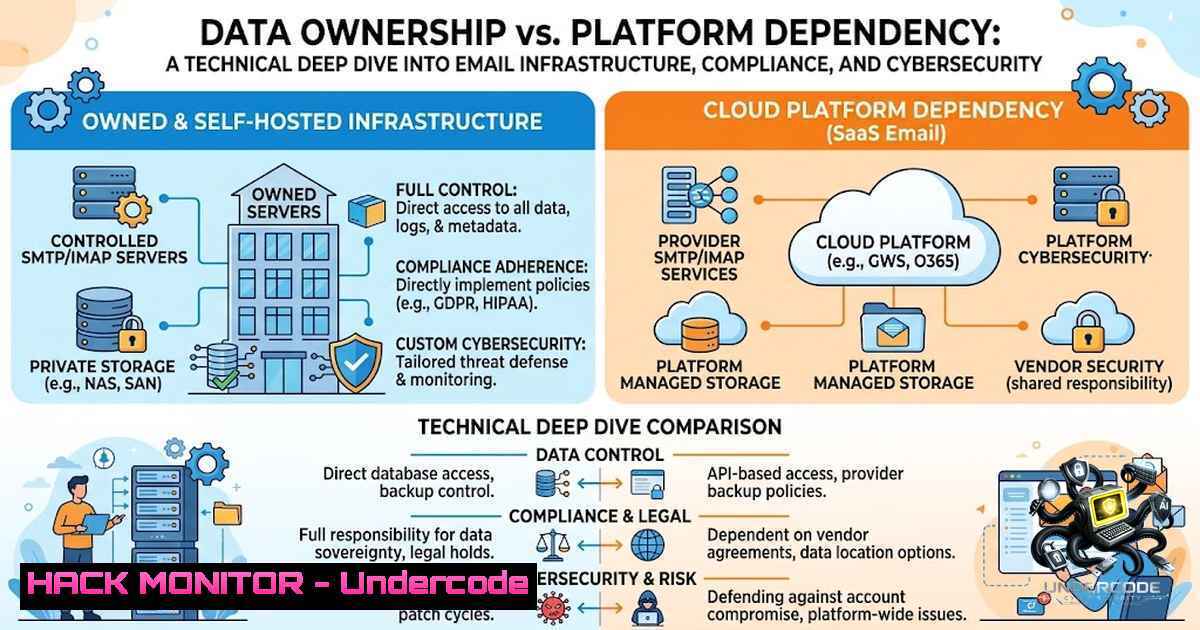
The digital marketing landscape is undergoing a fundamental shift, evidenced by the legal sector’s 4.90% email click-through rate—more than double the all-industry average. This statistic isn’t just a marketing win; it’s a testament to the power of owning your communication channels versus renting them. In an era where algorithms dictate reach and AI scrapers repurpose content, the ability to control your data pipeline is not just a business advantage but a cybersecurity imperative. This article explores the technical infrastructure required to build a resilient, high-conversion email system, focusing on data sovereignty, API security, and the hardening of your digital assets against the growing threat of vendor lock-in and data exfiltration.
Learning Objectives & Secrets:
- Objective 1: Master Email Authentication Protocols. Learn to implement SPF, DKIM, and DMARC to protect your domain from spoofing and ensure high deliverability.
- Objective 2: Build a Self-Hosted Email List. Secret tip: Transition from third-party platforms to a self-managed Mail Transfer Agent (MTA) like Postfix to retain absolute control over your subscriber data and sending reputation.
- Objective 3: Automate with Security in Mind. Secret tip: Use secure API gateways to trigger automated email sequences (nurture campaigns) without exposing internal systems to the public internet, leveraging tools like OAuth 2.0 and mutual TLS.
You Should Know:
1. Email Authentication and Infrastructure Hardening
The foundation of a professional email strategy is verifying that your emails are legitimate. This involves configuring DNS records to implement SPF (Sender Policy Framework), DKIM (DomainKeys Identified Mail), and DMARC (Domain-based Message Authentication, Reporting & Conformance). This is not just about deliverability; it is a critical cybersecurity measure against business email compromise (BEC) and phishing attacks.
Step-by-step guide for Linux (Ubuntu/Debian):
- Set up SPF: Add a TXT record to your DNS zone:
v=spf1 mx include:yourmailserver.com ~all. - Generate DKIM keys: Use
opendkim-genkey -D /etc/opendkim/keys/ -d yourdomain.com -s default. This creates a private and public key. Publish the public key in a DNS TXT record. - Configure DMARC: Add a TXT record `_dmarc.yourdomain.com` with value
v=DMARC1; p=quarantine; rua=mailto:[email protected].
Step-by-step guide for Windows Server (IIS SMTP):
- Install SMTP Server: Open Server Manager, add the SMTP Server feature.
- Domain Settings: In IIS 6.0 Manager, configure the SMTP virtual server domain properties to resolve your domain and configure smart hosting if using a relay.
- Authentication: Ensure the server does not allow open relay; restrict IP ranges.
2. API Security for Email Automation
To replicate the success of the legal sector’s nurture sequences, you need a robust automation layer. However, integrating CRMs and email engines requires a secure API architecture. A compromised API key can lead to data breaches and unauthorized email blasts, damaging reputation and trust.
Step-by-step guide for securing Email APIs:
- Use OAuth 2.0: When connecting services (e.g., MailerLite alternatives to your CRM), ensure the flow uses short-lived access tokens and refresh tokens.
- IP Allowlisting: Restrict API calls to known IP addresses or subnets within your cloud environment.
- Rate Limiting: Implement rate limiting on your API gateway to prevent brute-force attacks and excessive requests that could leak data. Use `iptables` on Linux for connection limits:
`iptables -A INPUT -p tcp –dport 443 -m connlimit –connlimit-above 20 -j DROP`
– Validate Webhooks: When using incoming webhooks to trigger automation, validate the HMAC signature header. Example code in Python:import hmac, hashlib def verify_signature(payload, signature, secret): computed = hmac.new(secret.encode(), payload, hashlib.sha256).hexdigest() return hmac.compare_digest(computed, signature)
- Data Compliance and the Data (Use and Access) Act 2025
The legal sector’s success hinges on trust, which requires airtight compliance. The article references the Data (Use and Access) Act 2025, which is changing GDPR and PECR regimes. This means handling consent, the “right to be forgotten,” and data portability is more critical than ever. Cybersecurity here is not just about protecting data but proving you manage it responsibly.
Step-by-step guide for Compliance Hardening:
- Audit Data Flow: Map where email data is stored, processed, and transmitted. Use network monitoring tools like `tcpdump` or Wireshark to ensure encryption (TLS 1.3) is enforced.
- Redact Sensitive Data: Implement data loss prevention (DLP) rules in your email server to redact PII. For Postfix, configure `header_checks` to mask emails:
`header_checks = regexp:/etc/postfix/header_checks`
`/(.)[email protected](.)/ REPLACE ${1}REDACTED${2}`
- Manage Consent Records: Store consent logs immutably. Use a database with built-in hashing like PostgreSQL’s `pgcrypto` to store hashed consent, ensuring evidence of opt-in.
- Implement Data Portability: Provide a secure endpoint for users to download their data, encrypted with a per-user key (KMS/HSM).
4. Server Hardening for Email Infrastructure
An exposed email server is a primary target for credential stuffing and relay attacks. Moving beyond basic authentication, we must harden the server itself.
Step-by-step guide for Linux (Postfix):
- Disable VRFY and EXPN: Prevent attackers from enumerating users. In Postfix, set
disable_vrfy_command = yes. - Implement Fail2Ban: Protect against brute force on SMTP and IMAP.
`fail2ban-client set postfix banip `
- TLS Certificate Rotation: Use automation like Certbot for Let’s Encrypt to ensure certificates are valid and ciphers are strong.
`certbot certonly –standalone -d mail.yourdomain.com`
Then configure Postfix to use this certificate: `smtpd_tls_cert_file = /etc/letsencrypt/live/mail.yourdomain.com/fullchain.pem`
– Windows SMB Hardening: Ensure SMB is not exposed on the same IP if hosting email on Windows, to prevent lateral movement.
5. Migrating from Platform Dependency to Ownership
The key takeaway from the article is ownership. Moving from SaaS email platforms to self-hosting or private cloud solutions requires a technical migration strategy. This involves backing up list data, segment metadata, and engagement history.
Step-by-step guide for Data Migration:
- Export Data: Use the platform’s API to extract all subscriber lists and custom fields (e.g., MailerLite API endpoint
GET /subscribers). - Data Cleansing: Use `csvkit` to remove duplicates and validate email formats on Linux.
`csvgrep -c email -r ‘^[a-zA-Z0-9._%+-]+@[a-zA-Z0-9.-]+\.[a-zA-Z]{2,}$’ subscribers.csv > cleaned.csv`
- Import to Self-Hosted System: Use `mailman` or `Mautic` to import. For Mautic, use the CLI command:
`php app/console mautic:import:csv –file=/path/to/cleaned.csv`
- DNS Cutover: Change MX records gradually (TTL to 300 seconds) to reduce email loss during propagation.
6. Securing Email Content and AI Scrapers
The article mentions that “you don’t own the AI search results.” To protect your intellectual property embedded in email content, consider using defensive strategies.
Step-by-step guide:
- Content Obfuscation: Use image-based emails for sensitive content (though not recommended for accessibility), or embed content behind personalized links.
- Tokenization: For high-value content, use one-time access tokens in the URL.
Example: `/download?token=JWT_SIGNED` which invalidates after a single click or time-based expiry. - Robots.txt: If you host content on a public server, disallow AI scrapers.
`User-agent: GPTBot`
`Disallow: /`
`User-agent: CCBot`
`Disallow: /`
- Limit Public Exposure: Don’t put sensitive legal advice in a public newsletter archive. Password-protect the archive directory using `.htaccess` on Apache or `location` blocks in Nginx.
What Undercode Say:
- Key Takeaway 1: Ownership is the ultimate security. When you control your infrastructure, you control your vulnerability footprint. Relying on third-party platforms introduces inherent risks: supply chain attacks, arbitrary data access, and policy changes.
- Key Takeaway 2: Compliance drives technical architecture. The emphasis on the Data (Use and Access) Act 2025 highlights that legal and cybersecurity teams must collaborate on architecture. Automated compliance checks (e.g., automated deletion of unsubscribed users) must be integral to the email system.
Analysis:
The underlying narrative is a push towards digital sovereignty. For cybersecurity professionals, this is a call to action to shift from “security as an add-on” to “security as the foundation.” Building an in-house email engine mitigates the risk of a third-party breach leaking your entire list. It also prevents platform-level shadow banning or reputation blacklisting beyond your control. However, this comes with the heavy responsibility of patching and monitoring. The strategic use of open-source tools (Postfix, Dovecot, Mautic) allows for full code review and customization, ensuring alignment with zero-trust principles. The 4.90% CTR is a byproduct of trust and relevancy, which is fundamentally reinforced by a secure, transparent data handling process that the user can verify.
Prediction:
- +1 (Positive): Organizations will increasingly adopt hybrid models, keeping sensitive customer data on-premise while using cloud compute for AI-driven personalization, ensuring data residency compliance.
- +1 (Positive): The demand for cybersecurity professionals skilled in email security and API hardening will surge, creating a specialized niche with higher compensation.
- -1 (Negative): As more entities build their own infrastructure, the threat surface expands. We predict a rise in targeted attacks against self-hosted MTAs, specifically exploiting misconfigurations in TLS and authentication, unless rigorous hardening is applied.
- -1 (Negative): Without the protective shielding of major platforms (like Gmail/Outlook’s spam filtering), smaller self-hosted senders may face deliverability issues and blacklisting by larger ISPs, forcing a reliance on email warming services that themselves become attack vectors.
- +1 (Positive): The adoption of advanced encryption standards (like TLS 1.3) and strict DMARC p=reject policies will drive the overall security posture of the email ecosystem higher, making it harder for spammers and phishers to impersonate legitimate businesses.
▶️ Related Video (78% Match):
🎯Let’s Practice For Free:
🎓 Live Courses & Certifications:
Join Undercode Academy for Verified Certifications
🚀 Request a Custom Project:
Secure, high-velocity infrastructure and disruptive technological engineering. Contact our engineering team for high-tier development and proprietary systems:
[email protected]
💎 Smart Architecture | 🛡️ Secure by Design | ⭐ Trusted by Thousands
IT/Security Reporter URL:
Reported By: https://lnkd.in/p/eTXFxbt3 – Hackers Feeds
Extra Hub: Undercode MoN
Basic Verification: Pass ✅


