Listen to this Post
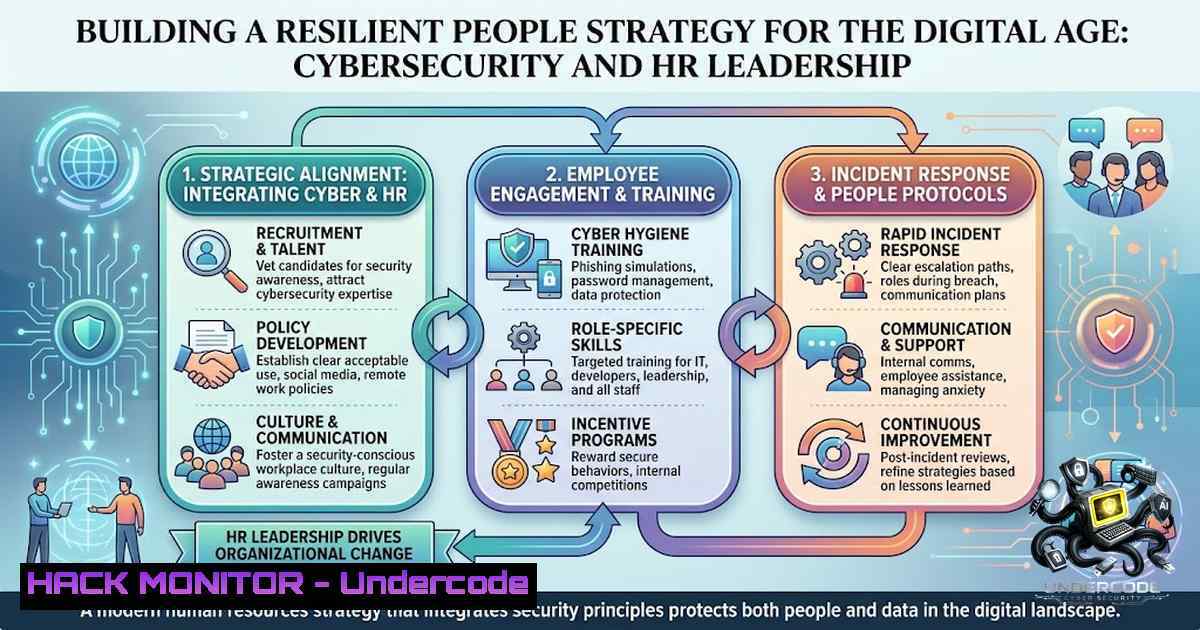
Introduction
The intersection of human resources leadership and cybersecurity has become increasingly critical as organizations navigate complex digital transformation journeys. While Navya N. Rao’s appointment as Associate Director – HR at Masscom Corporation represents a significant milestone in HR leadership, it also highlights the growing importance of integrating people strategy with organizational security frameworks. In today’s threat landscape, HR professionals must collaborate with IT and security teams to develop comprehensive approaches to talent management, compliance, and workforce planning that address both human capital and cybersecurity imperatives.
Learning Objectives & Secrets
- Objective 1: Understand how HR leadership can drive cybersecurity culture and awareness across organizations, transforming employees from potential vulnerabilities into active security champions through strategic talent management and engagement initiatives.
-
Objective 2 Secret Tips: Leverage HR’s unique position to influence security compliance and data protection by implementing behavioral-based security training programs and integrating cybersecurity metrics into performance management systems. Use employee engagement data to identify potential insider threat indicators.
-
Objective 3 Secret Tips: Align organizational transformation efforts with security frameworks by embedding cybersecurity requirements into talent acquisition, onboarding, and workforce planning processes. Develop cross-functional partnerships between HR and IT to create seamless security experiences for employees.
You Should Know
1. Implementing Cybersecurity Awareness Training Programs
HR leaders can leverage their position to develop comprehensive security awareness initiatives that complement technical controls. The following commands and configurations help establish baseline security awareness infrastructure:
Linux Command to Monitor Security Training Completion:
!/bin/bash
 Security training compliance checker
 Monitor employee training completion logs

training_log="/var/log/training_compliance.log"
echo "Employee Training Compliance Report - $(date)" > $training_log

for user in $(cut -d: -f1 /etc/passwd | grep -v root); do
if [ -f "/home/$user/.security_training_completed" ]; then
echo "$user - Training Completed" >> $training_log
else
echo "$user - Training Pending" >> $training_log
fi
done

Generate HTML report for HR dashboard
html_output="/var/www/html/training_report.html"
echo "<html><body>

<h2>Security Training Compliance</h2>

<pre>" > $html_output
cat $training_log >> $html_output
echo "</pre>

</body></html>" >> $html_output
Windows PowerShell for User Security Posture Assessment:
 PowerShell script to assess user security posture
 Run as Administrator

$UserReport = @()
$ADUsers = Get-ADUser -Filter  -Properties Name, LastLogonDate, PasswordLastSet

foreach ($User in $ADUsers) {
$PasswordAge = (Get-Date) - $User.PasswordLastSet
$LastLogonDays = (Get-Date) - $User.LastLogonDate

$UserObject = [bash]@{
Name = $User.Name
PasswordAgeDays = [bash]::Round($PasswordAge.TotalDays)
DaysSinceLastLogon = [bash]::Round($LastLogonDays.TotalDays)
RequiresReset = $PasswordAge.TotalDays -gt 90
InactiveRisk = $LastLogonDays.TotalDays -gt 30
}
$UserReport += $UserObject
}

$UserReport | Export-Csv "C:\Reports\UserSecurityAssessment.csv" -1oTypeInformation
Step-by-Step Guide:
- Implement mandatory security awareness training using platforms like KnowBe4 or SANS Security Awareness
- Configure automated email reminders for training completion using cron jobs or Task Scheduler
- Set up phishing simulation campaigns to test employee readiness
- Track incident reporting rates and response times as key performance indicators
- Generate monthly compliance reports for HR leadership review
2. Integrating Cybersecurity into Talent Acquisition and Onboarding
HR professionals must embed security considerations into the entire employee lifecycle. This section covers practical implementation strategies:
Linux Script for Secure Onboarding Automation:
!/bin/bash
 Secure employee onboarding script

onboard_employee() {
EMPLOYEE_NAME=$1
EMPLOYEE_EMAIL=$2
DEPT=$3

Create secure home directory structure
mkdir -p /home/$EMPLOYEE_NAME
chmod 700 /home/$EMPLOYEE_NAME

Generate SSH key pair for secure access
ssh-keygen -t rsa -b 4096 -f "/home/$EMPLOYEE_NAME/.ssh/id_rsa" -1 ""

Create security policy acknowledgment
echo "Employee: $EMPLOYEE_NAME" > "/home/$EMPLOYEE_NAME/security_policy_acknowledgment.txt"
echo "Date: $(date)" >> "/home/$EMPLOYEE_NAME/security_policy_acknowledgment.txt"
echo "I acknowledge receipt and understanding of organizational security policies" >> "/home/$EMPLOYEE_NAME/security_policy_acknowledgment.txt"

Generate access credential file
openssl rand -base64 32 > "/home/$EMPLOYEE_NAME/.credentials"

Set up multi-factor authentication configurations
echo "Setup MFA for $EMPLOYEE_EMAIL" | mail -s "MFA Setup Required" $EMPLOYEE_EMAIL

echo "Onboarding completed for $EMPLOYEE_NAME"
}

Usage: onboard_employee "Navya N. Rao" "[email protected]" "HR"
Windows AD Security Baseline Configuration:
 PowerShell script for new user security setup

Set strong password policies
Set-ADDefaultDomainPasswordPolicy -Identity "masscom.local" `
-MaxPasswordAge 60.00:00:00 `
-MinPasswordLength 12 `
-PasswordHistoryCount 24 `
-ComplexityEnabled $true

Create new user with security groups based on department
function New-SecureADUser {
param(
[bash]$FirstName,
[bash]$LastName,
[bash]$Department,
[bash]$EmployeeID
)

$UserName = "$($FirstName)$($LastName.Substring(0,1))"
$DisplayName = "$FirstName $LastName"
$UPN = "[email protected]"
$Path = "OU=$Department,DC=masscom,DC=local"

Set strong initial password
$Password = -join ((48..122) | Get-Random -Count 16 | % {[bash]$_})
$SecurePassword = ConvertTo-SecureString $Password -AsPlainText -Force

Create user with security groups
New-ADUser -1ame $UserName `
-GivenName $FirstName `
-Surname $LastName `
-DisplayName $DisplayName `
-UserPrincipalName $UPN `
-AccountPassword $SecurePassword `
-Enabled $true `
-Path $Path `
-EmployeeID $EmployeeID `
-ChangePasswordAtLogon $true `
-Description "Security compliance onboarding"

Add to department-specific security groups
Add-ADGroupMember -Identity "Security_Training_Compliance" -Members $UserName
Add-ADGroupMember -Identity "MFA_Enabled_Users" -Members $UserName

Write-Host "User $DisplayName created with MFA enforcement"
}

Example usage
New-SecureADUser -FirstName "Navya" -LastName "Rao" -Department "HR" -EmployeeID "HR-2026-001"
3. Building a Culture of Security: HR-Driven Initiatives
Creating a security-conscious workforce requires more than policies; it demands cultural transformation:
Key Implementation Steps:
- Develop Security Champions Program – Identify and train security advocates within each department who serve as points of contact for security concerns
-
Integrate Security into Performance Reviews – Include security awareness metrics in performance evaluations, such as phishing simulation success rates and incident reporting timeliness
-
Create Gamified Security Challenges – Implement leaderboards and recognition programs for security best practices
-
Establish Clear Incident Response Procedures – Document and communicate clear protocols for reporting security incidents, ensuring employees know exactly who to contact and what steps to follow
-
Conduct Regular Security Town Halls – Host quarterly security briefings to share emerging threats, update policies, and celebrate security successes
4. Leveraging AI for Security-Powered HR Analytics
Artificial Intelligence can transform how HR approaches security risk management:
Python Script for Security Risk Assessment Using Machine Learning:
import pandas as pd
import numpy as np
from sklearn.ensemble import RandomForestClassifier
from sklearn.model_selection import train_test_split
import warnings
warnings.filterwarnings('ignore')

Load employee security behavior data
def load_employee_security_data():
 Sample dataset structure
data = {
'employee_id': np.arange(1, 501),
'training_completion': np.random.choice([0, 1], 500, p=[0.3, 0.7]),
'phishing_click_rate': np.random.uniform(0, 0.5, 500),
'incident_reporting_count': np.random.poisson(1, 500),
'password_age_days': np.random.randint(1, 120, 500),
'security_incidents': np.random.choice([0, 1], 500, p=[0.85, 0.15])
}
return pd.DataFrame(data)

Train risk prediction model
def train_risk_model(df):
X = df[['training_completion', 'phishing_click_rate',
'incident_reporting_count', 'password_age_days']]
y = df['security_incidents']

X_train, X_test, y_train, y_test = train_test_split(
X, y, test_size=0.2, random_state=42
)

model = RandomForestClassifier(n_estimators=100, random_state=42)
model.fit(X_train, y_train)

Feature importance
feature_importance = pd.DataFrame({
'feature': X.columns,
'importance': model.feature_importances_
}).sort_values('importance', ascending=False)

return model, feature_importance

Generate security risk report for HR
df = load_employee_security_data()
model, importance = train_risk_model(df)
print("Top Risk Factors:")
print(importance)
Step-by-Step Guide:
- Data Collection – Aggregate employee security-related data including training completion, incident reports, and system access patterns
-
Model Training – Use historical data to train machine learning models that predict security risk levels
-
Risk Scoring – Generate risk scores for employees based on behavioral patterns
-
Intervention Planning – Use predictive insights to target training and awareness initiatives to high-risk groups
-
Continuous Monitoring – Update models regularly with new data to improve accuracy
-
Cloud Security and HR Compliance in Hybrid Work Environments
As organizations adopt hybrid work models, HR must understand cloud security implications:
AWS CLI Commands for Security Compliance Audit:
 AWS CLI commands for security compliance checking

Check IAM user MFA status
aws iam list-users --query 'Users[].UserName' --output text | while read user; do
mfa_status=$(aws iam list-mfa-devices --user-1ame $user --query 'MFADevices' --output text)
if [ -z "$mfa_status" ]; then
echo "MFA NOT ENABLED: $user"
else
echo "MFA ENABLED: $user"
fi
done

Audit S3 bucket permissions
aws s3api list-buckets --query 'Buckets[].Name' --output text | while read bucket; do
aws s3api get-bucket-acl --bucket $bucket --query 'Grants[?Grantee.URI==`http://acs.amazonaws.com/groups/global/AllUsers`]'
if [ $? -eq 0 ]; then
echo "PUBLIC ACCESS FOUND: $bucket"
 Log for HR compliance review
echo "$bucket - $(date)" >> /var/log/hr_s3_compliance.log
fi
done
Azure Security Compliance Script:
 Azure PowerShell for HR security compliance

Check Azure AD conditional access policies
$Policies = Get-AzureADMSConditionalAccessPolicy

foreach ($Policy in $Policies) {
Write-Host "Policy: $($Policy.DisplayName)"
Write-Host "Status: $($Policy.State)"
Write-Host "Conditions: $($Policy.Conditions.Applications.IncludeApplications)"
Write-Host "Grant Controls: $($Policy.GrantControls.BuiltInControls)"
}

Audit user permissions for sensitive HR data
$SensitiveDataGroups = Get-AzureADGroup -SearchString "HR_Sensitive_Data"
foreach ($Group in $SensitiveDataGroups) {
$Members = Get-AzureADGroupMember -ObjectId $Group.ObjectId
Write-Host "Group: $($Group.DisplayName)"
Write-Host "Members:" $Members.DisplayName
 Log for compliance
$Members | Export-Csv "C:\Reports\Azure_HR_Group_$($Group.DisplayName).csv"
}
6. Data Privacy and Security Compliance Framework
HR leaders must ensure compliance with GDPR, CCPA, and other privacy regulations while maintaining operational efficiency:
Linux Command for Data Classification and Protection:
!/bin/bash
 Data classification and protection script

Create directory structure for data classification
mkdir -p /data/classified/{public,internal,confidential,restricted}

Set permissions based on classification
 Public data - world readable
chmod 755 /data/classified/public

Internal data - group readable only
chmod 750 /data/classified/internal
chgrp internal_team /data/classified/internal

Confidential data - specific user access
chmod 700 /data/classified/confidential
chown hr_manager /data/classified/confidential

Restricted data - strict access control
chmod 600 /data/classified/restricted
chown security_officer /data/classified/restricted

Set extended attributes for classification metadata
setfattr -1 user.classification -v "confidential" /data/classified/confidential

Generate audit trail for data access
auditctl -w /data/classified/ -p rwxa -k data_access
 Check logs: ausearch -k data_access
7. Security Awareness for Remote Workforce
Implementing secure remote work practices requires specific technical controls and HR policies:
VPN Configuration for Secure Remote Access:
 OpenVPN server configuration
 /etc/openvpn/server.conf

port 1194
proto udp
dev tun
ca ca.crt
cert server.crt
key server.key
dh dh2048.pem
server 10.8.0.0 255.255.255.0
ifconfig-pool-persist ipp.txt
push "route 192.168.10.0 255.255.255.0"
push "dhcp-option DNS 8.8.8.8"
keepalive 10 120
cipher AES-256-CBC
auth SHA256
user nobody
group nogroup
persist-key
persist-tun
status openvpn-status.log
verb 3

Generate client certificate for HR team members
 ./easyrsa gen-req hr_member
 ./easyrsa sign-req client hr_member
 ./easyrsa export-p12 hr_member
Endpoint Security Monitoring for HR Systems:
 PowerShell script for endpoint compliance monitoring

Check Windows Defender status
$DefenderStatus = Get-MpPreference
if ($DefenderStatus.DisableRealtimeMonitoring -eq $true) {
Write-Warning "Real-time monitoring is disabled on $env:COMPUTERNAME"
 Alert HR security team
Send-MailMessage -To "[email protected]" `
-Subject "Endpoint Security Alert" `
-Body "Real-time monitoring is disabled" `
-From "[email protected]" `
-SmtpServer "smtp.masscom.com"
}

Check for missing security patches
$MissingPatches = Get-WindowsUpdateLog -Last 10 | Select-String "missing"
if ($MissingPatches) {
Write-Host "Missing security updates found"
 Schedule patch deployment
Install-WindowsUpdate -AcceptAll -AutoReboot
}
What Undercode Say:
- Key Takeaway 1: HR leadership must evolve beyond traditional people management to become strategic partners in organizational security, understanding how human behavior impacts cybersecurity posture
-
Key Takeaway 2: The integration of security metrics into HR systems, employee engagement strategies, and talent management frameworks creates a comprehensive defense-in-depth approach
-
Analysis: Navya N. Rao’s appointment at Masscom Corporation exemplifies the trend where HR leaders take on expanded responsibilities that require understanding of both people strategy and organizational security. With her experience across diverse organizations and her involvement with Hacking HR, she is well-positioned to bridge the gap between human resources and cybersecurity requirements. The future of HR leadership will demand proficiency in implementing AI-powered security analytics, maintaining cloud compliance, and fostering a culture where security awareness is embedded in every aspect of the employee experience.
Prediction:
+1 The convergence of HR and cybersecurity will accelerate as organizations recognize that 85% of data breaches involve human error, making HR’s role in security culture critical for defense
+1 AI-powered HR analytics will revolutionize how organizations predict and mitigate insider threats, enabling proactive interventions before security incidents occur
+1 Employee experience platforms will integrate security features seamlessly, making compliance less burdensome and more intuitive for workers
-1 The talent gap in cybersecurity-HR hybrid roles will widen, requiring organizations to invest heavily in specialized training and development programs
+N Regulatory compliance complexity will increase as HR leaders must navigate evolving privacy laws across multiple jurisdictions while maintaining operational efficiency
-P Organizations that successfully integrate HR and security functions will achieve 40% better incident response times and significantly reduced breach-related costs
▶️ Related Video (82% Match):
🎯Let’s Practice For Free:
🎓 Live Courses & Certifications:
Join Undercode Academy for Verified Certifications
🚀 Request a Custom Project:
Secure, high-velocity infrastructure and disruptive technological engineering. Contact our engineering team for high-tier development and proprietary systems:
[email protected]
💎 Smart Architecture | 🛡️ Secure by Design | ⭐ Trusted by Thousands
IT/Security Reporter URL:
Reported By: https://lnkd.in/p/eNc9FNyW – Hackers Feeds
Extra Hub: Undercode MoN
Basic Verification: Pass ✅


