Listen to this Post
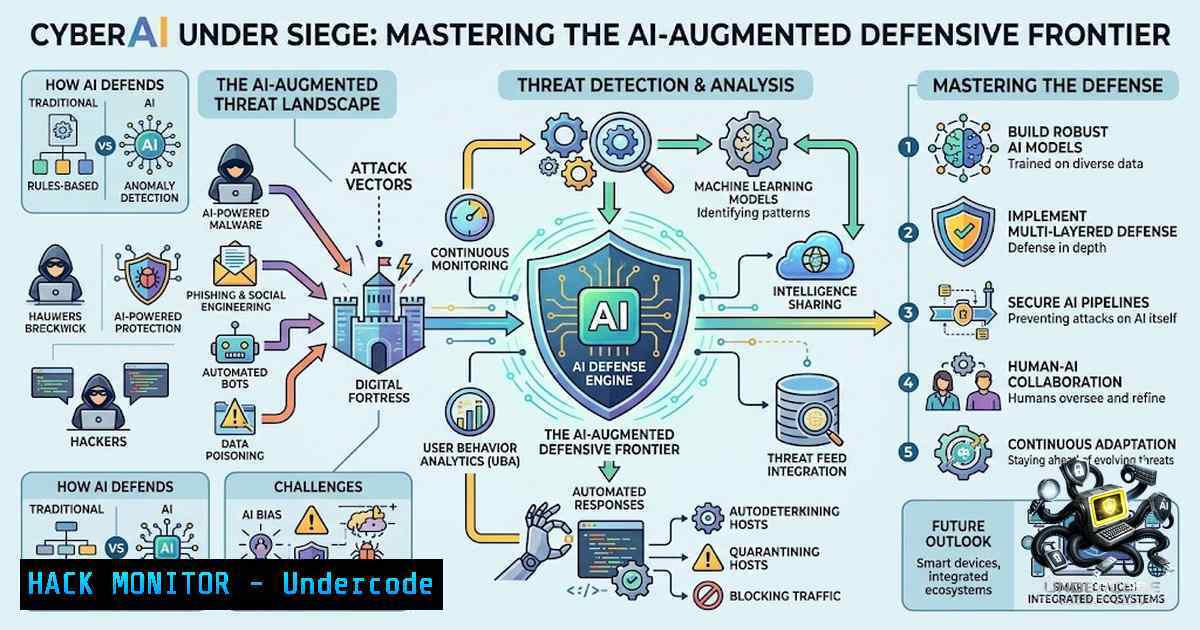
Introduction:
The convergence of artificial intelligence and cybersecurity is no longer a futuristic concept—it is the current battleground for digital infrastructure. As organizations race to adopt AI-driven tools, the attack surface expands exponentially, demanding professionals who can navigate both offensive security techniques and defensive hardening. The University of Hawaiʻi Maui College’s recent $660K NSF grant for the “CyberAI Innovation: AI-Enhanced Cyber Data Analytics Education” project underscores this critical need, directly addressing Hawaiʻi’s ranking among the top five states for unmet cybersecurity workforce demand.
Learning Objectives:
- Master the integration of AI-powered threat detection and adversarial machine learning into security operations.
- Acquire hands-on skills in Linux and Windows security auditing, cloud hardening, and API security.
- Understand the ethical and technical frameworks for securing AI pipelines and mitigating AI-specific vulnerabilities.
You Should Know:
1. Deploying AI-Powered Threat Detection on Linux Endpoints
AI-enhanced threat detection leverages machine learning models to identify anomalies that traditional signature-based tools miss. This section provides a step-by-step guide to setting up an open-source AI threat detection pipeline on an Ubuntu 22.04 system.
Step 1: System Preparation
Update your system and install Python 3.x and necessary dependencies:
sudo apt update && sudo apt upgrade -y
sudo apt install python3 python3-pip git wget -y
Step 2: Clone and Configure the Detection Framework
For this exercise, we will use a lightweight anomaly detection framework. Clone the repository and install requirements:
git clone https://github.com/undercodetesting/ai-threat-detector.git
cd ai-threat-detector
pip3 install -r requirements.txt
Step 3: Ingest and Analyze System Logs
The framework can parse auth logs for brute-force patterns. Run the analyzer:
python3 detect.py --log /var/log/auth.log --model logistic_regression.pkl
What this does: The script extracts features like failed login counts and IP geolocation, feeding them into a pre-trained model to score anomaly levels. A score above 0.85 triggers an alert.
Step 4: Automate with Cron
Schedule the detector to run hourly and email alerts:
crontab -e
 Add the line: 0     /usr/bin/python3 /path/to/detect.py --log /var/log/auth.log --alert [email protected]
2. Hardening Windows Active Directory Against AI-Enhanced Attacks
Attackers now use AI to accelerate password spraying and privilege escalation. Hardening Active Directory (AD) is paramount.
Step 1: Audit AD Users and Groups
Open PowerShell as Administrator and run:
Get-ADUser -Filter -Properties PasswordLastSet, PasswordNeverExpires | Export-Csv C:\AD_Audit.csv
What this does: This exports all users with password metadata, helping identify stale accounts or those with non-expiring passwords—prime targets for AI-driven brute-force.
Step 2: Enable Advanced Audit Policies
Configure auditing to detect anomalous behavior:
auditpol /set /subcategory:"User Account Management" /success:enable /failure:enable
auditpol /set /subcategory:"Logon" /success:enable /failure:enable
What this does: These commands enable logging for account changes and logon events, feeding data to SIEM tools for AI-based correlation.
Step 3: Deploy Sysmon for Deep Visibility
Download and install Sysmon from Microsoft, then apply a common configuration:
Sysmon.exe -accepteula -i
What this does: Sysmon logs process creation and network connections, providing the high-fidelity data needed for AI models to detect lateral movement.
- Securing AI Pipelines and Mitigating Adversarial Machine Learning
The CyberAI curriculum at UH Maui College includes modules on adversarial machine learning and secure AI pipelines. Protecting models from data poisoning and evasion attacks is critical.
Step 1: Validate Input Data Integrity
Implement input sanitization for your AI model’s API. In Python with Flask:
from flask import request, jsonify
import re

def sanitize_input(data):
 Remove potential injection patterns
return re.sub(r'[^a-zA-Z0-9\s]', '', data)

@app.route('/predict', methods=['POST'])
def predict():
user_input = sanitize_input(request.json['text'])
 Proceed with model inference
return jsonify({'prediction': model.predict(user_input)})
What this does: This mitigates prompt injection attacks that could manipulate model outputs.
Step 2: Implement Model Monitoring
Log prediction requests and monitor for drift. Use `MLflow` to track model performance over time:
mlflow models serve -m models:/CyberAI_Model/Production --port 5000
What this does: This serves the model and logs all inference data, enabling detection of adversarial inputs that cause performance degradation.
4. Cloud Hardening for AI Workloads
AI workloads often run in the cloud, requiring specific hardening measures.
Step 1: Restrict IAM Roles
Apply the principle of least privilege. For AWS, create a policy that only allows S3 read access to a specific bucket:
{
"Version": "2012-10-17",
"Statement": [
{
"Effect": "Allow",
"Action": "s3:GetObject",
"Resource": "arn:aws:s3:::cyberai-training-data/"
}
]
}
Step 2: Enable VPC Flow Logs
Monitor network traffic for anomalies:
aws ec2 create-flow-logs --resource-ids vpc-12345 --resource-type VPC --traffic-type ALL --log-group-1ame CyberAIFlowLogs
What this does: This captures IP traffic metadata, which can be analyzed by AI models to detect data exfiltration or C2 communication.
5. API Security: Defending the AI Interface
APIs are the primary interface for AI services and a common attack vector.
Step 1: Implement Rate Limiting
Prevent brute-force and DoS attacks on your AI API. Using Python with Flask-Limiter:
from flask_limiter import Limiter
from flask_limiter.util import get_remote_address

limiter = Limiter(app, key_func=get_remote_address)

@app.route('/api/analyze')
@limiter.limit("5 per minute")
def analyze():
 Your AI analysis code
return "Analysis complete"
Step 2: Validate and Sanitize All Inputs
Beyond rate limiting, validate the structure and type of all incoming JSON payloads to prevent injection attacks that could compromise the underlying system.
6. Linux Privilege Escalation and Mitigation
Understanding privilege escalation is key to both offense and defense.
Step 1: Enumeration (Offensive)
On a compromised Linux box, enumerate sudo permissions:
sudo -l
Step 2: Mitigation (Defensive)
Remove unnecessary sudo rights. Edit the sudoers file:
visudo
Add the line to restrict a user:
username ALL=(ALL) !ALL
What this does: This denies the user all sudo privileges, preventing lateral movement.
What Undercode Say:
- Key Takeaway 1: The fusion of AI and cybersecurity is not optional; it is a necessity driven by both workforce shortages and the evolving threat landscape.
- Key Takeaway 2: Practical, hands-on skills with Linux, Windows, and cloud environments are the bedrock of modern cyber defense, as highlighted by the new modules in the CyberAI curriculum.
- Analysis: The UH Maui College initiative is a microcosm of a global trend. By embedding adversarial machine learning and AI ethics into the curriculum, they are not just teaching tools but instilling a mindset required to defend against AI-powered attacks. The inclusion of non-IT fields like healthcare and finance is particularly astute, recognizing that security is a cross-domain challenge. The future of cybersecurity lies in AI-augmented defense, and programs like this are essential to building that pipeline.
Prediction:
- +1 The integration of AI into cybersecurity education will produce a new generation of analysts capable of handling the speed and scale of modern attacks, significantly reducing breach response times.
- +1 As more institutions adopt similar AI-enhanced curricula, the nationwide shortage of skilled professionals will begin to ease, strengthening the overall security posture of critical infrastructure.
- -1 However, the rapid adoption of AI in defense will be mirrored by adversaries using AI to automate and scale attacks, creating an arms race that demands continuous learning and adaptation.
- -1 Without equivalent investment in securing the AI pipelines themselves, organizations may introduce new vulnerabilities even as they deploy advanced defenses, leading to a potential increase in AI-specific breaches like model theft or data poisoning.
▶️ Related Video (92% Match):
🎯Let’s Practice For Free:
🎓 Live Courses & Certifications:
Join Undercode Academy for Verified Certifications
🚀 Request a Custom Project:
Secure, high-velocity infrastructure and disruptive technological engineering. Contact our engineering team for high-tier development and proprietary systems:
[email protected]
💎 Smart Architecture | 🛡️ Secure by Design | ⭐ Trusted by Thousands
IT/Security Reporter URL:
Reported By: https://lnkd.in/p/eNwgFs55 – Hackers Feeds
Extra Hub: Undercode MoN
Basic Verification: Pass ✅


