Listen to this Post
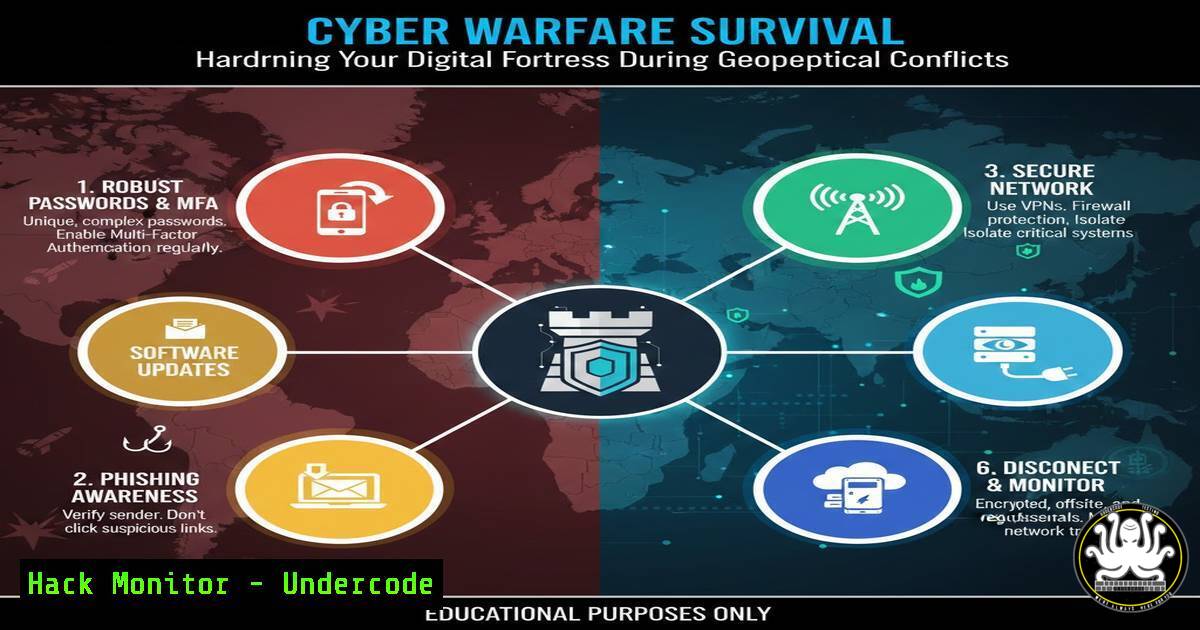
Introduction:
In an era where geopolitical skirmishes are increasingly fought in the digital domain, traditional IT security is no longer sufficient. Organizations must transition from a peacetime security posture to a cyber-warfare defense strategy. This article explores the specific technical considerations for maintaining resilience against state-sponsored attacks, advanced persistent threats (APTs), and collateral damage from global cyber conflicts, providing actionable hardening techniques and incident response protocols.
Learning Objectives:
- Understand the shift in threat landscape during geopolitical conflicts and how it impacts organizational risk.
- Implement advanced system hardening and network segmentation to mitigate the blast radius of a potential breach.
- Develop and test incident response playbooks specifically designed for nation-state actor scenarios.
You Should Know:
1. Geopolitical Threat Modeling and Attack Surface Reduction
During times of conflict, your organization becomes a potential target not just for financial gain, but for geopolitical leverage. Hacktivist groups and state-sponsored actors often seek to disrupt critical infrastructure, supply chains, or financial systems. The first step is to reduce your attack surface. This involves identifying and immediately patching or isolating legacy systems that may be running outdated protocols.
Step‑by‑step guide for Attack Surface Reduction (Linux/Windows):
- Windows (PowerShell): Use the following command to identify all listening ports and associated services. Disable any unnecessary services immediately.
Get-NetTCPConnection -State Listen | Select-Object LocalAddress, LocalPort, OwningProcess
- Linux (Netstat/SS): Run the following to audit open ports and then use `ufw` or `iptables` to block unauthorized inbound traffic.
sudo ss -tulpn
sudo ufw default deny incoming
sudo ufw allow out 443  Only allow essential outbound traffic
2. Implementing “Cyber Hygiene” 2.0: Zero Trust Architecture
The old “trust but verify” model is dead. In a cyber warfare context, you must assume breach. Implement a Zero Trust Architecture (ZTA) by enforcing strict identity verification and micro-segmentation. Ensure that even if one workstation is compromised, the attacker cannot pivot laterally to critical servers.
Step‑by‑step guide for Network Segmentation (Cisco/Generic Firewall):
- Concept: Create VLANs to separate user traffic from server traffic.
- Command Example (Cisco IOS):
configure terminal
vlan 10
name MANAGEMENT
vlan 20
name USER_WORKSTATIONS
interface gigabitEthernet 0/1
switchport mode access
switchport access vlan 20
- Windows Firewall Hardening: Block lateral movement by restricting RDP and SMB traffic between workstations.
New-NetFirewallRule -DisplayName "Block SMB Lateral" -Direction Inbound -Protocol TCP -LocalPort 445 -Action Block -Profile Any
3. API Security and Cloud Hardening
APIs are the backbone of modern applications and a prime target for cyber warfare. Attackers exploit API vulnerabilities to exfiltrate sensitive data or disrupt cloud services. Implement strict rate limiting, input validation, and authentication checks.
Step‑by‑step guide for API Security (NGINX Reverse Proxy):
- Rate Limiting: Add the following to your NGINX configuration to prevent DDoS and brute-force attacks.
http { limit_req_zone $binary_remote_addr zone=mylimit:10m rate=10r/s; server { location /api/ { limit_req zone=mylimit burst=20 nodelay; proxy_pass http://backend_api; } } } - Cloud Hardening (AWS S3 Bucket): Ensure buckets are not public.
aws s3api put-public-access-block --bucket your-bucket-name --public-access-block-configuration BlockPublicAcls=true,IgnorePublicAcls=true,BlockPublicPolicy=true,RestrictPublicBuckets=true
- Advanced Persistent Threat (APT) Mitigation and EDR Configuration
Standard antivirus is useless against custom APT malware. You need Endpoint Detection and Response (EDR) solutions configured for “hunt mode.” Focus on detecting living-off-the-land binaries (LOLBins) and unusual process hierarchies.
Step‑by‑step guide for EDR/SIEM Rule Creation (Sysmon):
- Install Sysmon on Windows: Configure it to log process creation and network connections.
- Config Snippet (sysmon-config.xml): Focus on detecting `wmic.exe` or `powershell.exe` being called by Office applications.
<ProcessCreate onmatch="include">
<CommandLine condition="contains">wmic process</CommandLine>
<ParentImage condition="image">winword.exe</ParentImage>
</ProcessCreate>
- Linux Auditd: Monitor for suspicious cron jobs or user additions.
auditctl -w /etc/passwd -p wa -k user-modification
auditctl -w /etc/crontab -p wa -k cron-changes
5. Vulnerability Exploitation and Mitigation: Log4j and Beyond
During conflicts, old vulnerabilities are re-weaponized. Ensure your environment is patched against Log4Shell and similar critical flaws. If patching is impossible, implement virtual patching via Web Application Firewalls (WAF).
Step‑by‑step guide for Log4j Mitigation (WAF Rule – ModSecurity):
– ModSecurity Rule to block JNDI lookups:
SecRule REQUEST_FILENAME|ARGS|REQUEST_BODY "@rmatch (?:.?\${.?(?:jndi|ldap[bash]?|rmi|dns):[^}]+?.?})" \
"id:1001,\
phase:2,\
block,\
capture,\
t:none,\
msg:'Possible Log4j JNDI attack',\
logdata:'Matched payload: %{TX.0}'"
6. Backup Resilience and Disaster Recovery
Ransomware in a wartime scenario often targets backups first. Implement the 3-2-1 backup rule with an “air-gapped” or immutable copy. Test your recovery process, not just your backup process.
Step‑by‑step guide for Linux Immutable Backups (Restic/Rclone):
- Backup to Object Storage with Immutability:
Assuming you have an S3 bucket with object lock enabled
restic -r s3:https://s3.amazonaws.com/your-bucket backup /important/data
To ensure immutability, you rely on the bucket policy preventing deletion/modification within a set period.
7. Supply Chain Security and CI/CD Pipeline Hardening
Attackers will target your vendors and your software build pipelines to inject malicious code. Secure your CI/CD tools (Jenkins, GitLab) and verify software artifacts.
Step‑by‑step guide for CI/CD Hardening (GitLab CI):
- Use Signed Commits: Enforce GPG signature verification.
- Dependency Scanning: Integrate dependency scanning into your pipeline.
stages:</li>
<li>test
dependency_scanning:
stage: test
image: docker:stable
services:</li>
<li>docker:dind
script:</li>
<li>docker run --rm -v $(pwd):/app aquasec/trivy fs --severity HIGH,CRITICAL --no-progress /app
What Undercode Say:
- Resilience over Prevention: In a cyber war, breaches are inevitable. The focus must shift entirely to resilience—how quickly you can detect, contain, and recover—rather than trying to build an impenetrable wall.
- Geopolitical Context is Key: Security teams must now incorporate geopolitical threat intelligence feeds. A political speech today can be a precursor to a DDoS or data wiper attack on your sector tomorrow.
- The Human Factor: Technical controls fail if users fall for sophisticated, context-aware spear-phishing campaigns. Continuous simulation training tailored to current global events is no longer optional but a critical defense layer.
Prediction:
We will see a rise in “cyber mercenaries” and hack-for-hire groups targeting corporate supply chains as a form of economic warfare. Organizations will be forced to disclose cyber insurance policies and resilience metrics on shareholder reports, making cybersecurity a direct board-level financial liability rather than just an IT operational cost.
▶️ Related Video (88% Match):
🎯Let’s Practice For Free:
IT/Security Reporter URL:
Reported By: Rauleduardocabrera Ciberseguridad – Hackers Feeds
Extra Hub: Undercode MoN
Basic Verification: Pass ✅


