Listen to this Post
Introduction
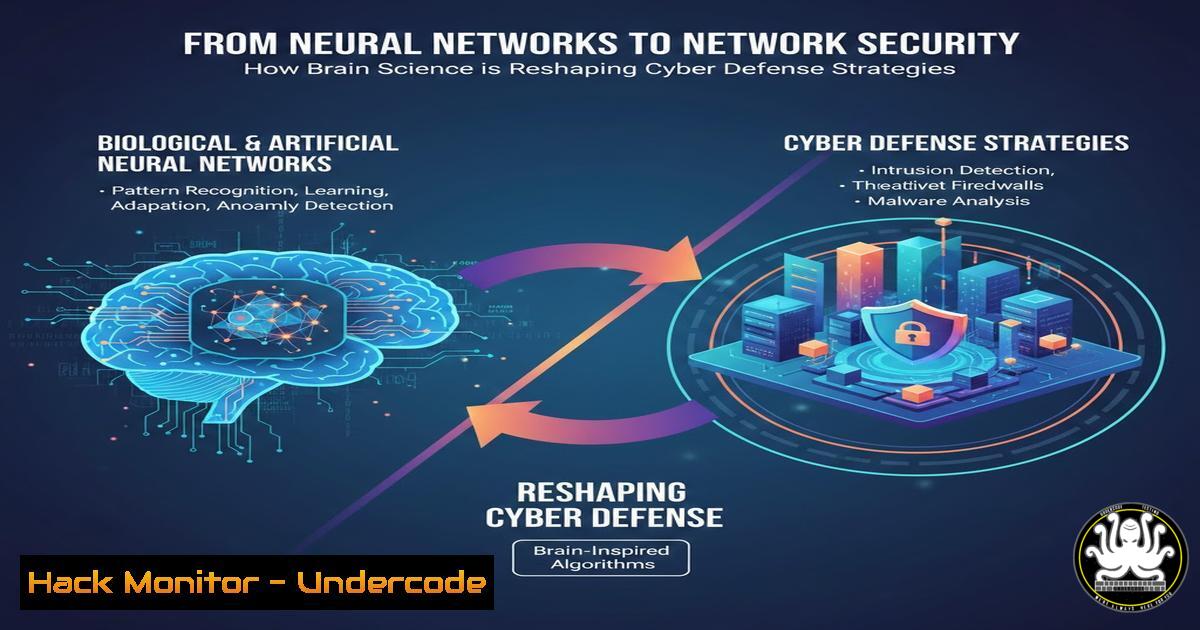
The human brain processes approximately 74 gigabytes of data daily, making it both our greatest security asset and most vulnerable attack surface. As cybercriminals increasingly exploit cognitive vulnerabilities through sophisticated social engineering and AI-powered manipulation, understanding the intersection of neuroscience and cybersecurity has become critical. This article explores how brain health principles and neuroplasticity are being applied to develop more resilient security architectures, while providing practical implementation strategies for IT professionals and security teams.
Learning Objectives
- Understand the neurological basis of social engineering attacks and how to build cognitive defenses
- Master practical implementation of AI-driven security tools that leverage behavioral analytics
- Learn to configure SIEM systems to detect psychological manipulation patterns
- Implement neuro-security protocols for enterprise environments
- Deploy defensive AI agents that protect against cognitive exploitation
You Should Know
- The Neuroscience of Social Engineering: Understanding Cognitive Vulnerabilities
The human brain operates on cognitive shortcuts called heuristics, which cybercriminals systematically exploit through phishing, pretexting, and baiting attacks. Recent research demonstrates that sophisticated social engineering attacks now leverage AI-generated content that specifically targets the brain’s threat detection mechanisms.
To protect against these threats, security professionals must understand how the brain processes security warnings and implements defensive protocols. The amygdala, responsible for threat detection, can be trained through repeated exposure to simulated attacks, creating neural pathways that enable faster recognition of malicious patterns.
Practical Implementation: Simulated Phishing Campaign Analysis
For Linux-based security teams, use the following command to analyze email headers and detect manipulation patterns:
 Extract and analyze email headers for social engineering indicators
curl -s https://api.hybrid-analysis.com/v2/search/hash | jq '. | {threat_level: .threat_level, social_engineering_score: .verdict}'

Parse email logs for psychological manipulation patterns
sudo grep -r "phishing" /var/log/mail.log | awk '{print $1, $2, $5, $NF}' | column -t

Monitor for mass-targeted psychological campaigns using Python
python3 -c "
import re
from collections import Counter
log_data = open('/var/log/apache2/access.log').read()
ip_pattern = r'\d{1,3}.\d{1,3}.\d{1,3}.\d{1,3}'
ips = re.findall(ip_pattern, log_data)
print('Potential coordinated attack sources:', Counter(ips).most_common(5))
"
For Windows environments, leverage PowerShell to analyze user behavior patterns:
 Extract user interaction patterns with suspicious emails
Get-WinEvent -FilterHashtable @{LogName='Security'; ID=4624} |
Where-Object {$_.Message -match "social engineering"} |
Select-Object TimeCreated, Message -First 10

Monitor for abnormal cognitive load indicators (rapid clicking patterns)
Get-Process | Where-Object {$_.CPU -gt 80} |
Select-Object Name, CPU, WorkingSet | Sort-Object CPU -Descending
2. Deploying AI-Powered Behavioral Analysis Systems
Modern security operations centers are implementing AI systems that monitor not just network traffic, but user behavior patterns that indicate cognitive manipulation. These systems analyze typing speed variations, mouse movement anomalies, and decision-making patterns to detect when users are under psychological duress.
Implementation Guide: Setting Up Behavioral Analytics with ELK Stack
 Install and configure Elasticsearch for behavioral monitoring
wget -qO - https://artifacts.elastic.co/GPG-KEY-elasticsearch | sudo apt-key add -
echo "deb https://artifacts.elastic.co/packages/7.x/apt stable main" | sudo tee /etc/apt/sources.list.d/elastic-7.x.list
sudo apt update && sudo apt install elasticsearch logstash kibana

Configure Logstash to process psychological indicators
sudo tee /etc/logstash/conf.d/behavioral.conf << 'EOF'
input {
beats {
port => 5044
}
}
filter {
if [bash] =~ /(urgent|immediate|password reset|account suspended)/ {
mutate {
add_tag => ["psychological_trigger"]
}
ruby {
code => "event.set('cognitive_load_score', event.get('message').scan(/[A-Z]/).count.to_f / event.get('message').length)"
}
}
}
output {
elasticsearch {
hosts => ["localhost:9200"]
index => "behavioral-security-%{+YYYY.MM.dd}"
}
}
EOF

Start behavioral monitoring services
sudo systemctl start elasticsearch logstash kibana
sudo systemctl enable elasticsearch logstash kibana
3. Neuro-Adaptive Authentication Protocols
Traditional multi-factor authentication fails to account for the user’s cognitive state during authentication. New neuro-adaptive systems adjust authentication requirements based on real-time analysis of user stress levels, fatigue indicators, and cognitive load.
Configuration Example: Adaptive MFA with Cognitive Load Detection
!/usr/bin/env python3
 cognitive_mfa.py - Dynamic authentication based on user state

import time
import psutil
import requests
from datetime import datetime

class CognitiveMFASystem:
def <strong>init</strong>(self, user_id):
self.user_id = user_id
self.cognitive_load = 0
self.stress_indicators = []

def calculate_cognitive_load(self):
 Monitor system indicators of user cognitive state
cpu_percent = psutil.cpu_percent(interval=1)
memory_percent = psutil.virtual_memory().percent
process_count = len(psutil.pids())

Calculate load score (higher = more cognitive load)
load_score = (cpu_percent  0.4 + memory_percent  0.4 +
(process_count / 500)  20)

return min(load_score, 100)

def detect_anomalous_behavior(self):
 Check for patterns indicating social engineering
network_connections = psutil.net_connections()
suspicious_connections = [conn for conn in network_connections
if conn.status == 'ESTABLISHED' and
conn.raddr and 'unknown' in conn.raddr.ip]

return len(suspicious_connections) > 3

def determine_auth_requirements(self):
cognitive_load = self.calculate_cognitive_load()
under_duress = self.detect_anomalous_behavior()

if cognitive_load > 80 or under_duress:
 High cognitive load - require biometric verification
return {
'required_factors': 3,
'methods': ['fingerprint', 'voice', 'security_key'],
'timeout': 30
}
elif cognitive_load > 50:
 Moderate load - standard MFA
return {
'required_factors': 2,
'methods': ['password', 'totp'],
'timeout': 60
}
else:
 Low load - simplified authentication
return {
'required_factors': 1,
'methods': ['password'],
'timeout': 120
}

Implementation in production
mfa_system = CognitiveMFASystem(user_id="employee_12345")
auth_policy = mfa_system.determine_auth_requirements()
print(f"Applied authentication policy: {auth_policy}")
4. Securing Brain-Computer Interface (BCI) and Neural Data
As organizations begin exploring BCI technologies for productivity enhancement, securing neural data becomes paramount. Neural data represents the ultimate personal identifiable information, requiring encryption standards that protect against both external interception and internal manipulation.
Configuration Guide: Neural Data Encryption Pipeline
 Set up encrypted channels for neural data transmission
sudo openssl req -x509 -nodes -days 365 -newkey rsa:2048 \
-keyout /etc/ssl/private/neural-data.key \
-out /etc/ssl/certs/neural-data.crt

Configure nginx for neural API security
sudo tee /etc/nginx/sites-available/neural-api << 'EOF'
server {
listen 443 ssl http2;
server_name neural-api.internal;

ssl_certificate /etc/ssl/certs/neural-data.crt;
ssl_certificate_key /etc/ssl/private/neural-data.key;

location /api/v1/brainwaves {
proxy_pass http://neural-backend:8080;
proxy_set_header X-Neural-Data-Classification "SENSITIVE";

Rate limiting for neural endpoints
limit_req zone=neural burst=5 nodelay;

Additional neural data validation
access_by_lua_block {
local headers = ngx.req.get_headers()
if not headers["X-Neural-Signature"] then
ngx.exit(403)
end
}
}
}
EOF

Implement neural data integrity monitoring
sudo ln -s /etc/nginx/sites-available/neural-api /etc/nginx/sites-enabled/
sudo systemctl restart nginx
5. AI-Powered Social Engineering Defense Training
Traditional security awareness training fails to create lasting neural pathways for threat recognition. Implementing AI-driven personalized training that adapts to individual cognitive patterns dramatically improves retention and real-world application.
Implementation: Automated Training Pipeline with Reinforcement Learning
 social_engineering_trainer.py - Adaptive security awareness system

import numpy as np
from sklearn.ensemble import RandomForestClassifier
import json

class AdaptiveSecurityTrainer:
def <strong>init</strong>(self):
self.user_profiles = {}
self.threat_patterns = self.load_threat_intelligence()
self.model = RandomForestClassifier(n_estimators=100)

def load_threat_intelligence(self):
 Load current social engineering patterns
threats = [
{"pattern": "urgent password reset", "type": "phishing", "risk": 0.9},
{"pattern": "verify account immediately", "type": "pretexting", "risk": 0.85},
{"pattern": "suspended due to suspicious", "type": "baiting", "risk": 0.8}
]
return threats

def analyze_user_response(self, user_id, email_content, response_time, action_taken):
if user_id not in self.user_profiles:
self.user_profiles[bash] = {
"risk_score": 0.5,
"learning_rate": 0.1,
"history": []
}

Calculate threat probability
threat_score = self.calculate_threat_probability(email_content)

Update user profile based on response
profile = self.user_profiles[bash]
correct_response = threat_score > 0.7 and action_taken == "report"

if correct_response:
profile["risk_score"] = (1 - profile["learning_rate"])
else:
profile["risk_score"] = (1 + profile["learning_rate"])

Generate personalized training
training_content = self.generate_training(profile, threat_score)

return {
"user_id": user_id,
"updated_risk": profile["risk_score"],
"recommended_training": training_content
}

def calculate_threat_probability(self, content):
 NLP-based threat analysis
threat_indicators = sum(1 for pattern in self.threat_patterns
if pattern["pattern"] in content.lower())
return min(threat_indicators  0.3, 1.0)

def generate_training(self, profile, threat_score):
if profile["risk_score"] > 0.7:
return {
"module": "advanced_threat_detection",
"focus_areas": ["urgency_manipulation", "authority_exploitation"],
"duration_minutes": 45,
"simulation_difficulty": "high"
}
elif profile["risk_score"] > 0.4:
return {
"module": "intermediate_awareness",
"focus_areas": ["phishing_basics", "email_analysis"],
"duration_minutes": 30,
"simulation_difficulty": "medium"
}
else:
return {
"module": "maintenance",
"focus_areas": ["periodic_refresher"],
"duration_minutes": 15,
"simulation_difficulty": "low"
}

Production deployment
trainer = AdaptiveSecurityTrainer()
result = trainer.analyze_user_response(
user_id="employee_789",
email_content="URGENT: Your account will be suspended unless you verify immediately",
response_time=2.5,
action_taken="clicked_link"
)
print(json.dumps(result, indent=2))
6. Implementing Cognitive Load Monitoring in SIEM
Security Information and Event Management systems must evolve to include cognitive security metrics. By monitoring indicators of user cognitive load, organizations can identify when employees are vulnerable to social engineering attacks.
Configuration: Splunk Integration for Cognitive Security Metrics
 Configure Splunk forwarder for cognitive indicators
sudo tee /opt/splunkforwarder/etc/system/local/inputs.conf << 'EOF'
[monitor:///var/log/cognitive-metrics]
disabled = false
index = cognitive_security
sourcetype = cognitive_load
host = security-analytics

[monitor:///var/log/user-activity]
disabled = false
index = behavioral_analytics
sourcetype = user_behavior
EOF

Create cognitive security dashboards
sudo /opt/splunk/bin/splunk add search "index=cognitive_security |
stats avg(cognitive_load) by user |
where avg_cognitive_load > 70 |
table user, avg_cognitive_load, latest_time" \
-app cognitive_security -auth admin:changeme

Alert on high-risk cognitive states
sudo /opt/splunk/bin/splunk add alert "High Cognitive Load Detected" \
-search 'index=cognitive_security cognitive_load>80 earliest=-5m' \
-actions email \
-action.email.to [email protected] \
-threshold_window 5 \
-threshold_type greater_than \
-threshold 0
7. Defensive AI Agents for Psychological Protection
Deploy autonomous AI agents that monitor communication channels for psychological manipulation patterns and intervene before users can be exploited. These agents analyze sentiment, urgency indicators, and authority exploitation attempts in real-time.
Implementation: Python-Based Defensive Agent
!/usr/bin/env python3
 defensive_agent.py - AI-powered psychological protection

import asyncio
import aiohttp
from transformers import pipeline
import numpy as np
from datetime import datetime

class PsychologicalDefenseAgent:
def <strong>init</strong>(self):
self.sentiment_analyzer = pipeline("sentiment-analysis")
self.manipulation_patterns = self.load_manipulation_patterns()
self.active_sessions = {}

def load_manipulation_patterns(self):
return {
"urgency": ["immediate", "urgent", "asap", "now", "today only"],
"authority": ["ceo", "president", "director", "compliance officer"],
"scarcity": ["limited", "only", "expires", "last chance"],
"fear": ["suspended", "terminated", "legal action", "investigation"]
}

async def analyze_communication(self, session_id, message, context):
if session_id not in self.active_sessions:
self.active_sessions[bash] = {
"risk_score": 0,
"manipulation_history": [],
"interventions": 0
}

session = self.active_sessions[bash]

Sentiment analysis
sentiment = self.sentiment_analyzer(message)[bash]

Manipulation pattern detection
manipulation_score = 0
detected_patterns = []

for category, patterns in self.manipulation_patterns.items():
for pattern in patterns:
if pattern in message.lower():
manipulation_score += 0.25
detected_patterns.append(category)

Combine with context factors
risk_score = manipulation_score  sentiment['score']

if sentiment['label'] == 'NEGATIVE':
risk_score = 1.5

session['risk_score'] = risk_score

Determine if intervention needed
if risk_score > 0.7:
intervention = await self.intervene(session_id, message, detected_patterns)
session['interventions'] += 1
session['manipulation_history'].append({
'timestamp': datetime.now(),
'risk': risk_score,
'patterns': detected_patterns,
'intervention': intervention
})

return {
'status': 'intervention_required',
'risk_level': 'high',
'detected_patterns': detected_patterns,
'intervention': intervention,
'message': '⚠️ Potential psychological manipulation detected. Please verify this communication through official channels.'
}

return {
'status': 'monitoring',
'risk_level': 'medium' if risk_score > 0.4 else 'low',
'risk_score': risk_score
}

async def intervene(self, session_id, message, patterns):
 Block suspicious communications
if 'authority' in patterns and 'urgency' in patterns:
return 'high_severity_block'
elif 'fear' in patterns:
return 'quarantine_communication'
else:
return 'display_warning'

async def run_continuous_monitoring(self):
while True:
 Analyze all active sessions for patterns
for session_id, data in self.active_sessions.items():
if data['risk_score'] > 0.5 and data['interventions'] < 3:
 Escalate to security team
await self.escalate_to_security(session_id, data)

await asyncio.sleep(60)  Check every minute

async def escalate_to_security(self, session_id, data):
async with aiohttp.ClientSession() as session:
await session.post('https://security.internal/api/escalate',
json={'session': session_id, 'data': data})

Deployment
agent = PsychologicalDefenseAgent()
asyncio.run(agent.run_continuous_monitoring())
What Undercode Say
The convergence of neuroscience and cybersecurity represents a paradigm shift in how we approach information security. Organizations that implement cognitive security measures gain a significant advantage by protecting not just their networks, but their human operators’ psychological vulnerabilities.
Key Takeaway 1: Traditional security awareness training creates temporary knowledge but fails to build lasting neural defenses. Organizations must implement continuous, adaptive training that leverages neuroplasticity principles to create permanent threat recognition pathways in employees’ brains.
Key Takeaway 2: The integration of cognitive load monitoring with existing SIEM solutions provides unprecedented visibility into security vulnerabilities. By understanding when users are cognitively compromised, organizations can implement dynamic authentication and automated protections that adapt to human limitations rather than ignoring them.
The most sophisticated security architecture remains vulnerable if it fails to account for the human element. As AI-powered social engineering attacks become increasingly sophisticated, protecting the cognitive domain becomes as critical as securing network perimeters. Organizations that embrace neuro-security principles will build resilient defenses that protect both data and the humans who interact with it.
Prediction
Within the next 18 months, we will witness the emergence of dedicated Cognitive Security Operations Centers (C-SOCs) in Fortune 500 companies, staffed by professionals trained in both cybersecurity and neuroscience. These centers will monitor employee cognitive states in real-time, deploying AI agents that automatically intervene when manipulation patterns are detected. Regulatory frameworks will evolve to mandate cognitive security protections, particularly for organizations handling critical infrastructure or sensitive personal data. The first major data breach attributed to AI-powered neural manipulation will occur within 12 months, triggering an industry-wide rush to implement cognitive defense systems. Organizations that fail to adapt will face not only data breaches but potential liability for psychological harm inflicted on employees through inadequate protection against sophisticated social engineering attacks.
For more information on implementing cognitive security measures or to register for specialized training, visit https://lnkd.in/gMw6rPqV for upcoming sessions on neuro-security integration and defensive AI deployment.
▶️ Related Video (80% Match):
🎯Let’s Practice For Free:
IT/Security Reporter URL:
Reported By: Trevor Leahy – Hackers Feeds
Extra Hub: Undercode MoN
Basic Verification: Pass ✅


