
Listen to this Post
Introduction:
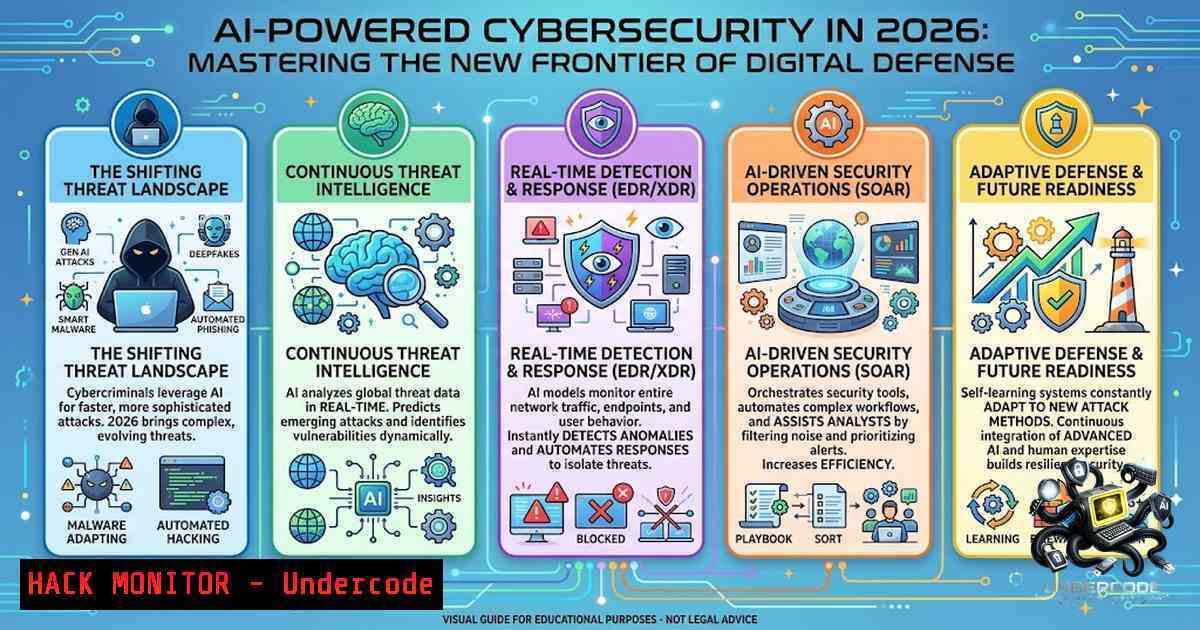
As artificial intelligence becomes deeply embedded across enterprise systems, organizations face unprecedented security challenges that demand a fundamental shift in defensive strategy. The convergence of AI-driven attacks and AI-powered defenses has created a new battleground where traditional security tools are no longer sufficient, and cybersecurity professionals must rapidly acquire specialized skills to secure AI technologies, defend against AI-enabled threats, and apply governance controls to AI systems.
Learning Objectives & Secrets:
- Objective 1: Master AI-specific threat modeling and risk analysis—learn to identify attack surfaces unique to AI systems, including prompt injection, data poisoning, and model theft, while applying industry frameworks such as OWASP for LLMs and MITRE ATLAS.
- Objective 2 Secret Tip: Implement defensive controls for AI pipelines by securing training data, embeddings, and RAG components—most breaches originate from compromised data sources rather than model vulnerabilities themselves.
- Objective 3 Secret Tip: Leverage AI as a force multiplier in Security Operations Centers (SOCs) by automating investigation, response, and workflows—organizations using AI-powered security tools have demonstrated over 10x investigation capacity at 88% lower cost than human experts alone.
- The AI Security Training Landscape: Certifications and Programs for 2026
The rapid evolution of AI threats has catalyzed a wave of specialized training programs designed to equip cybersecurity professionals with the skills needed to secure AI-driven environments. The CompTIA SecAI+ (CY0-001) certification has emerged as a foundational credential, preparing IT professionals to identify AI-related risks, apply technical and organizational controls, and support secure AI adoption across the enterprise. This course covers AI Essentials, security foundations, threat modeling, defensive strategies, and AI-enabled cybersecurity operations.
For professionals seeking deeper expertise, the CERT Leadership in AI for Cybersecurity Certificate Package from Carnegie Mellon University’s Software Engineering Institute offers comprehensive training in constructing machine learning models, applying deep neural networks, interacting with large language models (LLMs), and implementing appropriate AI tools for various cybersecurity challenges. The program includes approximately 26 hours of eLearning plus a capstone workshop.
Virginia Tech’s AI-Powered Cybersecurity Certificate Program ($3,790) provides hands-on training in networking, operating systems, ethical hacking, vulnerability assessment and penetration testing (VAPT), malware analysis, incident response, and AI-powered security operations. The program emphasizes AI in SIEM/SOAR, automation of SOC using AI techniques, and threat detection.
UCD’s AI Security: Offensive, Defensive, and Operational Best Practices module (€1,369) equips students with offensive and defensive techniques to secure AI architectures, generative models, and AI-driven applications. The curriculum covers adversarial attacks, prompt injection, data poisoning, model backdoors, and privacy attacks.
Practical Commands for AI Security Auditing:
 Linux - Check for unauthorized AI/ML model files
find / -1ame ".h5" -o -1ame ".pt" -o -1ame ".pb" 2>/dev/null | grep -v "/usr/lib|/usr/share"

Linux - Monitor AI API traffic
sudo tcpdump -i any port 443 -A -s 0 | grep -E "api.|openai|anthropic|cohere"

Windows - Check for running AI-related processes
Get-Process | Where-Object {$_.ProcessName -match "python|tensorflow|pytorch|ollama|llama"}

Windows - Audit AI service endpoints
netstat -ano | findstr :5000 | findstr LISTENING
- Cloud Security Hardening: Protecting AI Workloads at Scale
Cloud environments hosting AI workloads require specialized hardening beyond traditional infrastructure security. Azure’s default posture is permissive by design—Microsoft optimizes for developers getting started quickly, making the burden of tightening that posture fall entirely on the organization. The most effective approach treats identity as the real perimeter, enforces phishing-resistant MFA through Conditional Access, and uses managed identities instead of secrets.
Azure Hardening Commands and Configuration:
 Azure CLI - Enforce storage account private access
az storage account update --1ame sgdatastore2026 \
--public-1etwork-access Disabled \
--min-tls-version TLS1_2

Azure CLI - Read secret using managed identity (no credential in code)
az keyvault secret show --vault-1ame sg-app-kv --1ame db-password --query value -o tsv

Azure CLI - Assign Azure Policy to deny public storage
az policy assignment create --1ame "deny-public-storage" \
--policy "/providers/Microsoft.Authorization/policyDefinitions/6fb7a2e1-7a3c-4f1e-8a8a-5f9e6a2b3c4d" \
--scope "/subscriptions/{subscription-id}"
GCP Hardening Commands:
 GCP - Install hardening agent as Gemini CLI extension
gemini extensions install https://github.com/GoogleCloudPlatform/gcp-hardening-toolkit

GCP - Apply organization policy constraints
gcloud resource-manager org-policies set-policy policy.yaml --organization=ORGANIZATION_ID

GCP - Enable Security Command Center for continuous monitoring
gcloud scc activate --organization=ORGANIZATION_ID
AWS Hardening Commands:
 AWS CLI - Audit S3 bucket public access
aws s3api get-public-access-block --bucket <bucket-1ame>

AWS CLI - Remediate public access
aws s3api put-public-access-block --bucket <bucket-1ame> \
--public-access-block-configuration BlockPublicAcls=true,IgnorePublicAcls=true,BlockPublicPolicy=true,RestrictPublicBuckets=true

AWS CLI - Enforce SSE-KMS encryption
aws s3api put-bucket-encryption --bucket <bucket-1ame> \
--server-side-encryption-configuration '{"Rules":[{"ApplyServerSideEncryptionByDefault":{"SSEAlgorithm":"aws:kms","KMSMasterKeyID":"alias/aws/s3"}}]}'
3. API Security: The Connective Tissue Under Attack
APIs have become the operational backbone of digital business, with approximately 83% of internet traffic now flowing through APIs. In June 2024 alone, Akamai monitored 26 billion attacks targeting APIs, representing a 49% growth from the previous year. The rise of agentic AI is fueling a rapid proliferation of APIs, creating dynamically generated endpoints that are difficult to inventory and traditional security tools cannot keep up with.
OWASP API Security Top 10 Mitigations:
API1:2023 – Broken Object Level Authorization (BOLA): Use UUIDs instead of sequential IDs and implement ownership checks on every request.
 Python - Implement ownership check with JWT
def verify_ownership(request, resource_id):
user_id = request.jwt_payload.get('sub')
resource_owner = get_resource_owner(resource_id)
if user_id != resource_owner:
raise PermissionDenied("User does not own this resource")
API5:2023 – Broken Function Level Authorization: Implement rigorous RBAC on all endpoints.
// Node.js - RBAC middleware
function checkRole(requiredRole) {
return (req, res, next) => {
const userRole = req.user.role;
if (userRole !== requiredRole && userRole !== 'admin') {
return res.status(403).json({ error: 'Insufficient privileges' });
}
next();
};
}
app.post('/admin/v1/users', checkRole('admin'), createUser);
API7:2023 – Server Side Request Forgery (SSRF): Validate and sanitize all URLs before making outbound requests.
 Python - SSRF prevention with allowlist
import ipaddress
def validate_url(url):
parsed = urlparse(url)
hostname = parsed.hostname
ip = socket.gethostbyname(hostname)
if ipaddress.ip_address(ip).is_private:
raise ValueError("Private IP addresses not allowed")
if hostname not in ALLOWED_DOMAINS:
raise ValueError("Domain not in allowlist")
return url
Windows Commands for API Security Monitoring:
 Windows - Monitor API traffic on common ports
netstat -ano | findstr :443 | findstr ESTABLISHED

Windows - Check API authentication logs
Get-WinEvent -LogName Security | Where-Object {$_.Id -in 4624,4625} | Select-Object TimeCreated, Message -First 20

Windows - Audit API endpoint access
wevtutil qe Security /c:100 /f:text /q:"[System[(EventID=5156)]]"
- AI-Powered Security Tools: Microsoft MAI-Cyber-1-Flash and Project Perception
Microsoft launched its first cybersecurity-specialized model, MAI-Cyber-1-Flash, designed “to find challenging vulnerabilities in complex codebases”. The model outperforms Gemini, GPT-5.5 Cyber, GPT-5.6 Sol, and Mythos 5 on the Cyber Gym benchmark. The accompanying Project Perception platform deploys teams of AI agents—red teams for attack simulation, blue teams for vulnerability detection and triage, and green teams for corrective actions and fixes.
The platform represents a massive efficiency upgrade, transforming processes that took “hours and hours of manual work” into “minutes” with complete detection, posture fixing, and code fixes. Microsoft’s tools will be available in preview on November 3, 2026.
Sysdig Secure AI, introduced at Black Hat USA 2026, combines agentic AI, headless cloud security, and a generative AI assistant to automate cloud defense at machine speed. Built on runtime telemetry, it analyzes what is running and exploitable, checks whether vulnerabilities are reachable, surfaces zero-day activity, and helps contain or fix risk.
Linux Commands for Vulnerability Discovery:
 Linux - Scan for open ports and services
nmap -sV -p- -T4 192.168.1.0/24

Linux - Check for vulnerable packages
sudo apt list --upgradable 2>/dev/null | grep -i security
sudo yum check-update --security

Linux - Audit file integrity
sudo rpm -Va  CentOS/RHEL
sudo debsums --all --changed  Ubuntu/Debian

Linux - Check for suspicious processes
ps aux | grep -v "[" | awk '{print $11}' | sort | uniq -c | sort -1r
- Incident Response and Forensics in the AI Era
The first 10 minutes of incident response on compromised systems are critical. Security teams must rapidly identify active connections, running processes, scheduled tasks, and persistence mechanisms.
Linux Incident Response Commands:
 Linux - Check currently logged in users
who
w
last -1 20

Linux - Identify active network connections
ss -tulwn
netstat -tulpn

Linux - Find suspicious processes
ps aux --sort=-%mem | head -20
lsof -i -P -1 | grep LISTEN

Linux - Check scheduled tasks
crontab -l
ls -la /etc/cron

Linux - Identify persistence mechanisms
systemctl list-unit-files --state=enabled
find /etc/init.d -type f -executable
Windows Incident Response Commands:
 Windows - Check logged in users
qwinsta
whoami /all

Windows - Identify active connections
netstat -ano | findstr ESTABLISHED

Windows - Find suspicious processes
tasklist /v | findstr /i "suspicious"
Get-Process | Sort-Object -Property CPU -Descending | Select-Object -First 20

Windows - Check scheduled tasks
schtasks /query /fo LIST /v

Windows - Audit security policies
auditpol /get /category:
Windows File Integrity Verification:
 Windows - Scan and repair system files
sfc /scannow

Windows - Verify file hashes
Get-FileHash -Path C:\Windows\System32\kernel32.dll -Algorithm SHA256
6. Governance, Risk, and Compliance for AI Systems
As AI adoption accelerates, organizations must implement robust governance models that address responsible AI principles, enterprise risk management, and regulatory compliance. The EU AI Act and emerging standards require organizations to document AI system capabilities, limitations, and security controls.
Key GRC Controls for AI:
- Model Inventory Management: Maintain an up-to-date inventory of all AI models in production, including version, training data sources, and deployment details.
-
Data Lineage and Provenance: Track the origin and transformation of training data to identify potential poisoning or bias.
-
Continuous Monitoring: Implement logging, auditing, and anomaly detection for AI systems.
-
Human-in-the-Loop Controls: Define escalation paths and approval workflows for automated decisions.
-
Incident Response Playbooks: Develop AI-specific incident response procedures covering model compromise, data leakage, and adversarial attacks.
Windows Commands for Compliance Auditing:
 Windows - Audit policy settings
secedit /export /cfg C:\security_template.inf

Windows - Check installed software for compliance
Get-WmiObject -Class Win32_Product | Select-Object Name, Version, Vendor

Windows - Review event logs for security incidents
Get-WinEvent -LogName Security -MaxEvents 100 | Where-Object {$_.Id -in 4624,4625,4672,4688}
Linux Commands for Compliance Auditing:
 Linux - Check system for compliance with CIS benchmarks
sudo apt-get install cis-audit
sudo cis-audit --level 1

Linux - Audit file permissions
find / -type f -perm /o+w -ls 2>/dev/null

Linux - Check for world-writable directories
find / -type d -perm /o+w -ls 2>/dev/null

Linux - Verify SSH configuration
sudo grep -E "PermitRootLogin|PasswordAuthentication|Port" /etc/ssh/sshd_config
What Undercode Say:
- Key Takeaway 1: The cybersecurity industry is undergoing a paradigm shift where AI is both the primary threat vector and the most powerful defensive tool. Organizations that fail to invest in AI security training and tooling will be defenseless against AI-powered attacks that move at machine speed.
-
Key Takeaway 2: Cloud security in the AI era requires treating identity as the new perimeter, implementing infrastructure-as-code guardrails, and adopting AI-1ative security platforms that can analyze runtime telemetry to identify reachable vulnerabilities and contain risks in real-time.
-
Analysis: The convergence of agentic AI, proliferating APIs, and cloud-1ative architectures has created an attack surface that expands faster than traditional security teams can manage. The Microsoft MAI-Cyber-1-Flash model and Sysdig Secure AI represent a new class of AI-1ative security tools that promise to democratize Fortune-100-grade security capabilities. However, this democratization cuts both ways—cybercriminals are equally empowered by AI, as evidenced by AI agents that can move from vulnerability discovery to database compromise in under an hour. The 83% of organizations adopting or planning to adopt AI for cybersecurity must simultaneously address the security of their AI systems and the AI-enablement of their security operations. The key differentiator will not be technology adoption but the depth of AI security expertise within security teams, as demonstrated by the growing demand for certifications like CompTIA SecAI+ and CMU’s CERT Leadership in AI.
Prediction:
-
+1 Organizations that invest in AI security training and AI-1ative security platforms by Q1 2027 will achieve 3-5x faster incident response times and 60-80% reduction in mean time to remediation (MTTR) compared to organizations relying on traditional security tools.
-
+1 The emergence of specialized AI security certifications (CompTIA SecAI+, COASP, CERT Leadership in AI) will create a new career pathway with salary premiums of 30-50% over traditional cybersecurity roles.
-
-1 The proliferation of agentic AI systems will cause a 200-300% increase in API-related breaches by 2027 as organizations struggle to inventory and secure dynamically generated endpoints.
-
-1 Small and medium-sized businesses that cannot afford AI security tools and training will become prime targets for AI-powered attacks, potentially causing a wave of consolidation or bankruptcies in vulnerable sectors.
-
-1 Regulatory frameworks (EU AI Act, emerging US federal AI legislation) will outpace organizational compliance capabilities, resulting in significant fines and legal exposure for companies with inadequate AI governance controls.
▶️ Related Video (86% Match):
https://www.youtube.com/watch?v=2J2UkGPQ9mk
🎯Let’s Practice For Free:
🎓 Live Courses & Certifications:
Join Undercode Academy for Verified Certifications
🚀 Request a Custom Project:
Secure, high-velocity infrastructure and disruptive technological engineering. Contact our engineering team for high-tier development and proprietary systems:
[email protected]
💎 Smart Architecture | 🛡️ Secure by Design | ⭐ Trusted by Thousands
IT/Security Reporter URL:
Reported By: https://lnkd.in/p/e_9j_Xt2 – Hackers Feeds
Extra Hub: Undercode MoN
Basic Verification: Pass ✅


