Listen to this Post
Introduction:
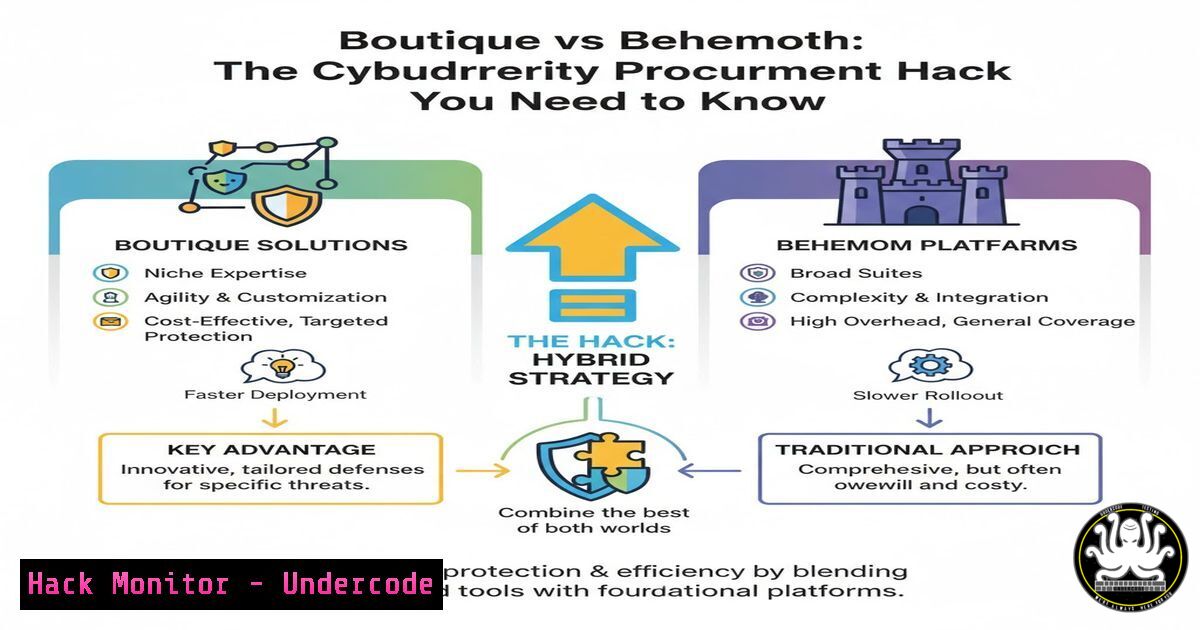
The choice between a boutique cybersecurity firm and a large multinational corporation is a critical strategic decision that impacts everything from threat response time to the overall security posture of your organization. While the big names offer brand recognition, smaller specialized shops provide agility and deep expertise. This article deconstructs the technical and operational advantages of each to guide your procurement strategy.
Learning Objectives:
- Understand the key technical and service-level differentiators between boutique and large cybersecurity providers.
- Learn practical commands and procedures for security tasks that highlight the need for specialized, hands-on expertise.
- Develop a framework for evaluating security partners based on your organization’s specific technical debt and risk profile.
You Should Know:
1. The Agility Advantage in Incident Response
Boutique firms often excel in rapid, customized incident response. A large MSSP might rely on a standardized playbook, whereas a smaller team can tailor their investigation from the outset using advanced hunting queries.
` Example: Custom Sigma rule for hunting suspicious process execution`
`title: Suspicious MSBuild Execution`
`logsource:`
` product: windows`
` service: sysmon`
`detection:`
` selection:`
` Image|endswith: ‘\MSBuild.exe’`
` CommandLine|contains:`
` – ‘.csproj’`
` – ‘.xml’`
` filter:`
` CommandLine|contains: ‘Microsoft’`
` condition: selection and not filter`
Step-by-step guide:
This Sigma rule is designed to detect the misuse of MSBuild, a legitimate Windows tool, to execute malicious code. In a boutique-led investigation, an analyst might quickly craft this rule based on a specific threat intelligence feed, deploy it to the SIEM, and begin hunting within minutes. The rule triggers on MSBuild.exe execution where the command line references a project file but lacks the typical “Microsoft” string, a common indicator of weaponization. This level of rapid, custom detection development is a hallmark of an agile security partner.
2. API Security: Beyond Automated Scanner Basics
Large providers may run generic DAST scans against API endpoints, but boutique firms often bring a deeper, code-aware approach to uncovering business logic flaws that scanners miss.
` Using ffuf to fuzz an API endpoint for unauthorized data access`
`ffuf -w wordlist.txt -u “https://api.target.com/v1/users/FUZZ/orders” -H “Authorization: Bearer
Step-by-step guide:
This command uses ffuf, a web fuzzing tool, to test for Insecure Direct Object References (IDOR). It substitutes the `FUZZ` keyword with values from a wordlist (e.g., other user IDs) while using a valid authentication token. A 200 response code for a user ID not belonging to the token holder indicates a critical vulnerability. A boutique firm’s penetration tester would manually craft this test to exploit a business logic flaw that a standard vulnerability scanner would likely never identify, demonstrating a deeper level of security assessment.
- Cloud Security Hardening: The Devil in the Defaults
Multinationals may deploy monolithic cloud security policies, while boutiques can implement granular, resource-specific hardening. The following AWS CLI command checks for a common misconfiguration that boutique audits frequently catch.
aws ec2 describe-security-groups --query 'SecurityGroups[?IpPermissions[?ToPort==22&& IpRanges[?CidrIp==0.0.0.0/0]]]' --output table
Step-by-step guide:
This command lists all security groups with rules that allow SSH (port 22) access from anywhere on the internet (0.0.0.0/0). This is a severe misconfiguration. A boutique firm would not only identify this but also provide a tailored remediation script to revoke the rule and help implement a just-in-time access solution, moving beyond simply reporting the finding to actively helping fix it.
4. Container Security: Runtime Vulnerability Detection
Specialized boutiques often have deeper expertise in niche areas like container security. They can implement runtime security measures that go far beyond static image scanning.
` Falco rule to detect a shell spawned in a running container`
`- rule: Run shell in container`
` desc: Detect a shell spawned inside a container`
` condition: container.id != host and proc.name in (bash, sh, zsh)`
` output: “Shell run in container (user=%user.name container_id=%container.id container_name=%container.name shell=%proc.name parent=%proc.pname cmdline=%proc.cmdline)”`
` priority: WARNING`
Step-by-step guide:
This is a rule for Falco, a cloud-native runtime security tool. It detects when a shell process (bash, sh, zsh) is spawned inside a container, which is a common precursor to an attack. A boutique security partner would help you deploy and tune Falco with custom rules like this one, providing visibility into runtime behaviors that static analysis tools cannot see, a level of service often glossed over by larger, less specialized providers.
5. The Personal Touch in Security Training
Boutique firms often provide training that is tailored to your specific tech stack, not a generic curriculum. For example, they might provide a custom lab for your developers on secure code practices.
` Example: Git hook to block commits with high-confidence secrets`
`!/bin/sh`
` pre-commit hook to scan for secrets with detect-secrets`
`if ! git secrets –scan; then`
` echo “WARNING: Potential secret detected. Commit blocked.”`
` echo “Review the output above and use –no-verify to override (not recommended).”`
` exit 1`
`fi`
Step-by-step guide:
This is a `pre-commit` Git hook script that uses a tool like `git-secrets` or `detect-secrets` to scan code before it’s committed. If a potential secret (like an API key) is found, the commit is blocked. A boutique training team would not only teach this concept but could help you implement and customize this hook for your specific development environment, providing immediate, practical value that generic training courses lack.
6. Advanced Persistent Threat (APT) Hunting
When dealing with sophisticated adversaries, the deep focus of a boutique firm is invaluable. They can help you hunt for evidence of memory-resident malware that evades traditional detection.
` Volatility 3 command to search for unlinked DLLs in memory`
`vol -f memory.dump windows.malfind.Malfind –pid 1234`
Step-by-step guide:
This command uses the Volatility memory forensics framework to analyze a RAM dump from a potentially compromised Windows host (with Process ID 1234). The `malfind` plugin looks for injected code, hidden DLLs, and other memory-resident malware artifacts. This represents a level of forensic depth that boutique firms are often more willing and able to perform, as they are not constrained by the high-volume, ticket-driven model of a large MSSP.
What Undercode Say:
- Expertise Over Bureaucracy: The primary value of a boutique firm is direct access to senior-level expertise, bypassing the layers of account managers and junior analysts common in large corporations. This translates to faster, more intelligent responses to security incidents.
- Alignment of Incentives: Boutique firms thrive on reputation and results, not on selling multi-year licenses for shelfware. Their business model is inherently aligned with your security outcomes, as their success is directly tied to yours.
The analysis from the comments section reveals a clear consensus among industry professionals: the personalized, dedicated service of a boutique cybersecurity provider consistently outperforms the impersonal, process-driven model of multinational giants. The key differentiator is “care” – a willingness to go above and beyond that is often absent in large, bureaucratic organizations. The agility of a smaller firm allows for custom detection engineering, deep-dive penetration testing, and tailored training that directly addresses an organization’s unique attack surface. While a large provider may offer 24/7 monitoring, the quality and context of that monitoring are frequently superior with a partner whose entire business depends on your success.
Prediction:
The growing complexity of the threat landscape, fueled by AI-powered attacks and software supply chain compromises, will increasingly favor the boutique cybersecurity model. The ability to rapidly adapt, provide deep specialization, and offer personalized service will become non-negotiable for effective cyber defense. We will see a market shift where organizations prioritize nimble, expert partners over brand name and scale, leading to a consolidation of large MSSPs and a rise in specialized boutique alliances that collaborate to provide comprehensive coverage.
🎯Let’s Practice For Free:
IT/Security Reporter URL:
Reported By: Colecornford Hey – Hackers Feeds
Extra Hub: Undercode MoN
Basic Verification: Pass ✅


