
Listen to this Post
Introduction:
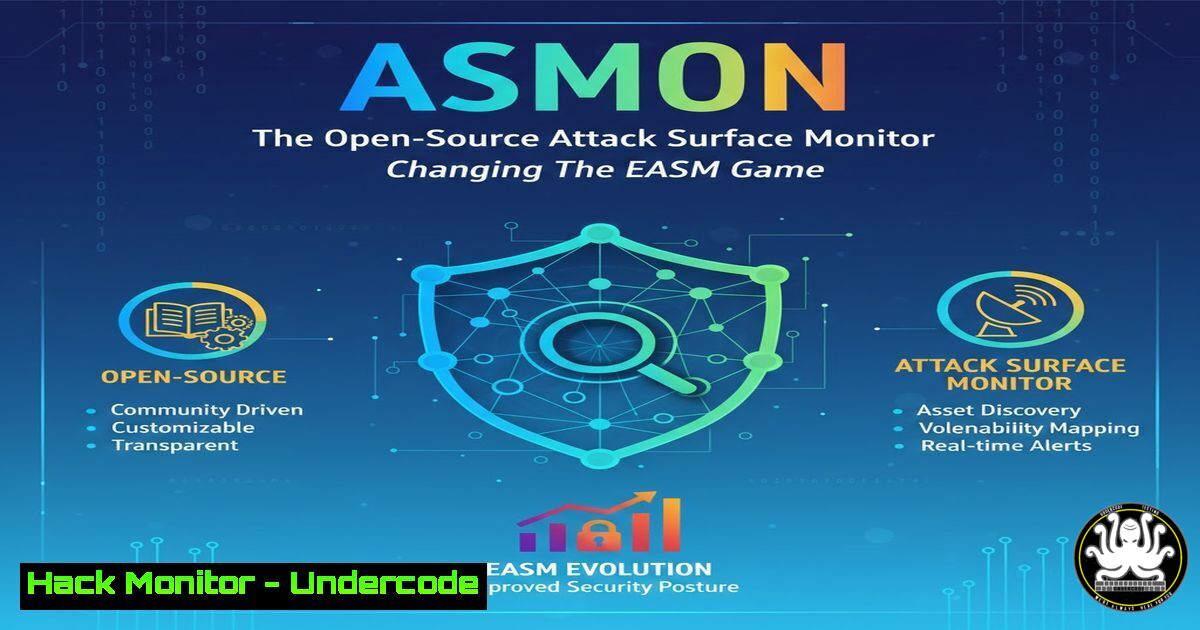
In an era where digital estates sprawl across clouds, APIs, and remote assets, External Attack Surface Management (EASM) has shifted from a luxury to a necessity. Developed through “vibe coding,” ASMON (Attack Surface Monitor) emerges as a community-driven, open-source solution designed to democratize security monitoring. This tool empowers Security Analysts and DevOps teams to autonomously discover shadow IT, scan for open ports, cross-reference CVEs, and receive real-time alerts without the hefty price tag of commercial enterprise platforms.
Learning Objectives:
- Understand the architecture and deployment of an open-source EASM tool (ASMON) for continuous asset discovery.
- Learn to configure automated port scanning, CVE correlation, and real-time alerting via Slack webhooks.
- Gain practical skills in customizing open-source security tools to map an organization’s external attack surface.
You Should Know:
1. Deployment and Initial Configuration of ASMON
ASMON is an open-source Python-based utility designed to automate the reconnaissance phase of security monitoring. To begin, you must clone the repository from the provided link and install the necessary dependencies. This tool likely relies on libraries like requests, shodan, nmap, or custom socket implementations.
Step‑by‑step guide (Linux Environment):
 Clone the repository
git clone https://github.com/elshanrza/ASMON.git  Assuming the redirect from lnkd.in
cd ASMON

Set up a virtual environment (Recommended)
python3 -m venv asmon-env
source asmon-env/bin/activate

Install requirements
pip install -r requirements.txt

Configure initial settings
cp config.yaml.example config.yaml
nano config.yaml
Within config.yaml, you will define your target domains or IP ranges. This is the foundational step where you tell ASMON what “surface” to monitor.
2. Performing Asset Discovery and Port Scanning
The core of ASMON lies in its ability to discover assets. It will likely perform DNS enumeration, subdomain brute-forcing, and certificate transparency log checks to find exposed assets. Once assets are identified, it initiates port scans to detect live services.
Step‑by‑step guide:
 Run the discovery module
python3 asmon.py --discover --target example.com

Execute a full port scan on discovered assets
python3 asmon.py --scan --top-ports 1000
This command utilizes a masscan/nmap hybrid approach to quickly identify open ports (e.g., 22, 443, 8080, 3389) and their associated service banners. This data is crucial for understanding the initial blast radius.
3. Vulnerability Correlation and CVE Analysis
After identifying services and their versions (e.g., nginx 1.18.0, OpenSSH 7.4), ASMON cross-references this data against public CVE databases. This step transforms raw asset data into actionable intelligence by highlighting which specific services are vulnerable to known exploits.
Step‑by‑step guide (Conceptual):
 Run the vulnerability module
python3 asmon.py --cve-check
The tool will generate a report listing affected assets. For manual verification, a Security Analyst might use a command like this to simulate the logic:
 Example: Manual CVE check for a specific version using searchsploit
searchsploit openssh 7.4
ASMON automates this process, saving hours of manual research and immediately flagging critical exposures like Log4j or ProxyShell vulnerabilities if the respective services are detected.
4. Implementing Real-Time Monitoring and Slack Alerts
ASMON is designed to run continuously, not just as a one-off scanner. By integrating a scheduler (like cron jobs or a systemd timer), the tool will periodically re-scan the attack surface. When a new high-risk CVE is released or a new open port is detected, it triggers an alert. The Slack webhook integration ensures that the security team is notified instantly.
Step‑by‑step guide:
First, configure the Slack webhook URL in your config.yaml:
slack:
webhook_url: "https://hooks.slack.com/services/T00000000/B00000000/XXXXXXXXXXXXXXXXXXXXXXXX"
Then, set up a cron job to run the monitoring script hourly:
 Edit crontab
crontab -e
 Add the following line to run every hour
0     cd /path/to/ASMON && /usr/bin/python3 /path/to/ASMON/asmon.py --monitor
When a deviation from the baseline is found (e.g., port 3306 suddenly becomes open), the team receives a formatted alert in Slack, allowing for immediate incident response.
5. Exporting Reports and Analyzing Historical Data
For compliance and auditing, ASMON includes a reporting feature. It can export findings in JSON, CSV, or HTML formats, providing a snapshot of the attack surface at a specific point in time. This historical data is invaluable for tracking the remediation of vulnerabilities over time.
Step‑by‑step guide:
 Generate a full report of the last scan
python3 asmon.py --export --format html --output report_nov2024.html

View historical trends (If SQLite backend is used)
sqlite3 asmon.db "SELECT date, COUNT(DISTINCT ip) FROM scans GROUP BY date;"
This allows security managers to present metrics to leadership, showing a reduction in attack surface or a decrease in critical vulnerabilities month-over-month.
What Undercode Say:
- Key Takeaway 1: Open-source EASM tools like ASMON are leveling the playing field, allowing small to medium-sized enterprises to compete with large corporations in attack surface visibility without massive budgets.
- Key Takeaway 2: The integration of “vibe coding” (rapid, AI-assisted development) is accelerating the creation of niche security tools, but it also places a burden on the user to verify the code’s safety and accuracy before deploying it in a production environment.
- Key Takeaway 3: Real-time alerting (Slack integration) transforms a static scanning tool into a dynamic defense mechanism, bridging the gap between reconnaissance and incident response.
The release of ASMON represents a significant shift toward community-driven security. By open-sourcing the code, Elshan Pashayev invites the global security community to audit, improve, and tailor the tool to their specific needs. While it currently offers essential EASM functions, the roadmap will likely include API discovery, cloud misconfiguration checks, and deeper integration with threat intelligence feeds. Analysts should adopt this tool not as a set-it-and-forget-it solution, but as a customizable framework to be hardened and expanded upon.
Prediction:
Within the next 12 months, we will see a surge in “vibe-coded” security tools flooding the open-source market. ASMON will likely evolve to incorporate AI-driven prioritization of vulnerabilities based on exploitability, and we may witness the emergence of a commercial “ASMON Pro” tier offering managed services, while the community version remains a staple for budget-conscious security teams. This could disrupt the traditional EASM vendor landscape, forcing them to innovate faster or lower their prices.
▶️ Related Video (86% Match):
🎯Let’s Practice For Free:
IT/Security Reporter URL:
Reported By: Elshanpashayev Easm – Hackers Feeds
Extra Hub: Undercode MoN
Basic Verification: Pass ✅


