Listen to this Post
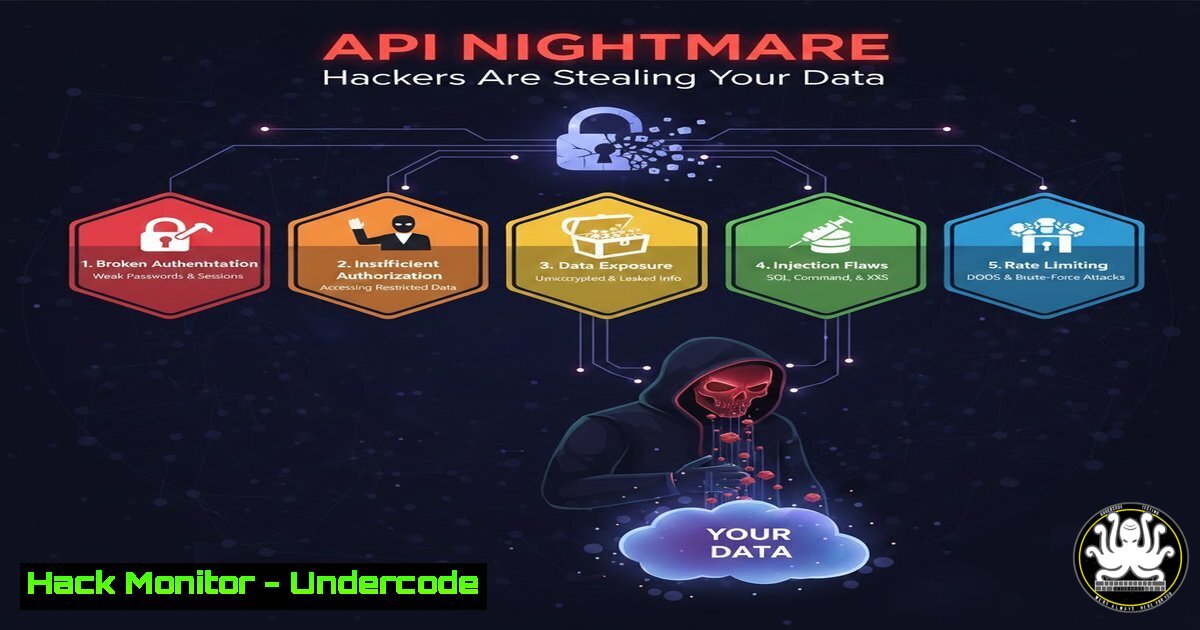
Introduction:
Application Programming Interfaces (APIs) have become the backbone of modern digital infrastructure, connecting everything from cloud services to mobile apps. However, this proliferation has made them a prime target for cyberattacks, with vulnerabilities often stemming from misconfigurations, broken authentication, and excessive data exposure. Understanding how to exploit and mitigate these flaws is crucial for both offensive security professionals and defenders tasked with protecting critical assets.
Learning Objectives:
- Identify and exploit common API vulnerabilities like Broken Object Level Authorization (BOLA) and injection flaws.
- Implement practical hardening techniques for APIs in cloud environments like AWS and Azure.
- Utilize open-source tools to automate API security testing and monitoring.
You Should Know:
- Exploiting Broken Object Level Authorization (BOLA) with cURL and Python
BOLA, often manifested as Insecure Direct Object References (IDOR), allows attackers to access resources by manipulating identifiers in API requests. This is a common flaw where endpoints do not properly verify if a user is authorized for a specific object ID.
Step‑by‑step guide explaining what this does and how to use it.
First, identify an API endpoint that uses predictable IDs, such as /api/v1/users/123. Using a command-line tool like cURL, you can test for IDOR by changing the ID parameter while using a captured session token.
 Linux/macOS: Test IDOR by iterating through user IDs
curl -H "Authorization: Bearer <ATTACKER_TOKEN>" https://target.com/api/v1/users/124
 If this returns data for user 124, the API is vulnerable.
For automated testing, a simple Python script can enumerate IDs:
import requests
for id in range(120, 130):
response = requests.get(f'https://target.com/api/v1/users/{id}', headers={'Authorization': 'Bearer <TOKEN>'})
if response.status_code == 200:
print(f'Accessed data for ID: {id}')
Mitigation requires implementing proper authorization checks on every endpoint, ensuring users can only access resources they own.
2. Injecting Malicious Payloads into GraphQL APIs
GraphQL APIs, while efficient, are susceptible to injection and abusive queries if not properly secured. Attackers can exploit nested queries to cause Denial-of-Service (DoS) or inject malicious data.
Step‑by‑step guide explaining what this does and how to use it.
To test for GraphQL injection, locate the GraphQL endpoint (often `/graphql` or /v1/graphql). Use a tool like `GraphiQL` or `curl` to send a malicious query. For instance, a SQL injection via GraphQL might look like this:
curl -X POST https://target.com/graphql \
-H "Content-Type: application/json" \
--data '{"query": "query { user(id: \"1' OR '1'='1\") { id, email } }"}'
To mitigate, implement input validation and sanitization at the GraphQL layer, use query depth limiting, and employ API gateways to filter malicious payloads.
- Hardening Cloud API Gateways on AWS and Azure
Cloud API gateways, such as AWS API Gateway and Azure API Management, are critical control points. Misconfigurations can lead to data leaks or unauthorized access.
Step‑by‑step guide explaining what this does and how to use it.
For AWS, ensure IAM roles are least-privilege and enable logging with CloudTrail. Use AWS CLI to audit policies:
 List all APIs
aws apigateway get-rest-apis
 Check for resources without authorization
aws apigateway get-resources --rest-api-id <your-api-id> --query 'items[?resourceMethods.ANY.httpMethod==<code>GET</code>]'
In Azure, use PowerShell to enforce API policies:
 Get API policies in Azure API Management
Get-AzApiManagementPolicy -Context <context> -ApiId <api-id>
 Apply a rate limiting policy
Add-AzApiManagementPolicy -Context $context -ApiId $apiId -Policy "<rate-limit calls=\"100\" renewal-period=\"60\" />"
Always enable SSL/TLS, use WAF integration, and regularly review access logs.
4. Automating API Security Scans with OWASP ZAP
The OWASP Zed Attack Proxy (ZAP) is a free tool for finding vulnerabilities in APIs, including REST and SOAP. It can automate active scans for common flaws.
Step‑by‑step guide explaining what this does and how to use it.
First, configure ZAP to proxy your API traffic. Start ZAP in daemon mode on Linux:
cd /path/to/zap/
./zap.sh -daemon -port 8080 -config api.disablekey=true
Then, use the ZAP API to trigger an active scan:
curl "http://localhost:8080/JSON/ascan/action/scan/?url=https://target.com/api/v1/&recurse=true"
Monitor the results for issues like missing security headers or injection vulnerabilities. Integrate ZAP into your CI/CD pipeline for continuous testing.
5. Implementing Rate Limiting and JWT Validation
Rate limiting prevents abuse and brute-force attacks, while proper JSON Web Token (JWT) validation ensures authentication integrity.
Step‑by‑step guide explaining what this does and how to use it.
For Node.js APIs, use the `express-rate-limit` middleware:
const rateLimit = require("express-rate-limit");
const limiter = rateLimit({
windowMs: 15  60  1000, // 15 minutes
max: 100 // limit each IP to 100 requests per windowMs
});
app.use("/api/", limiter);
For JWT validation, always verify the signature and expiry. In Python with Flask:
import jwt
from functools import wraps
def token_required(f):
@wraps(f)
def decorated(args, kwargs):
token = request.headers.get('Authorization')
if not token:
return {'error': 'Token is missing'}, 401
try:
data = jwt.decode(token, 'your-secret-key', algorithms=["HS256"])
except:
return {'error': 'Token is invalid'}, 401
return f(args, kwargs)
return decorated
Avoid using weak secrets and store keys securely in environment variables or vaults.
- Exploiting and Patching Server-Side Request Forgery (SSRF) in APIs
APIs that fetch external resources can be vulnerable to SSRF, allowing attackers to reach internal systems.
Step‑by‑step guide explaining what this does and how to use it.
Test for SSRF by manipulating URL parameters in API requests. For example, if an API endpoint `/api/fetch?url=https://example.com` exists, try:
curl -X GET 'https://target.com/api/fetch?url=http://169.254.169.254/latest/meta-data/'
This attempts to access AWS metadata from the internal network. Mitigate by validating and sanitizing all input URLs, using allowlists, and blocking requests to internal IP ranges.
- Setting Up Centralized Logging and Monitoring for APIs
Continuous monitoring detects anomalies and potential breaches in real-time. Use tools like the ELK Stack (Elasticsearch, Logstash, Kibana) or Splunk.
Step‑by‑step guide explaining what this does and how to use it.
On a Linux server, install Filebeat to ship API logs to Elasticsearch:
 Install Filebeat on Ubuntu
sudo apt-get update && sudo apt-get install filebeat
 Configure Filebeat to read API access logs
sudo nano /etc/filebeat/filebeat.yml
Add configuration to point to your API logs and Elasticsearch instance. Then, create Kibana dashboards to visualize failed login attempts, unusual traffic spikes, and geographic access patterns. Set up alerts for critical events, such as multiple 401 errors from a single IP.
What Undercode Say:
- APIs Are the New Perimeter: Traditional network defenses are insufficient; API security must be a core component of your strategy, requiring dedicated testing and hardening.
- Automation is Non-Negotiable: Manual testing cannot scale with the number of APIs; integrate security tools into development pipelines to catch flaws early.
- The analysis underscores that API attacks are escalating due to increased adoption of microservices and cloud-native apps. Attackers leverage automated tools to scan for misconfigured endpoints, making proactive defense essential. Organizations must shift left, embedding security into API design phases, and adopt a zero-trust approach, verifying every request. Failure to do so results in data breaches, as seen in recent incidents involving exposed API keys and unauthorized data access.
Prediction:
As APIs continue to drive digital transformation, attacks will become more sophisticated, leveraging AI to fuzz endpoints and identify vulnerabilities at scale. The rise of quantum computing may eventually break current encryption standards, compromising API authentication. However, advancements in AI-driven security tools will also enable real-time threat detection and automated patching, creating an arms race. Regulations like GDPR and CCPA will impose stricter requirements on API data handling, forcing companies to adopt comprehensive security frameworks or face severe penalties.
🎯Let’s Practice For Free:
IT/Security Reporter URL:
Reported By: Drmarthaboeckenfeld The – Hackers Feeds
Extra Hub: Undercode MoN
Basic Verification: Pass ✅


