
Listen to this Post
Introduction:
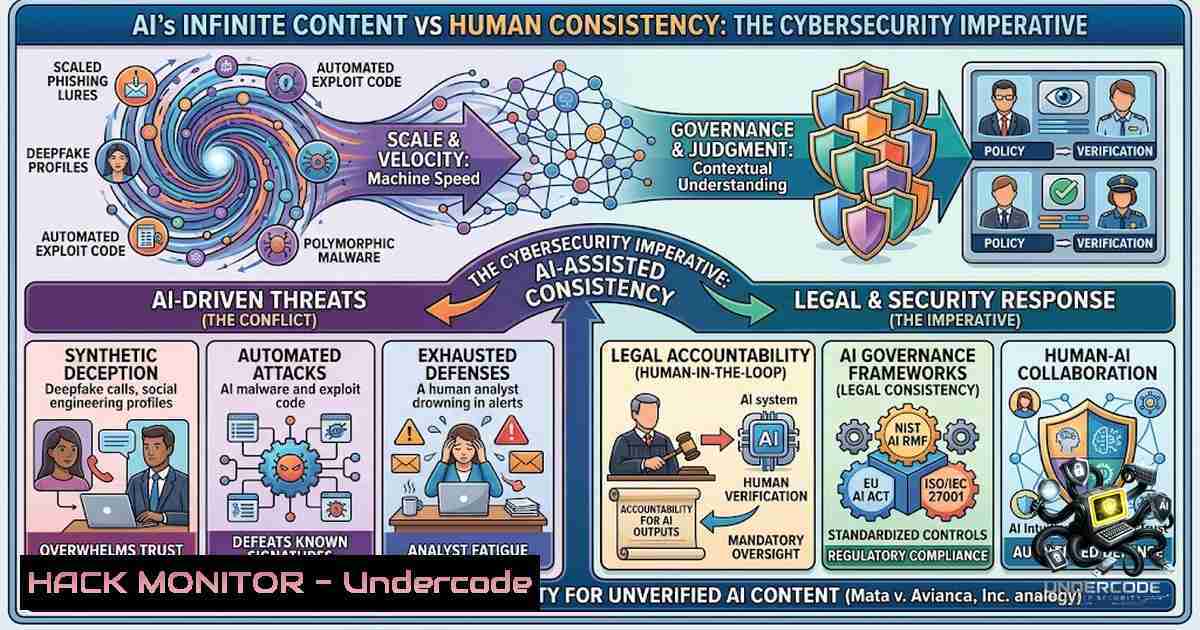
In an era where artificial intelligence can generate code, bypass captchas, and even mimic human communication, the cybersecurity industry faces a paradox: the more we automate, the more valuable human oversight, consistency, and presence become. Just as a six-year newsletter run without growth hacks proved that accountability and regularity outweigh fleeting viral tactics, security professionals are realizing that AI does not render human effort obsolete—it amplifies the need for reliable, repeatable, and accountable security practices. This article distills the hidden technical lessons from this human-centric success story, translating them into actionable cybersecurity, IT, and AI training strategies for defenders and engineers alike.
Learning Objectives & Secrets:
- Objective 1: Build Consistent Security Hygiene Over Time – Learn to implement daily, weekly, and monthly security routines that compound in value, much like consistent writing builds a loyal audience. The secret is automating the mundane while personally verifying critical alerts.
- Objective 2: Leverage AI as a Force Multiplier, Not a Replacement – Secret tip: Use AI to triage logs and suggest remediation steps, but always conduct a final human review of high-severity incidents to catch contextual nuances that models miss.
- Objective 3: Create Accountability in Digital Identities and Access – Secret tip: Implement “named accountability” for privileged actions—every sudo command or API key rotation must be tied to a verified human identity, reducing the anonymity that AI-driven attacks exploit.
You Should Know:
1. Consistent Patching and Configuration Management
Automating patch management is standard, but the compounding effect of disciplined, scheduled verification is what prevents breaches. Unlike a “viral” one-time security fix, consistent patch cycles build a resilient infrastructure over months and years.
– Linux (Debian/Ubuntu): Set up weekly automated checks and manual validation.
 Schedule a weekly update check in cron
sudo crontab -e
 Add line: 0 2   1 apt update && apt upgrade -y > /var/log/patch_weekly.log
 Manual verification of pending security updates
sudo apt list --upgradable | grep -i security
– Windows (Server 2022): Use PowerShell to enforce and audit patching.
 Check installed updates and filter by security
Get-HotFix | Where-Object {$_.Description -like "Security"}
 Install critical updates using PSWindowsUpdate module
Install-WindowsUpdate -Category "SecurityUpdates" -AcceptAll -AutoReboot
– Tool Configuration: Integrate a vulnerability scanner like OpenVAS or Nessus to run after each patch cycle. Configure email alerts to notify the “accountable human” for any missed patches.
- Automating Log Analysis with AI, but Human-Validating Anomalies
AI can process terabytes of logs, but it cannot understand business context. Create a pipeline where AI flags potential threats, and a human analyst reviews a curated “Top 10” daily.
– Linux (ELK Stack with Machine Learning): Set up a basic anomaly detection job using the Elastic Machine Learning feature.
 In kibana.yml, enable ML
xpack.ml.enabled: true
 Sample anomaly detection job configuration for failed logins
– Windows (Azure Sentinel): Use built-in AI to correlate alerts, but create a custom workbook that surfaces only the highest-confidence alerts for human review.
// KQL query to filter high-confidence alerts
SecurityAlert
| where Severity == "High" and (ConfidenceScore > 80)
| project TimeGenerated, AlertName, EntityName, ConfidenceScore
– Tutorial: Deploy a simple Python script that reads AI-generated alerts and flags any that occur outside normal business hours for immediate human check.
3. API Security and Consistent Key Rotation
Just as the newsletter’s success came from regular, dependable delivery, API security relies on the routine rotation of secrets. AI can guess static keys; consistency in rotation is the defense.
– Linux (Hashicorp Vault): Automate dynamic secrets for database access.
 Enable database secrets engine
vault secrets enable database
 Configure a rotation policy
vault write database/roles/my-db-role \
db_name=my-postgres-db \
creation_statements="CREATE USER \"{{name}}\" WITH PASSWORD '{{password}}';" \
default_ttl="1h" \
max_ttl="24h"
– Windows (Azure Key Vault): Use PowerShell to rotate keys on a schedule.
 Rotate a storage account key
$storageAccount = Get-AzStorageAccount -ResourceGroupName "MyRG" -1ame "mystorage"
$key = New-AzStorageAccountKey -ResourceGroupName "MyRG" -1ame "mystorage" -KeyName "key1"
 Update applications with new key via script
– Cloud Hardening: Implement AWS IAM Access Analyzer to review unused roles and permissions weekly, ensuring no stale access keys exist.
4. Vulnerability Exploitation and Mitigation: The Zero-Day Routine
Attackers exploit unpredictability. Consistent, scheduled penetration testing and red-team exercises act as the “daily writing” of your security posture, making it harder for attackers to find a weak spot.
– Linux (Metasploit & Nmap): Run a weekly internal scan.
 Nmap scan for open ports and services
nmap -sV -p- -T4 192.168.1.0/24 -oA weekly_scan
 Use Metasploit to verify a specific CVE (e.g., SMB vulnerability)
msfconsole -q -x "use exploit/windows/smb/ms17_010_eternalblue; set RHOSTS 192.168.1.10; run; exit"
– Windows (PowerShell & Defender): Utilize Microsoft Defender for Endpoint to run automated attack simulations.
 Trigger a simulated attack from the Microsoft 365 Defender portal
 Or use the below to check for specific IoCs
Get-MpThreat | Where-Object {$_.ThreatID -eq "214772"}  Example ID for a known exploit
– Step-by-Step Mitigation: For every exploited vulnerability, create a “lessons learned” document and update your SIEM correlation rules to catch similar attempts in the future.
- Identity and Access Management (IAM): The Human Firewall
AI can generate phishing emails, but consistent training and an accountable human “gatekeeper” for every privilege escalation prevents compromise.
– Linux (Sudo & PAM): Enforce dual approval for critical commands.
 In /etc/sudoers, require a second factor for sudo
%admin ALL=(ALL) ALL: authenticate via pam_radius
 Configure PAM for TOTP authentication
auth required pam_google_authenticator.so
– Windows (Active Directory & MFA): Enforce Conditional Access Policies.
 Using MSOnline module to enforce MFA for all global admins
$auth = New-Object -TypeName Microsoft.Online.Administration.StrongAuthenticationRequirement
$auth.RelyingParty = ""
Set-MsolUser -UserPrincipalName "[email protected]" -StrongAuthenticationRequirements $auth
– Tool Configuration: Integrate Okta or Azure AD with your SIEM so that every failed MFA attempt triggers an alert to a named security officer.
6. Cloud Hardening with Infrastructure as Code (IaC)
Consistency in cloud deployments means infrastructure as code (Terraform, CloudFormation) with strict policy-as-code (e.g., Sentinel or OPA). This prevents the “config drift” that often leads to exposed storage buckets or open security groups.
– Terraform Example (AWS): Enforce an S3 bucket policy that disallows public access.
resource "aws_s3_bucket_public_access_block" "example" {
bucket = aws_s3_bucket.example.id
block_public_acls = true
block_public_policy = true
}
– CI/CD Integration: Add a step to run `checkov` or `tfsec` in your pipeline to fail builds that introduce misconfigurations, ensuring every deployment is secure by default.
- Zero Trust Architecture: Every Request is Anonymous Until Verified
Just as the newsletter’s success relied on individual connections, Zero Trust assumes no implicit trust. Every access request must be authenticated, authorized, and continuously validated.
– Implementation: Deploy a service mesh like Istio with mutual TLS (mTLS) and enforce fine-grained authorization policies based on workload identity.
– Linux Command: Use `curl` to test mTLS connectivity.
curl -v --cert client.pem --key client-key.pem --cacert ca.pem https://secure-api.example.com
– Monitoring: Set up alerts for any request that fails the policy engine, flagging them for immediate human investigation.
What Undercode Say:
- Key Takeaway 1: Consistency in security operations, from patching to access reviews, builds a defensive depth that AI-powered attacks cannot easily circumvent. The compounding effect of daily, weekly, and monthly routines is the ultimate “secret sauce.”
- Key Takeaway 2: AI is a powerful assistant, but the human element of accountability and context remains irreplaceable. Tools should augment human decisions, not eliminate them, especially in high-stakes incident response.
Analysis: The post’s core insight—that AI makes human presence more scarce and thus more valuable—applies directly to cybersecurity. Attackers leverage AI to generate code and launch automated attacks at scale; however, the defenders who consistently verify, rotate keys, patch, and review logs create a moving target that automation struggles to keep up with. The underlying message is that security is not a one-time project but a daily discipline. The newsletter’s growth mirrors the maturation of a security program: no single action creates success, but the accumulation of small, correct actions over time creates an environment that is resistant to both human error and machine-driven exploitation. This is the new frontier of cyber defense—managing the human-AI symbiosis effectively.
Prediction:
- +1 The demand for security professionals who can bridge AI automation and human oversight will surge. Roles like “AI Security Strategist” will become standard, emphasizing consistency and accountability over pure technical prowess.
- +1 Security Awareness Training will evolve to focus on building “daily habits” rather than annual compliance checkboxes, mirroring the compounding effect seen in the newsletter’s growth.
- -1 Organizations that rely solely on AI-based security solutions without human validation will experience more frequent “silent failures”—misconfigurations and false negatives that lead to breaches, as AI lacks contextual business awareness.
- +1 The “human firewall” will be redefined to include a “Digital Presence” metric—tracking how often security personnel actively engage with logs, patches, and alerts, with higher presence correlating to lower breach rates.
- -1 The scarcity of human attention in security operations will create a premium for “accountable admins,” leading to a talent war where organizations compete not just for skills, but for reliability and consistency.
- +1 In the next two years, security frameworks (NIST, ISO 27001) will incorporate specific requirements for “human validation cycles,” mandating that critical AI-generated alerts must be reviewed by a named individual within a defined time window.
- -1 Attackers will increasingly use AI to mimic routine human behavior (e.g., login patterns, API calls), making it harder for automated systems to detect anomalies. This will force a shift toward “behavioral authentication” and zero-trust models where every action is explicitly verified by a human gatekeeper for high-value transactions.
▶️ Related Video (90% Match):
🎯Let’s Practice For Free:
🎓 Live Courses & Certifications:
Join Undercode Academy for Verified Certifications
🚀 Request a Custom Project:
Secure, high-velocity infrastructure and disruptive technological engineering. Contact our engineering team for high-tier development and proprietary systems:
[email protected]
💎 Smart Architecture | 🛡️ Secure by Design | ⭐ Trusted by Thousands
IT/Security Reporter URL:
Reported By: https://lnkd.in/p/eeucruxE – Hackers Feeds
Extra Hub: Undercode MoN
Basic Verification: Pass ✅


