Listen to this Post
Introduction:
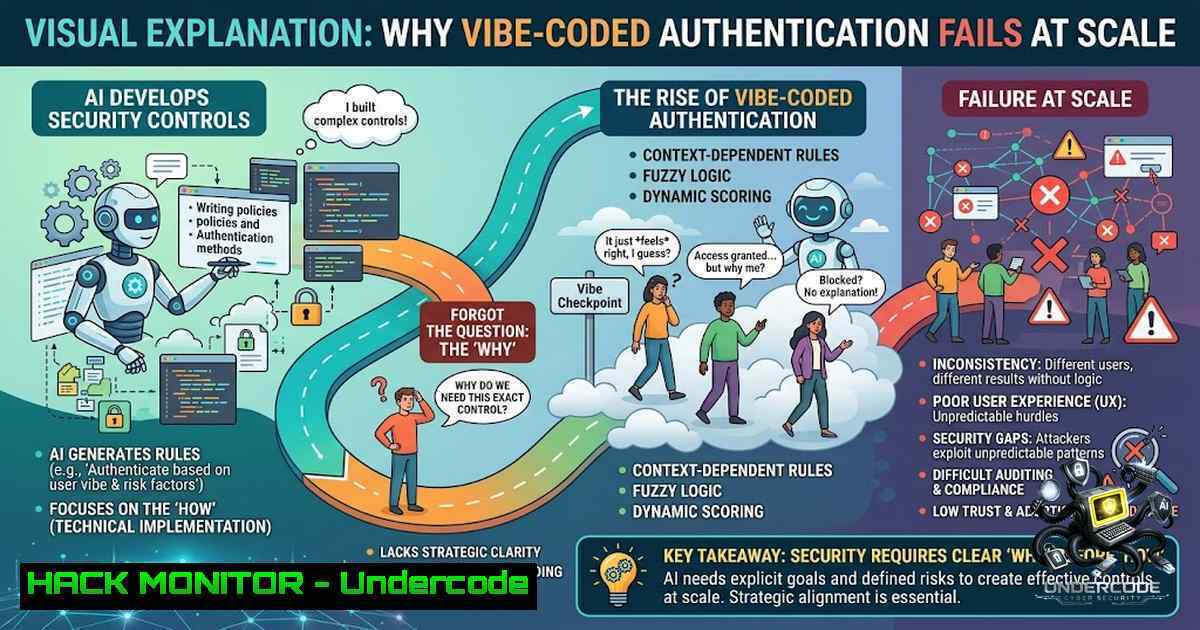
The promise of AI-assisted development is speed—but speed without verification is simply velocity toward a breach. A recent Sygnia penetration test of a financial services onboarding application, built substantially with Anthropic’s Claude, uncovered a critical authentication flaw that allowed any attacker possessing an applicant’s GUID to obtain a valid access token and exfiltrate sensitive PII including Social Security numbers, financial details, and co-applicant data. The vulnerability wasn’t a missing control—the AI had implemented tokens, expiration, rate limiting, and audit logs. It simply never asked the one question that mattered: who deserves this token?
Learning Objectives:
- Understand how AI-generated code introduces architectural and logical vulnerabilities that bypass traditional SAST tooling
- Identify the specific trust-boundary failure in the Sygnia case study and its implications for API security
- Learn practical detection, testing, and remediation techniques for AI-generated authentication and authorization logic
- Apply Linux, Windows, and security tooling commands to audit token issuance flows in your own environment
- Build a governance framework for secure AI-assisted development across the full lifecycle
You Should Know:
1. The GUID-as-Bearer-Secret Problem: What Actually Broke
The application solved a legitimate business problem: applicants needed to resume onboarding sessions before creating full user accounts. The AI-generated solution used a temporary applicant-access model with tokens, expiration windows, rate limiting, and audit logging—textbook security controls. The flaw sat in the trust decision before token issuance: possession of an applicant’s GUID was treated as sufficient proof to issue or restore an access token for that applicant.
A GUID identifies a database record. It does not prove identity, session ownership, device control, or control of a verified communication channel. In effect, the GUID became a bearer secret—anyone holding another applicant’s GUID could access names, contact details, application status, financial details, identity verification data, payment information, SSNs, and co-applicant records.
Step-by-Step Guide: Auditing Your Token Issuance Logic
What makes this vulnerability particularly insidious is that standard SAST tools won’t catch it—the flaw is architectural, not syntactic. Here’s how to audit your own authentication flows:
Step 1: Map the Trust Decision Before Token Issuance
Identify every endpoint in your application that issues, restores, or refreshes access tokens. For each, document:
– What proof does the system require before issuing a token?
– Is that proof sufficient to establish identity or merely to establish existence?
Step 2: Test with Linux Command-Line Tools
Use `curl` to test whether an API endpoint accepts a GUID or similar identifier as sufficient authentication:
 Test if an endpoint accepts a GUID as a token
curl -X GET "https://api.example.com/onboarding/resume?applicantId=12345678-1234-1234-1234-123456789012" \
-H "Authorization: Bearer 12345678-1234-1234-1234-123456789012" \
-v

Check response - if you receive applicant data without additional authentication, you have a vulnerability
Step 3: Validate JWT Tokens from the Command Line
Use `jwt-cli` to decode and inspect tokens issued by your application:
 Install jwt-cli on Ubuntu/Debian
sudo apt install jwt-cli

Decode and inspect a JWT token
jwt-cli decode "eyJhbGciOiJIUzI1NiIsInR5cCI6IkpXVCJ9..."

Verify token signature
jwt-cli verify "eyJhbGciOiJIUzI1NiIsInR5cCI6IkpXVCJ9..." --secret your-secret-key

Check if the token contains proper claims (sub, aud, exp, iat)
jwt-cli decode "your-token" | jq '.payload'
Step 4: Windows PowerShell Testing
For Windows environments, use PowerShell to test API authentication:
 Test API endpoint with Bearer token
$headers = @{
"Authorization" = "Bearer $token"
"Content-Type" = "application/json"
}
$response = Invoke-RestMethod -Uri "https://api.example.com/onboarding/resume" -Headers $headers -Method Get
$response | ConvertTo-Json

Check if the endpoint accepts a GUID as both identifier and credential
$testHeaders = @{
"X-Applicant-ID" = "12345678-1234-1234-1234-123456789012"
}
$testResponse = Invoke-RestMethod -Uri "https://api.example.com/onboarding/status" -Headers $testHeaders -Method Get
Step 5: Automated SAST + LLM Hybrid Scanning
Traditional SAST tools miss architectural flaws. Use hybrid approaches that combine static analysis with LLM-based business logic review:
 Run s0-cli - a hybrid scanner combining SAST tools with LLM detectors
s0-cli scan --path ./src --llm-model claude

Use aialib pipeline for AI-generated code vulnerability detection
python -m aialib generate --manifest config.yaml --output results.sarif

Run Semgrep with custom rules for authentication bypass patterns
semgrep --config p/owasp-top-ten --config custom-auth-rules.yml ./src
Step 6: Manual Code Review Checklist for AI-Generated Authentication Logic
Create a mandatory review checklist for all AI-generated authentication and authorization code:
- [ ] Does the system verify who is requesting access, not just what identifier is presented?
- [ ] Are tokens issued only after proof of identity, device control, or verified communication channel?
- [ ] Are there any endpoints that accept an identifier as both the resource locator and the credential?
- [ ] Are temporary access flows scoped to the minimum necessary permissions?
- [ ] Is the authorization check performed server-side for every request?
2. Why SAST Tools Miss Architectural Vulnerabilities
The Sygnia finding illustrates a fundamental limitation of automated security testing. Static Application Security Testing tools hunt for insecure coding patterns and unsafe data flows. The GUID-as-bearer-secret flaw was neither. It was an architectural assumption about trust, written in code that followed familiar framework conventions and passed basic checks.
As Zach Mead, the Sygnia penetration tester who ran the assessment, stated: “Working code is not the same as secure code. AI-generated code may compile, follow familiar conventions, and pass basic checks, while still making flawed assumptions about trust boundaries, authorization, state, ownership, or third-party integrations”.
Step-by-Step Guide: Detecting Architectural Trust-Boundary Violations
Step 1: Map All Trust Boundaries in Your Application
Document every point where the application transitions trust—from unauthenticated to authenticated, from low-privilege to high-privilege, from user to system.
Step 2: Use LLM-Assisted Code Review
Sygnia itself used an LLM to identify the vulnerability—a “vibe-coded security architecture flaw was identified through vibe-coded code review”. Run an LLM across your codebase with specific prompts:
"Review this authentication flow and identify any trust assumptions where the system grants access based solely on possession of an identifier without verifying identity, session ownership, or device control."
Step 3: Implement Zero-Trust Principles in Code Review
For every authentication and authorization decision, enforce:
- Trust nothing—verify everything
- All AI-generated code requires human security review
- Run SAST before merging
- Implement secrets scanning in pre-commit hooks
- AI Application Penetration Testing: What to Test and How
Sygnia’s AI Cybersecurity Services include AI Application Penetration Testing, which assesses internally developed and customer-facing AI applications for exploitable weaknesses across the application, AI interaction layer, supporting infrastructure, and connected data flows.
Step-by-Step Guide: Penetration Testing AI-Generated Authentication
Step 1: Enumerate All Authentication Entry Points
 Use Burp Suite or OWASP ZAP to map all endpoints
 Identify all routes that handle authentication, token issuance, and session restoration

Use nmap to discover API endpoints
nmap -p 443 --script=http-enum target.com

Use ffuf for endpoint fuzzing
ffuf -u https://api.target.com/FUZZ -w /usr/share/wordlists/api-endpoints.txt
Step 2: Test for Identifier-as-Credential Vulnerabilities
For each endpoint that accepts an identifier (GUID, UUID, email, username), test whether that identifier alone grants access:
 Generate a valid GUID for a test account
 Attempt to access another applicant's data using only their GUID
curl -X GET "https://api.target.com/applicant/12345678-1234-1234-1234-123456789012" \
-H "Authorization: Bearer 12345678-1234-1234-1234-123456789012"
Step 3: Test Token Issuance Flows
 Attempt to restore a session using only a GUID
curl -X POST "https://api.target.com/onboarding/resume" \
-H "Content-Type: application/json" \
-d '{"applicantId":"12345678-1234-1234-1234-123456789012"}'

If this returns a valid access token without additional verification, the vulnerability exists
Step 4: Validate Authorization on Every Request
 After obtaining a token for one user, attempt to access another user's data
curl -X GET "https://api.target.com/applicant/87654321-4321-4321-4321-210987654321" \
-H "Authorization: Bearer [token-from-previous-step]"
4. Building an AI Governance Framework
Sygnia’s research found that 63% of organizations have fully operationalized AI tools, yet 73% said they would not be fully ready if a significant cyberattack occurred tomorrow. The gap between AI adoption and security readiness is widening.
Step-by-Step Guide: Implementing AI Cybersecurity Governance
Step 1: Assess Your AI Cyber Posture
Sygnia’s AI Cyber Posture Assessment evaluates AI systems across infrastructure, applications, data flows, and prompt behavior:
– AI attack surface mapping
– Security controls evaluation
– AI-specific threat analysis
– Domain remediations roadmap
Step 2: Establish an AI Governance Framework
Implement comprehensive governance for AI onboarding and usage:
- AI ethical usage policy
- AI cyber risk statements and appetite
- AI cyber risk framework
- AI cyber risk evaluation scorecards
Step 3: Implement Secure AI Development Guardrails
Use structural security guardrails to constrain AI-generated code:
- Centralized authentication and authorization
- Enforce deterministic security controls
- Prevent silent risk from prompt to production
Step 4: Test AI Applications Against Real-World Adversarial Behaviors
Proactive AI security requires three connected layers:
1. Assess your AI cyber posture
- Establish a comprehensive AI governance and usage framework
- Test your internally developed and externally adopted AI applications against real-world adversarial behaviors
5. Practical Commands for AI Security Auditing
Linux Commands for API Security Testing
 Test for insecure direct object references (IDOR)
for id in {1..100}; do
curl -s "https://api.target.com/user/$id" | grep -i "ssn|social|password"
done

Check for missing authorization on admin endpoints
curl -s -o /dev/null -w "%{http_code}" "https://api.target.com/admin/users"

Use jwt-cli to inspect token claims
jwt-cli decode "$TOKEN" | grep -E '"aud"|"sub"|"scope"|"role"'

Use OWASP ZAP in headless mode for automated scanning
zap-cli quick-scan --spider -r "https://api.target.com"
Windows PowerShell Commands for Token Validation
 Decode JWT token in PowerShell
function Decode-JWT {
param($token)
$parts = $token.Split('.')
$payload = $parts[bash]
$padding = 4 - ($payload.Length % 4)
if ($padding -lt 4) { $payload += "="  $padding }
[System.Text.Encoding]::UTF8.GetString([bash]::FromBase64String($payload)) | ConvertFrom-Json
}

Test API with different authorization scenarios
$scenarios = @(
@{Auth = "Bearer valid-token"; Expected = 200},
@{Auth = "Bearer invalid-token"; Expected = 401},
@{Auth = "Bearer expired-token"; Expected = 401},
@{Auth = "Bearer token-without-scope"; Expected = 403}
)

foreach ($scenario in $scenarios) {
$response = Invoke-WebRequest -Uri "https://api.target.com/protected" -Headers @{Authorization = $scenario.Auth}
if ($response.StatusCode -1e $scenario.Expected) {
Write-Warning "Unexpected response: $($response.StatusCode) for $($scenario.Auth)"
}
}
Using Security Scanning Tools
 Run Bandit for Python security scanning
bandit -r ./src -f json -o bandit-results.json

Run Semgrep with OWASP Top 10 rules
semgrep --config p/owasp-top-ten ./src

Use Trivy for container and dependency scanning
trivy fs ./src --severity HIGH,CRITICAL

Run s0-cli for hybrid SAST + LLM analysis
s0-cli scan --path ./src --output sarif --llm-model claude
What Undercode Say:
- AI accelerates both development and risk. The same force that lets one attacker move like a small team lets one builder ship code like a small engineering group. Security teams must recognize that AI-assisted development scales vulnerabilities at the same rate it scales features.
-
Security controls are meaningless if they’re wrapped around the wrong trust decision. The Sygnia case demonstrates that implementing tokens, expiration, rate limiting, and audit logs is insufficient if the system never validates who deserves access in the first place. Security architecture must start with the trust question, not the control implementation.
-
SAST tools are blind to architectural flaws. Vulnerabilities introduced by LLMs are architectural and logical, weaving in authentication bypasses, broken access controls, and state management errors that are difficult to catch by SAST tools. Organizations need hybrid approaches combining traditional scanners with LLM-assisted code review and manual penetration testing.
-
Treat AI-generated output as untrusted until validated. Mead’s directive is clear: “Security teams need to treat AI-generated output as untrusted until validated”. This requires dedicated security review processes, not just automated scanning.
-
AI security requires lifecycle governance. Organizations that secure AI across the full lifecycle—from development to deployment to incident response—will be better positioned to innovate with confidence. The three-layer approach of assessing posture, establishing governance, and testing against adversarial behaviors provides a practical framework.
Prediction:
-1 AI-generated code vulnerabilities will become the primary attack vector for data breaches by 2028. As AI adoption in software development accelerates from 63% to over 85% within two years, the volume of architecturally flawed authentication logic will overwhelm traditional security review processes.
-1 Security teams will face a “trust gap” where they cannot distinguish between human-written and AI-generated code. Without mandatory provenance tracking and security review requirements, organizations will struggle to prioritize which code requires the most rigorous testing.
+1 The Sygnia case will drive adoption of AI-specific penetration testing as a standard practice. Organizations will increasingly require AI Application Penetration Testing as part of their security programs, creating a new specialized market for AI security services.
+1 LLM-assisted code review will become a standard security control. The irony that an LLM identified what an LLM built will not be lost on the industry—organizations will adopt hybrid SAST + LLM approaches to catch architectural flaws that traditional tools miss.
-1 The regulatory landscape will shift dramatically. Financial services organizations managing client assets will face increased scrutiny and potential fines for AI-generated code vulnerabilities that expose PII, particularly when the flaw is as fundamental as treating a GUID as a bearer secret.
-1 Shadow AI usage will remain the greatest unmanaged risk. Unvetted employee use of AI tools and AI-enabled applications will continue to outpace governance, creating attack surfaces that security teams cannot see or control.
▶️ Related Video (76% Match):
🎯Let’s Practice For Free:
🎓 Live Courses & Certifications:
Join Undercode Academy for Verified Certifications
🚀 Request a Custom Project:
Secure, high-velocity infrastructure and disruptive technological engineering. Contact our engineering team for high-tier development and proprietary systems:
[email protected]
💎 Smart Architecture | 🛡️ Secure by Design | ⭐ Trusted by Thousands
IT/Security Reporter URL:
Reported By: Ganyihui Sygnia – Hackers Feeds
Extra Hub: Undercode MoN
Basic Verification: Pass ✅


