Listen to this Post
Introduction
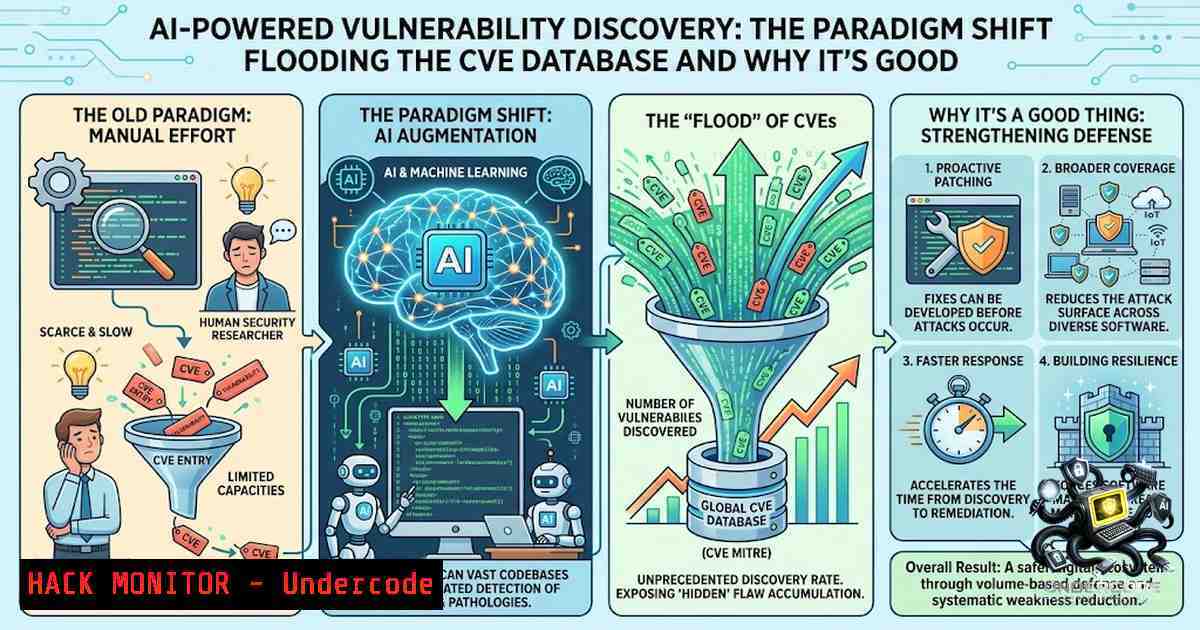
The cybersecurity industry is witnessing an unprecedented surge in reported vulnerabilities, with High and Critical severity CVEs reaching record numbers. According to Epoch AI’s vulnerability trend data, this spike isn’t necessarily a sign that software is becoming less secure—rather, it reflects a fundamental shift in how we discover flaws, driven by the integration of specialized AI models into the vulnerability research pipeline. As AI-powered systems like Anthropic’s Claude Mythos and OpenAI’s GPT-5.5-cyber demonstrate autonomous vulnerability discovery capabilities, the bottleneck is no longer finding vulnerabilities—it’s keeping pace with the AI that finds them.
Learning Objectives
- Understand the relationship between AI-powered vulnerability discovery tools and the sharp increase in CVE reporting rates
- Master practical techniques for triaging, prioritizing, and remediating High and Critical severity vulnerabilities using CVSS v4.0 frameworks
- Implement automated vulnerability scanning and patch management workflows across Linux and Windows environments
- Apply DevSecOps principles to integrate continuous vulnerability assessment into CI/CD pipelines
You Should Know
- The AI Vulnerability Discovery Revolution: From Manual Hunting to Autonomous Detection
The data from Epoch AI’s CVE explorer reveals a striking correlation: the April 7, 2026 announcement of Claude Mythos Preview coincided with a dramatic jump in new vulnerability reports. Anthropic claimed the model could autonomously discover vulnerabilities and gave trusted partners early access to harden their software. By May 22, 2026, Mythos Preview had identified more than ten thousand high- or critical-severity bugs. OpenAI followed suit with GPT-5.5 and GPT-5.5-cyber, launching similar trusted-partner programs.
This paradigm shift means that vulnerability discovery is no longer limited by human researcher bandwidth. AI models can analyze codebases at scale, identify patterns indicative of security flaws, and generate proof-of-concept exploits faster than traditional methods. The result? A flood of CVEs that might have remained undiscovered for months or years.
Understanding CVSS Scoring:
Epoch AI’s data uses the Common Vulnerability Scoring System (CVSS) to categorize severity:
- None: 0.0
- Low: 0.1 – 3.9
- Medium: 4.0 – 6.9
- High: 7.0 – 8.9
- Critical: 9.0 – 10.0
The platform defaults to CVSS v4.0 when available, with fallback to v3.1 and v3.0. Understanding these scores is critical for prioritization—a Critical vulnerability (9.0+) typically requires immediate remediation, while High (7.0-8.9) should be addressed within days.
- Practical Vulnerability Triage: Setting Up Your Scanning Infrastructure
With the volume of vulnerabilities exploding, organizations need automated systems to detect, prioritize, and remediate issues. Here’s how to establish a robust vulnerability management pipeline:
Step 1: Deploy Network Vulnerability Scanners
Linux (using OpenVAS):
 Install OpenVAS on Ubuntu/Debian
sudo apt update
sudo apt install openvas
sudo gvm-setup
sudo gvm-start

Run a basic scan
gvm-cli socket --socketpath /var/run/gvm/gvmd.sock --gmp-username admin --gmp-password [bash] --xml "<create_task><name>Quick Scan</name><target id='[target-id]'/></create_task>"
Windows (using PowerShell and built-in tools):
 Run Windows Defender Offline Scan
Start-MpWDOScan

Check for missing patches
Get-HotFix | Where-Object {$_.InstalledOn -lt (Get-Date).AddDays(-30)}

Use Microsoft Baseline Security Analyzer (MBSA) - legacy but useful
mbsacli /target [bash] /n os+iis+sql+1assword
Step 2: Implement Continuous Container Scanning
For organizations using containers, AI-discovered vulnerabilities in base images are particularly concerning:
 Using Trivy for container image scanning
trivy image --severity HIGH,CRITICAL nginx:latest

Using Grype
grype nginx:latest --fail-on critical

Integrate with CI/CD (GitHub Actions example)
 .github/workflows/security-scan.yml
name: Container Security Scan
on: [bash]
jobs:
scan:
runs-on: ubuntu-latest
steps:
- uses: actions/checkout@v3
- name: Scan image
run: |
docker build -t myapp .
trivy image --exit-code 1 --severity HIGH,CRITICAL myapp
Step 3: Automate CVE Monitoring
Since Epoch AI processes CVE records from the CVE Program’s cvelistV5 repository, you can set up automated alerts:
 Clone the CVE list repository for local analysis
git clone https://github.com/CVEProject/cvelistV5.git
cd cvelistV5

Monitor for new High/Critical CVEs affecting your stack
 Example: Find all CVEs with CVSS score >= 7.0
find . -1ame ".json" -exec jq 'select(.cve.metrics.cvssMetricV31[bash].cvssData.baseScore >= 7.0) | .cve.id' {} \;
3. Windows-Specific Vulnerability Remediation Workflows
Windows environments face unique challenges with the surge in reported vulnerabilities. Here’s a systematic approach:
Step 1: Automated Patch Management
 Check for missing updates
Get-WindowsUpdate -MicrosoftUpdate -Category "Security Updates" -IsInstalled $false

Install all critical updates
Install-WindowsUpdate -MicrosoftUpdate -Category "Security Updates" -AcceptAll -AutoReboot

Schedule regular scans via Task Scheduler
$Action = New-ScheduledTaskAction -Execute "powershell.exe" -Argument "-Command <code>"Get-WindowsUpdate -Install -AcceptAll -AutoReboot</code>""
$Trigger = New-ScheduledTaskTrigger -Daily -At "02:00AM"
Register-ScheduledTask -TaskName "SecurityUpdateScan" -Action $Action -Trigger $Trigger -User "SYSTEM"
Step 2: Exploit Mitigation Using Built-in Windows Security Features
 Enable Credential Guard (mitigates credential theft vulnerabilities)
 Requires UEFI and virtualization support
bcdedit /set {0cb3b571-2f2e-4343-a879-d86a476d7215} loadoptions DISABLE-LSA-ISO
bcdedit /set {0cb3b571-2f2e-4343-a879-d86a476d7215} device partition=\Device\HarddiskVolume1

Enable Windows Defender Application Guard for Edge
Add-WindowsCapability -Online -1ame "Microsoft.Windows.AppGuard" -LimitAccess -Source "D:\sources\sxs"

Configure Exploit Protection (mitigates memory corruption vulnerabilities)
Set-ProcessMitigation -1ame "chrome.exe" -Enable DEP,SEHOP,ASLR
Step 3: Active Directory Vulnerability Assessment
With AI discovering more AD-related vulnerabilities, regular assessment is crucial:
 Use PingCastle for AD security assessment (free tool)
.\PingCastle.exe --healthcheck --server [bash] --user [Domain\User] --password [bash]

Check for Kerberos vulnerabilities (e.g., Kerberoasting)
.\Rubeus.exe kerberoast /simple /outfile:hashes.txt

Review AD delegation permissions (often overlooked)
Get-ADObject -LDAPFilter "(objectClass=trustedDomain)" -Properties
- API Security in the Age of AI-Discovered Vulnerabilities
APIs are prime targets for AI-powered vulnerability discovery tools. Here’s how to harden your API infrastructure:
Step 1: Implement Comprehensive API Security Testing
 Using OWASP ZAP for API scanning
zap-api-scan.py -t https://api.example.com/openapi.json -f openapi -r report.html

Using Postman's Newman with security collections
newman run security-collection.json --env-var "baseUrl=https://api.example.com"

Burp Suite automation (requires Burp Pro)
java -jar burp-rest-api.jar --headless --config=burp-config.json
Step 2: API Rate Limiting and Authentication Hardening
// Node.js/Express API rate limiting with Redis
const rateLimit = require('express-rate-limit');
const RedisStore = require('rate-limit-redis');

const limiter = rateLimit({
store: new RedisStore({
sendCommand: (...args) => client.call(...args),
}),
windowMs: 15  60  1000, // 15 minutes
max: 100, // 100 requests per window
message: 'Too many requests from this IP',
standardHeaders: true,
legacyHeaders: false,
});

app.use('/api/', limiter);

// Implement JWT with short expiration and refresh tokens
const token = jwt.sign(
{ userId: user.id, role: user.role },
process.env.JWT_SECRET,
{ expiresIn: '15m' }
);
Step 3: API Vulnerability Scanning with AI-Enhanced Tools
 Using StackHawk for automated DAST in CI/CD
stackhawk scan --api-id [api-id] --env CI

Using 42Crunch for OpenAPI security validation
npx @42crunch/security-audit openapi.json --output report.json

Detect API misconfigurations
nmap -p 443 --script http-enum,http-headers,http-methods target.com
5. Cloud Infrastructure Hardening Against AI-Discovered Vulnerabilities
Cloud environments are increasingly targeted by AI-driven vulnerability discovery. Implement these hardening measures:
Step 1: AWS Security Assessment
 Install and run Prowler for AWS security assessment
pip install prowler
prowler aws --services ec2,s3,iam --severity critical,high

Check S3 bucket permissions (common misconfiguration)
aws s3api get-bucket-acl --bucket my-bucket
aws s3api get-bucket-policy --bucket my-bucket

Enable AWS Config for continuous compliance
aws configservice put-configuration-recorder --configuration-recorder name=default,roleARN=arn:aws:iam::[bash]:role/config-role
aws configservice start-configuration-recorder --configuration-recorder-1ame default
Step 2: Azure Security Hardening
 Azure PowerShell - Check for open network security groups
Get-AzNetworkSecurityGroup | ForEach-Object {
$<em>.SecurityRules | Where-Object {$</em>.Access -eq "Allow" -and $<em>.SourcePortRange -eq "" -and $</em>.DestinationPortRange -eq ""}
}

Enable Azure Defender for cloud security
Set-AzSecurityPricing -1ame "VirtualMachines" -PricingTier "Standard"

Run Azure Security Center recommendations
Get-AzSecurityAssessment | Where-Object {$_.Status.Code -1e "Healthy"}
Step 3: Kubernetes Security (Cloud-1ative)
 Scan Kubernetes clusters with kube-bench (CIS benchmark)
kubectl apply -f job-kube-bench.yaml

Use kube-hunter for penetration testing
kube-hunter --remote [cluster-ip]

Implement network policies to restrict pod communication
cat <<EOF | kubectl apply -f -
apiVersion: networking.k8s.io/v1
kind: NetworkPolicy
metadata:
name: default-deny
spec:
podSelector: {}
policyTypes:
- Ingress
- Egress
EOF

Scan images in the cluster with sysdig
sysdig -M 30 -p "%evt.type %evt.info" container.name=myapp
- AI-Powered Vulnerability Detection: Setting Up Your Own Security AI Pipeline
As the data shows, AI is the driving force behind the vulnerability surge. Organizations should consider implementing their own AI-powered security tools:
Step 1: Deploy Open-Source AI Security Tools
 Install Semgrep for static analysis with AI-enhanced rules
pip install semgrep
semgrep --config auto --severity ERROR .

Use CodeQL for deep code analysis (GitHub)
codeql database create ./db --language=python --source-root=.
codeql database analyze ./db codeql/python-queries --format=sarif-latest --output=results.sarif

Deploy DeepCode (Snyk) for AI-powered vulnerability detection
npm install -g snyk
snyk test --severity-threshold=high
Step 2: Implement Machine Learning for Anomaly Detection
 Python example: ML-based log analysis
import pandas as pd
from sklearn.ensemble import IsolationForest

Load system logs
logs = pd.read_csv('system_logs.csv')

Train isolation forest for anomaly detection
model = IsolationForest(contamination=0.1)
model.fit(logs[['response_time', 'error_rate', 'request_count']])

Predict anomalies (potential vulnerabilities being exploited)
logs['anomaly'] = model.predict(logs[['response_time', 'error_rate', 'request_count']])
anomalies = logs[logs['anomaly'] == -1]
print(f"Detected {len(anomalies)} anomalous patterns")
Step 3: Automate Vulnerability Triage with AI
 Use AI to prioritize CVEs based on your environment
 Example: Filter CVEs affecting your specific software stack
 Epoch AI lists notable CNAs including Microsoft, Google, Apple, Adobe, Oracle, Cisco, IBM, Red Hat, Intel, AMD, NVIDIA, Qualcomm, Samsung, SAP, Amazon, VMware, GitHub, Linux, Mozilla, Apache, OpenSSL

Create a script to check for CVEs affecting your stack
!/bin/bash
STACK=("nginx" "postgresql" "nodejs" "python")
for cve in $(cat cve_list.txt); do
for stack_item in "${STACK[@]}"; do
if grep -q "$stack_item" <<< "$cve"; then
echo "ALERT: $cve affects $stack_item"
fi
done
done
What Undercode Say:
- Key Takeaway 1: The surge in vulnerability reports is not a deterioration of software security but a testament to AI’s unprecedented capability to discover flaws at scale. Organizations must shift from “finding vulnerabilities” to “managing the flood of findings.”
-
Key Takeaway 2: The bottleneck has moved from discovery to remediation. With AI finding thousands of vulnerabilities daily, security teams need automated triage, prioritized patching, and CI/CD integration to survive. The organizations that thrive will be those that embrace AI not just for discovery, but for automated remediation as well.
Analysis: The Epoch AI data reveals a critical inflection point in cybersecurity. The integration of AI models like Claude Mythos and GPT-5.5-cyber into vulnerability research has effectively automated a process that was previously manual and resource-intensive. This democratizes security research but also creates a new challenge: information overload. Security teams can no longer manually review every CVE; they must adopt AI-driven prioritization tools. The data also highlights reporting discrepancies—Linux became a CNA in February 2024 and subsequently began assigning CVEs for thousands of backported bug fixes. This suggests that part of the increase is also due to improved reporting practices, not just AI discovery. The net effect is positive: more vulnerabilities found means fewer zero-days available for attackers. However, the window between disclosure and exploitation is shrinking, demanding faster patch cycles and more resilient architectures.
Expected Output:
Introduction:
The cybersecurity industry is witnessing an unprecedented surge in reported vulnerabilities, with High and Critical severity CVEs reaching record numbers. According to Epoch AI’s vulnerability trend data, this spike isn’t necessarily a sign that software is becoming less secure—rather, it reflects a fundamental shift in how we discover flaws, driven by the integration of specialized AI models into the vulnerability research pipeline. As AI-powered systems like Anthropic’s Claude Mythos and OpenAI’s GPT-5.5-cyber demonstrate autonomous vulnerability discovery capabilities, the bottleneck is no longer finding vulnerabilities—it’s keeping pace with the AI that finds them.
What Undercode Say:
- Key Takeaway 1: The surge in vulnerability reports is not a deterioration of software security but a testament to AI’s unprecedented capability to discover flaws at scale. Organizations must shift from “finding vulnerabilities” to “managing the flood of findings.”
- Key Takeaway 2: The bottleneck has moved from discovery to remediation. With AI finding thousands of vulnerabilities daily, security teams need automated triage, prioritized patching, and CI/CD integration to survive. The organizations that thrive will be those that embrace AI not just for discovery, but for automated remediation as well.
Expected Output:
Prediction:
- +1 AI-powered vulnerability discovery will become the industry standard within 18-24 months, reducing average vulnerability discovery time from months to hours.
- +1 The democratization of security research through AI will lead to a more secure software ecosystem, as vulnerabilities are found and fixed before attackers can weaponize them.
- +1 Organizations that implement automated remediation pipelines will gain a significant competitive advantage, reducing their mean time to remediate (MTTR) from weeks to days.
- -1 The volume of CVEs will continue to grow exponentially, overwhelming security teams that have not adopted AI-assisted triage and prioritization tools.
- -1 Attackers will also leverage AI to discover vulnerabilities faster, potentially leading to an arms race where the window between disclosure and exploitation shrinks to hours.
▶️ Related Video (76% Match):
🎯Let’s Practice For Free:
🎓 Live Courses & Certifications:
Join Undercode Academy for Verified Certifications
🚀 Request a Custom Project:
Secure, high-velocity infrastructure and disruptive technological engineering. Contact our engineering team for high-tier development and proprietary systems:
[email protected]
💎 Smart Architecture | 🛡️ Secure by Design | ⭐ Trusted by Thousands
IT/Security Reporter URL:
Reported By: Yohann Larbi – Hackers Feeds
Extra Hub: Undercode MoN
Basic Verification: Pass ✅


