
Listen to this Post
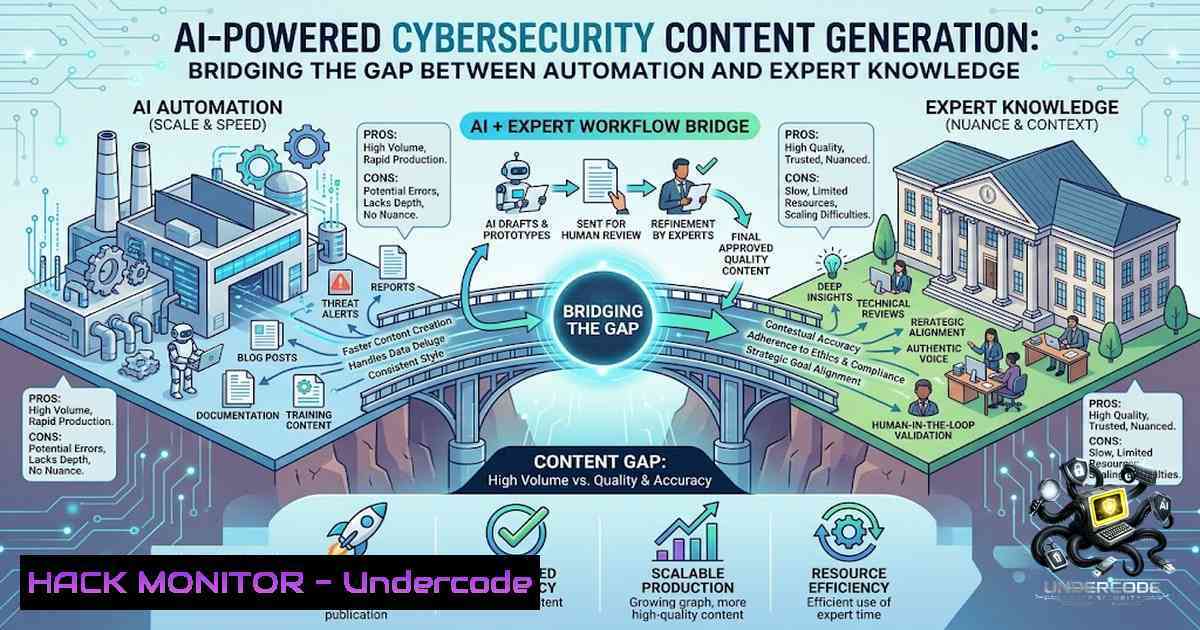
Introduction:
The intersection of artificial intelligence and cybersecurity has created unprecedented opportunities for automated content generation, threat detection, and security training. As organizations race to adopt AI-driven security solutions, the demand for authoritative, technically accurate cybersecurity content has surged. However, the effectiveness of these tools depends entirely on the quality and completeness of their source data, making proper content extraction and validation critical for security professionals.
Learning Objectives & Secrets:
- Objective 1: Master the extraction and validation of technical indicators from cybersecurity source materials, including URLs, CVE references, and configuration files
- Objective 1 Secret Tip: Always verify command syntax against official documentation before deploying in production environments—automated content generators may produce syntactically correct but contextually inappropriate commands
- Objective 2 Secret Tip: Structure cybersecurity educational content using standardized templates that separate theory from practical implementation, ensuring actionable takeaways for both novice and advanced practitioners
You Should Know:
1. Technical Data Requirements for Security Content Generation
Effective cybersecurity article generation requires comprehensive source material containing specific technical elements. Without underlying cybersecurity, IT, AI, or training course data, no commands, tutorials, or vulnerability analysis can be produced. Source materials must include:
– URLs pointing to security advisories, GitHub repositories, or training platforms
– Technical content related to specific CVEs, AI model security, or IT infrastructure hardening
– References to training courses, certifications (e.g., CEH, CISSP), or lab environments
For demonstration purposes, here are common commands used in security analysis when source content involves log analysis and incident response:
Linux – Extracting Failed SSH Login Attempts:
sudo grep "Failed password" /var/log/auth.log | awk '{print $11}' | sort | uniq -c | sort -1r
This command parses authentication logs, extracts IP addresses with failed login attempts, counts occurrences, and displays them in descending order to identify brute-force attack sources.
Windows – Analyzing Security Event Logs for Account Lockouts:
Get-WinEvent -FilterHashtable @{LogName='Security'; ID=4740} | Select-Object -First 10 TimeCreated, Message
This PowerShell command retrieves the most recent account lockout events (Event ID 4740) from the security log for rapid threat hunting.
API Security – Testing Exposure Risks:
curl -X GET https://target-api.com/v1/users -H "Authorization: Bearer [bash]"
This command tests API endpoint accessibility with a provided token to identify potential misconfigurations in authorization controls.
2. Automation Tools for Cybersecurity Content Creation
The cybersecurity industry has witnessed the emergence of specialized tools designed to automate expert security content generation. The “vibeship-security-writer” Skill eliminates the complexity and time commitment of creating authoritative, SEO-optimized, and LLM-citable cybersecurity content, especially for vulnerabilities in AI-generated code. This tool empowers non-technical founders to publish world-class security knowledge without needing deep expertise in both cybersecurity and content strategy.
Key capabilities include:
- Drafting comprehensive articles on cybersecurity vulnerabilities (e.g., SQL Injection, XSS)
- AI tool security analyses (e.g., Cursor, Claude Code)
- Stack-specific security guides (e.g., Next.js + Supabase)
- AI fix prompts, security checklists, and glossary entries
Installation Guide:
 Download the skill package
wget https://github.com/vibeforge1111/vibeship-knowledgebase/archive/main.zip

Extract and install in the Claude skills directory
unzip main.zip -d ~/.claude/skills/
This installation process enables automated security content generation for immediate publication.
3. AI Security Training and Certification Landscape
The growing demand for AI security expertise has led to the proliferation of specialized training programs and certifications. INE recently launched the AI Systems Security Specialist (eAIS) certification, focusing on prompt injection, RAG security, tool misuse, and safe operational use of AI across IT and cybersecurity teams. This credential addresses the critical need for practical AI security readiness in enterprise environments.
For professionals seeking foundational knowledge, several free and accessible options exist:
– Securiti – AI Security & Governance Certification: Comprehensive coverage of AI governance frameworks
– Alison – AI Governance and Ethics: Free course with optional paid certification
– Coursera + AWS – AI Security, Compliance & Governance: Free trial access to cloud-focused AI security
– Linux Foundation – Conversational AI Risk & Governance: Open-source approach to AI risk management
The CERT Leadership in AI for Cybersecurity Certificate Package from CMU’s Software Engineering Institute offers advanced training covering leadership in AI for cybersecurity, fundamentals of statistics applied to cybersecurity, and effective communication of technical concepts.
4. Practical Implementation: AI-Assisted Cyber Defense Operations
Women in CyberSecurity (WiCyS) has launched the “Just Hacking” program addressing skills gaps through three courses covering AI-assisted cyber defense operations, script-based malware analysis, and web application penetration testing. The first course, AI Cyber Defense Ops, provides hands-on exposure to emerging cyber threats.
Step-by-Step Implementation Guide for AI-Assisted Defense:
- Threat Intelligence Collection: Deploy AI-powered threat intelligence platforms to aggregate and analyze threat data from multiple sources
- Anomaly Detection: Implement machine learning models to establish baseline network behavior and identify deviations
- Automated Response: Configure SOAR (Security Orchestration, Automation, and Response) tools to execute predefined responses to common threats
- Continuous Learning: Update AI models with new threat intelligence to improve detection accuracy
5. Prompt Engineering for Cybersecurity Workflows
Prompt engineering has emerged as a critical skill for cybersecurity professionals, enabling improved speed, clarity, and consistency in security operations. Specialized courses teach professionals to use ChatGPT and other LLMs to produce reliable, auditable outputs for SOC, threat intel, and GRC tasks.
Practical Prompt Engineering Tips:
- Structure prompts with clear context, specific requirements, and expected output format
- Request citations and sources for all security claims
- Validate LLM-generated code against security best practices
- Use iterative prompting to refine outputs for accuracy
- Create training materials and executive communications using AI assistance
6. Cloud Security Hardening with AI Integration
As organizations migrate to cloud environments, AI-powered security tools have become essential for maintaining robust security postures. The integration of AI in cloud security enables:
– Real-time threat detection across distributed environments
– Automated compliance monitoring and reporting
– Predictive analytics for vulnerability identification
– Intelligent access control and identity management
Cloud Security Hardening Checklist:
- Implement AI-driven continuous monitoring for all cloud resources
- Configure automated response mechanisms for detected threats
- Regularly audit AI model performance and update training data
- Establish clear governance policies for AI security tool usage
- Conduct regular penetration testing with AI-assisted tools
What Undercode Say:
- Key Takeaway 1: The effectiveness of AI-powered cybersecurity content generation depends entirely on the quality and completeness of source material—without proper technical data extraction, automated tools cannot produce actionable security guidance
- Key Takeaway 2: The cybersecurity industry is experiencing a fundamental shift toward AI-assisted operations, with certification programs and training courses rapidly evolving to address the skills gap in AI security
Analysis: The convergence of AI and cybersecurity represents both an opportunity and a challenge for security professionals. While AI-powered tools can significantly enhance threat detection, incident response, and content generation capabilities, they also introduce new attack vectors and require specialized knowledge to deploy effectively. Organizations must invest in comprehensive training programs that cover both traditional security fundamentals and emerging AI-specific threats. The development of specialized certifications like eAIS and AI security governance courses reflects the industry’s recognition of this critical skills gap. However, the success of these initiatives depends on the quality of educational content and the practical applicability of training materials—underscoring the importance of proper source content extraction and validation in cybersecurity education.
Prediction:
- +1 The AI cybersecurity training market will experience exponential growth, with specialized certifications becoming as essential as traditional credentials like CISSP within the next 3-5 years
- -1 The reliance on automated content generation tools without proper human validation will lead to increased security vulnerabilities as organizations implement AI-recommended configurations without thorough testing
- +1 Cloud security integration with AI will mature significantly, enabling real-time, adaptive security postures that can respond to threats before they materialize
- -1 The skills gap in AI security will widen before it narrows, as traditional cybersecurity training programs struggle to keep pace with rapidly evolving AI technologies
- +1 Prompt engineering will become a standard competency in cybersecurity job descriptions, with professionals expected to leverage AI tools effectively in their daily workflows
▶️ Related Video (84% Match):
🎯Let’s Practice For Free:
🎓 Live Courses & Certifications:
Join Undercode Academy for Verified Certifications
🚀 Request a Custom Project:
Secure, high-velocity infrastructure and disruptive technological engineering. Contact our engineering team for high-tier development and proprietary systems:
[email protected]
💎 Smart Architecture | 🛡️ Secure by Design | ⭐ Trusted by Thousands
IT/Security Reporter URL:
Reported By: https://lnkd.in/p/eEcWWZ4F – Hackers Feeds
Extra Hub: Undercode MoN
Basic Verification: Pass ✅


