Listen to this Post
Introduction
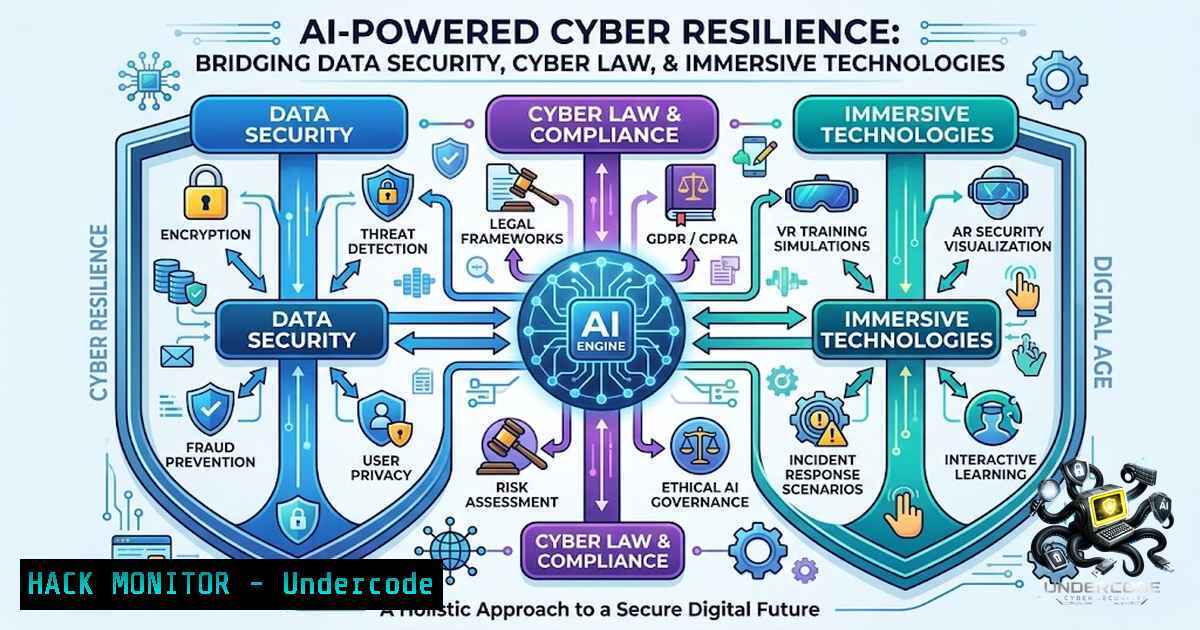
As artificial intelligence (AI) and machine learning (ML) permeate every facet of modern infrastructure, the convergence of cybersecurity, data protection, and legal frameworks has become critical. The recent podcast featuring Supriya Rai and Lava Kafle highlights Nepal’s growing focus on these domains, underscoring the need for professionals to master encryption, decryption, and the secure deployment of AI in environments ranging from cloud to extended reality (XR). This article distills technical best practices from that discourse, offering actionable steps to harden systems, comply with emerging cyber laws, and leverage AI for defensive operations.
Learning Objectives
- Understand the intersection of AI, cybersecurity, and cyber law, with practical applications in data encryption and threat detection.
- Implement system-level hardening commands on Linux and Windows to protect AI workloads and sensitive data.
- Deploy container security measures for Kubernetes (k86) and blockchain infrastructures.
- Apply API security and cloud hardening techniques to mitigate vulnerabilities in AI-driven applications.
You Should Know
- Hardening AI Workloads: Linux and Windows Security Commands
AI models and data pipelines are prime targets for adversaries. Securing the underlying operating systems is the first line of defense. Below are verified commands to lock down both Linux and Windows environments, ensuring that your AI infrastructure resists common attack vectors.
Linux Hardening Steps:
- Update and Patch: Regularly update packages to close known vulnerabilities.
sudo apt update && sudo apt upgrade -y  Debian/Ubuntu
sudo yum update -y  RHEL/CentOS
- Secure SSH Access: Disable root login and enforce key-based authentication.
sudo sed -i 's/PermitRootLogin yes/PermitRootLogin no/' /etc/ssh/sshd_config
sudo systemctl restart sshd
- Configure Firewall with UFW: Allow only necessary ports (e.g., 22, 443, and specific AI service ports).
sudo ufw default deny incoming
sudo ufw default allow outgoing
sudo ufw allow 22/tcp
sudo ufw allow 443/tcp
sudo ufw enable
- Audit System Logs: Monitor for suspicious activities using
auditd.sudo auditctl -w /etc/passwd -p wa -k identity sudo ausearch -k identity
Windows Hardening Steps (PowerShell as Administrator):
- Enable Windows Defender and Real-time Protection:
Set-MpPreference -DisableRealtimeMonitoring $false
Update-MpSignature
- Configure Windows Firewall: Block all inbound connections except essential services.
New-1etFirewallRule -DisplayName "Block All Inbound" -Direction Inbound -Action Block
New-1etFirewallRule -DisplayName "Allow HTTPS" -Direction Inbound -LocalPort 443 -Protocol TCP -Action Allow
- Enforce BitLocker Encryption: Protect data at rest on AI training drives.
Enable-BitLocker -MountPoint "C:" -EncryptionMethod XtsAes256 -SkipHardwareTest
- Audit Policy Changes: Use `auditpol` to track security events.
auditpol /set /subcategory:"Security System Extension" /success:enable /failure:enable
- Container and Orchestration Security for AI (Kubernetes & Docker)
With AI models increasingly deployed in containers, securing Kubernetes (k86) clusters is non-1egotiable. Misconfigurations can expose model weights, training data, and API endpoints.
Step‑by‑Step Guide:
- Run Containers as Non-Root Users: In your Dockerfile, add:
RUN useradd -m -u 1000 appuser
USER appuser
2. Implement Pod Security Standards (PSS) in Kubernetes:
apiVersion: v1
kind: Namespace
metadata:
name: ai-production
labels:
pod-security.kubernetes.io/enforce: restricted
3. Use Network Policies to Restrict Egress: Prevent compromised pods from exfiltrating data.
apiVersion: networking.k8s.io/v1
kind: NetworkPolicy
metadata:
name: deny-egress
spec:
podSelector: {}
policyTypes:
- Egress
4. Enable Audit Logging: Forward Kubernetes audit logs to a SIEM for anomaly detection.
kube-apiserver --audit-log-path=/var/log/kubernetes/audit.log --audit-policy-file=/etc/kubernetes/audit-policy.yaml
- API Security and Cloud Hardening for AI Services
AI models are often exposed via RESTful or gRPC APIs. Securing these endpoints is vital to prevent model stealing, prompt injection, and denial-of-service attacks.
Step‑by‑Step Guide:
- Implement Rate Limiting: Use a reverse proxy like NGINX or API gateway (e.g., Kong) to limit requests per IP.
limit_req_zone $binary_remote_addr zone=mylimit:10m rate=10r/s; server { location /api/ { limit_req zone=mylimit burst=20 nodelay; proxy_pass http://ai-backend; } } - Enforce Mutual TLS (mTLS): Ensure that both client and server authenticate each other.
openssl req -x509 -1ewkey rsa:4096 -keyout server.key -out server.crt -days 365 -1odes
Configure your AI service to require client certificates
- Validate and Sanitize Inputs: Use JSON schema validation to prevent injection attacks.
from jsonschema import validate
schema = {
"type": "object",
"properties": {"prompt": {"type": "string", "maxLength": 1000}},
"required": ["prompt"]
}
validate(instance=request_json, schema=schema)
4. Cloud-Specific Hardening (AWS Example):
- Restrict S3 bucket policies to specific IAM roles.
- Enable VPC flow logs to monitor traffic to AI instances.
- Use AWS KMS to encrypt model artifacts at rest.
4. Encryption and Decryption in Practice
Data security hinges on robust cryptography. Whether protecting training datasets or inference results, understanding and implementing encryption is essential.
Symmetric Encryption (AES-256) with OpenSSL:
- Encrypt a file:
openssl enc -aes-256-cbc -salt -in plaintext.txt -out encrypted.bin -pass pass:YourStrongPassword
- Decrypt a file:
openssl enc -d -aes-256-cbc -in encrypted.bin -out decrypted.txt -pass pass:YourStrongPassword
Asymmetric Encryption (RSA) for Key Exchange:
- Generate a private key:
openssl genrsa -out private.pem 2048
- Extract the public key:
openssl rsa -in private.pem -pubout -out public.pem
- Encrypt a file with the public key:
openssl rsautl -encrypt -inkey public.pem -pubin -in secret.txt -out secret.enc
- Decrypt with the private key:
openssl rsautl -decrypt -inkey private.pem -in secret.enc -out secret.txt
For AI pipelines, consider using envelope encryption: encrypt data with a data key (AES), then encrypt that data key with a master key (RSA or KMS). This balances performance and security.
- Navigating Cyber Law and Compliance for AI Deployments
With Nepal and other nations enacting cyber laws, compliance is no longer optional. The podcast emphasizes the importance of legal frameworks in data protection.
Key Compliance Actions:
- Data Localization: Ensure that sensitive data (e.g., citizen records) remains within jurisdictional boundaries.
- Consent Management: Implement mechanisms to obtain and record user consent for data processing, as required by laws like Nepal’s Electronic Transactions Act.
- Breach Notification: Establish an incident response plan that includes notifying authorities within 72 hours of a breach.
- Audit Trails: Maintain detailed logs of who accessed what data and when. Use tools like `auditd` (Linux) or Windows Event Logging to create immutable records.
6. Securing Emerging Technologies: AR/VR/MR/XR and Blockchain
Immersive technologies (AR, VR, MR, XR) and blockchain introduce new attack surfaces. For XR applications, ensure that sensor data (cameras, microphones) is encrypted in transit and stored securely. For blockchain, focus on smart contract auditing and private key management.
Blockchain Security Checklist:
- Use hardware security modules (HSMs) for key storage.
- Implement multi-signature wallets for administrative functions.
- Regularly run static analysis tools (e.g., Slither for Solidity) on smart contracts.
- Monitor for unusual transaction patterns using blockchain analytics.
What Undercode Say
- Convergence is Inevitable: The fusion of AI, cybersecurity, and cyber law is not a trend but a necessity. Organizations must treat security as a foundational requirement, not an afterthought.
- Education and Awareness are Key: Podcasts and public discourse, like the one featuring Supriya Rai and Lava Kafle, play a vital role in democratizing knowledge. However, theoretical understanding must be paired with hands-on practice—running commands, configuring firewalls, and simulating attacks.
The discussion around Nepal’s cyber landscape reveals a growing maturity, but also highlights gaps in enforcement and technical expertise. Professionals should invest in continuous learning, focusing on both offensive (penetration testing) and defensive (incident response) skills. The emphasis on encryption and decryption is particularly timely, given the rise of ransomware and state-sponsored espionage. Moreover, as AR/VR/MR/XR technologies become mainstream, their unique privacy and security challenges—such as biometric data leakage—will demand novel solutions. Finally, the integration of blockchain for immutable logging and smart contracts offers a promising avenue for automating compliance, but only if implemented with rigorous security reviews.
Prediction
- +1: AI-driven security operations centers (SOCs) will become the norm, reducing mean time to detect (MTTD) and respond (MTTR) by over 60% within the next three years.
- +1: Cyber law frameworks will evolve to mandate AI-specific audits, similar to financial audits, creating a new niche for compliance specialists.
- -1: The proliferation of AI-generated deepfakes and synthetic media will outpace defensive capabilities, leading to a surge in disinformation campaigns and identity fraud.
- -1: Without global cooperation on cyber law, jurisdictional fragmentation will hinder cross-border data sharing and incident response, particularly in developing nations like Nepal.
- +1: The adoption of post-quantum cryptography will accelerate, driven by the threat of quantum decryption, ensuring long-term data security for AI models.
▶️ Related Video (78% Match):
🎯Let’s Practice For Free:
🎓 Live Courses & Certifications:
Join Undercode Academy for Verified Certifications
🚀 Request a Custom Project:
Secure, high-velocity infrastructure and disruptive technological engineering. Contact our engineering team for high-tier development and proprietary systems:
[email protected]
💎 Smart Architecture | 🛡️ Secure by Design | ⭐ Trusted by Thousands
IT/Security Reporter URL:
Reported By: Supriya R – Hackers Feeds
Extra Hub: Undercode MoN
Basic Verification: Pass ✅


