
Listen to this Post
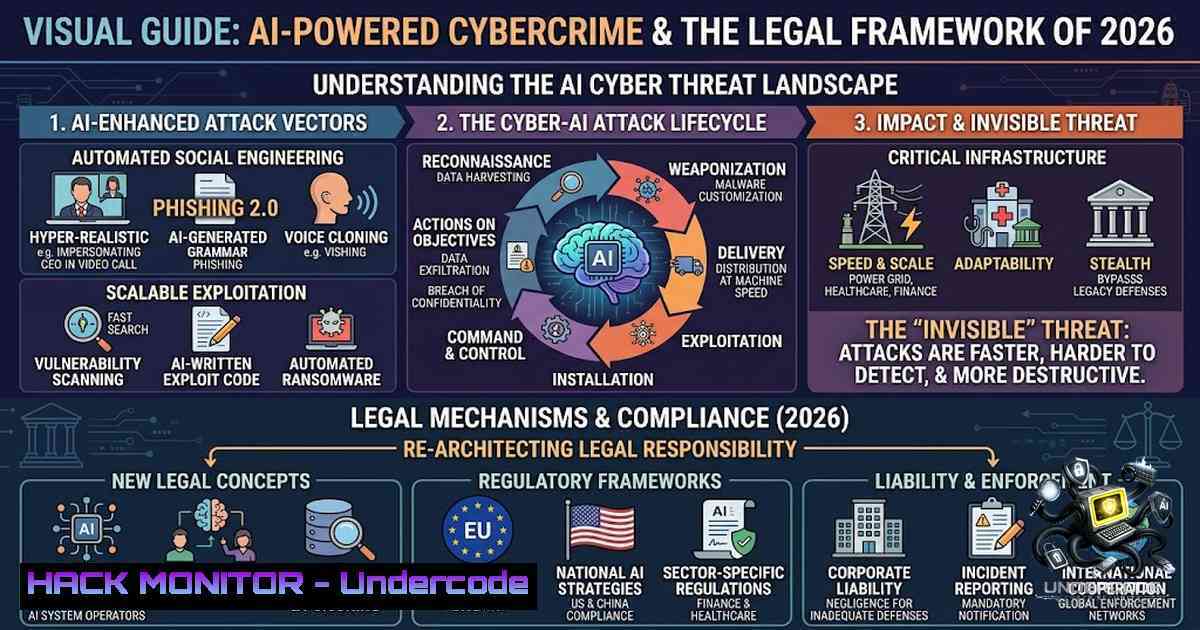
Introduction:
Cyber crime is undergoing a fundamental transformation—it is becoming harder to see and easier to scale. According to F-Secure’s September F-Alert, scam compounds are now adopting artificial intelligence to create fake personas, produce scam content, bypass identity checks, and support large-scale criminal operations. Meanwhile, compromised streaming devices are being weaponized to automate ad fraud and route third-party traffic through consumers’ home internet connections, turning ordinary households into unwitting accomplices in global cyber crime networks. As F-Secure’s threat intelligence research reveals, the scam economy is evolving rapidly, driven by AI and organized crime—and shaped by the rising importance of digital trust. This article examines how automation and AI are reshaping the cyber threat landscape and provides actionable guidance for organizations and individuals to defend against these emerging risks.
Learning Objectives & Secrets:
- Objective 1: Understand the AI-Driven Cyber Crime Ecosystem — Learn how criminal organizations are leveraging generative AI, deepfakes, and large language models to industrialize fraud at unprecedented scale. AI-generated phishing messages now achieve 54% click-through rates, compared to just 12% for standard attempts.
-
Objective 2 Secret Tip: Detect Compromised IoT Devices in Your Network — Most consumers have no idea their streaming devices have been recruited into botnets. Learn to identify telltale signs of compromise, including unusual outbound traffic patterns, unexpected CPU usage, and unauthorized DNS queries to known command-and-control domains.
-
Objective 3 Secret Tip: Defend Against AI-Powered Identity Fraud — Deepfake-based KYC bypass is now a mainstream criminal capability. Security teams must implement layered defenses including challenge-response liveness detection, behavioral biometrics, and cryptographic signal-path integrity verification.
You Should Know:
1. The Rise of AI-Powered Scam Compounds
Southeast Asian scam compounds are no longer running mass-message fraud operations. They are using artificial intelligence and automation to make cybercrime faster, more convincing, and harder for security teams to contain. Criminal gangs are deploying AI translation software, automated reply generators, and full customer relationship management platforms designed specifically for managing fraud victims.
One particularly concerning development is the ProKYC toolkit—a turnkey KYC-bypass solution that defeats document-plus-selfie customer onboarding with convincing forged IDs and deepfaked “liveness” videos. These tools take any photograph and generate a non-existent person using stolen personally identifiable information (PII), creating a convincing facsimile of a passport and a video showing a person moving their head around to satisfy liveness detection.
The financial impact is staggering. INTERPOL reports that AI-enhanced fraud is 4.5 times more profitable than traditional methods, and fraud-related campaigns have increased by 54% since 2024. The UNODC has estimated that online scam centers cost victims globally between $18 billion and $37 billion annually.
2. The Streaming Device Botnet Epidemic
Compromised streaming devices represent one of the most insidious threats to consumer security. The BadBox 2.0 botnet has transformed over 1 million consumer devices into digital proxies for criminal operations, while the Popa botnet—operated by a publicly traded Israeli company called NetNut—compromised over 2 million smart TVs and streaming boxes.
The infection mechanism is alarming: devices are being infected with malware before they even reach stores, essentially weaponizing the global supply chain. The Popa SDK was buried inside IPTV and streaming apps without meaningful consent disclosures. Independent researchers audited more than 20 apps enrolling user devices and found zero meaningful consent prompts—no clear disclosure that a user’s home connection would be rented to third parties.
The Fengwo Group, a China-linked cybercriminal operation, has built a large-scale ad-fraud and residential proxy ecosystem centered on Android TV boxes. Infected TV boxes are spoofed to appear as mobile phones to generate higher-value advertising traffic, load operator-controlled websites, and perform fraudulent ad impressions while evading anti-bot controls. The same infected devices can be turned into residential proxy nodes, allowing third parties to route traffic through victims’ home connections.
3. Detection Commands and Techniques
To detect compromised devices on your network, security professionals and home users can employ the following techniques:
Linux/Unix Network Analysis:
 Monitor outbound connections for suspicious traffic
sudo netstat -tunap | grep ESTABLISHED

Check for unusual DNS queries
sudo tcpdump -i any port 53 -1

Identify devices with high outbound traffic
sudo iftop -i eth0

Scan for open ports on IoT devices
nmap -sS -p- 192.168.1.0/24

Check for known malicious domains in DNS logs
grep -E "badbox|popa|netnut|kimwolf" /var/log/dns.log
Windows Network Analysis:
 View active connections
netstat -ano | findstr ESTABLISHED

Check DNS cache for suspicious entries
ipconfig /displaydns | findstr /i "badbox popa"

Monitor outbound traffic by process
Get-1etTCPConnection | Where-Object {$_.State -eq "Established"}

Use PowerShell to check for suspicious scheduled tasks
Get-ScheduledTask | Where-Object {$_.TaskPath -like "badbox"}
IoT Device Hardening Checklist:
- Disable ADB (Android Debug Bridge) on Android TV boxes
- Change default passwords on all IoT devices immediately
- Segment IoT devices onto a separate VLAN from critical systems
- Block outbound port 53 (DNS) except through controlled DNS servers
- Use network detection and response (NDR) tools tuned for IoT anomaly detection
4. Defending Against AI-Powered Identity Fraud
The sophistication of AI-generated identity fraud demands a multi-layered defense strategy. Criminals are actively trading toolkits that bundle synthetic video generation, voice cloning, and fake documents to facilitate identity fraud.
Recommended Defense Layers:
- Liveness Detection: Implement advanced, multi-factor liveness detection methods including challenge-response prompts, behavioral biometrics, and device fingerprinting
- Capture Provenance: Verify how media entered the system through virtual camera detection, device attestation, emulator and root checks, and frame timing analysis
- Forensic Document Analysis: Detect pixel, texture, and font anomalies that rule-based systems miss
- Red-Team Testing: Commission independent red-team assessments of identity verification stacks against current deepfake injection attack techniques
- Out-of-Band Verification: Enforce out-of-band callback rules for every financial instruction regardless of channel
Python Script for Basic Deepfake Detection:
import cv2
import numpy as np
from scipy.fft import fft2, fftshift

def detect_face_artifacts(image_path):
"""Detect potential deepfake artifacts using frequency analysis"""
img = cv2.imread(image_path, cv2.IMREAD_GRAYSCALE)
f_transform = fftshift(fft2(img))
magnitude_spectrum = np.log(np.abs(f_transform) + 1)

Check for unnatural frequency patterns
high_freq = np.sum(magnitude_spectrum[100:200, 100:200])
low_freq = np.sum(magnitude_spectrum[:100, :100])

ratio = high_freq / (low_freq + 1)
if ratio > 0.5:  Threshold for potential artifact
return "Potential deepfake artifact detected"
return "No obvious frequency anomalies"
5. Mitigating Residential Proxy Abuse
Residential proxy networks have become one of the most consequential threat enablers on the internet. Detection must shift from relying on IP reputation to more durable methods like device fingerprinting, because fingerprints survive IP rotation.
Enterprise Defenses:
- Deploy API abuse detection that distinguishes between residential, mobile, corporate, and datacenter traffic
- Implement rate limiting that accounts for distributed botnets rotating IPs across residential proxies
- Monitor DNS traffic for queries to known botnet domains—Infoblox found nearly a quarter of enterprise customers had made at least one query to a Kimwolf-related domain
- Use GreyNoise IP Check to determine if your IP address has been observed scanning the internet as part of a botnet or residential proxy network
6. The AI Arms Race: What’s Coming Next
F-Secure predicts that agentic AI will fundamentally reshape the digital threat landscape in 2026. Criminals will increasingly use AI to build synthetic identities by combining stolen real data with fabricated details. Autonomous AI agents capable of carrying out attacks independently—without human intuition in the loop—represent the next frontier of cyber risk.
The FBI’s takedown of the NetNut/Popa botnet in July 2026, which seized hundreds of domains, represents a tactical victory in a structural fight. However, the underlying infrastructure and business models that enable residential proxy abuse remain intact.
What Undercode Say:
- Key Takeaway 1: The Invisible Threat is the Most Dangerous — Cyber crime is becoming increasingly invisible to both consumers and security teams. AI-generated content is now indistinguishable from legitimate communications, and compromised IoT devices operate silently in the background of millions of homes. Organizations must shift from reactive detection to proactive threat hunting, assuming that some devices in their network are already compromised.
-
Key Takeaway 2: Trust is the New Battleground — As F-Secure’s research emphasizes, AI is eroding trust in everyday digital interactions—from search results to voice calls. The scam economy is no longer defined by how often scams happen, but by the damage they cause. Building digital trust requires a fundamental rethinking of security architecture, moving beyond protection to resilience. Service providers that prioritize security features will gain competitive advantage, as consumers increasingly switch providers based on security capabilities.
The convergence of AI, IoT exploitation, and organized crime represents a structural shift in the threat landscape. Organizations must adapt by implementing layered defenses, continuous monitoring, and user education. The fight against AI-powered cyber crime is not a technology problem alone—it requires a human-centered approach that builds trust and resilience across the entire digital ecosystem.
Prediction:
+1 The FBI and Google’s coordinated takedown of the NetNut/Popa botnet demonstrates that public-private partnerships can effectively disrupt large-scale criminal infrastructure. This model will likely expand to other residential proxy networks and botnet operations in 2027.
-1 The business model of residential proxy abuse is structurally resilient. New proxy networks will emerge to fill the gap left by NetNut, potentially with even more sophisticated evasion techniques.
-1 AI-powered fraud will continue to outpace traditional defenses. With AI-enhanced fraud being 4.5 times more profitable than traditional methods, criminal investment in AI capabilities will accelerate.
+1 F-Secure’s emphasis on human-centered security and digital trust models offers a path forward. Organizations that prioritize user trust and transparent security practices will be better positioned to withstand the coming wave of AI-driven attacks.
-1 Agentic AI—autonomous systems capable of planning and executing complete fraud campaigns—represents an existential threat to current security paradigms. Without regulatory frameworks and technical controls limiting AI autonomy, the risk of大规模 automated attacks will increase dramatically.
▶️ Related Video (90% Match):
🎯Let’s Practice For Free:
🎓 Live Courses & Certifications:
Join Undercode Academy for Verified Certifications
🚀 Request a Custom Project:
Secure, high-velocity infrastructure and disruptive technological engineering. Contact our engineering team for high-tier development and proprietary systems:
[email protected]
💎 Smart Architecture | 🛡️ Secure by Design | ⭐ Trusted by Thousands
IT/Security Reporter URL:
Reported By: https://lnkd.in/p/ezGMiTSq – Hackers Feeds
Extra Hub: Undercode MoN
Basic Verification: Pass ✅


