
Listen to this Post
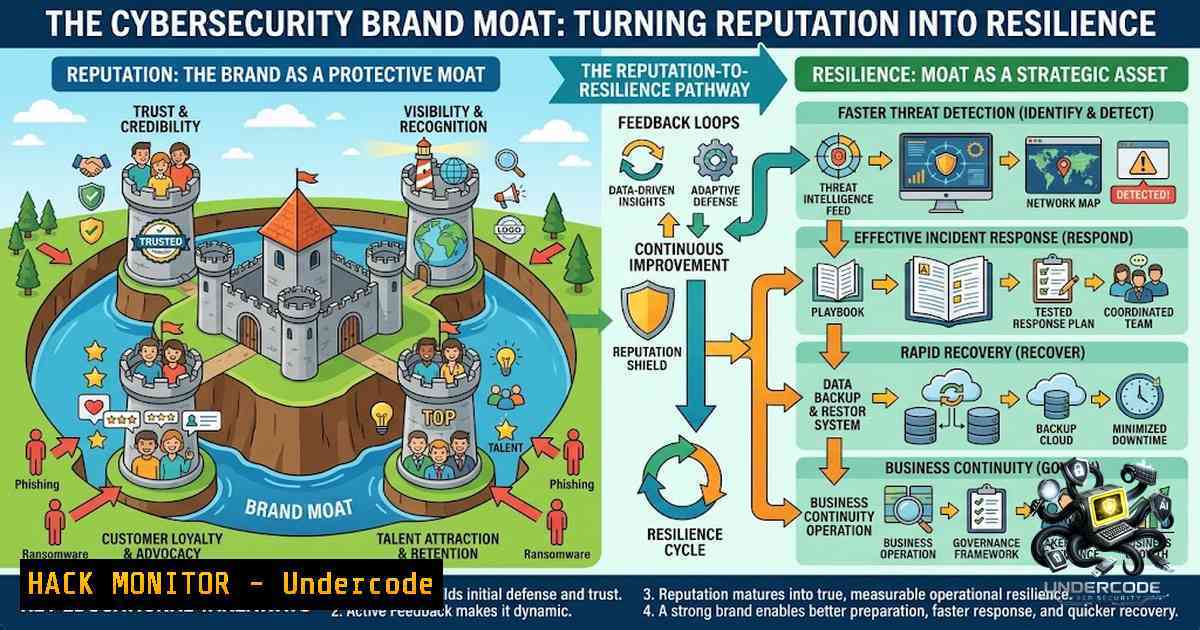
Introduction:
In the hyper-distracted landscape of modern cybersecurity, founders and security leaders often become fixated on tactical “silver bullets”—the latest threat intelligence feed, a new SIEM integration, or a shiny SOAR playbook. However, the highest-leverage distribution asset for security tools and managed services isn’t a new vulnerability scanner; it’s the brand’s perceived authority and trustworthiness. Just as a strong consumer brand amplifies marketing tactics, a robust security posture and clear value proposition amplify technical defenses, making exploitation more difficult and incident response more effective.
Learning Objectives & Secrets:
- Objective 1: Understand how a strong brand reputation acts as a passive defense layer, reducing the attack surface by deterring opportunistic threat actors.
- Objective 2 Secret Tip: Leverage AI-driven brand monitoring (e.g., using LLMs) to automatically detect and deface typosquatting domains before they can be used for phishing campaigns.
- Objective 3 Secret Tip: Shift from reactive vulnerability patching to “Brand Hardening”—where you actively publish proof-of-concepts (PoCs) to establish credibility, effectively turning your security team into a deterrent force.
You Should Know:
- The “Noise” Filter: Prioritizing Security Foundations Over Tactics
The original post highlights that founders drown in tactical noise—AEO, influencer marketing, outreach hacks. In cybersecurity, this mirrors the obsession with zero-day exploits and the latest ransomware variants while ignoring foundational hygiene. If you don’t know your “crown jewels” (data assets) or who your actual adversaries are (threat actors), every tactical investment is merely amplifying confusion and attack surface. A strong security brand is built on clear identity: “We are the XDR provider for healthcare” or “We are the API security experts.” This clarity aligns your engineering and SecOps teams toward a unified goal, making every vulnerability scan, patch cycle, and phishing test more cohesive. A weak brand means weak security posture—adversaries will exploit that disorganization. -
LLM Bias and Brand Reputation in AI Security
The post states that LLMs mention reputable brands more often. This is critical in the age of GenAI and automated threat intelligence. AI models powering SIEMs and SOARs are often trained on public data. A well-documented brand with extensive security whitepapers, CVEs, and public bug bounties is more likely to be cited by AI as a “reputable” or “trusted” source. This translates to faster detection of false positives and better contextual scoring for alerts. To harden this, ensure your security documentation is machine-readable and available via structured APIs. For example, if you publish threat signatures, ensure they are accessible via a REST API that an AI agent can query without web scraping.
Step-by-Step Guide (AI Hardening):
Linux (Curl): Check if your brand is being scraped correctly for threat intelligence.
`curl -s https://your-brand.com/security/feed.json | jq ‘.threats’`
Windows (PowerShell): Query the reputation score of your domain via VirusTotal API to see how AI models perceive you.
`$apikey = “YOUR_API_KEY”; Invoke-RestMethod -Uri “https://www.virustotal.com/api/v3/domains/yourdomain.com” -Headers @{“x-apikey”=$apikey}`
3. Influencer Identification and Third-Party Risk Management
The post notes that influencers promote brands they identify with. In cybersecurity, these “influencers” are managed service providers (MSPs), system integrators, and independent security researchers. To attract them, you must have a clear “Brand Moats” strategy that includes a robust Vendor Risk Management (VRM) process. If your brand is known for making integration easy (e.g., simple OAuth2 flows and clear SDKs), they will champion your product. A secret tip is to automate the validation of these influencer integrations. If an MSP uses your API, monitor the logs for anomalous authentication patterns.
Step-by-Step Guide (API Security Configuration):
Linux (OpenSSL): Validate the SSL/TLS certificate of your API endpoint to ensure a secure handshake for external integrations.
`openssl s_client -connect api.yourbrand.com:443 -servername api.yourbrand.com`
Windows (certutil): Check the cipher suites supported to mitigate downgrade attacks.
`certutil -v -urlcache https://api.yourbrand.com/health`
4. The “Conversion” Jump: Incident Response Trust
The case study of conversion jumping from 2% to 20% post-rebrand in the original text parallels the “Conversion” of a security incident to a “Trust Building” opportunity. A brand with a clear, transparent incident response (IR) plan converts a disaster into a show of strength. When a breach occurs, a strong brand delivers clear, actionable notifications (under GDPR/SEC rules) rather than vague legalese. This retains customer loyalty. The secret tip is to practice “Tabletop Exercises” not just in the SOC, but also with the marketing and legal teams to ensure the brand voice remains consistent during a crisis.
Step-by-Step Guide (Cloud Hardening for IR):
Use AWS CLI to enable VPC Flow Logs for network visibility during a suspected incident. This ensures you have the data to support your brand’s “we are transparent” claim.
`aws ec2 create-flow-logs –resource-type VPC –resource-ids vpc-12345 –traffic-type ALL –log-group-1ame Brand-Flow-Logs –deliver-logs-permission-arn arn:iam::account:role/FlowLogsRole`
Add a Public S3 bucket policy for releasing IoCs (Indicators of Compromise) to the public to show leadership.
5. Vulnerability Exploitation & Mitigation (The Distraction Trap)
The original post warns against chasing tactics. In cybersecurity, this is the “Shiny Object Syndrome” where teams chase zero-days and forget to patch known vulnerabilities (e.g., Log4j or ProxyShell). A strong brand prioritizes “Asset Inventory” and “Patch Management” because a breach would damage brand equity irreparably. To exploit this idea, threat actors often use “distraction” attacks (e.g., a minor DDoS) to hide a major data exfiltration attempt. Defenders must focus on “Business Logic Flaws” rather than just network vulnerabilities, as a flaw in the brand’s promise (e.g., “We guarantee privacy”) is a higher-risk vulnerability than a misconfigured firewall.
Step-by-Step Guide (Linux/Windows Commands):
Linux: Identify outdated packages that could tarnish your security reputation.
`sudo apt list –upgradable | grep -i “openssl\|apache”`
Windows: Use PowerShell to check for stale AD accounts that haven’t logged in, which are often used for internal phishing.
`Search-ADAccount -AccountInactive -TimeSpan 90.00:00:00 | Where-Object {$_.ObjectClass -eq ‘user’}`
6. Integration of AI Agents (The “Agent I shipped this week” Correction)
The post criticizes the rush to ship AI agents. However, a branded AI agent for security—trained specifically on your company’s knowledge base—is highly effective. Instead of just shipping a random tool, ship a defensive agent that acts as a “Digital Twin” of your security analyst. This agent should validate alerts before they reach humans, reducing fatigue. To secure this, use RBAC (Role-Based Access Control) via OAuth2.
What Undercode Say:
- Key Takeaway 1: “Amplifying confusion” with weak security tools is worse than having no tools. Ensure your entire security stack aligns with your brand promise; a fragmented security stack shows a fragmented identity to attackers.
- Key Takeaway 2: The 2% to 20% conversion jump isn’t just for sales; it applies to security metrics. A rebranded security posture (moving from “compliance-driven” to “security-first”) can reduce mean time to detect (MTTD) because employee awareness and vigilance increase by 20%.
Analysis:
The core analysis reveals a critical gap: many CISOs focus on “Tactical Metrics” (number of events blocked) rather than “Strategic Brand Equity” (reputation score). Just as Chubic rebranded to clarify its product value, security teams must rebrand themselves within the enterprise—not as “cost centers” but as “Business Enablers.” The noise of influencers and the “AI Agent of the week” distracts from the foundational work of Identity & Access Management (IAM) and Data Loss Prevention (DLP). A clear brand identity ensures that even a standard security control, like MFA, feels like a natural part of the product flow rather than an obstacle, significantly improving user adoption and overall security culture.
Prediction:
- +1 The future will see a rise in “Security Brand Reputation Scores” (similar to Trustpilot but for vulnerability disclosures). Companies with high scores will qualify for lower cyber insurance premiums.
- +1 AI will begin to auto-remediate vulnerabilities based on brand reputation; highly reputable brands will be prioritized by open-source dependency maintainers, receiving faster fixes.
- -1 Conversely, organizations lacking a clear security brand will suffer more severe “Emotet-level” consequences, as attackers will specifically target companies with “confused” security stacks, knowing they have weak incident response coordination.
▶️ Related Video (92% Match):
🎯Let’s Practice For Free:
🎓 Live Courses & Certifications:
Join Undercode Academy for Verified Certifications
🚀 Request a Custom Project:
Secure, high-velocity infrastructure and disruptive technological engineering. Contact our engineering team for high-tier development and proprietary systems:
[email protected]
💎 Smart Architecture | 🛡️ Secure by Design | ⭐ Trusted by Thousands
IT/Security Reporter URL:
Reported By: https://lnkd.in/p/ejdx8JcX – Hackers Feeds
Extra Hub: Undercode MoN
Basic Verification: Pass ✅


