
Listen to this Post
Introduction:
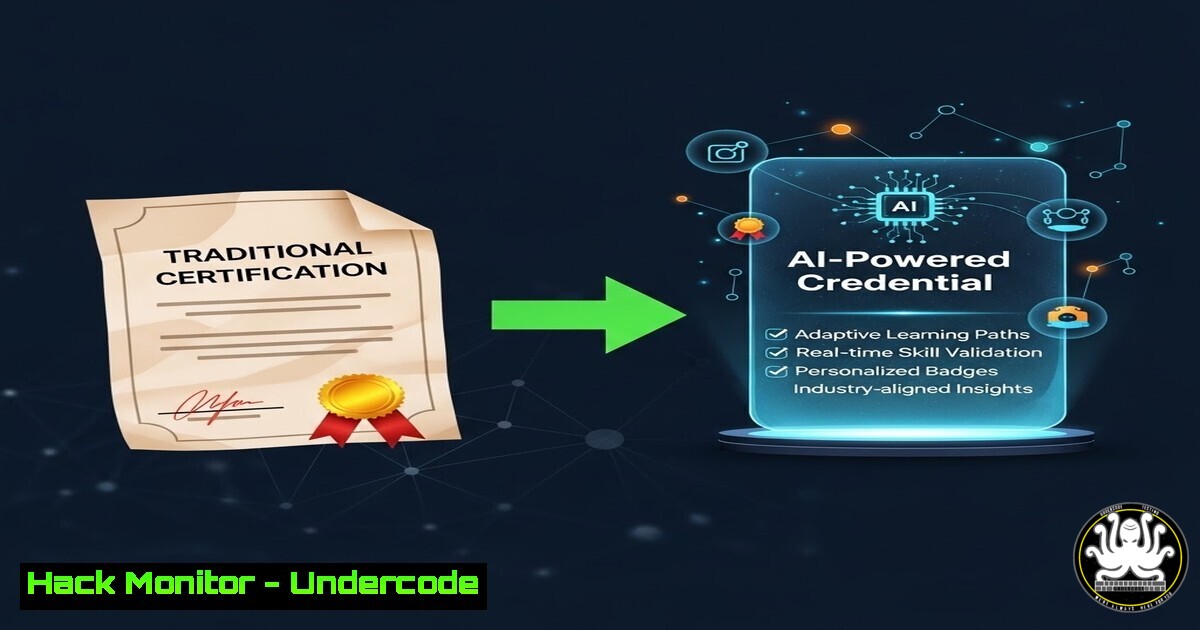
The professional certification landscape is undergoing a seismic shift, moving from theoretical knowledge testing to AI-driven, scenario-based skill assessment. Platforms like LearnTube.ai are at the forefront, leveraging artificial intelligence to simulate high-pressure, real-world operational challenges, thereby creating a new standard for verifying practical competence in fields like IT, cybersecurity, and operations management.
Learning Objectives:
- Understand the mechanics and advantages of AI-powered, scenario-based professional assessments.
- Recognize the data handling and privacy implications of platforms that simulate real business environments.
- Learn how to integrate and verify skills from such platforms into a professional tech portfolio.
You Should Know:
1. The Anatomy of an AI Assessment Engine
The core innovation is the simulation engine. Unlike a multiple-choice quiz, it places the candidate in an interactive environment—like a network operations center (NOC) during a breach or a SOC analyzing logs. For LearnTube’s “Operations Management” scenario, this might be a terminal-based inventory crisis.
Step‑by‑step guide explaining what this does and how to use it.
Step 1: Scenario Injection: The AI injects a problem, such as a sudden 300% spike in web traffic (a potential DDoS) or a critical supplier delay.
Step 2: Environment Provisioning: You are given access to a sandboxed environment. In a tech context, this could be a isolated Kubernetes cluster, a virtual network, or a database instance.
Step 3: Decision Tree Navigation: Your actions are logged and assessed. For example, in a cybersecurity scenario:
 Candidate might need to diagnose high server load
$ ssh admin@simulated-server
$ top -c  Check running processes
$ netstat -tulpn | grep :80  Check connections on port 80
$ sudo systemctl status nginx  Check web server status
The AI evaluates the correctness, efficiency, and sequence of your commands.
Step 4: Skill Graph Generation: Post-assessment, the platform generates a detailed “skill graph” highlighting proficiencies and gaps, far more valuable than a simple pass/fail.
2. Data Security in Simulation Platforms
When a platform simulates “real-world business challenges,” it often uses anonymized but realistic data sets. Ensuring this data is secure and that the simulation environment is isolated is paramount.
Step‑by‑step guide explaining what this does and how to use it.
Step 1: Sandbox Integrity: Verify the platform uses containerized or virtualized sandboxes (e.g., Docker, KVM) with no network bridge to internal systems. A simple check within a provided Linux sandbox:
$ cat /proc/1/cgroup  Check if you're in a container
$ ip a  Check network interfaces; look for docker or br- prefixes.
Step 2: Data Sanitization: The platform must scrub Personally Identifiable Information (PII) and proprietary data from its training scenarios. As a user, you should never enter real credentials.
Step 3: Session Hygiene: After the assessment, ensure all session tokens are invalidated. Manually clear any browser data related to the session.
3. Integrating AI Credentials into Your Tech Profile
A digital certificate (like the one shared: DJA-B-1-2084458-0) is just the starting point. The real value is in showcasing the specific skills validated.
Step‑by‑step guide explaining what this does and how to use it.
Step 1: Decode the Credential: Use the platform’s verification tool (e.g., scanning the QR code on the certificate at `https://lnkd.in/dqgCe45c`) to view the public skill breakdown.
Step 2: Portfolio Integration: Don’t just link to the certificate. On your LinkedIn or GitHub, create a detailed post or README.md file explaining the scenario you solved.
AI-Assessed Incident Response Simulation
Platform: LearnTube.ai P.E.A.K.S.
Scenario: Contained a lateral movement attack within a simulated AWS VPC.
Actions Taken:
1. Identified anomalous process via `ps aux | grep crypto<code>.
2. Isolated compromised instance using AWS CLI:</code>aws ec2 modify-instance-attribute --instance-id i-123abc --no-disable-api-termination`.
3. Preserved forensic artifacts using `dd` command.
Verified Skills: AWS CLI, Linux Forensics, Incident Containment.
Step 3: API Verification: If the platform offers an API, you can dynamically embed your verified status in a personal website.
4. Building Your Own Lab for Similar Practice
While platforms provide structured assessment, building a home lab is crucial for unstructured practice.
Step‑by‑step guide explaining what this does and how to use it.
Step 1: Set Up a Virtualization Environment: Use VirtualBox or VMware Workstation Player.
Step 2: Create a Vulnerable Practice Environment:
 Download and deploy a deliberately vulnerable VM like Metasploitable2
$ wget https://downloads.metasploit.com/data/metasploitable/metasploitable-linux-2.0.0.zip
$ unzip metasp.zip
 Import the .ova file into your virtualization software.
Step 3: Simulate Scenarios: Use your attacker machine (Kali Linux VM) to practice ethical hacking against your vulnerable VM, documenting every command and mitigation.
5. The Future: API-Driven Skill Verification for Hiring
The endpoint is automated, verifiable skill checks integrated directly into HR systems.
Step‑by‑step guide explaining what this does and how to use it.
Step 1: Standardized Skill Claims: Platforms may output a JSON Web Token (JWT) or verifiable credential containing your skill graph.
Step 2: Employer-Side Verification: A company’s recruitment portal can programmatically verify your claim.
 Pseudocode for employer verification endpoint
import requests, jwt
cert_url = "https://api.learntube.ai/verify/DJA-B-1-2084458-0"
response = requests.get(cert_url)
verified_skills = jwt.decode(response.json()['token'], options={"verify_signature": False})  Use platform's public key in prod
print(f"Candidate validated in: {verified_skills['competencies']}")
Step 3: Continuous Assessment: These platforms could offer micro-assessments to keep your profile current, pushing towards continuous credentialing.
What Undercode Say:
- Simulation is the New Standard: The future of technical certification lies in performance-based AI assessment, not memorization. This forces training to focus on applicable skills, closing the gap between learning and doing.
- Privacy is a Double-Edged Sword: While these platforms offer deep skill insights, they also generate granular performance data. Professionals must scrutinize data ownership policies, and platforms must employ privacy-by-design, ensuring simulation data is neither exfiltratable nor personally identifiable.
Analysis: LearnTube.ai’s model, as highlighted in the post, is a prototype for IT and cybersecurity credentialing. The mention of “real job challenges” and “quick decision making” is precisely what the industry lacks. For technical fields, the next logical step is integrating live-fire exercises in isolated cloud environments, assessing a candidate’s ability to respond to a ransomware simulation or harden a misconfigured Docker container. The risk lies in over-reliance on proprietary algorithms for assessment without transparency. However, the move towards demonstrable, rather than asserted, skill is a net positive that will raise the bar for professionals and attackers alike.
Prediction:
Within three years, AI-powered performance assessments will become the dominant method for mid-level technical hiring in cybersecurity, cloud engineering, and DevOps. This will create a parallel credentialing system that challenges traditional degrees and static certifications. We will see the rise of “Skill Futures,” where verifiable performance data influences hiring and compensation in real-time. Consequently, offensive security (red team) tools will evolve to include more AI-driven simulation for training, creating an arms race between AI-assisted defense verification and AI-assisted attack simulation.
▶️ Related Video (84% Match):
🎯Let’s Practice For Free:
IT/Security Reporter URL:
Reported By: Tanish Sharma – Hackers Feeds
Extra Hub: Undercode MoN
Basic Verification: Pass ✅


