
Listen to this Post
Introduction:
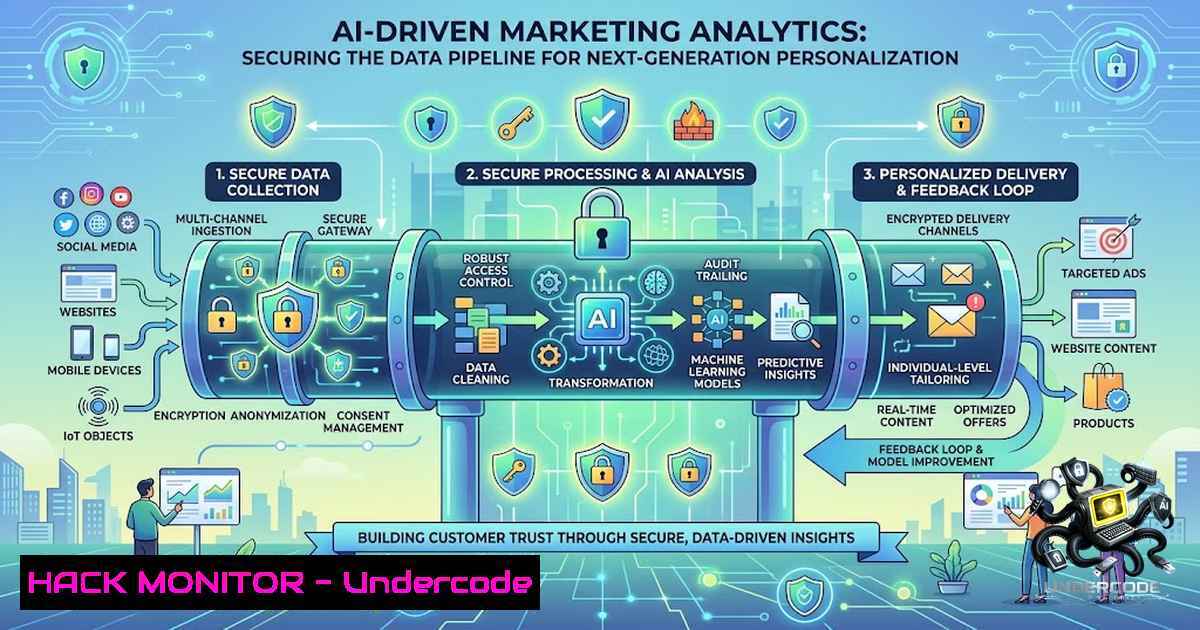
The digital marketing landscape is undergoing a seismic shift where manual audience targeting and static creative setups are being rapidly replaced by AI-driven content delivery and real-time optimization. As platforms evolve and users demand greater control over their data, the integration of machine learning models into marketing operations introduces new vectors for data exposure and API misuse. This article dissects the technical architecture behind modern intelligent marketing systems, focusing on the critical intersection of data pipeline security, cloud infrastructure hardening, and the implementation of secure AI workflows to ensure that increased automation does not come at the cost of compliance or vulnerability.
Learning Objectives & Secrets:
- Objective 1: Secure Data Ingestion for Audience Signals – Master the configuration of encrypted data streams (using TLS 1.3 and mTLS) to collect first-party data from webhooks and SDKs, ensuring that user consent and behavioral data remain protected from man-in-the-middle attacks during transit to your analytics warehouse.
- Objective 2: API Gateway Hardening Secret – Implement rate limiting, JWT validation, and IP whitelisting on your marketing automation APIs to prevent brute-force enumeration of user segments and to mitigate unauthorized access to your optimization models, which often exposes proprietary audience logic.
- Objective 3: Model Output Sanitization Secret – Apply strict output validation and context-filtering on generative AI models used for ad copy creation. This prevents prompt injection attacks that could manipulate your creative strategy or extract sensitive business logic from your internal fine-tuning datasets.
You Should Know:
1. Hardening the Cloud Environment for Marketing Workloads
The shift towards intelligent systems requires robust cloud infrastructure that can handle high-throughput data processing while maintaining strict security postures. Whether you are using AWS, Azure, or GCP, the foundation of a secure marketing stack involves Identity and Access Management (IAM) and network segmentation.
- Step-by-Step Guide for AWS:
- Create a Dedicated VPC: Isolate your marketing data processing instances from public subnets. Use private subnets for EC2 instances running your AI models.
- Configure Security Groups: Restrict inbound traffic to only necessary ports (e.g., HTTPS for API endpoints). Block all SSH access from the public internet; use a bastion host or AWS Systems Manager Session Manager instead.
- Implement IAM Least Privilege: Create a specific IAM role for your marketing analytics service. Attach a policy that grants read/write access only to specific S3 buckets (e.g.,
arn:aws:s3:::marketing-data-lake) and deny access to administrative functions. - Enable VPC Flow Logs: Monitor network traffic for anomalies. Look for unexpected egress traffic that could indicate data exfiltration.
- Linux Command for Monitoring Connection States:
sudo netstat -tulpn | grep LISTEN
This command is useful for verifying that only the intended services (like Nginx or your API server) are listening on public ports, reducing the attack surface.
-
Windows (PowerShell) Command for Firewall Audit:
Get-1etFirewallRule -Direction Inbound -Action Allow | Select-Object DisplayName, Enabled, Direction
This ensures that Windows-based analytics servers are not inadvertently exposing unnecessary services to the network.
2. Securing the API Pipeline for Real-Time Personalization
APIs are the backbone of modern intelligent marketing, enabling real-time bidding, audience segmentation, and creative optimization. However, they are also the primary entry point for attackers seeking to steal audience data or manipulate campaign performance. Securing these endpoints requires a defense-in-depth approach that goes beyond simple API keys.
- Step-by-Step Guide for API Security:
- Implement OAuth 2.0 or JWT: Ensure that all requests to your marketing optimization engine are authenticated. Use short-lived tokens (e.g., 15-minute expiry) and rotate refresh tokens frequently. Validate the signature and expiration of each JWT server-side before processing.
- Enforce Rate Limiting: Use a middleware or an API gateway (like Kong or AWS API Gateway) to limit requests per client ID. This protects against brute-force attacks and Denial-of-Service (DoS) attempts that could crash your AI inference services.
- Validate Input Schema: Strictly define the JSON schema for your API requests. Reject any request that contains extra fields or malformed data types. This prevents injection attacks where attackers might try to embed malicious payloads into text fields intended for AI prompts.
- Sanitize Logs: Ensure that sensitive audience PII (Personal Identifiable Information) is masked in API logs. Use regex or JSON-path filtering to remove email addresses and IPs before persisting logs to cloud storage.
- Code Snippet (Node.js) for JWT Validation Middleware:
const jwt = require('jsonwebtoken');
function authenticateToken(req, res, next) {
const authHeader = req.headers['authorization'];
const token = authHeader && authHeader.split(' ')[bash];
if (token == null) return res.sendStatus(401);</li>
</ul>

jwt.verify(token, process.env.ACCESS_TOKEN_SECRET, (err, user) => {
if (err) {
if (err.name === 'TokenExpiredError') return res.status(403).json({error: 'Token expired'});
return res.sendStatus(403);
}
req.user = user;
next();
});
}
3. Mitigating Threats in AI-Generated Content Delivery
As brands move to AI for content creation, the creative itself becomes a vector for attacks. “Prompt Injection” is a rising threat where malicious inputs can override developer instructions, causing the AI to generate harmful or non-compliant text. Furthermore, the training data used for fine-tuning these models must be guarded against poisoning.
- Step-by-Step Guide for AI Model Hardening:
- System Prompt Security: Always place the user’s input as a variable within a predefined, immutable system prompt structure. Use XML-like tags (e.g.,
<user_input>) to clearly separate instructions from data. - Implement Content Moderation: Integrate a secondary filter (e.g., a lightweight toxicity classifier) to evaluate the output of the generative AI before it is sent to the ad platform. If the output violates policy, fallback to a generic safe template.
- Data Sanitization for Fine-Tuning: Before using historical campaign data to fine-tune a model, strip it of any hard-coded URLs, phone numbers, or proprietary keyword bids to prevent the model from inadvertently generating competitor-sensitive content.
- Audit Access to AI Repositories: Secure your training datasets and model weights. Use encryption at rest and enforce that only CI/CD pipelines can push new model versions to production.
- Tutorial for Prompt Sanitization (Python):
import re</li>
</ul>

def sanitize_prompt(user_input):
 Remove potential command injections
clean_input = re.sub(r'[;|&$>]', '', user_input)
 Limit length to prevent resource exhaustion
return clean_input[:1000]

def generate_content(user_input):
safe_input = sanitize_prompt(user_input)
system_prompt = f"""
[System: You are a professional copywriter. Generate creative ad copies based on the following product description.]
<user_input>{safe_input}</user_input>
"""
 Call OpenAI API with system_prompt
return response
4. Data Pipeline Security: From Signal to Optimization
The value of intelligent marketing lies in the data—behavioral signals, conversion events, and engagement metrics. To maintain user trust and comply with regulations like GDPR and CCPA, this data must be secured throughout its lifecycle.
- Step-by-Step Guide for Pipeline Security:
- Encrypt Data at Rest: Enable AES-256 encryption for all databases and data lakes. In AWS, use S3-SSE; in Azure, use Storage Service Encryption.
- Encrypt Data in Transit: Enforce HTTPS for all data ingestion endpoints. Use mTLS for server-to-server communications to ensure both parties are trusted.
- Data Masking: Use dynamic data masking in your SQL databases to obfuscate PII for analysts who only need to view aggregated metrics.
- Implement a Data Retention Policy: Use automation to purge data older than the required compliance period (e.g., 13 months). This reduces the impact of a potential breach.
- Linux Command for Encrypted Backup (using OpenSSL):
tar -czf - /path/to/important_data | openssl enc -aes-256-cbc -e -out backup.tar.gz.enc -pass pass:YourStrongPassword
This script compresses the data and encrypts it in one go, suitable for secure archival of campaign datasets.
- Vulnerability Exploitation and Mitigation: The “Data Theft” Scenario
Consider a scenario where an attacker compromises a low-privilege marketing analyst account. From here, they can query the API for audience metadata. The mitigation strategy involves defense-in-depth.
- Step-by-Step Exploitation & Mitigation:
- Exploitation: The attacker uses the stolen credentials to call the `/audience_segments` endpoint, enumerating IDs to extract all segment names and sizes.
- Mitigation – Rate Limiting: Implement strict rate limiting. If an IP or user makes more than 100 requests per minute, block them for an hour and alert the security team.
- Mitigation – Anomaly Detection: Use an SIEM to detect unusual access patterns. If a user who typically queries data at 9 AM suddenly queries it at 3 AM from a foreign IP, flag it.
- Mitigation – Revocation: Implement a “kill-switch” API endpoint that can be triggered by a SOC analyst to instantly invalidate all active JWT tokens and pause data exports in case of a confirmed breach.
6. Configuration Management for Secure CI/CD
Managing the marketing tech stack involves deploying updates to AI models and campaigns frequently. Using “Infrastructure as Code” (IaC) like Terraform can secure these deployments.
- Step-by-Step Guide for IaC Security:
- Store Secrets in Vault: Never hardcode API keys in your Terraform files. Use a provider like Hashicorp Vault or AWS Secrets Manager to inject secrets at runtime.
- Static Analysis: Integrate tools like Checkov or TFSec into your CI pipeline. These tools scan your Terraform scripts for misconfigurations (e.g., open S3 buckets, publicly accessible databases).
- Manual Approval Gates: Require two-person approval for deployments that modify security groups, IAM roles, or network infrastructure.
What Undercode Say:
- Key Takeaway 1: The shift to AI-driven marketing is fundamentally a data security challenge. Securing the data pipeline from ingestion to model output is more critical than securing the front-facing ad interface, as a compromised back-end exposes the entire strategic intellectual property of a brand.
- Key Takeaway 2: Organizations must adopt a “Zero Trust” posture for their marketing APIs. Assuming that requests are trustworthy based solely on IP whitelisting is no longer sufficient; every request must be authenticated, authorized, and validated against a strict schema to protect against injection and enumeration attacks.
The transformation towards intelligent systems is inevitable, but the race to implement AI should not compromise security fundamentals. The trend of automating audience segmentation and content creation introduces a complex web of dependencies that are often overlooked by traditional marketing teams. This dependency on third-party AI providers and complex data pipelines increases the attack surface exponentially. As marketers demand more granular data, security teams must enforce stricter controls, blurring the lines between marketing operations and cybersecurity. It is no longer acceptable for marketing to be the “soft underbelly” of an organization’s IT infrastructure. The integration of secure coding practices, regular penetration testing, and cloud hardening is becoming a prerequisite for any company planning to leverage AI for competitive advantage. The most successful campaigns will be those that are not only clever and efficient but also resilient and trusted.
Prediction:
- +1 The mandatory implementation of NIST AI RMF guidelines will drive standard adoption of security frameworks, leading to more resilient marketing technologies and increased consumer trust as data protection becomes a key differentiator.
- -1 The rapid deployment of AI marketing tools without adequate security audits will likely lead to a significant data breach in 2026, exposing millions of consumer profiles and resulting in heavy regulatory fines, forcing a market correction and temporary slowdown in AI adoption.
- +1 Companies that successfully integrate end-to-end encryption and real-time threat detection into their marketing stacks will gain a competitive moat, as they will be the preferred partners for enterprises with stringent compliance requirements.
- -1 The increasing complexity of securing AI pipelines will widen the skills gap, leading to a shortage of qualified professionals and higher operational costs, which may disproportionately impact SMEs attempting to adopt these advanced technologies.
▶️ Related Video (88% Match):
🎯Let’s Practice For Free:
🎓 Live Courses & Certifications:
Join Undercode Academy for Verified Certifications
🚀 Request a Custom Project:
Secure, high-velocity infrastructure and disruptive technological engineering. Contact our engineering team for high-tier development and proprietary systems:
[email protected]
💎 Smart Architecture | 🛡️ Secure by Design | ⭐ Trusted by ThousandsIT/Security Reporter URL:
Reported By: https://lnkd.in/p/eGVx6gKr – Hackers Feeds
Extra Hub: Undercode MoN
Basic Verification: Pass ✅🔐JOIN OUR CYBER WORLD [ CVE News • HackMonitor • UndercodeNews ]
📢 Follow UndercodeTesting & Stay Tuned:


