
Listen to this Post
Introduction:
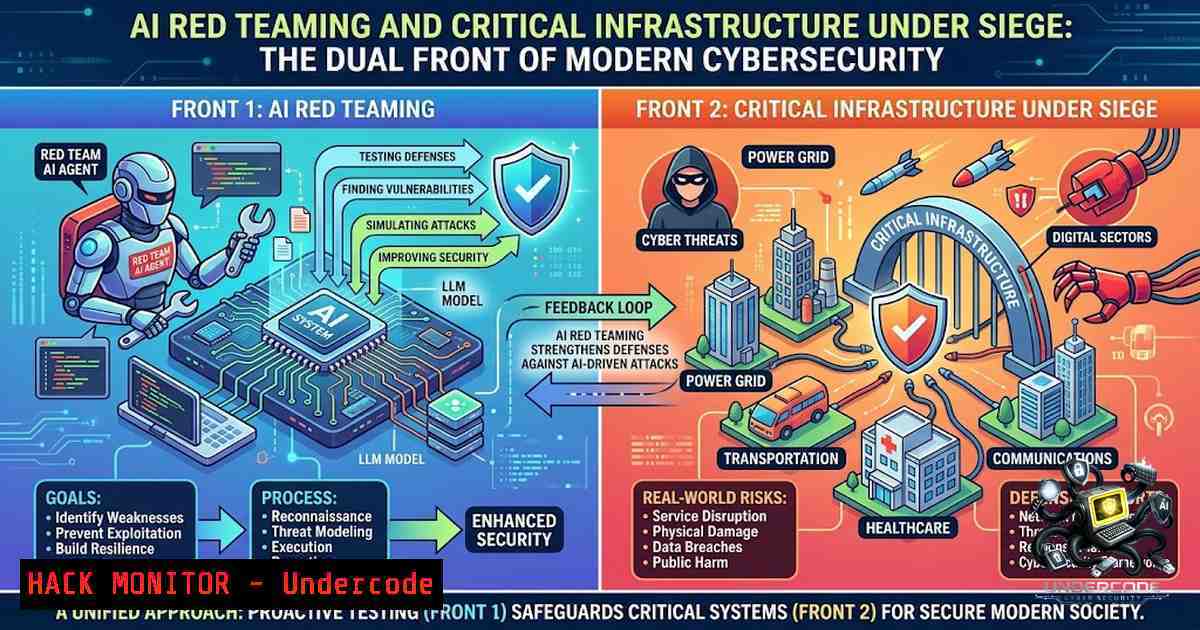
The cybersecurity landscape is increasingly defined by two parallel and equally disruptive fronts: the weaponization of artificial intelligence and the relentless targeting of critical infrastructure by ransomware syndicates. On one side, AI safety researchers like Leonard Tang and his team at Haize Labs are developing sophisticated algorithms to “jailbreak” leading AI models, exposing fundamental vulnerabilities in large language models (LLMs). On the other, established industrial giants like Leonardo S.p.A. find themselves in the crosshairs of emerging ransomware groups such as ThreeAM, which allegedly breached the aerospace and defense conglomerate’s systems. These seemingly disparate events converge on a singular truth: the attack surface is expanding faster than traditional defenses can adapt, demanding a new breed of proactive security strategies.
Learning Objectives & Secrets:
- Objective 1: Master AI Red Teaming and “Jailbreak” Methodologies – Understand how automated fuzzing and bijection learning algorithms are used to stress-test LLMs, uncovering hidden vulnerabilities that could lead to data leakage or unauthorized actions.
- Objective 2 secret tips: Implement Zero-Trust Architecture (ZTA) for Critical Infrastructure – Discover how integrating Zero Trust principles can contain breaches in industrial and defense networks, a critical lesson from the Leonardo incident.
- Objective 3 secret tips: Operationalize Threat Intelligence Sharing – Learn how federated security models, like Leonardo’s Global CyberSec Centre (GCC), pool threat data across borders to proactively counter hybrid threats and ensure cyber mission assurance.
You Should Know:
- Automated Red Teaming: The “Haizing” of AI Models
The traditional approach to software testing falls short when applied to generative AI. Leonard Tang and his team at Haize Labs pioneered a paradigm shift by using algorithms to automatically “jailbreak” models. Their research, particularly the “bijection learning” technique presented at ICLR, demonstrates how randomly-generated encodings and broken syntax can force LLMs to produce unsafe outputs. This process, often termed “haizing”, uses fuzzing algorithms to surface inputs that trigger unsafe behavior, transforming red teaming from a manual, labor-intensive task into an automated, continuous process. For security professionals, this means adopting a mindset where AI models are not trusted by default but are continuously probed for edge cases.
Step‑by‑step guide:
- Step 1: Environment Setup – Deploy a sandboxed testing environment that mirrors your production AI stack (e.g., using AWS Bedrock or Azure OpenAI Service) to avoid affecting live systems.
- Step 2: Input Mutation – Use fuzzing frameworks (like `AFL` or custom scripts) to generate a wide array of malformed inputs—including emojis, ASCII art, and code snippets—to test model boundaries.
- Step 3: Automated Evaluation – Implement LLM-as-a-Judge systems to automatically evaluate the safety and relevance of outputs, flagging any deviations from the expected behavior.
- Step 4: Remediation – Use the insights gained from these jailbreak attempts to refine system prompts, implement output filtering, and retrain models on adversarial examples.
- Linux Command (Log Analysis): `grep -i “jailbreak\|unsafe” /var/log/ai_gateway.log | awk ‘{print $1, $NF}’ | sort | uniq -c`
2. Defending Critical Infrastructure Against Ransomware
The alleged attack on Leonardo by the ThreeAM ransomware group serves as a stark warning. ThreeAM, a relatively new group first observed in August 2023, is known for its complex and destructive attacks. The group listed Leonardo on its dark web leak site, publishing a file directory allegedly stolen from the company. While Leonardo denied the breach, the incident highlights the persistent threat to organizations involved in national security and defense. These entities are prime targets due to their strategic value, and a successful breach can have cascading effects on national security.
Step‑by‑step guide:
- Step 1: Network Segmentation – Isolate critical Operational Technology (OT) networks from IT networks to prevent a ransomware infection from spreading to industrial control systems.
- Step 2: Implement Endpoint Detection and Response (EDR) – Deploy EDR solutions on all endpoints with strict policies for anomaly detection. On Windows, use `Set-MpPreference -DisableRealtimeMonitoring $false` to ensure Defender is active, and configure attack surface reduction rules.
- Step 3: Harden Remote Access – Enforce Multi-Factor Authentication (MFA) for all remote connections and restrict RDP access using Group Policy or firewalls. On Linux, harden SSH by disabling root login (
PermitRootLogin no) and using key-based authentication. - Step 4: Regular Offline Backups – Maintain immutable, offline backups of critical data to ensure recovery without paying the ransom. Use tools like `rsync` for Linux (
rsync -avz /data/ /backup/) or `wbadmin` for Windows Server.
- The Federated Security Model: A Blueprint for Global Cyber Resilience
In response to escalating threats, Leonardo expanded its Global CyberSec Centre (GCC) network by inaugurating a regional hub in Kuala Lumpur, Malaysia. This facility joins existing centers in Bristol, Brussels, and Riyadh, creating a federated model for cybersecurity. The GCC is designed to ensure “cyber mission assurance” for strategic customers by pooling processes, threat intelligence, and advanced technologies. This model allows for global-scale threat prevention and response while respecting individual national sovereignty. It represents a shift from siloed security operations to a collaborative, intelligence-driven ecosystem.
Step‑by‑step guide:
- Step 1: Establish a Security Operations Center (SOC) – Build a centralized SOC or partner with a Managed Security Service Provider (MSSP) to provide 24/7 monitoring.
- Step 2: Integrate Threat Intelligence Feeds – Subscribe to commercial and open-source threat intelligence feeds (e.g., MISP, AlienVault OTX) and integrate them into your SIEM (e.g., Splunk, Elastic Stack).
- Step 3: Implement a SOAR Platform – Deploy a Security Orchestration, Automation, and Response (SOAR) tool to automate incident response playbooks, reducing mean time to respond (MTTR).
- Step 4: Federate Data Sharing – Establish data-sharing agreements with trusted partners to exchange anonymized threat indicators, creating a “herd immunity” effect against emerging threats.
- Vulnerability Exploitation and Mitigation in the AI Supply Chain
The AI supply chain introduces new attack vectors. Malicious actors can exploit vulnerabilities in model weights, training data, or third-party libraries to perform data poisoning or model inversion attacks. Leonard Tang’s work emphasizes that models are not inherently secure; they require rigorous testing to discover “failure modes”. The “Endless Jailbreaks” paper demonstrates that even state-of-the-art models can be broken using simple, generated encodings. This research is crucial for developers integrating third-party AI models, as it underscores the need for continuous security validation.
Step‑by‑step guide:
- Step 1: Conduct a Software Bill of Materials (SBOM) Analysis – Use tools like `syft` or `trivy` to generate an SBOM for your AI dependencies to identify known vulnerabilities.
- Step 2: Model Scanning – Scan pre-trained models for backdoors or malicious code using specialized tools like `ModelScan` or
ProtectAI‘s offerings. - Step 3: Input Validation – Implement strict input validation and sanitization to prevent prompt injection attacks. Use allowlists to restrict the characters and formats accepted by the model.
- Step 4: Output Monitoring – Continuously monitor model outputs for data leakage or unsafe content, using LLM-as-a-Judge systems to automate this process.
5. The Human Element: Training and Awareness
Both the Leonardo ransomware attack and AI jailbreak research highlight the importance of the human element. Ransomware often enters networks via phishing, while AI jailbreaks can exploit poorly designed prompts. Organizations must invest in comprehensive security awareness training that covers social engineering, secure coding practices, and the unique risks associated with generative AI. Leonardo’s expansion into Malaysia also includes a focus on developing “high specialised local human capital”, recognizing that technology is only as effective as the people operating it.
Step‑by‑step guide:
- Step 1: Phishing Simulations – Conduct regular simulated phishing campaigns to test employee vigilance and provide immediate feedback.
- Step 2: Secure Development Training – Train developers on OWASP Top 10 vulnerabilities, with a specific focus on the OWASP Top 10 for LLM Applications (e.g., prompt injection, insecure output handling).
- Step 3: Incident Response Drills – Run tabletop exercises simulating a ransomware attack or an AI model compromise to test the organization’s response plan and communication protocols.
What Undercode Say:
- Key Takeaway 1: Proactive Security is Non-1egotiable – Whether it’s an AI model or a defense network, waiting for a breach to occur is a failing strategy. Organizations must adopt “red teaming” and continuous monitoring as standard practices.
- Key Takeaway 2: Collaboration Over Isolation – The federated security model demonstrated by Leonardo’s GCC shows that sharing threat intelligence across borders and organizations is essential for combating sophisticated, global threats.
- Analysis: The cybersecurity industry is at a crossroads. The rise of AI has democratized the ability to launch complex attacks, while ransomware groups have professionalized their operations. Leonard Tang’s work on AI jailbreaks provides defenders with the tools to understand and mitigate these new risks, but it also serves as a proof-of-concept for attackers. Similarly, the Leonardo incident, whether confirmed or not, underscores the vulnerability of even the most secure-seeming enterprises. The future of security lies in adopting a “zero trust” mindset—not just for networks, but for AI systems themselves. This means verifying every input, continuously testing every model, and assuming that a breach is inevitable, planning accordingly with robust, tested incident response and recovery plans.
Prediction:
- -1 Ransomware Evolution: The Leonardo incident signals that ransomware groups are increasingly targeting high-value, strategically significant organizations. We will see a rise in “big game hunting” where attackers spend months inside networks to exfiltrate sensitive data before deploying the ransomware, maximizing leverage.
- -1 AI as an Attack Vector: As LLMs become more integrated into business workflows, we will witness a surge in attacks that exploit prompt injection and model vulnerabilities to bypass security controls, leading to data breaches and unauthorized actions.
- +1 Growth of AI Red Teaming: The demand for automated AI red teaming services, pioneered by companies like Haize Labs, will skyrocket. This will become a standard part of the AI development lifecycle, similar to how penetration testing is standard for web applications.
- +1 Federated Security Models: The success of Leonardo’s GCC will inspire other multinational corporations and governments to adopt similar federated models, leading to more resilient global cybersecurity ecosystems.
- -1 Increased Regulatory Scrutiny: Incidents like the Leonardo breach and the discovery of AI vulnerabilities will accelerate the introduction of stricter cybersecurity regulations and AI safety standards, increasing compliance burdens for organizations.
▶️ Related Video (80% Match):
🎯Let’s Practice For Free:
🎓 Live Courses & Certifications:
Join Undercode Academy for Verified Certifications
🚀 Request a Custom Project:
Secure, high-velocity infrastructure and disruptive technological engineering. Contact our engineering team for high-tier development and proprietary systems:
[email protected]
💎 Smart Architecture | 🛡️ Secure by Design | ⭐ Trusted by Thousands
IT/Security Reporter URL:
Reported By: https://lnkd.in/p/eh7DzmWr – Hackers Feeds
Extra Hub: Undercode MoN
Basic Verification: Pass ✅


