Listen to this Post
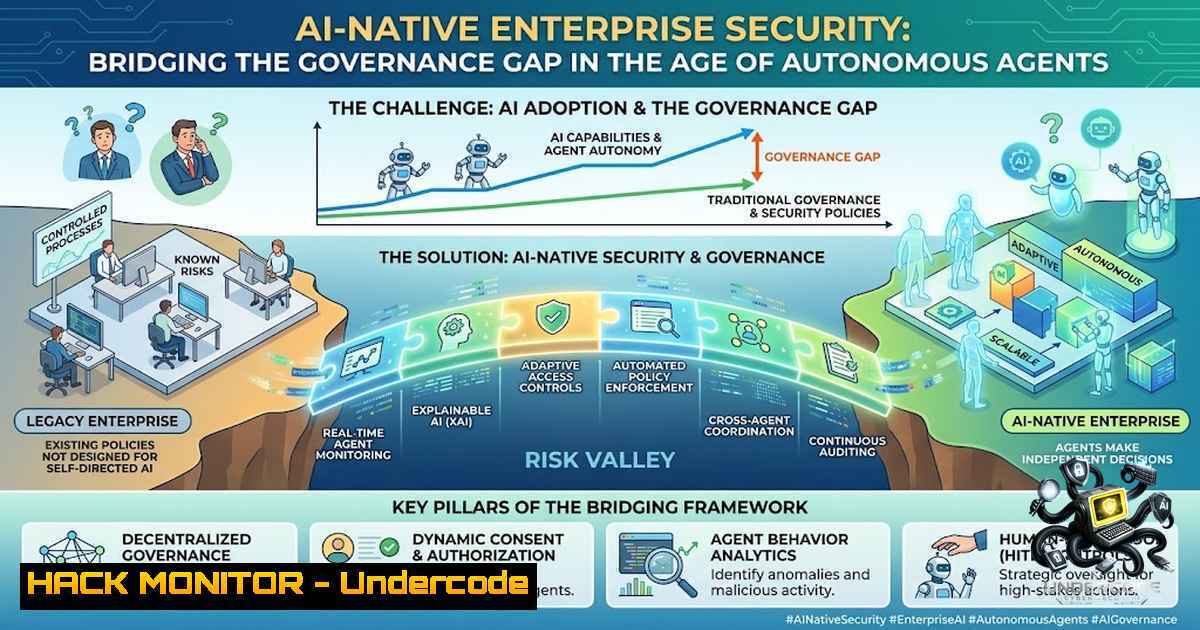
Introduction:
As artificial intelligence becomes deeply embedded in enterprise productivity ecosystems and operational technology, organizations face a fundamental security paradox: AI adoption is outpacing the governance frameworks designed to protect it. The 2026 Cloud Security Report reveals a 51-point gap between security intent and execution—77% of organizations have updated their security strategy in response to AI, yet only 26% possess the infrastructure to enforce it. With 70% of enterprises now running generative AI in production and 64% deploying AI agents, the traditional security architecture built for human-driven, predictable application behavior is proving dangerously inadequate for the API-heavy, autonomous nature of AI workloads.
Learning Objectives:
- Understand the evolving threat landscape of AI-1ative enterprises, including shadow AI, prompt injection, and autonomous agent risks
- Master Google Workspace AI security controls and configuration best practices for Gemini and agentic solutions
- Develop practical skills for securing IT/OT convergence in critical infrastructure environments
You Should Know:
- The AI Governance Gap: Visibility and Enforcement Challenges
The numbers paint a stark picture. Only 5% of organizations have full visibility into the AI tools their employees are using, and the same proportion can reliably distinguish between legitimate AI activity and suspicious usage. Over half of enterprises have confirmed at least one AI-related security incident, with unauthorized or shadow AI usage, AI-generated phishing and deepfake content, and sensitive data leakage through AI platforms ranking as the most common threats.
The root cause lies in architectural mismatch. Existing security stacks were designed for environments built around human-driven access and predictable SaaS patterns. AI traffic is fundamentally different—API-heavy, often autonomous, and running at volumes that most enterprise security tools were never built to inspect. Only 24% of organizations can fully inspect AI traffic without degrading application performance. At the application layer, just 22% rate their web application firewalls as effective against AI-specific threats such as prompt injection.
Step‑by‑step guide: Auditing AI Usage and Enforcing Governance
To establish visibility and control over AI usage in your organization:
- Discover shadow AI: Deploy a cloud access security broker (CASB) or specialized AI discovery tool to identify all AI services accessed across your network. Many organizations are surprised to find dozens of unauthorized AI tools in use.
-
Implement AI-specific DLP: Configure data loss prevention policies specifically for AI platforms. Only 15% of organizations have DLP controls configured for AI. Create rules that block sensitive data—including source code, PII, and financial information—from being submitted to external AI services.
-
Enforce access controls: Use identity-based policies to restrict AI tool access based on role and need. Implement session-level controls that log all interactions with AI platforms.
-
Deploy AI traffic inspection: Invest in next-generation firewalls or secure web gateways capable of inspecting AI API traffic without performance degradation. Consider moving AI training and inference workloads to private cloud or on-premises environments where traffic inspection is more可控.
-
Establish AI acceptable use policies: Document and enforce policies governing what data can be shared with AI tools, which tools are approved, and what constitutes acceptable use. Ensure policies are actively enforced and audited—only 14% of organizations currently do so.
2. Securing Google Workspace in the AI Era
As Google embeds Gemini and other AI capabilities deeply into Workspace, organizations must rethink their security posture. Google’s new AI Control Center in the Admin console provides a centralized pane of glass for managing security and governance settings for generative AI and agent actions. The four core modules address: monitoring and controlling AI access, managing security for AI products, anchoring AI usage in fundamental protections like classification labels and data protection rules, and reviewing privacy and compliance standards.
Third-party solutions are emerging to fill additional gaps. XM Cyber’s PostureAI, built with Google’s Gemini models and hosted on Google Cloud, provides ad-hoc security posture assessments for Google Workspace, helping administrators analyze granular configurations against security best practices. Google has also introduced mandatory two-factor authentication for administrators, passkeys, and device-bound session credentials to modernize authentication away from legacy setups.
Step‑by‑step guide: Hardening Google Workspace AI Security
- Enable the AI Control Center: Navigate to Google Admin console > Generative AI > AI Control Center. This dashboard is available by default—no manual opt-in required.
-
Review AI access and usage: Use the AI Control Center to gain visibility into who is using AI across Gmail, Drive, Docs, Sheets, Slides, Meet, Calendar, Chat, and the Gemini App.
-
Configure granular service controls: Enable granular authority over specific services, such as Gemini in Meet, to ensure every AI surface adheres to domain-specific data and security policies.
-
Implement classification labels and trust rules: Prevent oversharing and data leaks by configuring classification labels and data protection rules that apply even when using AI.
-
Enforce administrative MFA: Ensure all Workspace administrators have two-factor authentication enabled. Consider deploying passkeys for phishing-resistant authentication.
-
Conduct regular posture assessments: Use tools like PostureAI to analyze Workspace configurations against security best practices and identify misconfigurations before they can be exploited.
-
Critical Infrastructure and IT/OT Convergence: The New Battleground
The traditional air gap between IT and operational technology (OT) is effectively gone. As organizations digitize operations and connect OT systems to corporate networks and cloud environments, they inherit a class of cyber risk that traditional security tools were never designed to address. Ransomware activity against industrial organizations increased by 49% year-on-year, impacting 3,300 organizations globally and causing operational disruption. Attacks by state actors and hacktivists have doubled, increasingly targeting critical infrastructure such as energy supply and transport.
OT environments operate under fundamentally different constraints than enterprise IT. Uptime requirements are non-1egotiable—a patch that takes a server offline for 20 minutes can shut down a production line. Legacy systems 15 to 30 years old are the norm, with no native API or cloud connectivity. Regulatory frameworks are multiplying, with sectors facing overlapping requirements from NIST CSF, IEC 62443, ISO 27001, and national critical infrastructure legislation.
Step‑by‑step guide: Securing IT/OT Convergence
- Map your OT/ICS environment: Begin by creating a comprehensive inventory of all OT assets, including PLCs, SCADA systems, HMIs, and network devices. Document communication flows between IT and OT networks.
-
Implement network segmentation: Use the Purdue model to segment OT networks from IT networks. Deploy firewalls and one-way diodes to control traffic between zones. Network segmentation remains the cornerstone of OT security.
-
Harden remote access: Replace traditional VPNs with purpose-built secure remote access (SRA) platforms that enforce session-level controls, minimize lateral movement, and provide continuous visibility. Third-party access should be time-bound, task-specific, limited to individual assets, fully recorded, and automatically revoked.
-
Deploy OT-specific monitoring: Implement continuous monitoring solutions capable of detecting anomalous behavior in OT environments. Organizations with strong OT visibility detected and contained ransomware incidents in an average of five days, compared to the industry-wide average of 42 days.
-
Apply zero trust principles adapted for OT: Rather than extending IT security tools directly into control environments, use SRA gateways to proxy, isolate, and audit interactions with ICS assets. Emphasize session mediation and protocol isolation rather than endpoint agents.
-
Address firmware and password hygiene: Immediately change default passwords on all OT devices and establish requirements for integrators and suppliers to enforce password changes. Prioritize firmware updates that include verification capabilities to prevent permanent device damage.
4. AI-1ative Security Architecture: Building for the Future
The cybersecurity industry is shifting toward AI-1ative architectures where intelligence is built into the core of every application rather than added as an interface on top. In this model, observability, governance, access controls, and enforcement are all built in from day one. AI-1ative applications continuously adapt to changing data and threats, responding dynamically rather than operating statically until manually changed.
For security teams, this means treating proprietary security telemetry as a strategic asset. Organizations are consolidating fragmented security platforms, with application security testing, software composition analysis, secrets detection, and infrastructure scanning increasingly coming bundled. Developer-facing dashboards surface findings in code review rather than separate portals, dramatically improving remediation rates.
Step‑by‑step guide: Building an AI-1ative Security Program
- Consolidate security tools: Reduce tool sprawl by adopting unified platforms that integrate application security, cloud security, and incident response capabilities.
-
Shift security left in development: Integrate AI-driven code analysis, secret scanning, and dependency analysis into every commit. Defects caught early cost 10 to 100 times less to fix than those caught in production.
-
Implement AI red teaming: Conduct cloud-based AI red teaming to simulate adversarial attacks against AI systems. Stress-test AI integrity with advanced red teaming and deep model scanning to eliminate malware and malicious scripts.
-
Map your AI ecosystem: Create a complete inventory of all AI tools, models, and agents in use across the organization. Eliminate security silos by replacing fragmented, platform-specific approaches with unified visibility.
-
Retrain and reskill security teams: Provide in-house training on data science fundamentals, Python scripting, and specialized ML security courses. Security teams must understand how AI models work to effectively protect them.
What Undercode Say:
-
Key Takeaway 1: Governance must catch up to deployment. Organizations are deploying AI at unprecedented speed, but security governance is lagging dangerously behind. The 51-point gap between intent and execution must be closed through investments in visibility, inspection, and enforcement capabilities specifically designed for AI workloads.
-
Key Takeaway 2: IT/OT convergence is no longer optional to secure—it is mandatory. The air gap is dead. Critical infrastructure operators must adopt security models that respect OT constraints while enabling centralized governance. Secure remote access will become the primary control plane for industrial cybersecurity, bridging IT identity systems with OT assets.
Prediction:
-
+1 Organizations that invest in AI-1ative security architectures and establish robust governance frameworks will gain a competitive advantage, achieving faster incident detection and response while maintaining regulatory compliance.
-
-1 The governance gap will continue to widen as AI agents gain privileged access to core business systems—12% of organizations have already granted agents privileged access—leading to more frequent and severe AI-related security incidents.
-
-1 Critical infrastructure will remain a primary target for state-sponsored and ransomware groups. The convergence of IT and OT creates attack vectors that traditional security tools cannot address, and the 49% increase in ransomware against industrial organizations will likely accelerate.
-
+1 The emergence of AI Control Centers and specialized security tools for platforms like Google Workspace will help organizations gain the visibility they currently lack, enabling more effective governance of AI usage across the enterprise.
▶️ Related Video (82% Match):
https://www.youtube.com/watch?v=-hu73iJGIoo
🎯Let’s Practice For Free:
🎓 Live Courses & Certifications:
Join Undercode Academy for Verified Certifications
🚀 Request a Custom Project:
Secure, high-velocity infrastructure and disruptive technological engineering. Contact our engineering team for high-tier development and proprietary systems:
[email protected]
💎 Smart Architecture | 🛡️ Secure by Design | ⭐ Trusted by Thousands
IT/Security Reporter URL:
Reported By: https://lnkd.in/p/ecWXA-7J – Hackers Feeds
Extra Hub: Undercode MoN
Basic Verification: Pass ✅


